There are no goals of the mathematical community as a whole. Mathematics and mathematicians are free. Nobody is entitled to speak for "the goals of mathematical community".
I see mainly wishes of those in power to impose their goals to try to keep their power.
These are rough times for those whose mathematics is just a bag of tricks. The "bag of tricks mathematics" works perfect for IMO problems, it works also for solving not very deep problems and being prolific publishing.
The "bag of tricks mathematicians" are OVER. The AI has made them obsolete. They seem desperate. They need to adjust the global goals for all so that they do not become irrelevant.
@codercody AI will shake mostly the “elite” and level the playing field for the new & young. Because they are new, they have less to lose and more willing to adapt and use AI productively, leading to a breakthrough. After all, AI is the natural evolution of a form of math at certain stage
@codercody Speaking to a mathematician or not shouldn’t be the criteria to judge his statement. There are many agree and disagree. Then you will have to define the sample, like what kind of mathematician, etc. It becomes very arbitrary.
@rperezmarco Maybe the students who adapt to AI will do a different kind of mathematical proof that combine human power with AI. I for one have seen younger students who truly love math learning rapidly with the help of AI on proofs and analytical deduction.
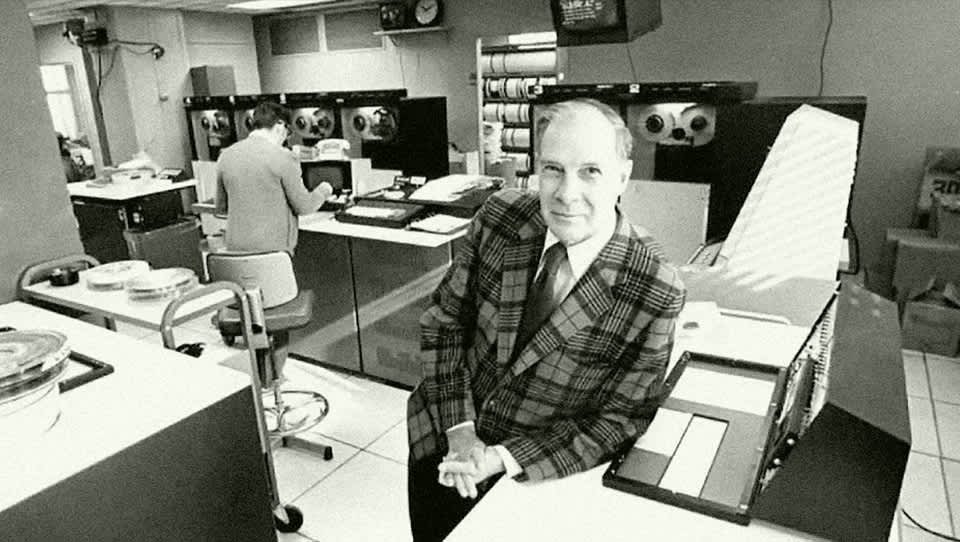
A mathematician who shared an office with Claude Shannon at Bell Labs gave one lecture in 1986 that explains why some people win Nobel Prizes and other equally smart people spend their whole lives doing forgettable work.
His name was Richard Hamming. He won the Turing Award. He invented error-correcting codes that made modern computing possible. And he spent 30 years at Bell Labs sitting in a cafeteria at lunch watching which scientists became legendary and which ones faded into nothing.
In March 1986, he walked into a Bellcore auditorium in front of 200 researchers and told them exactly what he had seen.
Here's the framework that has been quoted by every serious scientist for the last 40 years.
His opening line landed like a punch. He said most scientists he worked with at Bell Labs were just as smart as the Nobel Prize winners. Just as hardworking. Just as credentialed. And yet at the end of a 40-year career, one group had changed entire fields and the other group was forgotten by the time they retired.
He wanted to know what the difference actually was. And he said it wasn't luck. It wasn't IQ. It was a specific set of habits that almost nobody is willing to follow.
The first habit was the one that hurts the most to hear. He said most scientists deliberately avoid the most important problem in their field because the odds of failure are too high. They pick a safe adjacent problem, solve it cleanly, publish it, and move on. And because they never swing at the hard problem, they never hit it. He said if you do not work on an important problem, it is unlikely you will do important work. That is not a motivational line. That is a logical one.
The second habit was about doors. Literal doors. He noticed that the scientists at Bell Labs who kept their office doors closed got more done in the short term because they had no interruptions. But the scientists who kept their doors open got more done over a career. The open-door scientists were interrupted constantly. They also absorbed every new idea passing through the hallway. Ten years in, they were working on problems the closed-door scientists did not even know existed.
The third habit was inversion. When Bell Labs refused to give him the team of programmers he wanted, Hamming sat with the rejection for weeks. Then he flipped the question. Instead of asking for programmers to write the programs, he asked why machines could not write the programs themselves. That single inversion pushed him into the frontier of computer science. He said the pattern repeats everywhere. What looks like a defect, if you flip it correctly, becomes the exact thing that pushes you ahead of everyone else.
The fourth habit was the one that hit me the hardest. He said knowledge and productivity compound like interest. Someone who works 10 percent harder than you does not produce 10 percent more over a career. They produce twice as much. The gap doesn't add. It multiplies. And it compounds silently for years before anyone notices.
He finished the lecture with a line I have never been able to shake.
He said Pasteur's famous quote is right. Luck favors the prepared mind. But he meant it literally. You don't hope for luck. You engineer the conditions where luck can land on you. Open doors. Important problems. Inverted questions. Compounded hours. Those are not traits. Those are choices you make every single day.
The transcript has been sitting on the University of Virginia's computer science website for almost 30 years. The video is free on YouTube. Stripe Press reprinted the full lectures as a book in 2020 and Bret Victor wrote the foreword.
Hamming died in 1998. He gave his final lecture a few weeks before. He was 82.
The lecture that explains why some careers become legendary and others disappear is still free. Most people who could benefit from it will never open it.
Imagine trying to teach someone how to swim just by letting them read books about water.
That is how we have been training AI on physics, using text descriptions.
To really learn, you need to get in the water.
"The Well" is that water.
Polymathic AI has released a massive 15TB open-source library of physics simulations. It allows AI models to experience physical phenomena directly.
Instead of reading about a supernova, the model processes the actual data of the explosion. Instead of reading about aerodynamics, it analyzes the fluid flow.
This moves us from [Generative AI] (making things up) to [Scientific AI] (discovering truth).
A huge step forward for open science.
GitHub Repo: https://t.co/xgUdqncyRH
Prof. Chen Ning Yang, a world-renowned physicist, Nobel Laureate in Physics, Academician of the Chinese Academy of Sciences, Professor at Tsinghua University, and Honorary Director of the Institute for Advanced Study at Tsinghua University, passed away in Beijing due to illness at the age of 103. His life stands as a timeless chapter in human history—one that shines not only for China but for the global community of thinkers and innovators. His legacy will live on forever.
We have long taken it for granted that gravity is one of the basic forces of nature – one of the invisible threads that keeps the universe stitched together.
Source: ScienceAlert
Shared via the Google app https://t.co/esAqB41aZh
Given the political climate in the US, European universities are gearing up to attrach researchers from American universities.
I did my PhD in the US and now I work at a European university.
Here are a few things to keep in mind before you decide to hop over the pond:
OpenAI whistleblower William Saunders is testifying before a Senate subcommittee today (so is Helen Toner and Margaret Mitchell). His written testimony is online now. Here are the most important parts 🧵
A day later, and another major Mathlib project is complete:
Fermat's last theorem for "regular" prime exponents!
Main contributors: Alex J. Best, Chris Birkbeck, Riccardo Brasca, Xavier Roblot, Eric Rodriguez, Ruben Van de Velde, Andrew Yang https://t.co/z2MYoeQk55
Lean FTW!
This is just wild!
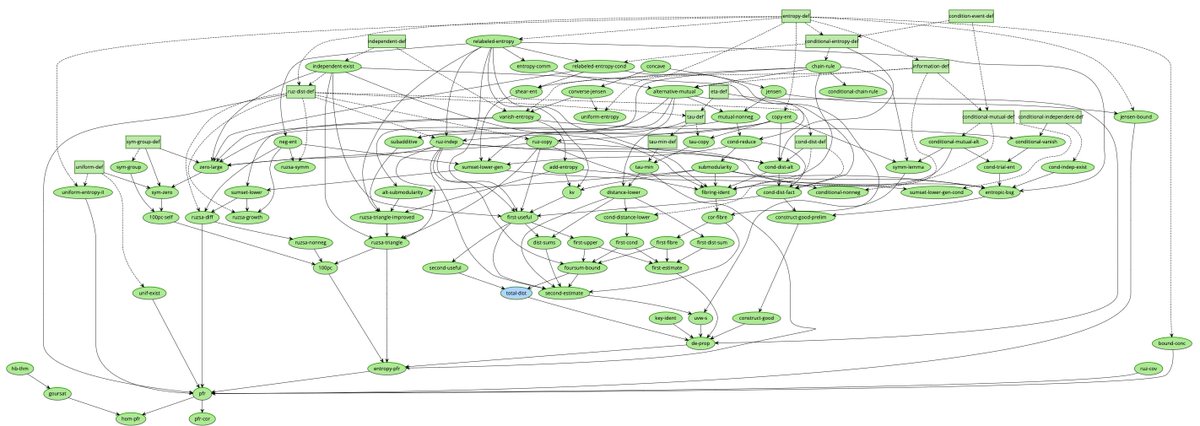
Nov 9: @wtgowers, Green, Manners, and Tao prove the polynomial Freiman-Ruzsa conjecture in char 2. https://t.co/Xz6k8OviC9
Nov 18: Tao announces that he wants to formalize it in Lean, building on Mathlib. https://t.co/VIXs18QAnG
Dec 4: One little theorem (blue in the dependency graph) remains!!! https://t.co/BxdmP2ZLm8






![techNmak's tweet photo. Imagine trying to teach someone how to swim just by letting them read books about water.
That is how we have been training AI on physics, using text descriptions.
To really learn, you need to get in the water.
"The Well" is that water.
Polymathic AI has released a massive 15TB open-source library of physics simulations. It allows AI models to experience physical phenomena directly.
Instead of reading about a supernova, the model processes the actual data of the explosion. Instead of reading about aerodynamics, it analyzes the fluid flow.
This moves us from [Generative AI] (making things up) to [Scientific AI] (discovering truth).
A huge step forward for open science.
GitHub Repo: https://t.co/xgUdqncyRH](https://pbs.twimg.com/media/HFC1ZQbaYAE9qoA.jpg)