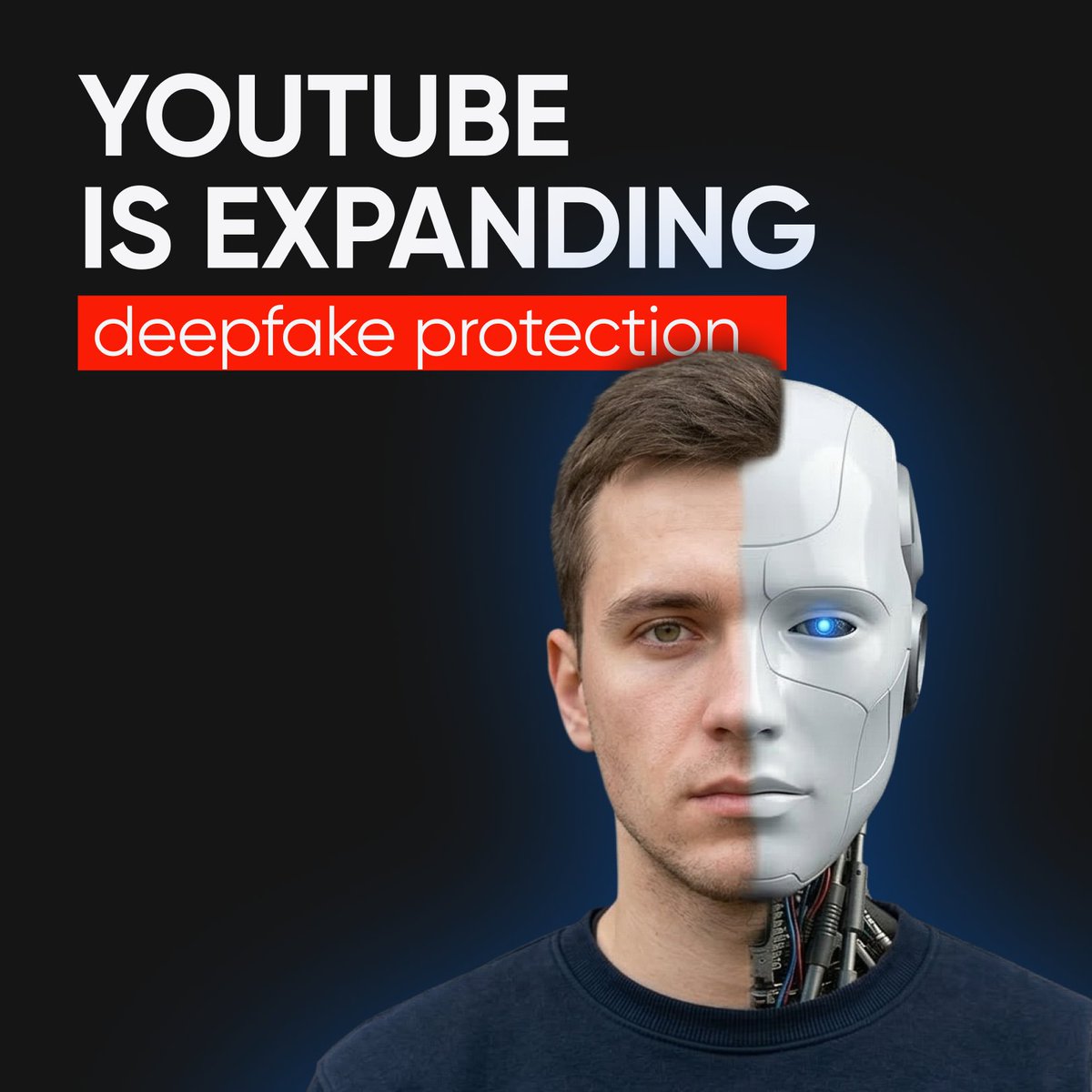
🚨 YouTube is expanding deepfake protection 🚨
Today, creating a video with someone else’s face using AI takes just a few minutes. That’s why YouTube is scaling its likeness detection tool — a facial recognition system 👀
At first, the feature was tested with a small group of creators. Now YouTube is expanding it to a broader pilot group. For now, it includes journalists, politicians, and government officials, but a global rollout is expected.
How the new tool works 👇
1️⃣ You verify your identity
You upload a selfie and a government ID to confirm it’s really you.
2️⃣ The algorithm scans videos on the platform
The system checks new uploads and searches for matches with your face.
3️⃣ You receive a notification
If a video appears that uses your face (even as a deepfake), the system alerts you ⚠️
4️⃣ You decide what happens next
You can leave the video as is or request its removal.
Of course, many people feel uneasy about sharing a facial scan and ID with the platform. But YouTube states that this data is used only for the protection system and will not be fed into Google’s generative AI models 🔒
In a world where deepfakes can be created in minutes, this tool could become an important way to protect your personal brand and reputation.
#YouTubeUpdates #CreatorEconomy #YouTubeCreators #DigitalIdentity #ContentCreators
🚨 Reused Content in 2026: how to avoid losing monetization on YouTube
YouTube is getting stricter about content without a clear creator contribution. If you make gaming videos, reactions, or edits — this directly affects you 👀
❌ The biggest myth
Many creators think that if there are no Content ID strikes and the video falls under Fair Use, monetization is guaranteed.
In reality — it isn’t.
The Reused Content policy works separately. Algorithms evaluate not just legality, but the added value of your content.
💡 What is “added value”?
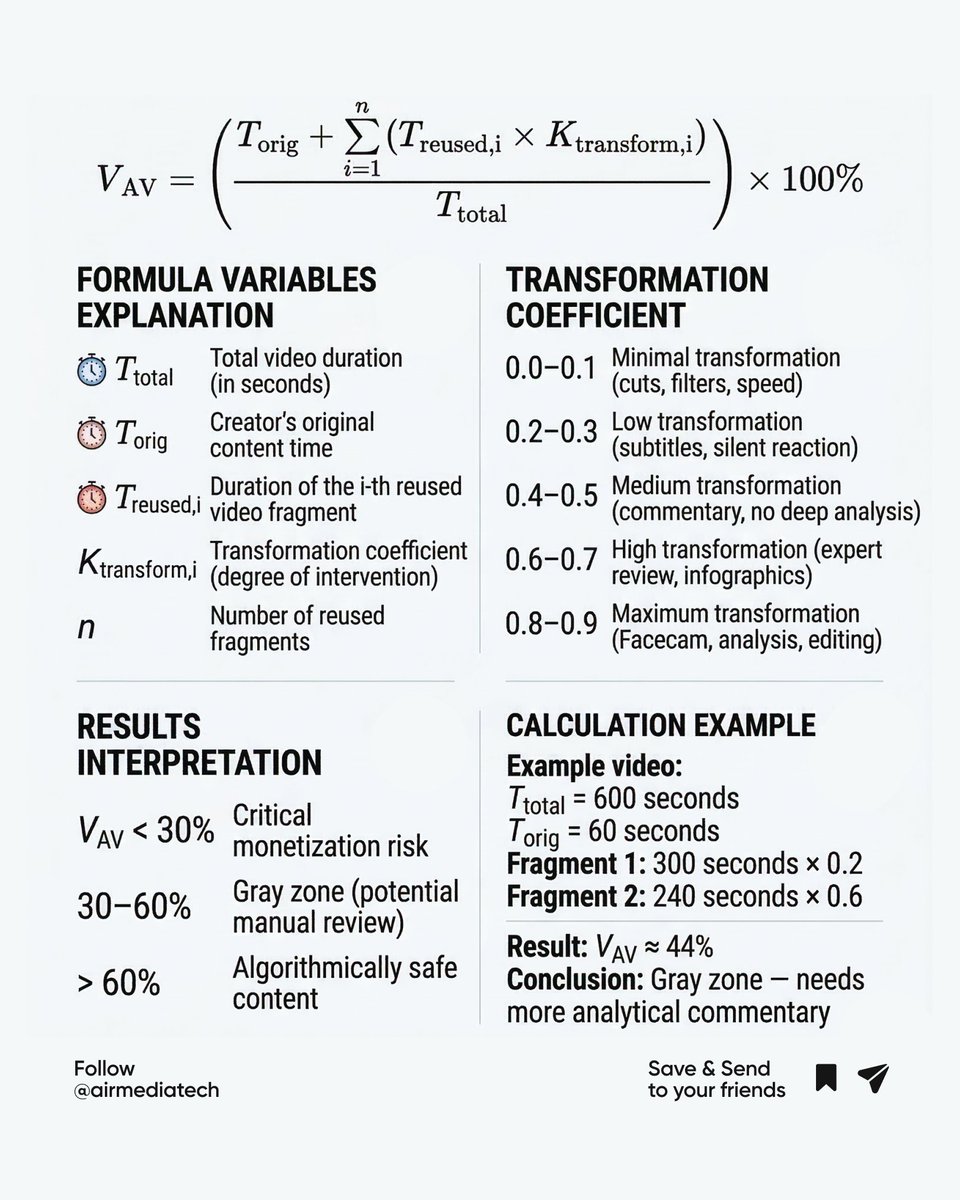
Think of it like a simple formula:
your original contribution + transformation of existing material
To stay out of the “grey zone”, this value should be around 60% or higher.
👉 We’ve even created a simple formula to help you calculate your “added value”.
Swipe the carousel and save it for later.
Here’s what actually helps 👇
🎮 Gaming channels
Simple no-commentary gameplay is no longer enough.
Facecam, explaining mechanics, analysis, or building your own narrative around the gameplay shows the algorithm that a real creator is involved.
🎬 Reaction channels
Just watching a video with facial reactions isn’t enough.
Pause the video, analyze it, explain the context, compare ideas.
Picture-in-picture is basically the minimum standard.
✂️ Edits & compilations
Clean editing synced to music is no longer enough.
Turn clips into video essays by adding voice-over, context, and your own interpretation.
🤖 What about AI content?
YouTube doesn’t ban AI as a production tool.
But fully automated, mass-generated videos without human control are very likely to lose monetization — even if it doesn’t happen immediately.
📌 The key rule:
People come to YouTube for your personality, perspective, and expertise, not just reused footage.
Have you ever faced a Reused Content issue on your channel?
Tell us in the comments 👇
#YouTubeTips #CreatorEconomy #YouTubeMonetization #ContentCreators #YouTubeStrategy
🛑 YouTube is tightening the rules: what creators should expect
The platform has updated its monetization guidelines, and this time the focus is on advertiser safety. If you create animation, gaming, or AI-generated content — pay attention to the new filters.
Algorithms are now much stricter when evaluating content featuring young-looking characters (humans, animated figures, or digital avatars). Videos may face restrictions if they include:
👉 Scenes of excessive stress or suffering involving characters.
👉 Disturbing visuals or overly graphic elements that may cause discomfort.
👉 An unsettling context — even if it’s “just a game or cartoon”.
Previously, many faceless channels with intense storylines existed in a grey zone. Now YouTube is making it clearer:
child-like or teenage-looking characters + stressful scenarios = demonetization risk.
⚠️ Important: Review not only the video itself, but also thumbnails and titles. A single overly provocative frame in a thumbnail can lead to a yellow icon or full monetization restrictions.
This is the moment to revisit your visual strategy and channel packaging. YouTube is becoming more demanding when it comes to content ethics. Focus on quality and safety so your views can turn into stable revenue 💸
#YouTubeStudio #CreatorEconomy #YouTubeUpdates #YouTubeMonetization #ContentCreators
YouTube has updated the Payment Activity page in Studio 💸
A small but very useful update for creators who run multiple channels under one AdSense account. Tracking revenue and payouts just got much easier 👀
Here’s what changed 👇
1️⃣ Aggregated stats across channels
If several channels are connected to the same AdSense, you can now see the total payouts across all projects at once.
2️⃣ Revenue breakdown per channel
Payments are now clearly split by channel, making it easy to see which channel generated how much.
3️⃣ 12-month payment history
Your entire payment history for the past year is now conveniently displayed on one page.
⚠️ Important: this view is only available to users who have access to revenue data in the channel or brand account permissions.
For those managing multiple channels or entire channel networks, this update is a big time-saver. No more collecting numbers from different pages just to understand your total payouts 😎
#YouTubeStudio #CreatorEconomy #YouTubeUpdates #YouTubeMonetization #ContentCreators
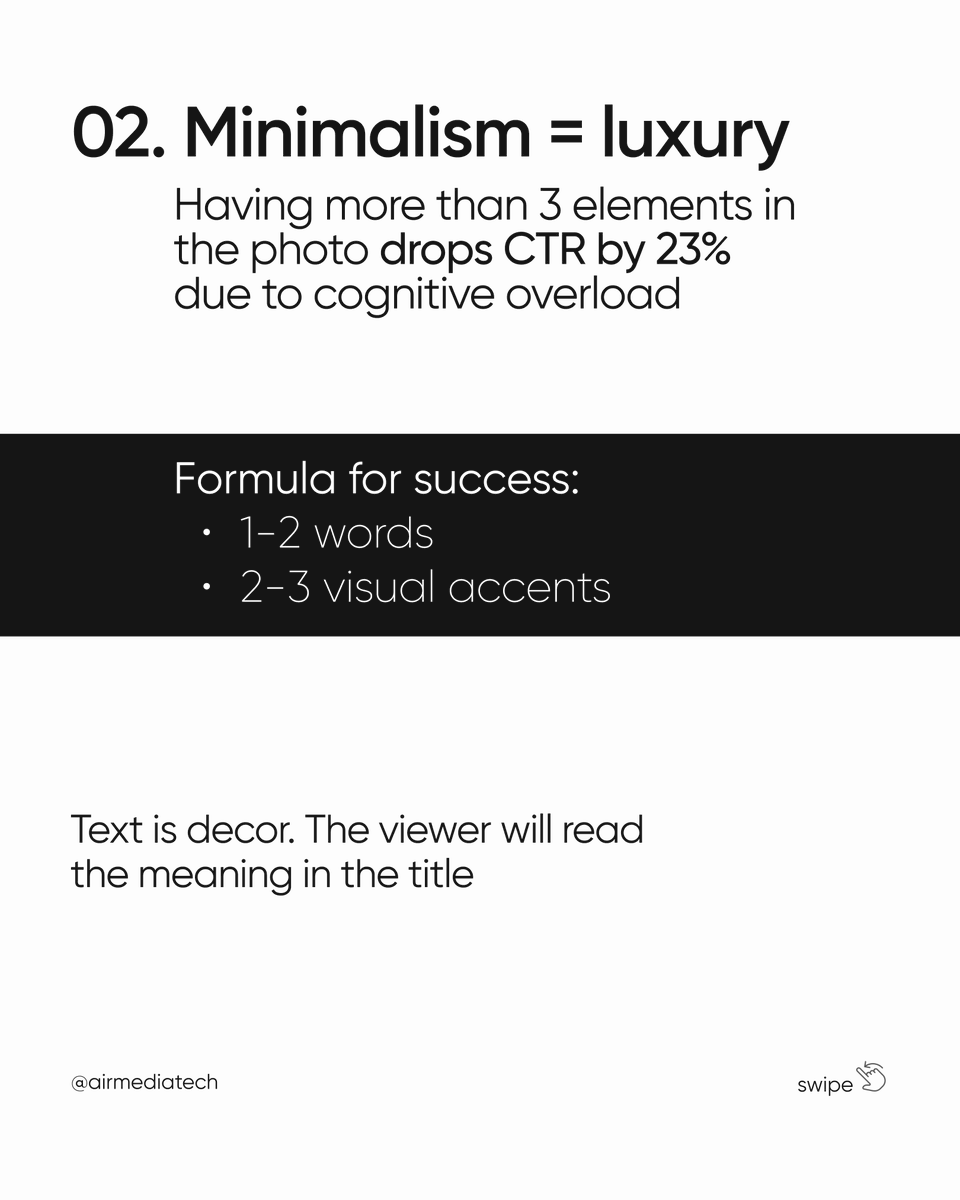
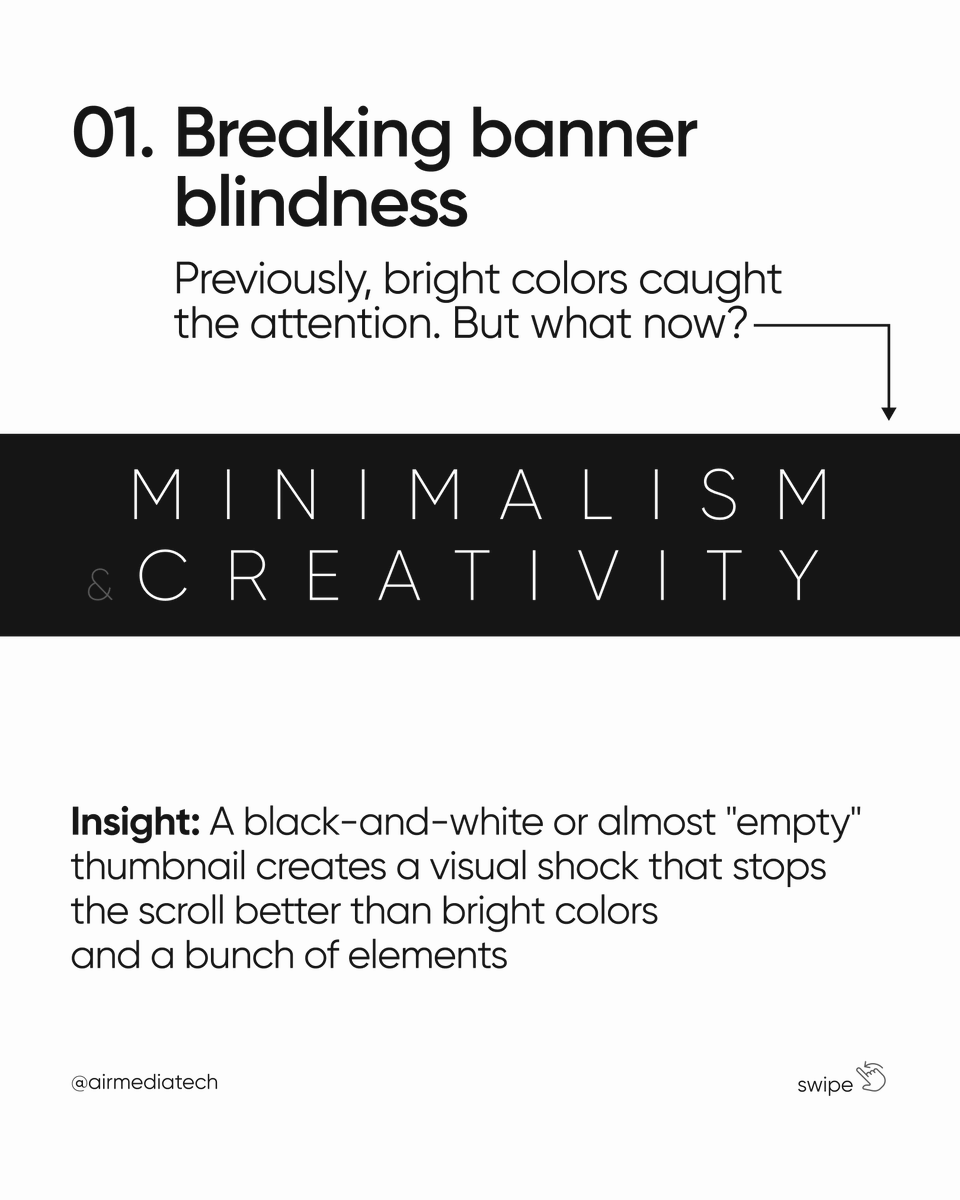
The era of aggressive clickbait and huge red arrows on YouTube is officially over ❌
The feed has turned into a "neon chaos," and viewers automatically ignore overloaded thumbnails. A new industry standard has taken its place 😎
We’ve gathered the main thumbnail design trends and rules that actually work.
👉 Swipe through the carousel!
#youtubethumbnails #contentcreator #youtubetips #videomarketing #creatorbusiness