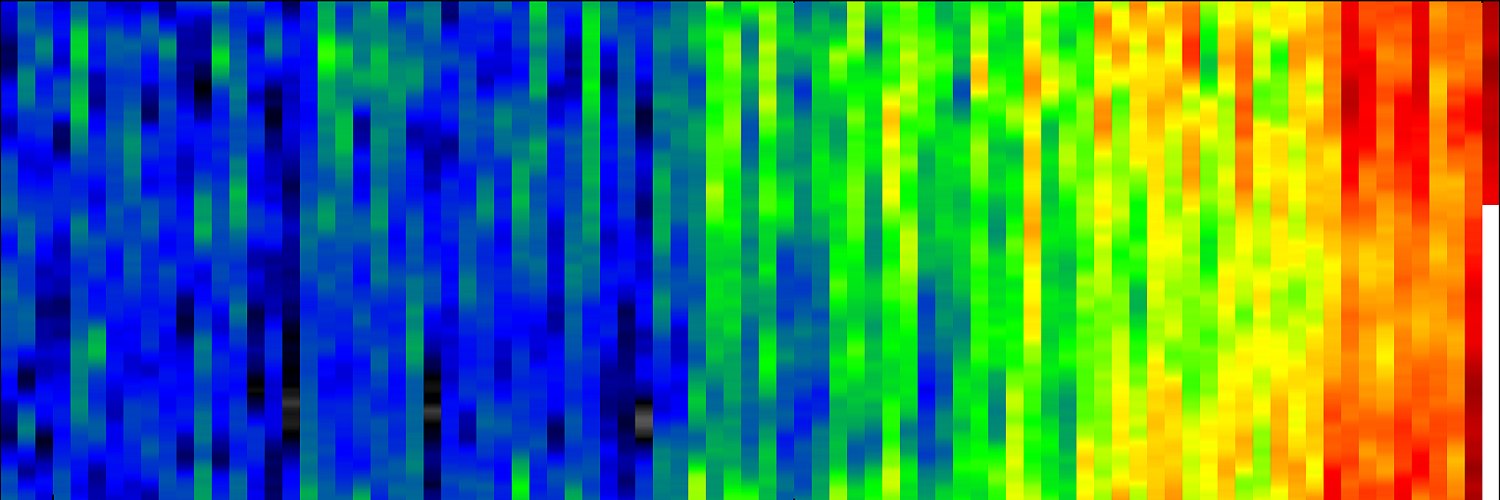
Current global sea-surface temperatures are 6.08 standard deviations above the 1982-2011 mean, or about 1-in-1,700,000,000 (1-in-1.7 billion), assuming a normal distribution and no climate change.
The "new normal" means there is "no normal" anymore.
🚨BREAKING 🌊🌡📈
Both the @NOAA and @CopernicusECMWF datasets show record high global Sea Surface Temperatures!
Paleoclimate evidence shows that these temperatures could be higher than any time in the past hundreds of thousands of years!
We're now on day 83 of record breaking daily global sea-surface temperatures. There's still an outside chance that this year could break the all-time daily record set back on April 24, 2024.
The Climate Casino is taking the Over.
@EliotJacobson If you haven't already, I highly suggest checking out Sheldon Solomon and terror management theory. I think you would find it very interesting.
@LauraMiers Not saying the insane pace we are building data centers isn't adding to the problem, but if we don't focus on the root of the problem, which is fossil fuel use and infinite growth based economics, we are missing the forest for the trees.
@LauraMiers While I appreciate the sentiment, it is frustrating to see this hyperfixation on AI when it comes to climate change and water resources. We were well on our way to Mad Max before AI, and we would essentially be just as screwed if LLMs never became as big as they are today.
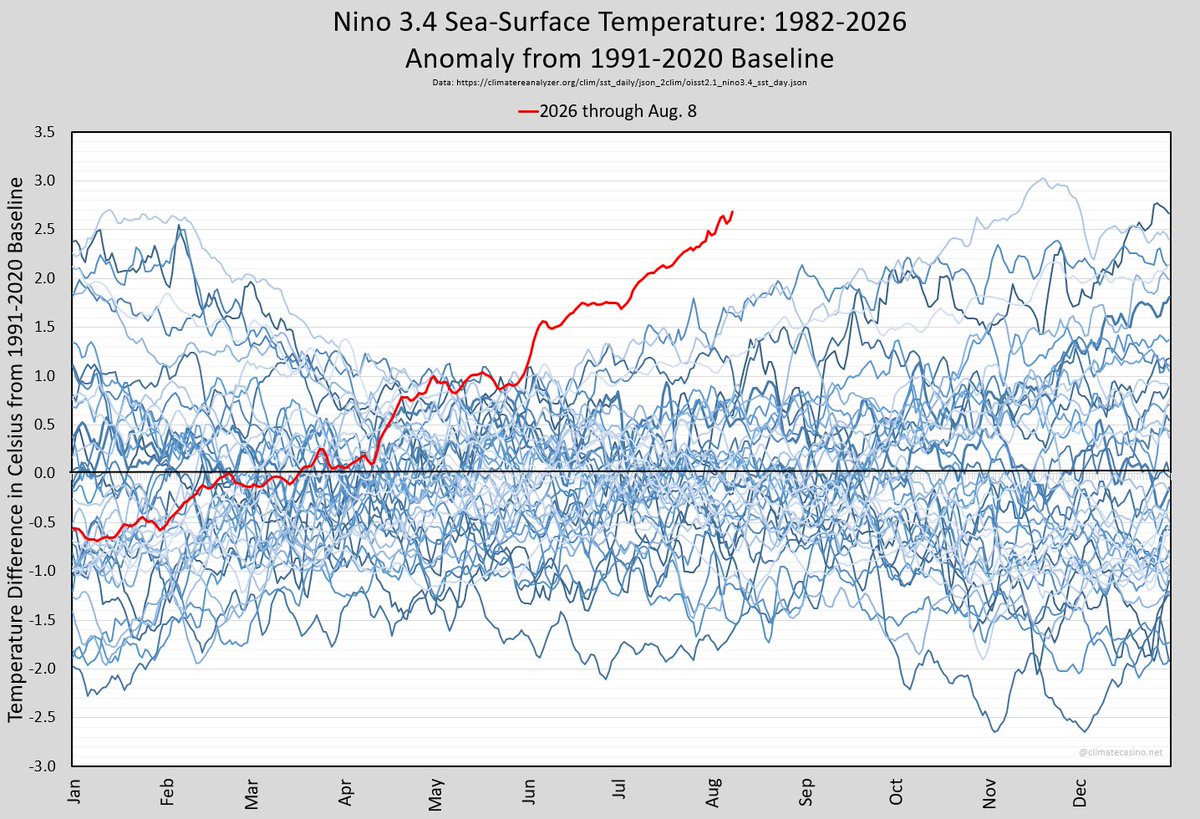
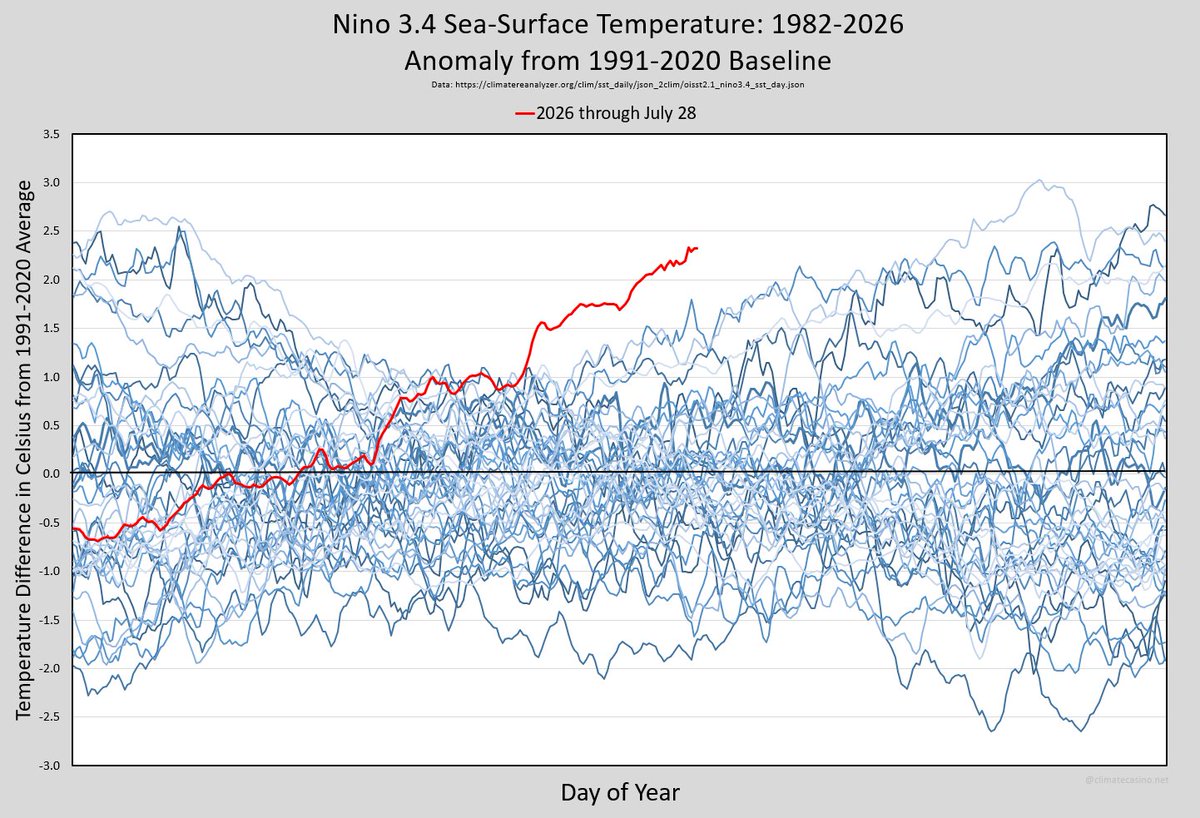
The latest Nino 3.4 data.
Yesterday's Nino 3.4 sea-surface temperature set the 60th consecutive daily record high for the Nino 3.4 region, and was 0.83°C higher than the previous record for July 28th, which came at the start of the 1997/98 El Nino.
Here's the latest Nino 3.4 sea-surface temperature anomaly forecast, along with 90% confidence interval, with data from CFSv2.
The forecast shows a maximum anomaly of 4.23°C over the 1991-2020 baseline in November.
We're now returning you to your regularly scheduled doom.
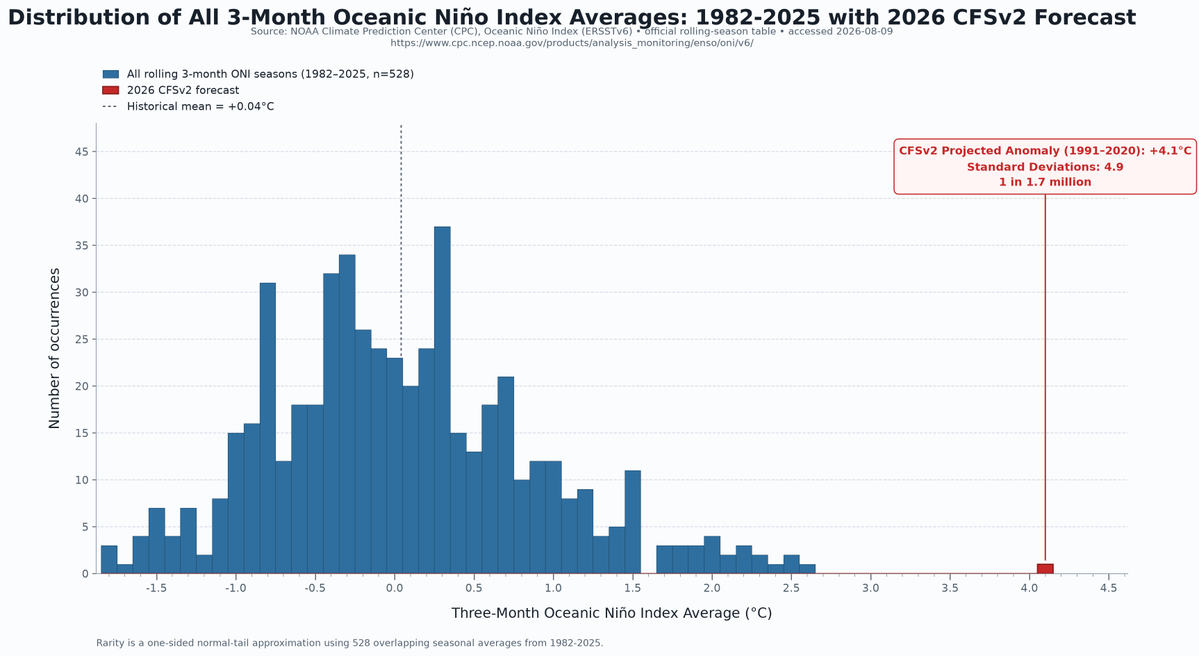
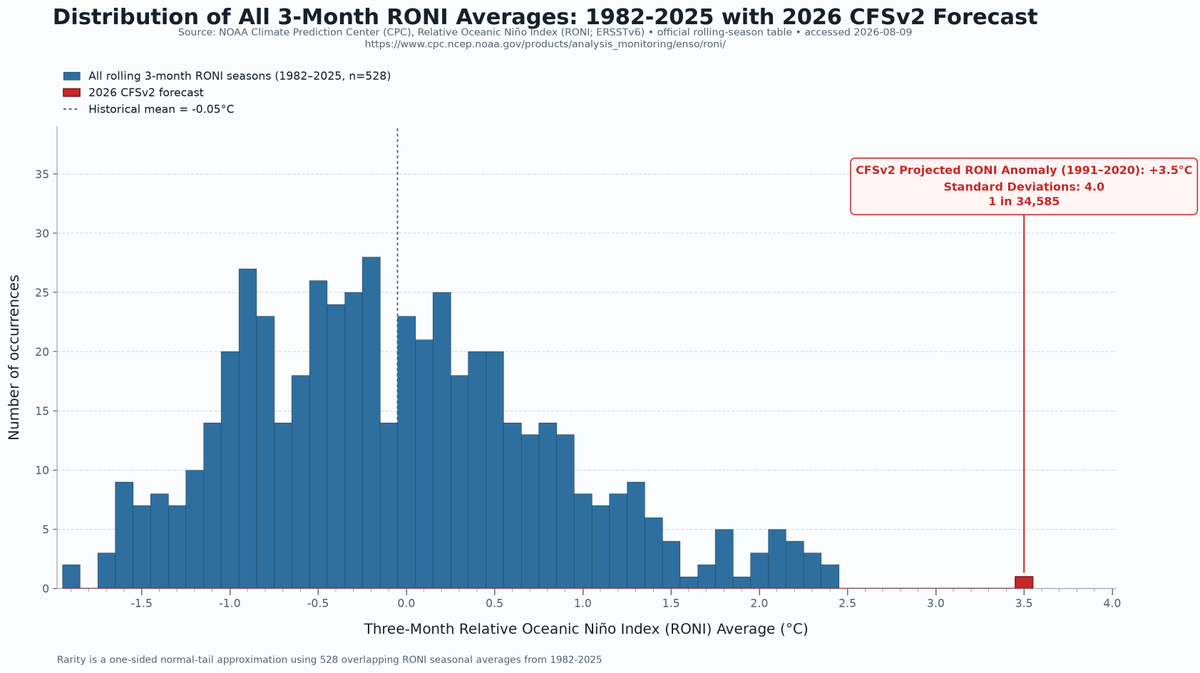
With all the July model runs now in, it is very likely that 2026 will see the largest El Niño event since records began in the late 1800s – and potentially by a truly mind-blowing margin. The median estimate is now 3.6C, roughly 0.8C hotter than the prior record (2.75C).