The way we build software has changed.
Again.
Good thing developers love learning new tricks.
GitHub Universe is back to help you navigate the age of AI agents.
https://t.co/sSxU88F0IV
As we enter the era of AI agents, one of the defining questions is how you develop competitive advantage when your competitor has access to the same AI models and intelligence as you.
The companies that are able to best harness their internal institutional knowledge, existing data assets, and domain-specific workflows -- connected with AI -- will be those that are able to stay ahead in the future.
Whether a company decides to build out the tech stacks themselves, or leverage a variety of best-in-class tools is certainly one core variable. But the key is to find the way that the enterprise can capture and protect the value created by their unique data, processes, and expertise over the long run. Each industry will have their own version of this, and the competitive advantage will vary by vertical.
We’re increasingly seeing this at Box, where customers want to ensure that they can take advantage of their institutional knowledge and have the flexibility of bringing any AI model and intelligence to their data at any time. This is a pattern that will increasingly become a core principle of strategy in the future.
AI agents won’t just shop for us.
They’ll consume services, coordinate tasks, manage capital, and transact with each other.
On @ycombinator, @jerallaire explains why the agentic economy needs infrastructure for contracts, payments, governance, and economic execution at machine scale.
AI Scientists are starting to actually do science. Not just answer questions. Not just run workflows.
Introducing AutoScientists: a decentralized team of AI agents that can generate hypotheses, design experiments, write code, test ideas, analyze failures, and revise strategy as evidence accumulates.
Because real research is not a to do list of tasks.
It is a living search process. Leads emerge, failures matter, teams form around what works, and priorities shift when evidence changes. Much like how a lab of scientists would work on cutting edge research together.
Across GPT training optimization, biomedical ML, and protein fitness prediction, this decentralized structure consistently does better research.
Learn more 👇
@GaoShanghua@marinkazitnik@KempnerInst@HarvardDBMI@Harvard
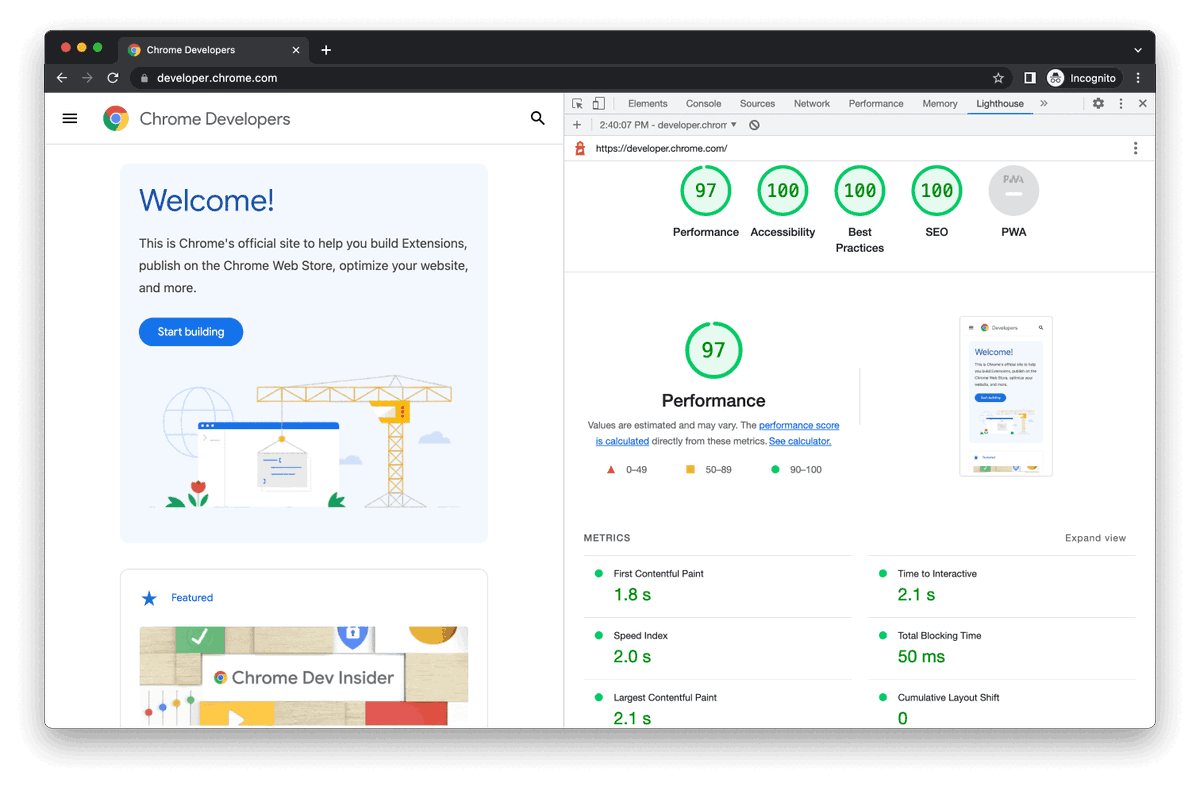
Prepare your site for AI agent interaction with Lighthouse → https://t.co/5myVWdLZd9
If you want AI agents to actually navigate your site properly, the new experimental audit in Lighthouse lets you see:
☀️ Discoverability for AI agents
⚡ WebMCP integration
👀 AI accessibility
#GoogleIO
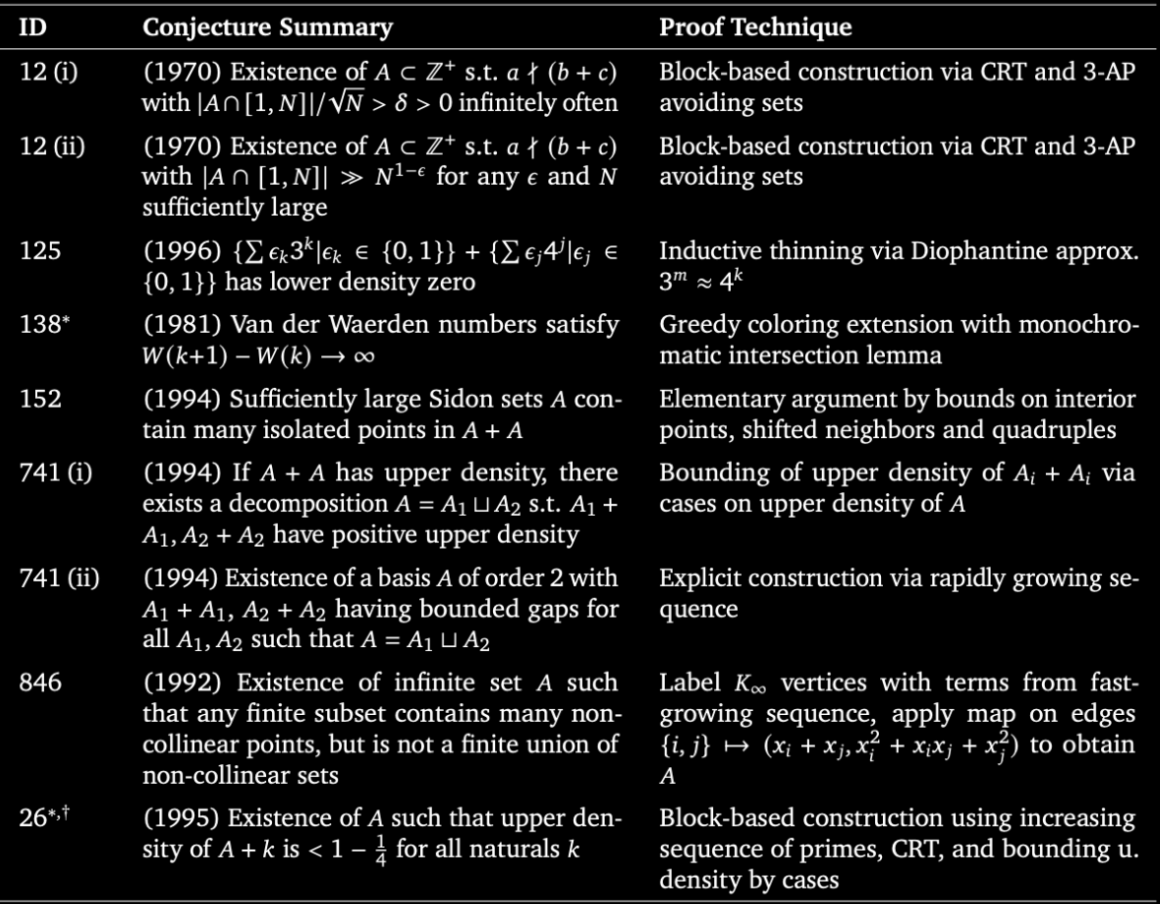
AI agents are advancing research-level math. 🚀
I’m thrilled to share @GoogleDeepMind’s AlphaProof Nexus - an agentic framework for formal proof search powered by Gemini.
When applied to a set of open formal math problems, our agent autonomously solved:
✅ 9 open Erdős problems (including two open for 56 years!)
✅ 44 Online Encyclopedia of Integer Sequences (OEIS) problems
✅ A 15-year-old open problem in algebraic geometry ✅ A 7-year-old open question in min-max optimization
We are collaborating with mathematicians across disciplines - from combinatorics and graph theory to quantum optics. Ultimately, these results show the massive potential of even simple agentic loops powered by Gemini.
Read the paper here: https://t.co/c5M9ZjRXU1
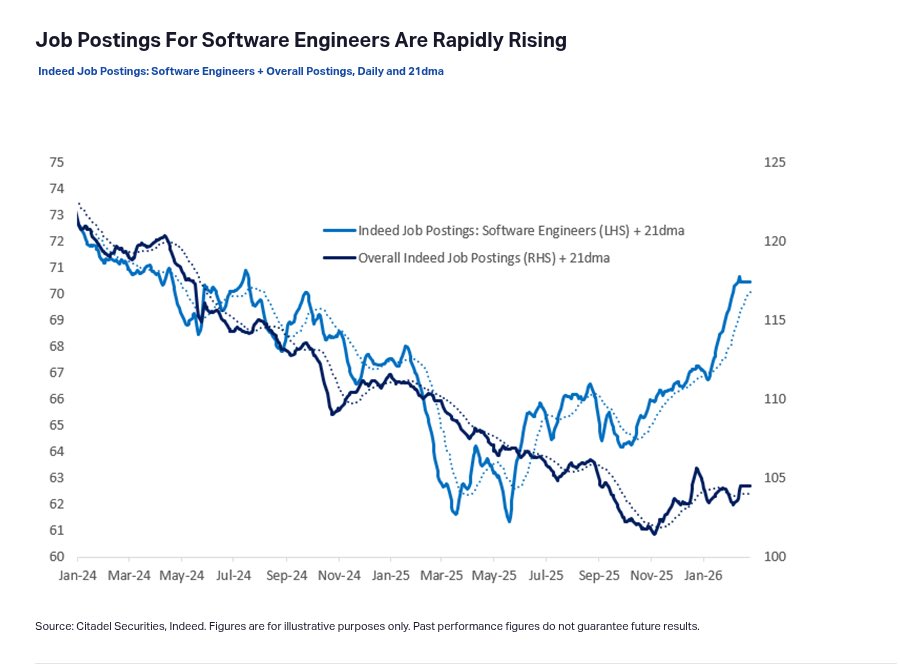
Q: How are job postings for software engineers rising rapidly despite AI agents automating coding?
A: Because there’s far more code to manage than ever before. We’re already seeing a 14x YoY increase in GitHub commits, and it’s accelerating.
AI has dramatically lowered the cost of writing code, so it’s now being used across far more businesses, applications, and use cases.
We’re at the beginning of a massive productivity boom driven by the proliferation of bespoke software throughout the entire economy.
Coding has been AI’s breakout use case this year. The fact that it’s increased demand for software engineers — rather than decreased it — should call into question the entire “AI will cause mass job loss” narrative.
We are quite short of compute, and that is going to result in compute becoming very expensive for complex agentic workflows even as single-turn chatbots get cheaper. So the richest companies & most pressing use cases will use AI agents & everyone else will be stuck with chatbots?
everyone wants their product to work with AI agents. but no one wants their product to be abused. and let's be honest: AI means more + better "bad bots"
we are building a product that can help you, by letting you verify there's a real human behind AI agents. we think it'll be really useful for:
- dev products
- e-ticketing
- agent credit cards
- social networks
we are starting a private Beta of Human Principal with a few companies that want to integrate and give us feedback.
interested? https://t.co/l5lml4DIEq
📣 Announcing Terminal-Bench Science: benchmarking AI agents on real scientific workflows – now open for task contributions👇
https://t.co/MSPMwnbhVt
@AnthropicAI, @OpenAI, and @GoogleDeepMind use Terminal-Bench to evaluate AI on coding tasks. We're now extending it to scientific workflows.
1/6🧵
The results of the research happening in my team @GoogleDeepMind have convinced me that the next era of scientific discovery will be aided by AI agents acting as force multipliers for human ingenuity.
That’s why I’m proud to introduce Gemini for Science - a collection of experimental science tools designed to support researchers at every stage of the research process. The tools include:
1️⃣ Literature Insights, built with Google NotebookLM, searches millions of scientific papers to synthesize findings and generate artifacts including data tables, slides, reports, and more.
2️⃣ Hypothesis Generation, built with Co-Scientist, simulates the scientific method via a multi-agent "idea tournament" to generate, debate, and rigorously evaluate research hypotheses.
3️⃣Computational Discovery, built with AlphaEvolve and ERA, is an agentic engine that generates and scores thousands of code variations in parallel, allowing researchers to test modeling approaches in fields like epidemiology in a fraction of the usual time.
Read more: https://t.co/l8XIg8iXCN
Register for access here: https://t.co/V3YS15mRUS
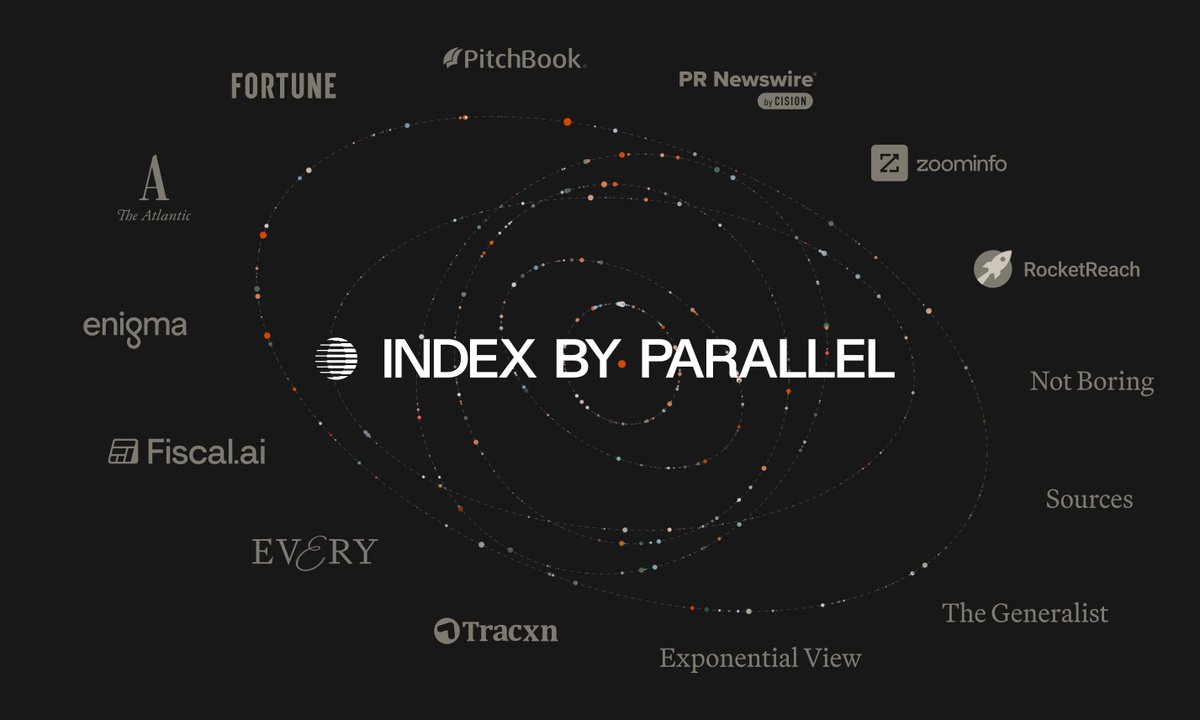
AI agents are the web's second user. They'll use it 1000x more than humans ever have.
The economic model of the web was built for human users. Index is a new, incentive-aligned model for the agentic web.
Albert Einstein + ElevenLabs.
AI agents can make education more accessible - a teacher for every student in every field. A classroom size of one learning from icons who shaped the world
Today with his estate, we’re bringing Albert Einstein to ElevenLabs
There are a lot of coding and reasoning benchmarks for AI agents, but not a lot for document understanding - which is a prerequisite for all downstream knowledge work.
We released ParseBench ~a month ago, and it is one of the most comprehensive benchmarks that test whether frontier models can understand real-world enterprise documents.
This includes complex pages with dense tables, charts, layouts, and more. Most real-world documents around finance, insurance, and legal have one or more of these dimensions.
We're hosting a live webinar next Wednesday to talk about document understanding benchmarking, come check it out: https://t.co/q0LUviHqyN
You can access the full benchmark, paper, and leaderboards through our main site here: https://t.co/PWczfhp0OX
.@nvidia CEO Jensen Huang and Dell CEO @MichaelDell discuss what they see as the biggest supply chain constraint right now with @EdLudlow, as well as the future of AI agents as digital workers https://t.co/RBQW5XJMuL
KEN GRIFFIN (CITADEL): "Work that we would usually do with people with masters and PhDs in finance over the course of weeks or months being done by AI agents over the course of hours or days. These are not these are not mid-tier white collar jobs."