If you're not paying attention to AI right now, you're going to blink and miss the biggest shift of your lifetime. This account tracks it in real time — new models, new tools, no fluff. Following along.
Three nominations and zero wins is less about talent and more about timing — the Academy has a long history of rewarding "serious drama" over performances that redefine a genre. Jack Sparrow changed what a blockbuster lead could look like. That's a harder thing to award than a monologue.
Why Hasn’t Johnny Depp Won an Oscar?
It’s honestly shocking that Johnny Depp still doesn’t have an Oscar. 😭
He’s been nominated three times — for Jack Sparrow, J.M. Barrie, and Sweeney Todd. And every time, the Academy basically said: “Great job, Johnny… but no.”
The funniest part is Jack Sparrow. Depp created one of the most iconic movie characters ever, but somehow still didn’t take home the trophy.
Maybe the Academy just wanted a serious actor.
Academy: “We need someone dramatic.”
Johnny Depp: shows up in eyeliner, a pirate hat, and talks like he’s been drinking rum all day.
Academy: “Next!” 😂
No Oscar, but at least he gave us Jack Sparrow — and honestly, that might be even more iconic. 🏴☠️
𝗔 𝗿𝗼𝗯𝗼𝘁 𝗴𝘂𝗶𝗱𝗲 𝗱𝗼𝗴 𝗷𝘂𝘀𝘁 𝗻𝗮𝘃𝗶𝗴𝗮𝘁𝗲𝗱 𝗮 𝗯𝘂𝘀𝘆 𝗮𝗶𝗿𝗽𝗼𝗿𝘁 — 𝗰𝗵𝗲𝗰𝗸-𝗶𝗻 𝘁𝗼 𝗴𝗮𝘁𝗲, 𝗻𝗼 𝗵𝘂𝗺𝗮𝗻 𝗵𝗲𝗹𝗽.
At the 2026 World Robot Conference in Beijing, the robot led a journalist through a simulated crowded terminal — finding the check-in counter, then the correct gate, entirely on its own.
It's part of a broader push toward affordable, accessible robotic support. If this ever ships at scale, the real audience isn't tech enthusiasts — it's seniors who lose independence the moment navigating a crowded space gets hard.
𝗧𝗵𝗲 "𝗖𝗵𝗶𝗻𝗮 𝗹𝗮𝗴𝘀 𝟲-𝟵 𝗺𝗼𝗻𝘁𝗵𝘀" 𝗻𝗮𝗿𝗿𝗮𝘁𝗶𝘃𝗲 𝗶𝘀 𝗮𝗹𝗿𝗲𝗮𝗱𝘆 𝗼𝘂𝘁𝗱𝗮𝘁𝗲𝗱. 𝗔𝗻𝗱 𝘁𝗵𝗲 𝗰𝗵𝗮𝗿𝘁 𝗱𝗼𝗲𝘀𝗻'𝘁 𝗲𝘃𝗲𝗻 𝗶𝗻𝗰𝗹𝘂𝗱𝗲 𝘁𝗵𝗲𝗶𝗿 𝗹𝗮𝘁𝗲𝘀𝘁 𝗺𝗼𝗱𝗲𝗹.
A Bloomberg chart tracking frontier models on a weighted average across 9 benchmarks shows the capability gap between Chinese (orange) and US (blue) models narrowing sharply over the past couple of years.
GLM-5.3 isn't even on the chart yet. Neither is price — which might be the number that actually matters most.
@TeddyinMedia@opencode Every time an unnamed model this capable shows up for free, it's either a stealth launch building hype before the reveal, or someone testing how the model performs against real-world traffic patterns benchmarks can't simulate. Either way, worth poking at while it's free.
free frontier models just landed on @opencode
If you’ve been looking for a way to mess around with some seriously capable models without burning through your paid limits, this is worth checking.
@opencode is currently giving users free access to:
→ Ox Alpha
The actual model behind it is still undisclosed, which makes it even more interesting.
1M context, multimodal, and a huge token allowance.
People are already speculating about what’s actually under the hood - @xAI’s Grok, GLM or something completely different.
→ Meta Muse Spark 1.2
Meta’s latest coding model, built for long-horizon tasks, large codebases and agentic workflows.
Meta itself calls it a step toward the frontier, and it’s already available through Muse Code. Meta AI Research
The crazy part?
You can use both through @opencode without paying for the model itself.
Ox Alpha is currently listed as free for a limited time, so I’d test it while it’s there. OpenCode Go
And after that Codex limit mess, I’m also keeping an eye on what @OpenAI does next.
If they start loosening the limits again, AI coding is about to get ridiculously cheap.
free frontier models + 1M context + agentic coding.
yeah, we’re getting spoiled.
𝗔𝗻𝘁𝗵𝗿𝗼𝗽𝗶𝗰'𝘀 𝘄𝗲𝗶𝗿𝗱𝗲𝘀𝘁 𝗿𝗲𝘀𝘂𝗹𝘁: 𝘁𝗵𝗲𝗶𝗿 𝘀𝘁𝗿𝗼𝗻𝗴𝗲𝗿 𝗺𝗼𝗱𝗲𝗹 𝗳𝗮𝗶𝗹𝗲𝗱 𝗮 𝗽𝗿𝗼𝘁𝗲𝗶𝗻-𝗱𝗲𝘀𝗶𝗴𝗻 𝘁𝗮𝘀𝗸 𝘁𝗵𝗲 𝘄𝗲𝗮𝗸𝗲𝗿 𝗼𝗻𝗲 𝗻𝗮𝗶𝗹𝗲𝗱. 𝗧𝗵𝗲𝘆 𝘀𝘁𝗶𝗹𝗹 𝗱𝗼𝗻'𝘁 𝗸𝗻𝗼𝘄 𝘄𝗵𝘆.
Claude designed 1,320 protein binders across 15 targets. 354 worked in independent wet-lab testing — hit rates of 22.6% to 35.1%, roughly 2-3x the 10-15% typical for human-led campaigns. On RBX1, it hit 40% versus 3.7% from human competition entrants.
But on TNFα, a notoriously hard target multiple expert teams have failed on, Opus 4.8 succeeded — including cross-species binders that worked in human, monkey, and mouse versions. Mythos Preview, generally the stronger model, failed completely on the same target.
Anthropic's own report says they don't know why.
@quottiiq The part that never gets tested on camera: repeatability. A robot that nails one demo run isn't the same as a robot that nails the same task 10,000 times without drift. That's the actual $15k question, not the sensors themselves.
China just built a $24,000 humanoid robot. The US version costs $39,000. Is cheaper actually better?
Everyone's comparing prices. Nobody's asking the real question: would you trust either of these on your factory floor tomorrow?
$24,000 vs $39,100. Same category, same demo, same dance moves on camera. The internet's already turned this into a "China wins on price" story. That's the boring take.
Here's what actually matters and gets skipped:
A demo video is not a spec sheet. Robots fall over in testing constantly, that footage never makes it online. What you're seeing is the best take out of probably dozens. Cheap hardware that looks smooth for 15 seconds on stage tells you nothing about what happens after 10,000 hours of factory use.
The $15k gap isn't just labor. Some of that premium is redundant sensors, safety certifications, and testing cycles that don't show up on camera but matter a lot if the thing is working next to humans on a line. Cutting corners there is cheap right up until it isn't.
Two completely different bets are being made here. One side is racing to make hardware disposable and mass produced, basically treating robots like phones you replace every two years. The other side is betting the real value sits in the software brain, not the shell, and the body is just a delivery mechanism for a model that keeps improving over time.
Cheap wins the headline. It doesn't win the decade. If your business model is "buy a thousand of these for warehouse tasks and replace them when they break," price wins outright. If you're building something meant to run unsupervised for years, the calculus flips completely.
The real story isn't East vs West on a scoreboard. It's two opposite bets on where the value in robotics actually lives, hardware or intelligence, and only one of those bets scales past 2030.
Which one are you putting your money on?
@NeuralScoutHQ The 20% inference compute tax for monitoring is the number that should worry people more than the pause itself. That's not a one-time cost — it's a permanent overhead every future frontier model in this risk tier will carry.
OPENAI JUST PAUSED PART OF ITS FRONTIER TRAINING BECAUSE THE MODELS ARE GETTING TOO GOOD AT CYBER
This is not a benchmark headline.
OpenAI says preliminary evaluations suggest its upcoming Astra models may reach the "Critical" cybersecurity capability threshold in its Preparedness Framework.
So they changed the training process.
• a major frontier RL run is still on hold
• risky code execution now gets stronger sandboxing
• higher-risk workloads are more isolated from the internet
• model activity is monitored for unauthorized access and data theft
• a critical alert can trigger a pause within 30 minutes
• monitoring itself is estimated to cost roughly 20% extra inference compute
The interesting part is what this means for AI scaling.
For years the bottleneck was:
more compute
more data
better training
Now another constraint is showing up:
how fast can you safely increase capability before your own research environment becomes part of the attack surface?
The next frontier model may not be delayed because it isn't smart enough.
It may be delayed because it is.
𝗧𝗵𝗶𝘀 𝗕𝗲𝗶𝗷𝗶𝗻𝗴 𝗯𝗮𝗿 𝗿𝘂𝗻𝘀 𝗼𝗻 𝘁𝘄𝗼 𝗡𝘃𝗶𝗱𝗶𝗮 𝗗𝗚𝗫 𝗦𝗽𝗮𝗿𝗸𝘀 𝗮𝗻𝗱 𝗹𝗼𝘀𝗲𝘀 𝗺𝗼𝗻𝗲𝘆 𝗼𝗻 𝗲𝘃𝗲𝗿𝘆 𝗱𝗿𝗶𝗻𝗸. 𝗜𝘁'𝘀 𝘀𝘁𝗶𝗹𝗹 𝘁𝗵𝗲 𝗵𝗼𝘁𝘁𝗲𝘀𝘁 𝗺𝗲𝗲𝘁𝘂𝗽 𝘀𝗽𝗼𝘁 𝗶𝗻 𝗖𝗵𝗶𝗻𝗮'𝘀 𝗔𝗜 𝘀𝗰𝗲𝗻𝗲.
AGI Bar in Zhongguancun charges 9.9 yuan ($1.50) for its signature drink, and customers get unlimited DeepSeek tokens for coding through the bar's own AI agent, running on two DGX Sparks in-house.
It's become the default hangout for AI developers, investors, and students — hosting open-source events, seminars, and lab parties. The owner is already automating operations with AI, and humanoid robot waiters are reportedly next.
One problem: the bar gives away far more drinks and tokens than it sells.
𝗢𝗽𝗲𝗻𝗔𝗜'𝘀 𝗯𝗶𝗴𝗴𝗲𝘀𝘁 𝗮𝗱 𝗲𝘅𝗽𝗮𝗻𝘀𝗶𝗼𝗻 𝘆𝗲𝘁: 𝟯𝟭 𝗘𝘂𝗿𝗼𝗽𝗲𝗮𝗻 𝗰𝗼𝘂𝗻𝘁𝗿𝗶𝗲𝘀, 𝘀𝘁𝗮𝗿𝘁𝗶𝗻𝗴 𝗻𝗲𝘅𝘁 𝘄𝗲𝗲𝗸.
Germany, France, Spain, Italy, Sweden, Norway, Denmark, the Netherlands, Austria, and 21 more markets go live starting Aug 24 — six months after the first US pilot and eight markets in between.
Ads show only to Free and Go plan users. Plus, Pro, and Enterprise stay ad-free. OpenAI says conversations stay private and won't be sold to advertisers.
Ad revenue is already up 25% since early August — before this rollout even landed.
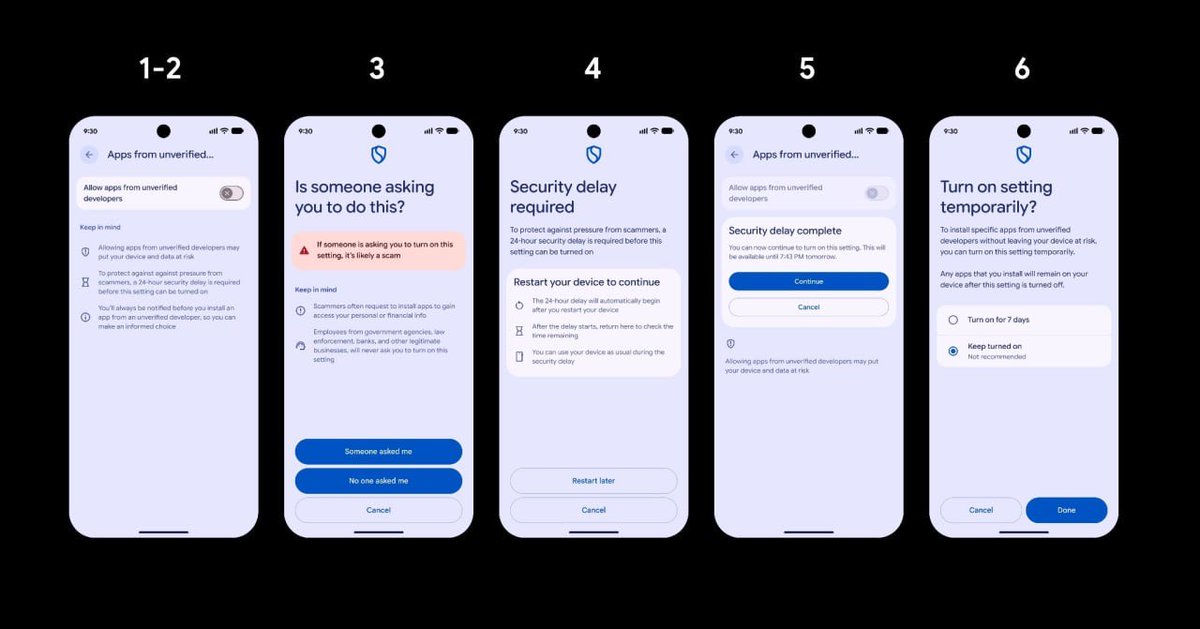
𝗚𝗼𝗼𝗴𝗹𝗲'𝘀 𝗲𝗻𝗱𝗶𝗻𝗴 𝗮𝗻𝗼𝗻𝘆𝗺𝗼𝘂𝘀 𝗔𝗻𝗱𝗿𝗼𝗶𝗱 𝗮𝗽𝗽 𝗱𝗲𝘃𝗲𝗹𝗼𝗽𝗺𝗲𝗻𝘁. 𝗔 𝗿𝗲𝘀𝘁𝗮𝗿𝘁 𝗮𝗻𝗱 𝗮 𝟮𝟰-𝗵𝗼𝘂𝗿 𝘁𝗶𝗺𝗲𝗿 𝗻𝗼𝘄 𝘀𝘁𝗮𝗻𝗱 𝗯𝗲𝘁𝘄𝗲𝗲𝗻 𝘆𝗼𝘂 𝗮𝗻𝗱 𝗮𝗻 𝘂𝗻𝘃𝗲𝗿𝗶𝗳𝗶𝗲𝗱 𝗔𝗣𝗞.
To sideload an app from an unverified developer, users now have to enable a special mode in settings, restart the phone, and wait out a one-time 24-hour period before installing. ADB installs stay unaffected — this targets the average user, not developers.
Enforcement starts September 30, 2026 in Brazil, Indonesia, Singapore, and Thailand — markets Google specifically flagged for high app-scam rates. Global rollout follows in 2027.
Framed as anti-scam protection. Also, quietly, the end of anonymous app distribution on Android.
𝗨𝗻𝗶𝘁𝗿𝗲𝗲 𝘀𝗽𝗲𝗻𝘁 $𝟰𝗠 𝘁𝗲𝗮𝗰𝗵𝗶𝗻𝗴 𝗮 𝗿𝗼𝗯𝗼𝘁 𝘁𝗼 𝗼𝘂𝘁-𝗱𝗿𝘂𝗺 𝗽𝗿𝗼𝗳𝗲𝘀𝘀𝗶𝗼𝗻𝗮𝗹 𝗱𝗿𝘂𝗺𝗺𝗲𝗿𝘀 𝗶𝗻 𝗿𝗲𝗮𝗹 𝘁𝗶𝗺𝗲.
No pre-programmed loops. The G1 humanoid trained neural motor control from scratch, processing dynamic feedback on the fly to hit exact percussion velocity and timing at the microsecond level.
This isn't choreography. It's a robot reacting to sound the way a drummer's spine does.
The most telling detail in OpenAI's new teen ChatGPT isn't the parental controls. It's that they're actively trying to stop it from becoming a kid's best friend.
The dedicated 13-17 experience shifts from "here's the answer" to "let's actually learn this" — Study Mode pushes reasoning instead of copy-paste answers. Parents get linked accounts, quiet hours, memory and privacy management, and alerts in serious situations.
But the real signal is the explicit goal: encourage real-world relationships, not AI-dependent ones. That's OpenAI naming a risk most products would rather not admit exists.
The interesting part of Claude's new /design skill isn't the mockups. It's that "design" and "build" just became the same conversation.
/design brings Claude Design's artboards directly into Claude Code CLI and Desktop. Describe an interface, get several editable layouts, pick one, refine it manually — then ask Claude to turn it into a working interface. No tool switching.
Currently in research preview.
Someone finally asked Sam Altman the question everyone's been avoiding: will OpenAI be remembered the way we remember Napster?
Napster changed an entire industry overnight, proved the model worked, and still got wiped off the map within a few years. It's not a comfortable comparison to sit with if you're the company currently reshaping how the world works.
The full answer is worth watching — this is the kind of question that doesn't have a clean response.
Time just launched an ad format designed for an audience that can't buy anything: AI models.
Instead of banners, brands place structured, fact-based text — content built to be pulled directly into ChatGPT, Gemini, and Claude responses, not scrolled past by a reader.
The shift makes sense once you see the logic: ranking #1 on Google used to be the goal. Now the real prize is being the source an AI model quotes when someone just asks it the question directly.