🗳️ Fee-Switch Referendum #4 Now Live
Vote with ZRO from any chain:
• “Yes” to activate the LayerZero protocol fee
• “No” to keep the protocol fee inactive
Voting concludes June 27, 2026, 00:00 UTC.
🔗 https://t.co/9eXlMkppb1
$260B+ across 830+ OFTs on 170+ chains.
From memecoins to tokenized treasuries to state-issued stable tokens, builders of all shapes use LayerZero, configured exactly to suit their needs. Read more about the Builder Spectrum at the link below.
https://t.co/77sMqimExT
Crypto's next phase will not be won by isolated ecosystems.
The largest interoperability deployment in Cardano's history is coming. Earlier this year, we announced that all of crypto would be connected to Cardano via LayerZero, creating a path for over 800 tokens to natively expand into the Cardano ecosystem.
The complex technical work will roll out in phases, from testnet and mainnet endpoints, to Stargate, to developer tooling that makes it easy for anyone to deploy, to product integrations across the entire LayerZero stack. By the end of this year, any asset will be able to deploy on Cardano.
While this work is in flight, we'll be teaming up with the Cardano teams to share more behind the scenes: a detailed roadmap, a deep dive on our partnership, and co-hosted digital and IRL events for the community.
We're excited for what this work means for both LayerZero and Cardano, and can't wait to share more in the coming weeks.
A connected Cardano. Done right.
https://t.co/ywpxbSRzHH
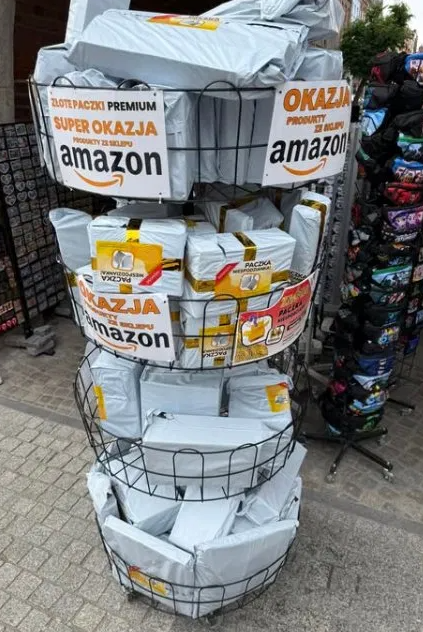
Idziesz przez rynek w Gdańsku, między bursztynem a magnesami stoi stojak. Złote paczki, premium, super okazja, logo Amazona. Zwroty konsumenckie, bierz w ciemno. I nagle łapiesz się na tym, że chcesz zapłacić za coś, czego nie znasz.
To loot box. Żywcem przeniesiony z gier mobilnych do realu. Płacisz nie za produkt, tylko za dreszczyk otwierania. To samo uczucie, które trzyma ludzi przy skrzynkach w grach. Tylko że tu zapominamy o trzech rzeczach.
Pierwsza. To zwykle nie są żadne zwroty z Amazona. Amazon nie sprzedaje paczek klientom detalicznie, od tego ma program Amazon Warehouse, gdzie pojedyncza sztuka idzie po inspekcji i z opisem stanu. Palety ze zwrotów to obrót hurtowy B2B, nie stragan nad morzem. Czyli w wielu przypadkach „zwrot z Amazona” nigdy przez Amazon nie przeszedł, a logo jest tam tylko po to, żeby uwiarygodnić paczkę w oczach turysty.
Druga. Nawet jeśli to realne zwroty, to przebrane. Najpierw wybiera hurtownik, potem kolejne ogniwo, a do ciebie trafia to, czego nikt wcześniej nie chciał. Losowy, tani towar, który ciężko sprzedać nawet za parę złotych.
Trzecia, najważniejsza. Ten sprzęt nie jest ci do niczego potrzebny. Gdyby był, dawno kupiłbyś go świadomie, a nie liczył, że wypadnie ci z pudełka. To czyste chciejstwo udające okazję.
A jeśli myślisz o odsprzedaży, wróć do punktu drugiego. Lepsze rzeczy są dawno wybrane, zostaje trudno zbywalny balast. Ktoś po prostu robi marżę na twoim dreszczyku emocji, a ty wracasz do domu z ładowarką do urządzenia, którego nie masz. 🦥
#EdukacjaFinansowa #MysteryBox #Amazon #ZakupyWCiemno
ZRO Updates
More ZRO has been bought back and locked up than sold into the market. Institutions and buybacks have taken 19.77% of supply in 18 months, while 63.8% of ZRO unlocked to investors still hasn't moved. $112.7M has gone into ZRO buybacks since September 2025, one of the largest programs in crypto.
ZRO is the only asset in the LayerZero ecosystem. All economic value from Zero, LayerZero, and Stargate flows back to it.
Every token expresses a view. ZRO's first was that there'd be many chains, no single winner, and value would accrue to whatever connected them. Now LayerZero has moved $267B across 165 chains.
The next view is bigger. Money and markets are the two largest waves finance will ever see, and both are already onchain. Zero was built for this moment. Coming this fall.
been critical of @LayerZero_Core comms in wake of kelp dao incident but this is exactly what was needed; forensic independent report, full transparency & industry leading security upgrades/practices deployed. Fully confident in LZ now being airtight. Case closed. Faith restored 💪
We’re sharing our completed post-mortem on the April 18th incident, prepared with @Mandiant and @CrowdStrike. We are publishing both an executive summary and the full report at the link below.
Over the past four weeks, we’ve worked with hundreds of partners to help them understand their current security posture, and harden it where appropriate. We’ll continue this work, alongside taking additional proactive steps for the benefit of not only our partners, but also the ecosystem as a whole.
We want to extend our thanks to our partners for their support and patience this past month. There’s a reason that over $12 billion has moved across the network in the past four weeks, and why the world’s most valuable asset issuers have stood by our side: they believe in us, in what the LayerZero protocol has to offer, and in the value of modular, isolated, application-controlled security.
The work continues. And we look forward to continue showing up for the applications that trust us with their business, as well as the broader ecosystem.
https://t.co/7bILN6dPJz
A ton of this is just completely untrue.
1) Kelp originally used the defaults which were MultiDVN or DeadDVN and manually migrated to a 1/1 config later
2) Almost 100% of the volume on a 1/1 config was rsETH
3) Not using a 1/1 for production applications is mentioned many times in the documentation.
The defaults Kelp is referencing in their screenshot were multiDVN or DeadDVN, which force-rejects an application using the defaults at all and requires them to manually set configuration.
rsETH was originally configured to use the default LayerZero configuration of a multiDVN setup of LayerZero Labs + Google:
Here are the exact transactions where that happens
Ethereum → Arbitrum:
https://t.co/C2uCxmpBCX
at 2024-02-06 03:09:47 UTC
Ethereum → Optimism:
https://t.co/vuQWxeyUUA
at 2024-02-06 03:09:59 UTC
KelpDAO then manually changed these to 1/1 configs:
For the original Feb 6 Ethereum routes to Arbitrum/Optimism, KelpDAO’s Ethereum contract switched from defaults to manual OApp-scoped config on 2024-04-01:
Send-side manual config:
https://t.co/HKCE8C8n7F
2024-04-01 07:12:11 UTC
Receive-side manual config:
https://t.co/FZTiol0qAp
2024-04-01 07:12:23 UTC
From this point on, Kelp began deploying all of their configurations as 1/1 configs. Here is Kelp’s deployment on Unichain:
Unichain → Ethereum was opened on 2025-04-01 18:55:41 UTC.
Pathway-open / setPeer tx:
https://t.co/0MlFpIxCfA
The manual ULN config followed 6 seconds later in https://t.co/0di0j78zYc.
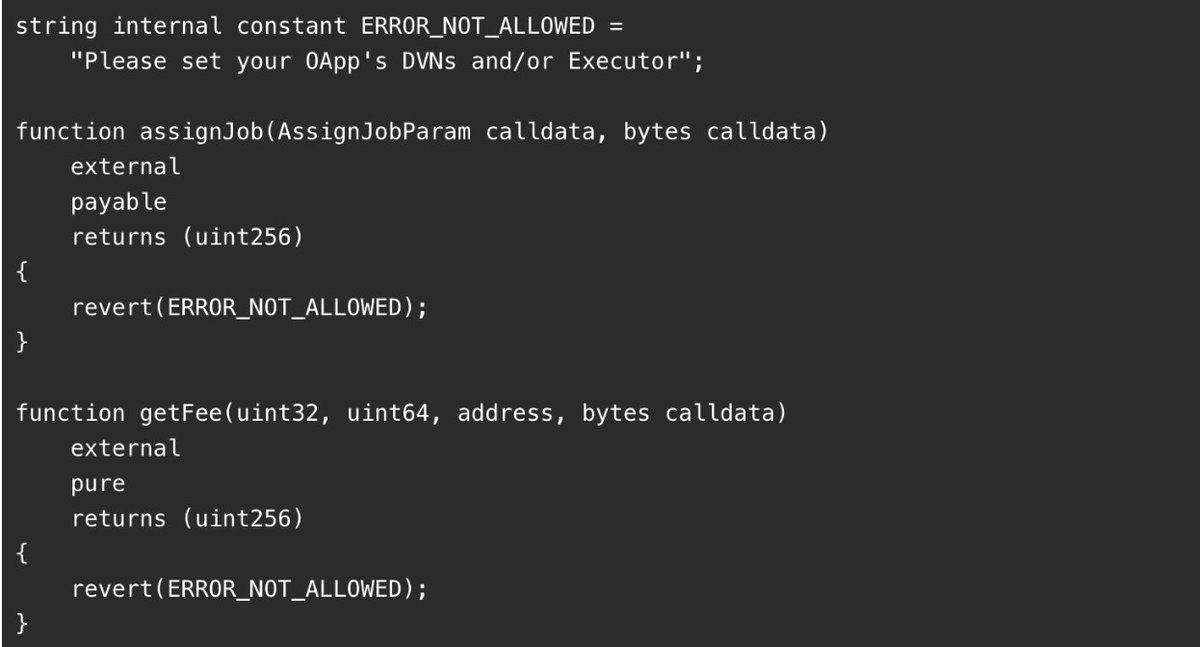
During this time the Unichain -> Ethereum and Ethereum -> Unichain defaults were set to DeadDVN which is a contract which makes it impossible for any application to transact without manually configuring their DVNs, this was not possible on the defaults of this pathway.
Here is the code in the DeadDVN (https://t.co/mAge3W6NhP) that specifically prohibits this.
(Screenshot 1)
This is called out many many times in the docs:
1. Integration Checklist — "Do" list
- Last edited: 2025-11-26 (Nazreen)
- Content: "Do: … Use more than one DVN for each production pathway instead of relying on a single DVN."
- File: v2/tools/integration-checklist.mdx:244
- URL: https://t.co/h9GHby9ynE
2. Integration Checklist — "Don't" list
- Last edited: 2025-11-26 (Nazreen)
- Content: "Don't: … Configure only one DVN for a pathway and treat it as production‑ready."
- File: v2/tools/integration-checklist.mdx:251
- URL: https://t.co/h9GHby9ynE
3. Integration Checklist — Defaults are not safe
- Last edited: 2025-09-25 (Tino Martínez Molina)
- Content: "Do not assume defaults are safe for production. Always check explicitly: getSendLibrary, getReceiveLibrary, and getConfig. If these resolve to defaults, confirm whether the defaults are valid for the intended pathway. Unintentional fallbacks to defaults are a common cause of blocked or failing pathways."
- File: v2/tools/integration-checklist.mdx:126-128
- URL: https://t.co/a6SdjYCbOu
4. Integration Checklist — Default fallback warning
- Last edited: 2026-02-26 (migration; same wording predates it)
- Content: "Warning: If no configuration is set, the OApp will fallback to the default settings set by LayerZero Labs."
- File: v2/tools/integration-checklist.mdx:222-238
- URL: https://t.co/h9GHby9ynE
5. ONFT Quickstart — Production guidance
- Last edited: 2025-02-20 (Radek Sienkiewicz)
- Content: "DVN Settings: Use multiple DVNs in production to ensure message verification is robust."
- File: v2/developers/evm/onft/quickstart.mdx:700
- URL: https://t.co/b8nO2yrEiX
6. ONFT Quickstart — Strong recommendation to configure
- Last edited: 2025-03-10 (Radek Sienkiewicz)
- Content: "We strongly recommend reviewing these settings carefully and configuring your security stack according to your needs and preferences."
- File: v2/developers/evm/onft/quickstart.mdx:366
- URL: https://t.co/WcNuXHLbiG
7. Starknet FAQ — "Should I use multiple DVNs?"
- Last edited: 2026-01-21 (Nazreen)
- Content:
▎ Should I use multiple DVNs?
▎ Recommended for production. Multiple DVNs provide:
▎ - Increased security (multiple independent verifiers)
▎ - Resilience (no single point of failure)
▎ - Trust minimization
- File: v2/developers/starknet/troubleshooting/faq.mdx:290-296
- URL: https://t.co/vtSZUFLZPJ
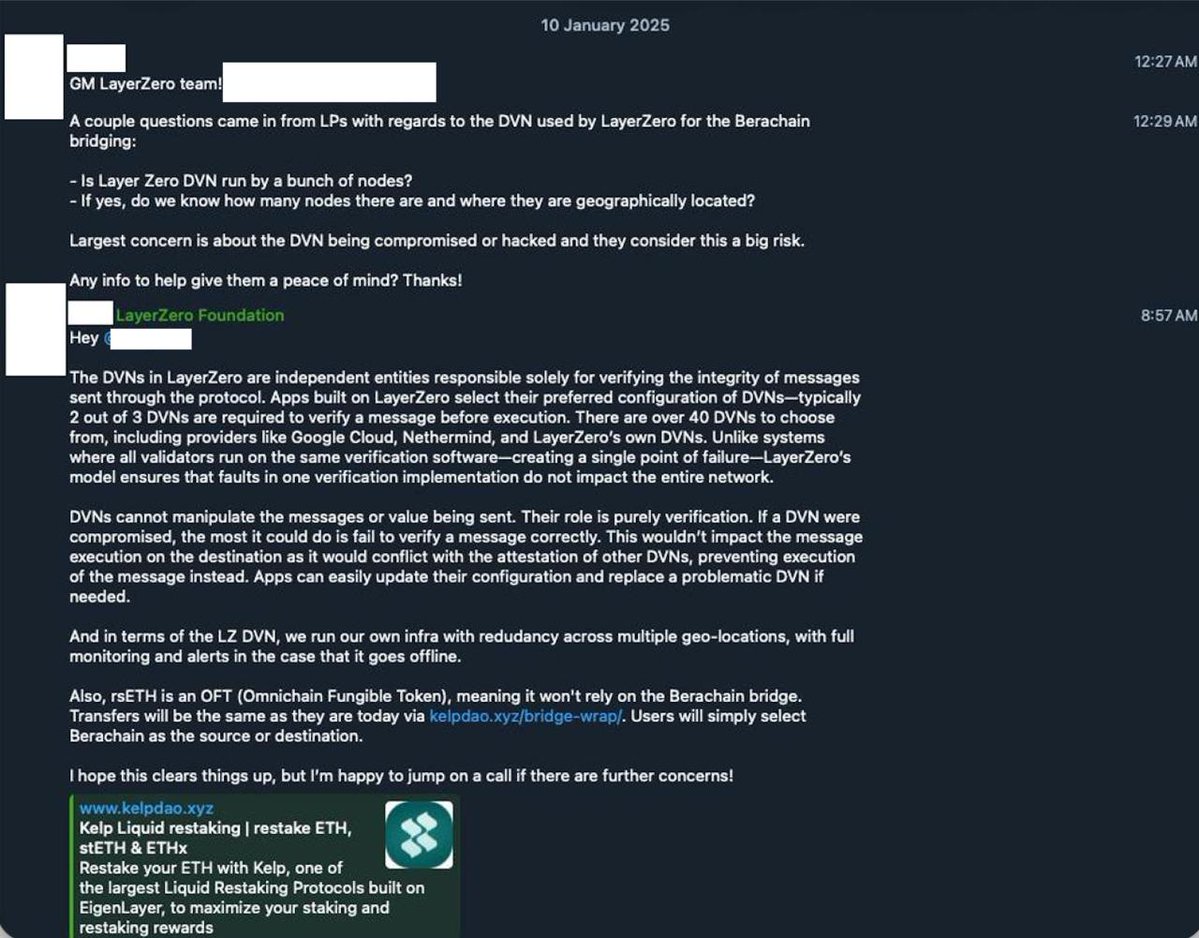
Here are the exact recommendations we gave KelpDAO when asked about DVNs (typically 2/3)
(Screenshot 2)
Other LayerZero applications speaking on exactly what is advised by the team
https://t.co/0ulWmlTZ2y
https://t.co/vQ2B8YQrw9
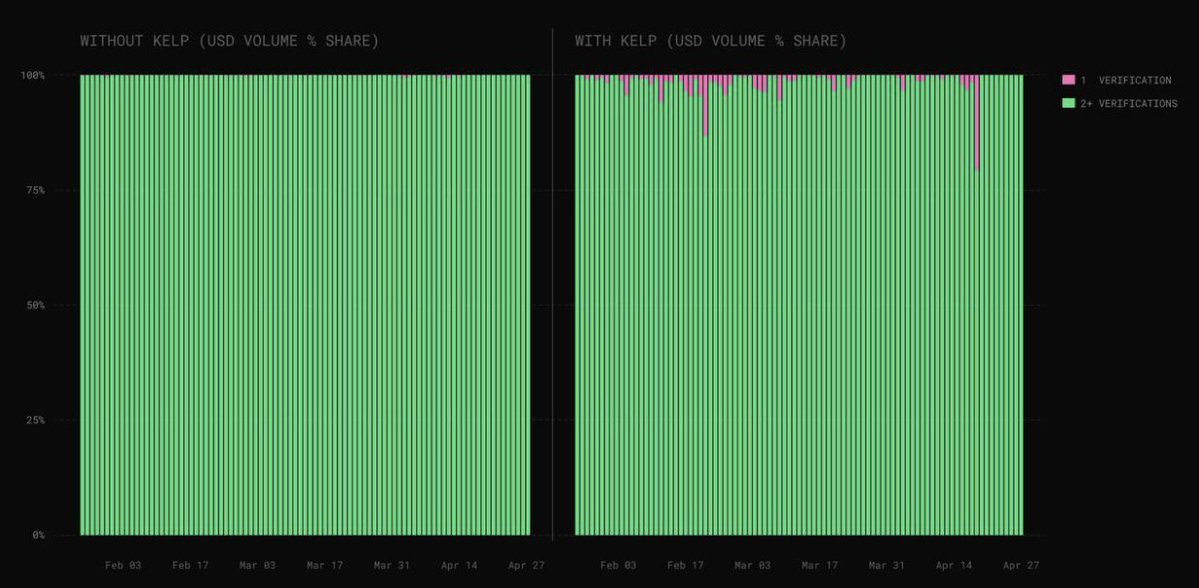
For how much volume was actually configured on 1/1 here is the exact data.
(Screenshot 3)
We will publish a complete post-mortem as soon as the external security firms have completed it.
You absolutely cannot find worse retards in crypto.
- KelpDAO built a $292M bridge secured by one verifier.
- One verifier means one point of failure.
- The ONLY omnichain protocol with huge tvl to do this
- North Korea found it (highest R:R in terms of cost to attack vs amount in contract)
- They poisoned the verifier's data sources and drained the bridge.
- What makes this worse: Kelp started with two verifiers.
- They manually downgraded to one in April 2024. onchain and provable.
- After the exploit, Kelp blamed LayerZero's infra.
- They published charts and screenshots to make it look like everyone did 1/1 setups.
- But the blockchain shows they chose this config deliberately.
- You can't accidentally choose your own security settings.
- They switch to 16/16 validator setup in chainlink
- They deny any form of responsibilty
Root cause now fully on-chain.
The rsETH OFT Adapter on mainnet trusted a LayerZero message from EID 30320, peer 0xc3eACf06…09f58, and released 116,500 rsETH ($293.5M) from escrow in a single lzReceive call.
LayerZero Scan labels that source peer “Kelp DAO.” Meaning it was Kelp’s own legitimately-deployed peer contract, with 308 prior message nonces on that pathway.
This is not setPeer injection. This is key compromise on the source chain.
IMPORTANT: Not a LayerZero protocol bug. An OApp peer-trust bug.
Full forensics, attacker cluster, and Aave bad debt flow in the thread below.
Chômeur : 900€ pour essayer de survivre.
Ouvrier: 1300€ pour survivre
Militaire: 1400€ pour risquer sa vie.
Pompiers: 1800€ pour sauver une vie.
Instituteur : 1600€ pour préparer à la
vie Médecin : 2200€ pour nous
maintenir en vie. Ministre : 18.000€ pour foutre la vie des autres en l'air !!
faite tourner si comme moi vous trouvez cela SCANDALEUX
LLM hallucinations are a massive roadblock to enterprise adoption of AI.
Swift, UBS, Euroclear, & 20+ major organizations advanced a solution to the $58B+ annual corporate actions problem by leveraging Chainlink to reduce AI hallucination risk.
LINK everything.