New from me + @razhael: In the process of investigating the Hugging Face hack, OpenAI found evidence that some its other AI agents broke out of their sandboxes, per sources. The company is now widening its probe to include those newly found incidents.
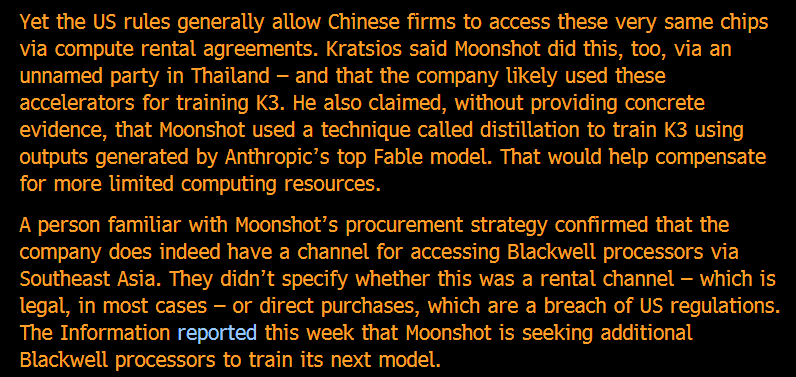
It's so funny that Chinese open source companies, when faced with a lack of Nvidia chips (due to restrictions) just use datacenters in South East Easia instead https://t.co/lj3x7snz32
Sources: Eric Trump-backed Space-Eyes, which develops AI-powered defense tech for the public sector, agrees to go public via a SPAC merger at a $638M valuation (Reuters)
(Visit Techmeme dot com for the link and full context!)
Out of the box, long-horizon agents struggle to accurately perform end to end work in the real economy (outside of coding) because those tasks are not easily verifiable, the data is hard to scale, and going from inputs to real outcomes can actually take many days.
Even if you had a reliable way to verify outcomes at scale (and weren’t bothered by the multi-hour iteration loops), the sheer volume of decisions by the agent that occur in a multi-hour job makes it hard to know whether performing well will generalize to production.
Over the last two years at @trybasis, we've been solving this problem by supervising the process our agents take to get to outcomes, rather than just looking at whether the outcome itself is correct.
We think this is the key to building production agents at scale.
It's what has allowed us to run agents in production that operate for hours, sometimes days, and reliably perform tasks like entire complex tax returns end to end.
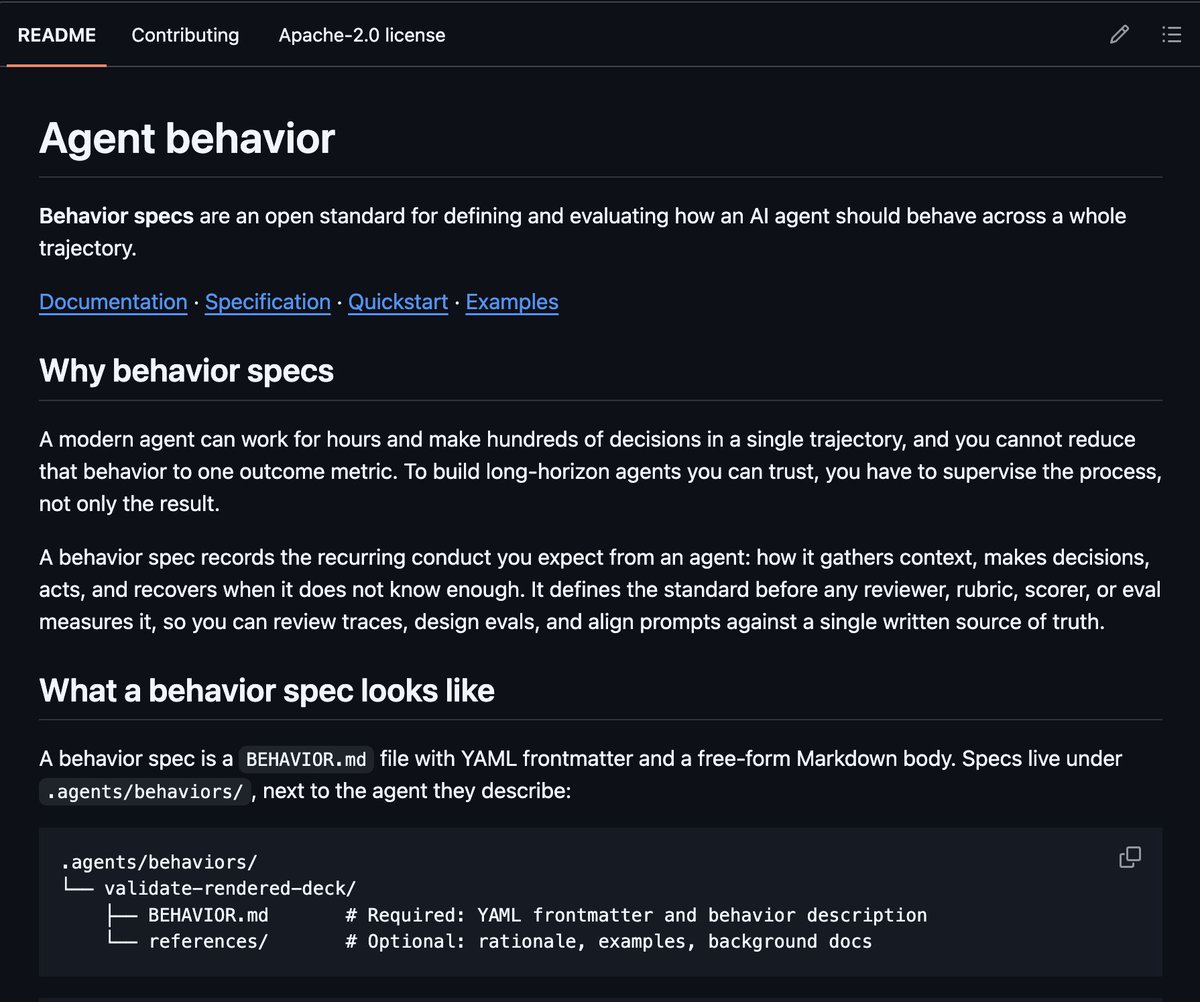
Today, alongside @braintrust, we're open sourcing a standard for defining, evaluating, and eventually rewarding agent behaviors.
Thread below with all the details on how we’re scaling behaviors to close the loop for long-horizon agents.
We are committed to pushing the model frontier across cost efficiency, capability, and speed.
Starting today, we are reducing prices for GPT-5.6 Luna by 80% and GPT-5.6 Terra by 20% , and offering a faster option for GPT-5.6 Sol in the API.
Luna and Terra’s lower prices are reflected in how usage is counted in Codex and ChatGPT Work, so your usage goes further.
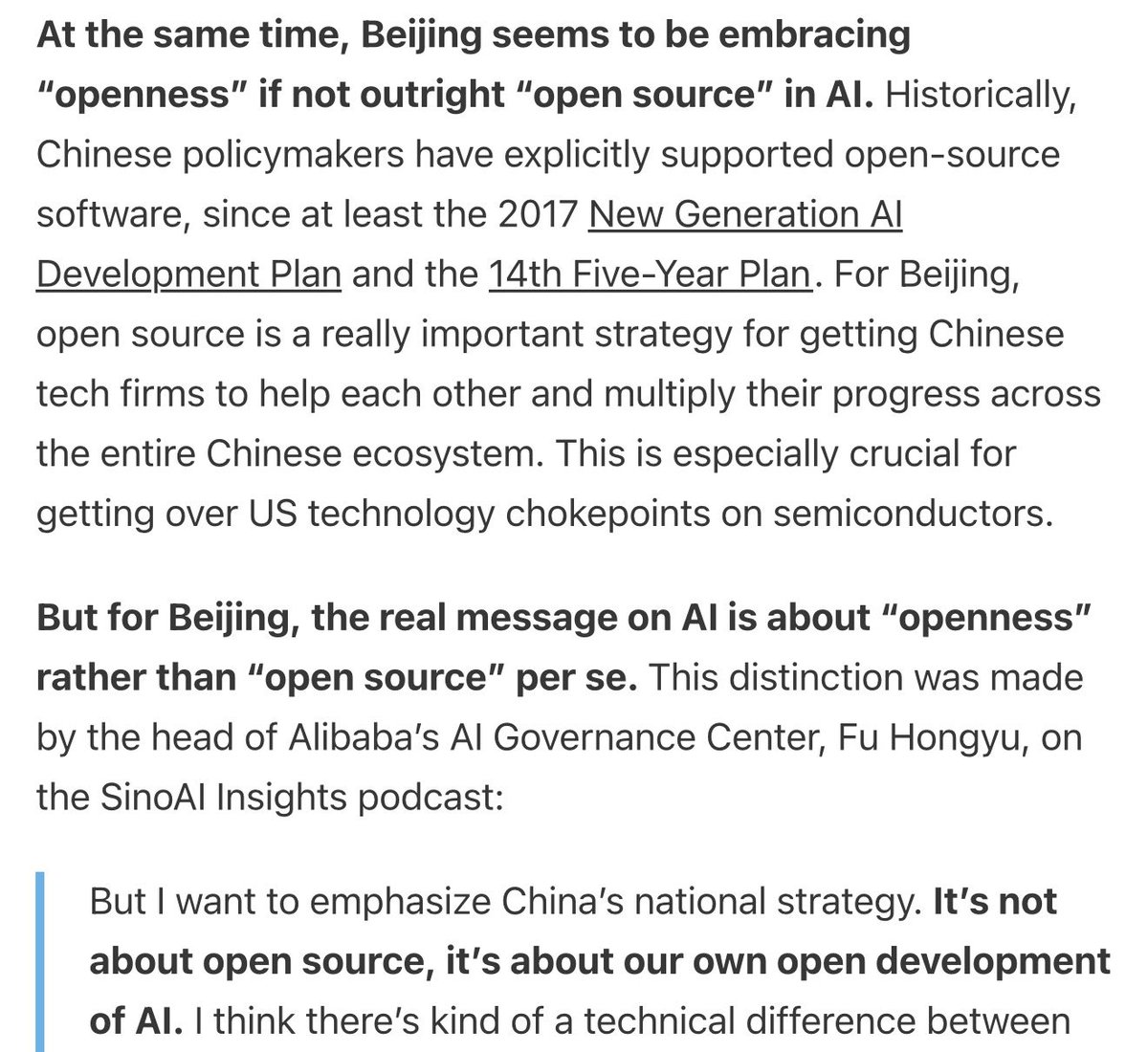
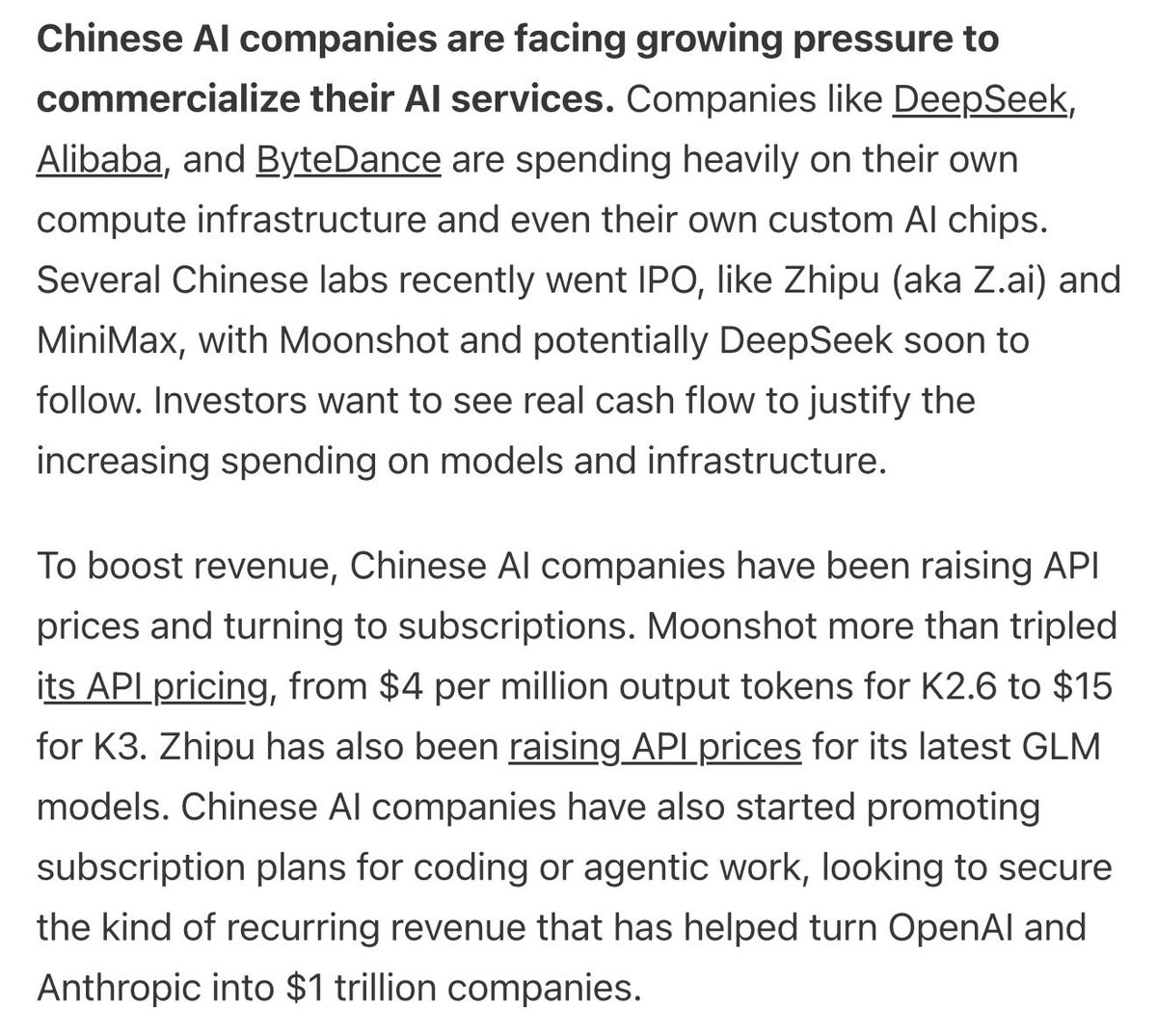
China may shift to a hybrid strategy on AI, closing top models while open-sourcing the rest.
Why? Chinese AI companies are facing growing pressure to commercialize. And Beijing is taking some AI risks more seriously.
Read my piece: https://t.co/GcHPEHhAGB
Cargo rockets!
Everyone in the comments is talking about defense, no one is talking about organ donations. But this will revolutionize organ donations, manufacturing spare parts, and much more.
Very proud that we at @lunar_vc invested in the first round!
Spending a week with my family and working most of it! Being a few hours ahead of US markets has given me some time to digest a lot of incredible markets discourse on X - there is too much to try and consume about AI but not enough about leverage. We are seeing a classic head hunt of the most levered players in the equity and convert market re AI globally. Hyperscaler and associated credit spreads in IG are wider as they should be (portfolio construction by notional and duration matter in credit because we don’t have the payout that equity does) and debt is being added to compute and power as another constraint on the AI theme. Govt regulation remains a massive wildcard but a longer cycle isn’t necessary a worse one. I would look for the forced sellers of assets trading at or below contract value with counterparties you feel good about that have positive optionality on growth opportunities. Think about the impact on spot and next 1-2 year curves for compute, power, and shell - those who are long and don’t need financing + can term out contracts now are materially advantaged. If this is the whole cycle being elongated and the curve flattened there are a lot of interesting securities to buy from forced sellers. More time for competition and technology to emerge in the intermediate term isn’t necessarily a bad thing for many infrastructure assets. I started my career in the middle of the early 2000s telecom cycle - Nortel, Lucent, Cisco, etc were financing their customers. There have been some very astute comments on this platform from people who understand the AI echosystem far better than I do about Nvidia and Broadcoms business model decision to become the working capital bank of the AI build - bridging the industry to revenue and cash flow. My sense is the focus in credit markets right now is too much on Meta Google Amazon etc and not enough on that business model change which liquifies the compute roll out in the near term and shifts the credit risk to those large semiconductor companies. It’s fun to seeing liquidity having a price again and god forbid IG companies cost of debt having to compete with their cost to equity.