We need Michiganders like @AmbBridgetBrink who will fight for their fellow citizens in Mi-7 and in Washington. (She will be in DC June 10 - DM me) Let’s all Dream https://t.co/2ctTvxC3nc via @YouTube
Congrats to OFAC and @USTreasury for publishing an intro to OFAC and US sanctions compliance. Outreach efforts like this are a major service to the small- and midsize business community, not to mention individuals who might have family, etc. in sanctioned countries.
Trump’s OPM wants to impose NDAs across the fed workforce. It isn’t really about protecting “confidential government information.” It's about intimidation and making public servants think twice before exposing misconduct, waste, abuse, or criticism the administration doesn’t want the public to hear
Thrilled to have an article in the Journal of Law & Geoeconomics unpacking the economic security elements of Trump's finalized "agreements on reciprocal trade." Key takeaways:
1. On paper, the economic security provisions are extensive. They cover potential collective tariffs on China; cooperation on export controls/sanctions/investment screening; using trusted vendors in telecom network infrastructure; investment opportunities in/cooperation on strategic sectors such as critical minerals; and, with several but not all partners, reductions in US Section 232 (national security) tariffs. Japan, Korea, and Taiwan also committed to government backing for investments in strategic sectors in the US.
2. Some provisions are more detailed than others. The export control provisions in the Taiwan ART, for example, are reasonably detailed. Some of the other provisions, such as US commitments to pursue financing for joint projects (e.g., DFC financing) are more general/aspirational.
3. Some provisions could be robust if the U.S. government actually takes an action. For example, tariff cooperation provisions generally provide that if the US imposes a tariff on a third country (e.g., China) due to US economic or national security, the trade partner shall impose a measure of equivalent impact. But if the US never imposes new tariffs on China (or does not trigger the mechanism), countries don’t have to act.
4. Many provisions reflect the Trump's overall hegemonic view of the world: They impose a one-way requirement on foreign governments to do something (such as raise tariffs on China) at the US request, but do not oblige the US to take actions our trade partners ask of us.
5. It remains TBD how these provisions are implemented. While we have final texts with a number of countries, no agreements have been fully implemented and some have raised political controversy abroad (e.g., the Malaysia deal). Here in the US Trump does not plan to submit any of these agreements to Congress and so their US staying power post-Trump is also TBD. (I bet many of the economic security provisions endure, even if modified).
6. Deals finalized to date are with comparatively small countries (e.g., Guatemala), or countries heavily dependent on the US strategically (Taiwan), or both (Argentina). Tactically it makes sense for USTR to nail down these provisions with countries where the US has leverage and to then try to expand them to more economically important countries (EU, etc.). But it remains to be seen if larger countries agree to the same terms.
7. I give USTR credit for taking concepts that have been kicking around in think tank/academic circles for a few years—integrating national security topics like export controls and CFIUS into trade agreements; using trade agreements to try to create collective tariff walls—and trying to turn them into negotiated text. I look forward to seeing how they play out.
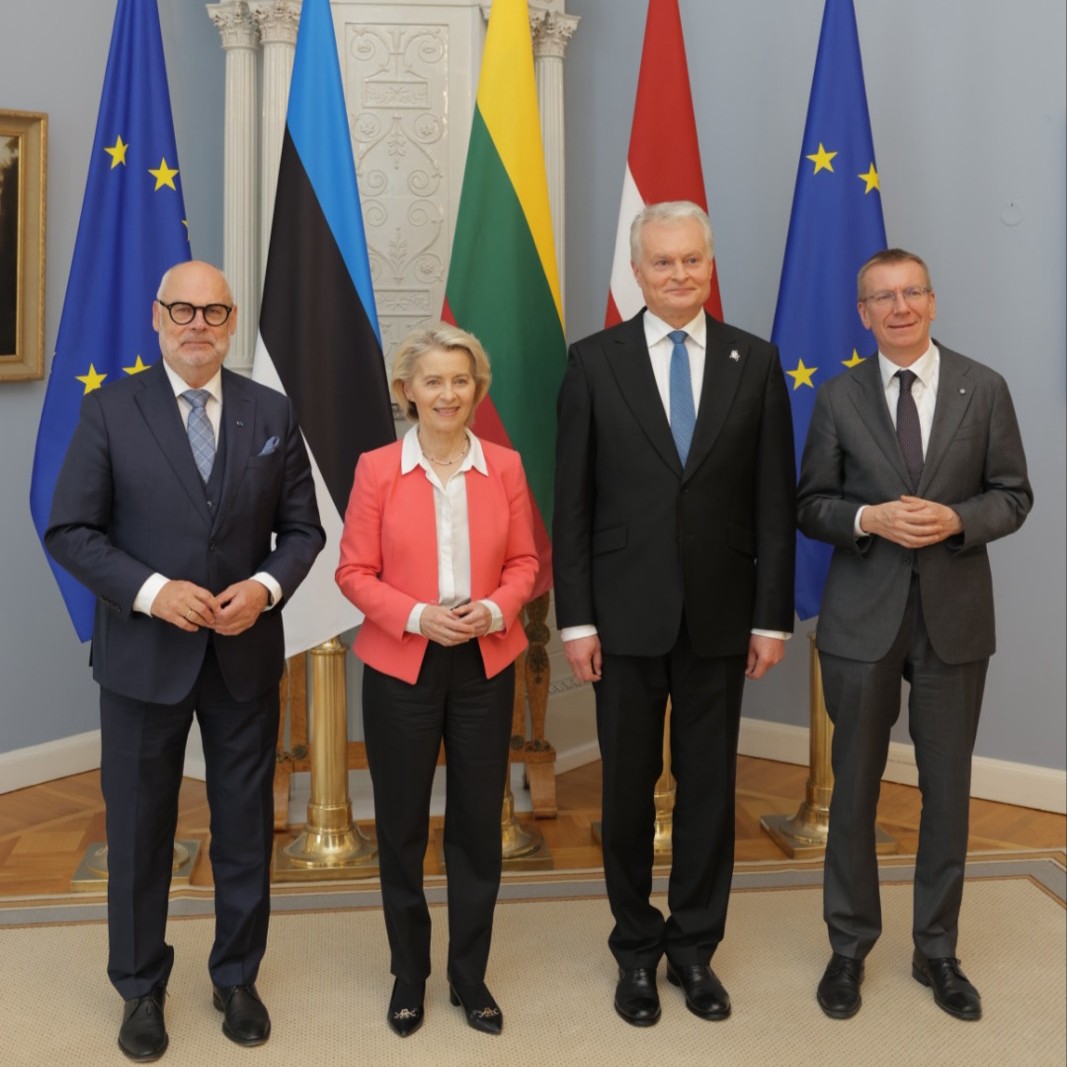
I’m in Vilnius to send a clear message:
Europe stands in full solidarity and unity with Estonia, Latvia and Lithuania.
And we are stepping up our support.
Because when Baltic States are being tested, Europe as a whole is being tested.
Pathetic. Administration’s approach was doomed from the start. They didn’t understand or care about the cause of the war, started by demanding UKR give up territory, never acknowledged that Russia was the aggressor, bragged about slashing aid for UKR. How embarrassing.
Lithuania has issued an air alert in parts of the country after a suspected drone approaching from Belarus was detected near the border. NATO Baltic Air Policing has been activated.
Shout out to Spring 2026 intern, Clara Hastings, and her article: The Changing Role of Diplomacy in Georgia. She interviewed Academy members to reflect on their time in the Caucasus region
https://t.co/Pc0AEhX2cQ
The Trump Admin yesterday suffered another court loss related to its ICC sanctions, losses that have potentially broader ramifications. Unpacking the developments:
1. Yesterday the U.S. District Court for D.C. ruled that the State Department's July 2025 sanctions against Francesca Albanese, an advocate who urged International Criminal Court (ICC) war crimes investigations into Israel, violated the First Amendment. After dealing with complex standing issues, the Court ruled that the government had targeted Albanese because of her political speech, and that doing so violated the First Amendment. The court enjoined the sanctions.
2. Yesterday's case follows two cases last year involving U.S. law professors who argued that they had a constitutional right to continue providing certain speech-related services, including expert testimony and training activities, to the ICC. Two different District Courts agreed, and in one case, Rona v. Trump, specifically ruled that the professors could continue to submit evidence, arguments, and amicus briefs to the court; advocate on behalf of the ICC; communicate with the ICC to facilitate job placements; draft policy documents and white papers for the ICC's Office of the Prosector General; and provide various other guidance and advice to the ICC.
3. These cases follow successful litigation during Trump's first term against Trump's use of sanctions authorities to ban the U.S. distribution of TikTok and WeChat. (Following that litigation, in 2024 Congress passed separate legislation that would have banned TikTok had its Chinese owners not divested most of it).
4. The cases raise interesting questions about the scope of First Amendment and Berman Amendment provisions with respect to sanctions. (Berman is a set of provisions in IEEPA, the sanctions statute, that protect the free flow of ideas and information). For example, the U.S. government has long taken the position that a U.S. company cannot "negotiate" with a sanctioned company about a potential business deal, even if "negotiations" do not involve signing a document or otherwise create legal rights. At least on the surface, there seems to be some tension between that and the Court's order in Rona. (Yes, commercial speech is legally different from political speech, but it also has constitutional protections).
5. I also think the cases potentially raise interesting questions about whether sanctions can lawfully prevent a U.S. company, such as an IT company, from transferring data or information such as emails, documents etc. to a sanctioned foreign company. As anyone following the Iran war online can see, X (and other social media platforms) generally already take the view that sanctions do not prohibit them from providing free social media platform services to sanctioned individuals.
6. It will be interesting to see if we get more litigation and how the courts react if/as they--rather than just regulators and the sanctions bar--interpret U.S. sanctions.
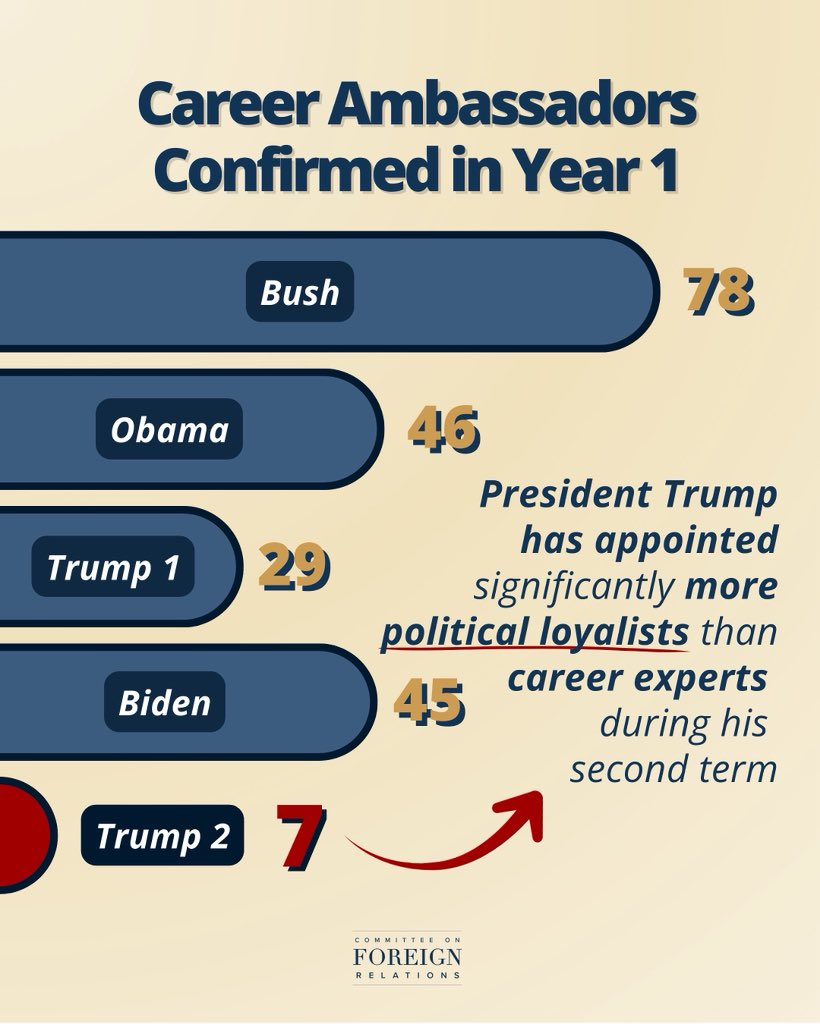
These vacancies aren’t normal.
President Trump has recalled an unprecedented number of qualified, career ambassadors and has nominated an unprecedented number of political loyalists.
Trump meets with Xi today from a position of weakness because he has gutted our diplomatic presence around the world.
Meanwhile, China fields ambassadors in almost every country. A thread 🧵 on the implications ⬇️
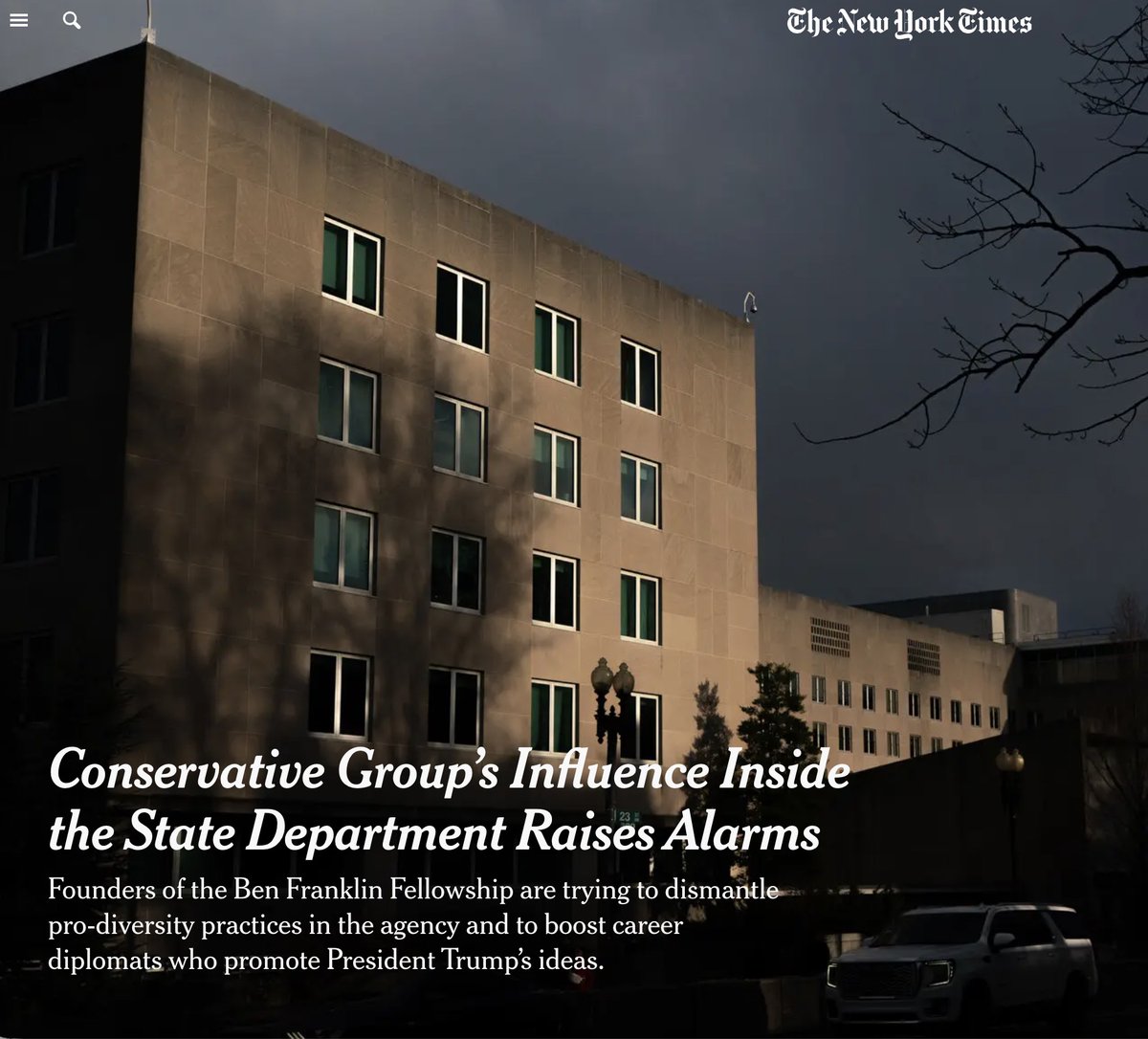
American diplomats shouldn't feel they need to pass an extreme right-wing purity test to serve in the @StateDept—especially apolitical public servants with vital expertise.
@RepGregoryMeeks is demanding answers on the Department's relationship with the Ben Franklin Fellowship👇
NEW from @nytimes: Democratic lawmakers have sent Rubio a letter asking about the sway of a conservative group, the Ben Franklin Fellows, inside the State Dept. The group boosts career diplomats with Trumpian ideas — despite the non-partisan culture of the foreign service.
In a statement issued on May 6, 2026, the Academy strongly opposes the decision of the U.S. Department of State to implement the “reduction in force” (RIF) of more than 200 Foreign Service personnel announced on May 4. https://t.co/Gpr1sMVKGF
AAD members Ambassadors George Kent and Daniel Rosenblum join Kelly Adams-Smith and Michele Kelemen to discuss the recent surge in State Department retirements. Rosenblum asks, "How bad will the damage be, and how long will it take to recover?" https://t.co/TpWIk1a1mf
On Tuesday, May 5, the State Department separated more than 200 Foreign Service members under the reduction in force first announced last July, even as it continues to recruit and onboard new officers.
Read our statement: https://t.co/72GAIMDWhY
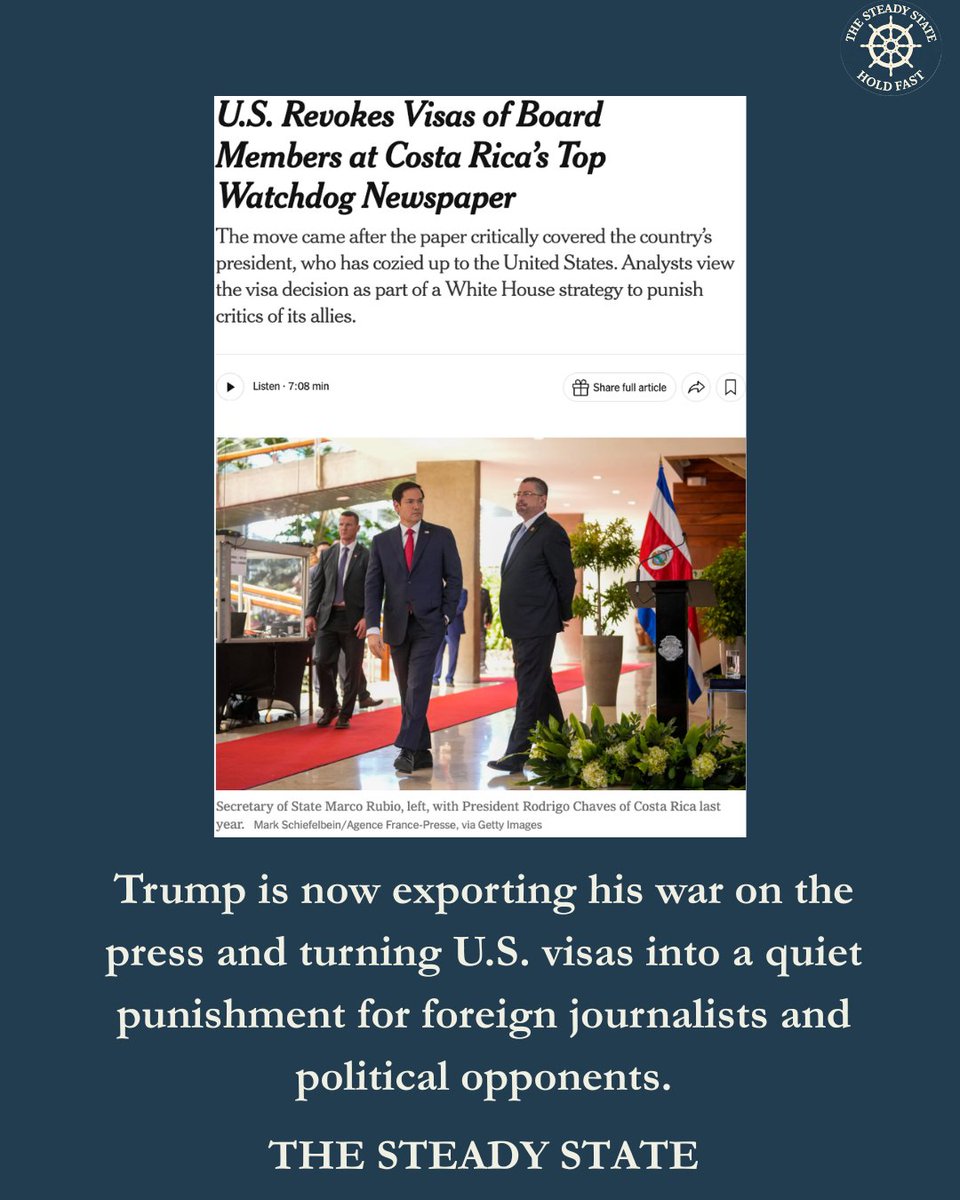
The Trump administration just revoked U.S. visas for 5 of 7 board members at La Nación, Costa Rica’s top watchdog newspaper, after it exposed President Rodrigo Chaves’ sexual harassment record and corruption. Trump is now exporting his war on the press and turning U.S. visas into a quiet punishment for foreign journalists and political opponents.
https://t.co/fQDWomonbf
For more on the broader pattern of governments treating independent journalism and critical reporting as political threats to be punished rather than protected, see the Substack piece, “Episode Summary: Shane Harris on Intelligence, Journalism, and a Changing America.”
https://t.co/fa5zhHb64A
The State Department has officially terminated hundreds of Foreign Service Officers who are qualified, trained, and have years of experience.
These officers took an oath to serve our country and dedicated their lives to advancing our nation’s values. President Trump’s reorganization of the State Department is not making us stronger or safer.
Rubio’s refusal to properly honor Foreign Service Day & the 300+ FSOs who died while serving, is an affront to their service.
Now, he's firing 250 of these non-partisan civil servants while we are in the middle of a war that is testing our alliances & endangering Americans around the world.
This will only further weaken America on the global stage.
https://t.co/Uxc20TFJ2e
1/ Rubio's @StateDept is forcing out career diplomats with critical national security expertise, while at the same time conducting a new recruitment campaign that seeks to replicate the Department’s well known record of historical exclusion.