Strengthening Internal Investigations & Response Frameworks
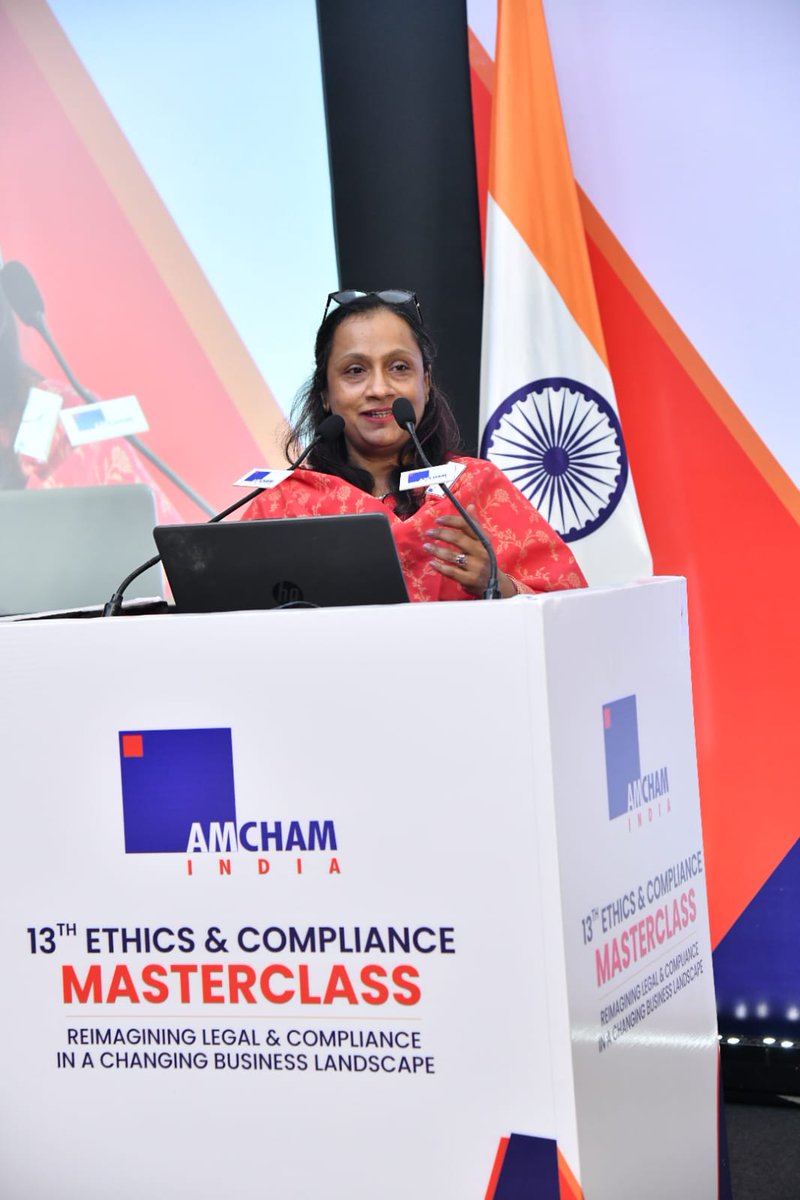
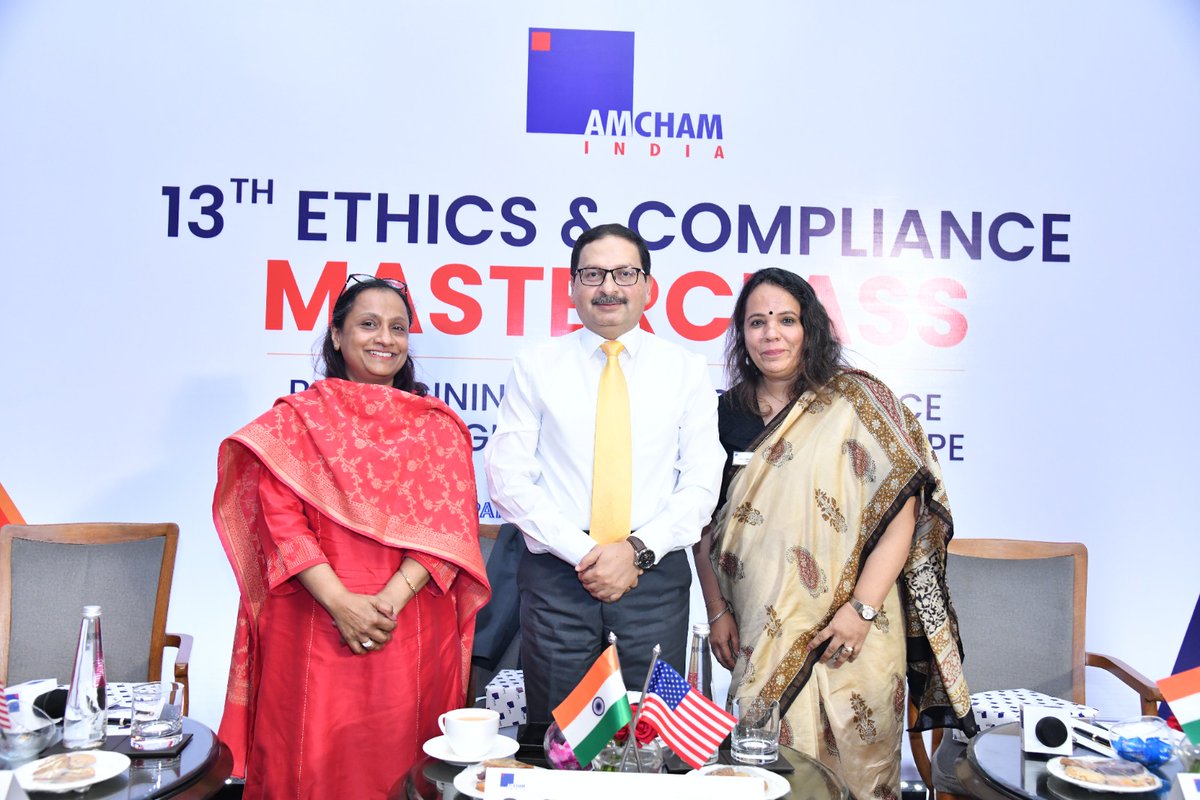
At AMCHAM India’s 13th Ethics & Compliance Masterclass, themed ‘Reimagining Legal & Compliance in a Changing Business Landscape,’ a panel explored ‘The Modern Investigation: People, Process, Technology and the Evolving Compliance Landscape.’
The discussion focused on the evolving role of in-house counsel, business continuity, information preservation, and how AI and technology are accelerating investigations and enabling proactive compliance.
The institutional takeaway: As regulatory scrutiny becomes more sophisticated, organizations need agile, technology-enabled investigation frameworks that strengthen governance, resilience, and accountability.
#AMCHAMIndia #EthicsAndCompliance #InternalInvestigations #Compliance #CorporateGovernance
Satyajit Gupta EXL| Dr. Deepak Yadav (DMS) Kenvue GCC| Megha Janakiraman Pfizer| Damandeep Kaur TP in India & APAC| Priyank Ladoia AZB & Partners
Navigating Geopolitical & Regulatory Uncertainty
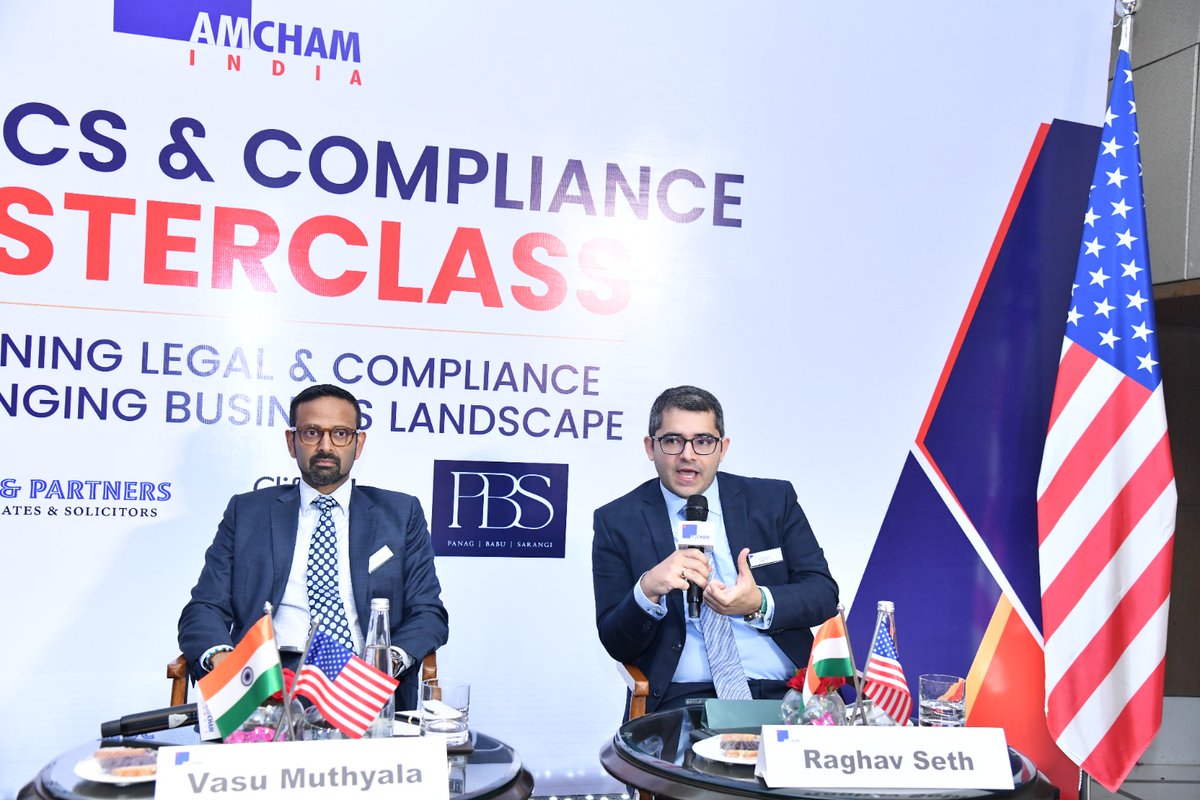
At AMCHAM India’s 13th Ethics & Compliance Masterclass, themed ‘Reimagining Legal & Compliance in a Changing Business Landscape,’ Mr. Raghav Seth, Partner, AZB & Partners, Mr. Asif Ahmed, Partner, AZB & Partners, and Mr. Vasu Muthyala, APAC Regional Head - Investigations and White-Collar Crime Practice, @Clifford_Chance, explored the implications of shifting geopolitics and an evolving enforcement landscape.
The conversation focused on export controls, sanctions, changes in law and force majeure and how regulators and courts in India and the US deal with such issues. The discussions also covered the need for greater diligence in cross-border contracts, regulatory obligations and multi-agency coordination.
As geopolitical dynamics reshape business, legal and compliance are becoming critical to building resilience and navigating complexity with confidence.
#AMCHAMIndia #EthicsAndCompliance #LegalAndCompliance #Geopolitics #RiskManagement
Geopolitics is increasingly becoming a core compliance consideration for global business.
At AMCHAM India’s 13th Ethics & Compliance Masterclass themed ‘Reimagining Legal & Compliance in a Changing Business Landscape,’ a fireside chat between Mr. @SafiAhsanRizvi , Risk Analyst & Geo-Strategist, Former Special Director, Intelligence Bureau, Ms. Bhawna Ranganadhan, Chairperson – Ethics & Compliance Committee, AMCHAM and Sr. Vice President & Deputy, General Counsel, Legal Compliance, Genpact, and Ms. Piya Haldar, Co-Chairperson – Ethics & Compliance Committee, AMCHAM and Chief Compliance Officer, India, Global Compliance Assurance Leader, Honeywell Technologies, on ‘The Geopolitics of Compliance: From Risk Control to Strategic Resilience’ examined how global shifts are reshaping the compliance agenda.
The discussion focused on the intersection of sanctions, export controls and trade restrictions, and their implications for supply chains, and third-party risk.
It also explored intelligence-led early-warning approaches to identify emerging risks, alongside responsible AI adoption, and effective governance guardrails.
The takeaway: geopolitical awareness is becoming integral to building resilient, forward-looking compliance frameworks.
#AMCHAMIndia #EthicsAndCompliance #Geopolitics #Compliance #StrategicResilience
AMCHAM India’s 14th Healthcare Conference in Hyderabad is underway, bringing together healthcare leaders around the theme ‘Shaping the Future of Healthcare: Innovation, Collaboration & Global Impact.’
Today’s conversations focus on healthcare priorities, innovation from India to the world, and translating breakthrough ideas into impact at scale—advancing the shared goal of healthcare for all.
A timely platform for industry, government, and stakeholders to exchange perspectives and shape a more inclusive, resilient, and future-ready healthcare ecosystem.
Thanking our partners for their continued support in enabling this important dialogue: @enGenGlobal | @Medtronic | @providence India| @Evernorth Health Services| Futurewerk
#AMCHAMIndia #Healthcare #HealthcareForAll #Innovation #Collaboration
AMCHAM India’s 13th Ethics & Compliance Masterclass is bringing together senior leaders and legal, compliance, and business practitioners for a timely conversation on ‘Reimagining Legal & Compliance in a Changing Business Landscape.’
From geopolitical and regulatory uncertainty to AI, investigations, supply chain risks and corporate accountability, today’s discussions are examining how organizations can navigate complexity while building trust, resilience, and responsible growth.
A day of practical insights, candid conversations and forward-looking perspectives on the evolving role of legal and compliance.
Thanking our partners for supporting this important platform and enabling meaningful industry dialogue: AZB & Partners, @Clifford_Chance| Panag, Babu & Sarangi and @kenvue.
#AMCHAMIndia #EthicsAndCompliance #LegalAndCompliance #USIndiaPartnership
Congratulations to AMCHAM’s Chairman, Mr. @SalilAnilGupte, on @Boeing's remarkable accomplishment. A proud milestone that reflects strong leadership, innovation and the continued impact of U.S. industry in South Asia.
@Boeing_In
Congratulations to Boeing and Biman Bangladesh Airlines on their agreement to acquire 11 additional aircraft from the world’s leading commercial lineup. A genuine win-win.
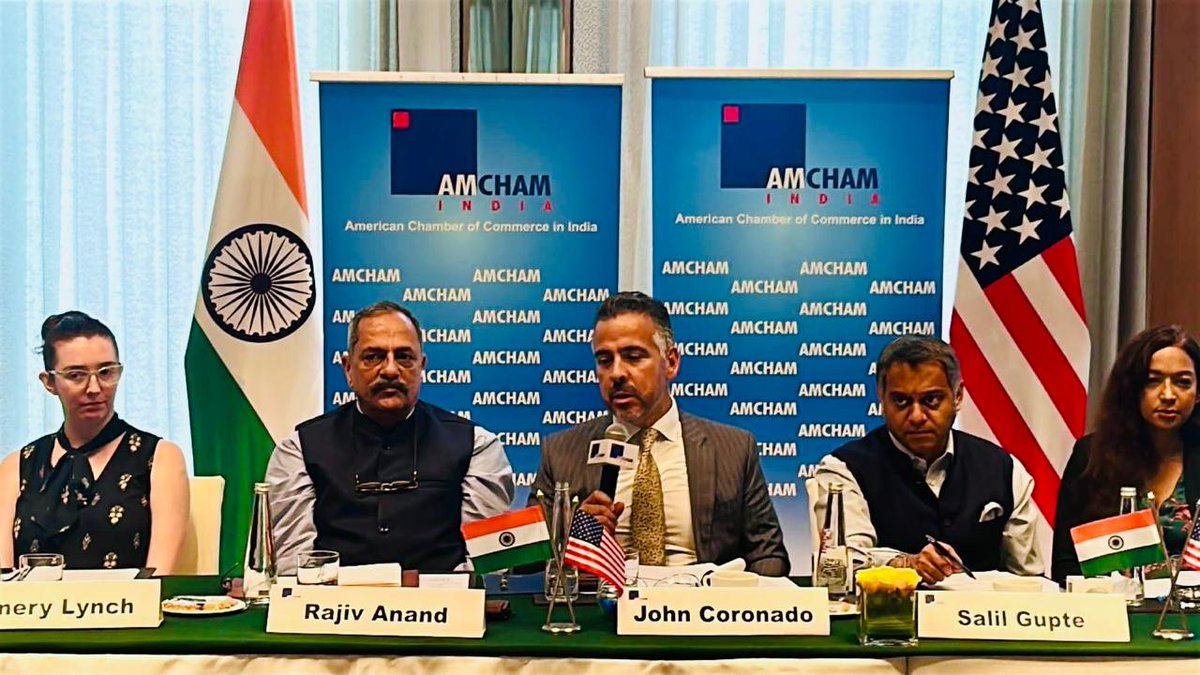
AMCHAM hosted a closed-door roundtable with the new Minister Counselor for Commercial Affairs, John Coronado, U.S. Embassy, to share market access challenges, trade barriers, and the overall ease of doing business in India. The discussion with U.S. industry covered agriculture and food processing, BFSI, civil aviation, cyber security, ICT, infrastructure, manufacturing, MedTech, pharmaceuticals, supply chain and logistics, and taxation. AMCHAM is committed to strengthening the bilateral economic partnership together and excited to have Mr. Coronado as our Honorary National Executive Board member!
#USIndiaPartnership #USIndia #AMCHAMIndia
@USAndIndia@ExportGov
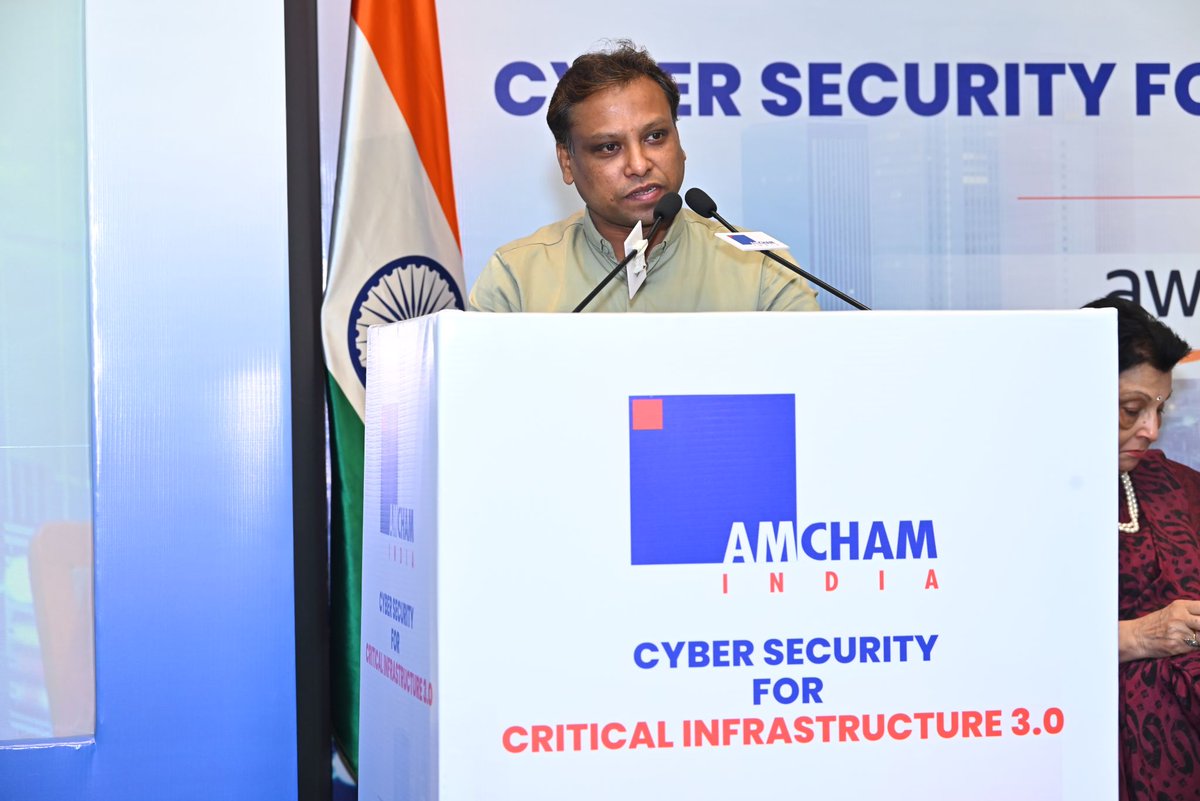
Building Cyber Resilience for a More Secure Digital India: At AMCHAM’s conference ‘Cyber Security for Critical Infrastructure 3.0’ Maj Gen (Dr) Pawan Anand, AVSM (Retd), Director, Centre for Emerging Technologies for Atma Nirbhar Bharat (USI-CETANB), delivered a special address on ‘AI-Driven Cyber Resilience for Critical Information Infrastructure.’ His message resonated strongly with AMCHAM’s focus on building trusted, secure, and resilient digital ecosystems through industry–government collaboration.
ANTICIPATE → MONITOR → RESPOND → LEARN → REPEAT
🔹 AI-enabled, human-governed: Harness AI while keeping accountability and human judgment at the core.
🔹 Resilience by design: Use architectural segmentation to strengthen critical systems and contain threats.
🔹 Secure yet interoperable: Build national cyber resilience while enabling trusted global connectivity and collaboration.
For AMCHAM, strengthening critical infrastructure security is not only about technology—it is about fostering innovation, strengthening public-private partnerships, and building the trust needed for India’s digital future. The imperative is clear: anticipate threats, adapt continuously, and build resilience before disruption occurs.
#AMCHAMIndia #CyberSecurity #CriticalInfrastructure #CyberResilience #AI #NationalSecurity #DigitalResilience #PublicPrivatePartnership #USIndiaPartnership
Securing the Power Grid Means Securing India’s Digital Backbone.
Speaking at AMCHAM’s conference ‘Cyber Security for Critical Infrastructure 3.0’ Mr. Suman Shiva, Director Cyber Security Division, Central Electricity Authority and CSIRT Power, Ministry of Power, Government of India, highlighted the evolving cyber security challenges facing India’s power sector.
Key takeaways:
🔹 IT–OT convergence: Connectivity improves efficiency—but expands the attack surface.
🔹 Think beyond the breach: A single vulnerability can cascade across an interconnected grid.
🔹 Security + availability: Cyber security must be embedded alongside reliability and operational continuity.
🔹 Resilience by design: Security solutions must be practical, effective, and built for modern power infrastructure.
🔹 Move from compliance to continuous assurance: Cyber security audits, continuous monitoring and proactive risk assessment must become integral to operations.
🔹 Invest in capacity building: Technology and regulation must be supported by skilled talent, institutional capability and sustained cybersecurity readiness.
For India, a resilient power grid is not just an energy imperative—it is an economic and national security imperative. As the grid gets smarter and more connected, security must evolve at the same pace.
#AMCHAMIndia #CyberSecurity #CriticalInfrastructure #PowerSector #EnergySecurity #CyberResilience #ITOT #DigitalInfrastructure #USIndiaPartnership
As AI Scales, Cyber Resilience Must Scale With It. At AMCHAM’s conference ‘Cyber Security for Critical Infrastructure 3.0’ Mr. Narendra Nath Gangavarapu, Joint Secretary, National Security Council Secretariat, Government of India, delivered a special address on AI, cyber security and resilience of critical infrastructure.
Key takeaways:
🔹 AI for Impact: Drive efficiency, innovation, and solutions to complex challenges.
🔹 Security by Design: Evolve cyber security in step with accelerating AI adoption.
🔹 Critical Infrastructure Resilience: Strengthen protection of AI-enabled systems as a national security priority.
The message was clear: India’s AI ambition must advance hand-in-hand with cyber security, resilience, and responsible adoption.
#AMCHAMIndia #CyberSecurity #CriticalInfrastructure #AI #CyberResilience #NationalSecurity #ResponsibleAI #USIndiaPartnership
From Quantum Readiness to Real-World Resilience
At AMCHAM’s conference ‘Cyber Security for Critical Infrastructure 3.0,’ a panel on ‘Security by Design – Quantum Safe & Subsea Cables’ focused on one critical question: How do we turn quantum readiness into action?
Key takeaways:
🔹 Build as an ecosystem: OEMs, operators, enterprises, cloud providers, and policymakers must collaborate.
🔹 Secure end-to-end: Protect the entire digital fabric—from data centers and terrestrial networks to subsea cables and end users.
🔹 Act now: Quantum-safe migration, including PQC, must begin before quantum computing becomes mainstream.
🔹 Move beyond POCs: Scale solutions through common standards, real-world deployment, and practical guidelines.
🔹 Invest in talent: Skilled cyber security, quantum, AI, and cryptography professionals are critical to technological self-reliance.
The message was clear: India must move from POCs to deployment, from silos to collaboration, and from preparedness to resilience.
#AMCHAMIndia #CyberSecurity #CriticalInfrastructure #QuantumSecurity #PQC #SubseaCables #CyberResilience #DigitalInfrastructure #USIndiaPartnership
Lt Col Amrinder Singh @NITIAayog | Dr. Ashima Chaturvedi Centre for Development of Telematics (C-DOT)| Dr. Ekta Kapoor @Frontier and Futuristic Technologies (FFT) Division Department of Science, Technology and Innovation Ministry of Science and Technology, Government of India Mr. Girish Bhatia @Ciena | Ms. Moupia De @IBM |Ms. Swati Anuj Arya @SPGlobal
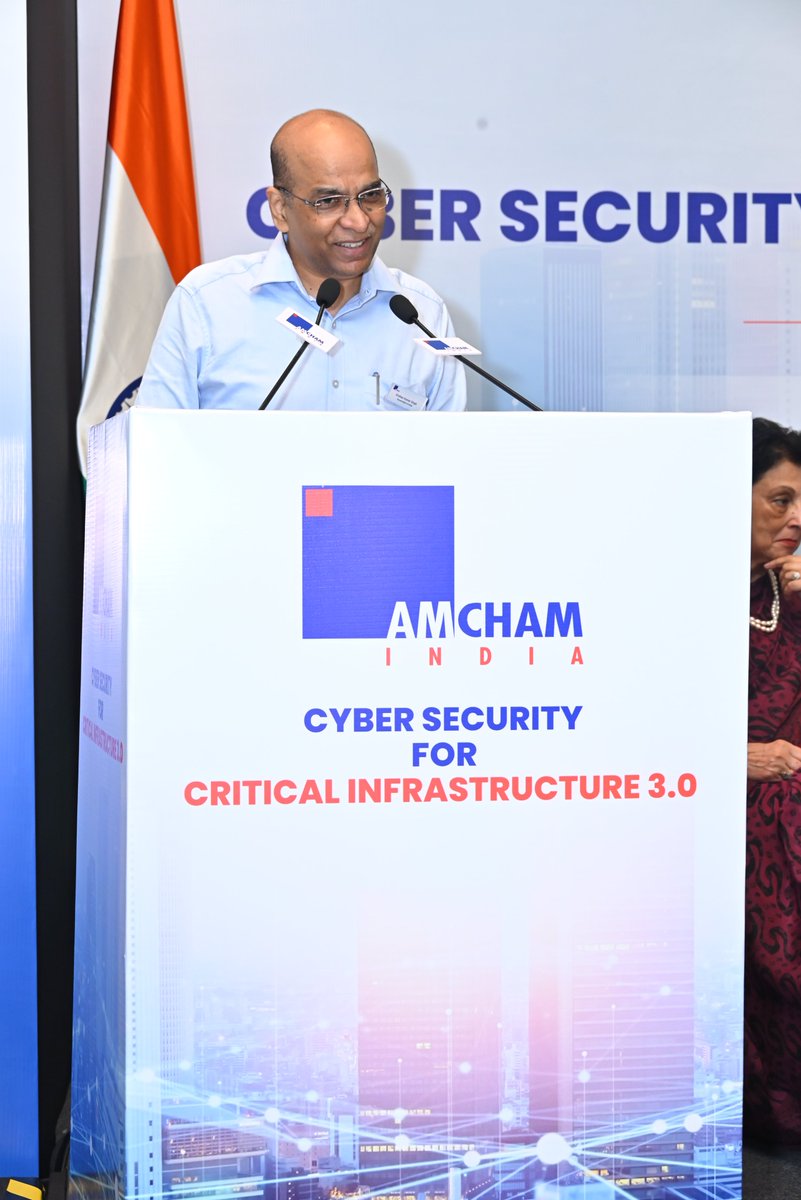
India’s AI Future Must Be Built on Cyber Resilience. At AMCHAM’s conference ‘Cyber Security for Critical Infrastructure 3.0’ Mr. Krishan Kumar Singh, Joint Secretary, @GoI_MeitY, delivered the keynote address, highlighting the need to evolve cyber security as India moves from digital India to AI-enabled digital India.
Key takeaways:
🔹 AI for Defense: Strengthen threat detection, monitoring, and response through AI.
🔹 AI Cuts Both Ways: Harness its potential while addressing increasingly sophisticated AI-enabled attacks.
🔹 Policy Meets Technology: Cyber resilience requires strong policy, implementation, and responsible AI adoption.
🔹 U.S.-India Partnership: Deepen technology and cyber security collaboration to build trusted, resilient digital ecosystems.
The message: India’s AI ambitions and cyber resilience must advance together.
#AMCHAMIndia #CyberSecurity #CriticalInfrastructure #AI #CyberResilience #DigitalIndia #ResponsibleAI #USIndiaPartnership #MeitY
When Finance Moves at the Speed of AI, Cyber Security Must Move Faster.
At AMCHAM’s conference ‘Cyber Security for Critical Infrastructure 3.0,’ a panel on ‘Cyber Security: Finance & BFSI’ explored how India’s rapidly evolving financial ecosystem can harness AI while strengthening security, resilience and trust.
Key takeaways:
🔹 Govern Agentic AI: Establish accountability, oversight, and guardrails for autonomous systems.
🔹 Secure Real-Time Payments: Protect critical payment infrastructure against increasingly sophisticated, AI-driven threats.
🔹 Strengthen Fraud Detection: Leverage AI to detect and respond to financial fraud faster while safeguarding data and customer trust.
🔹 Enable Global Payments: Advance cross-border interoperability and alignment with global security standards.
🔹 Build Responsible AI: Put governance, consumer protection, and trust at the center of inclusive digital finance
The message was clear: In an AI-driven financial ecosystem, cyber security is not just a safeguard-it is the foundation of trust, resilience, and innovation.
#AMCHAMIndia #CyberSecurity #BFSI #FinTech #ArtificialIntelligence #ResponsibleAI #CyberResilience #DigitalPayments #ConsumerTrust #USIndiaPartnership
Nitendra Rajput @mastercardindia | Bhanupreet Saini @PaloAltoNtwks | Vikram Kishore Bhattacharya @awscloud
The way forward is collaboration. India’s Labour Codes represent an important step towards a more modern and future-ready labour framework. Their success will ultimately depend on how effectively policy translates into practice.
Sustained government–industry–HR–legal engagement will be critical to building clarity, consistency and confidence through the implementation journey.
Key takeaways from Roundtable on Labor Code.
Pooja Ramchandani Suryansh Gupta @AMS_Shardul| Saraswathi Kasturirangan @DeloitteIndia | Dr. Mahendra Kumar, Joint Secretary| Mr. Govind Ram, Deputy Secretary| Mr. R.G. Meena, Advisor, Ministry of Labour and Employment, Government of India
#AMCHAMIndia #LabourCodes #LabourReforms #GovernmentIndustryDialogue #EaseOfDoingBusiness #IndiaGrowth @LabourMinistry
Making Labour Reform Work for Business: From Regulation to Readiness
The success of India’s labour codes will ultimately be measured by how effectively businesses can translate regulatory reform into practical, compliant and sustainable workplace practices.
At AMCHAM’s roundtable on ‘India’s Labour Codes: Bridging the Gap Between Policy and Practice,’ the legal and industry perspective added an important dimension to the conversation around implementation, compliance, and business readiness.
Ms. Pooja Ramchandani and Mr. Suryansh Gupta, @AMS_Shardul , shared their insights on practical considerations and challenges businesses need to navigate as the labour codes take shape.
The discussion brought focus to:
🔹Understanding the practical impact of the four labour codes
🔹Assessing readiness and preparing for the transition
🔹Navigating evolving compliance requirements
🔹Understanding the implications for registrations, approvals, and day-to-day operations
🔹Addressing interpretation, timelines, and implementation challenges
The dialogue reinforced that regulatory reform and business readiness must move together. Clear interpretation, practical guidance and continued engagement between government, industry and legal experts will be essential to building confidence and ensuring effective implementation. AMCHAM remains committed to creating platforms where policy, legal expertise and industry experience come together to address emerging business priorities and support India’s journey towards a more predictable and competitive business environment.
#AMCHAMIndia #LabourCodes #LabourReforms #ShardulAmarchandMangaldas #Employment #Workforce #Compliance #EaseOfDoingBusiness #PolicyAndPractice #GovernmentIndustryDialogue
India’s labour codes are not just about changing laws—they are about changing how businesses and the workforce navigate the future of work.
As India moves from policy reform to implementation, the need for clarity, preparedness and sustained government–industry dialogue has never been more important.
Against this backdrop, AMCHAM convened a focused roundtable on ‘India’s Labour Codes: Bridging the Gap Between Policy and Practice,’ bringing together policymakers, industry leaders, HR professionals and legal experts to examine what these reforms mean on the ground. We were pleased to welcome Dr. Mahendra Kumar, Joint Secretary, Ministry of Labour and Employment, GOI, Mr. Govind Ram, Deputy Secretary, Ministry of Labour and Employment, GOI, and Mr. R.G. Meena, Advisor, Ministry of Labour and Employment, GOI, who shared valuable perspectives on the policy and implementation landscape.
The industry and legal perspective was brought to the discussion by Ms. Pooja Ramchandani and Mr. Suryansh Gupta, @AMS_Shardul ., who highlighted practical considerations and challenges for businesses navigating the reforms.
We also thank Ms. Saraswathi Kasturirangan, Co-Chairperson – HR Committee, AMCHAM and Partner & Chief Happiness Officer, Deloitte, for her valuable inputs and insights, which enriched the conversation from an HR and organizational perspective.
Key themes from the dialogue included:
🔹 Translating the intent of the labour codes into effective implementation
🔹 Preparing businesses for transition and evolving compliance requirements
🔹 Simplifying registrations, approvals, and day-to-day compliance
🔹 Addressing industry concerns around timelines and interpretation
🔹 Strengthening consistency and clarity in implementation
The conversation reinforced a central message: successful labour reform requires more than regulatory change—it requires collaboration, clarity, and readiness across the ecosystem. Continued engagement between government, business, HR leaders and legal experts will be critical to ensuring that the labour codes deliver their intended outcomes while strengthening workforce participation, business competitiveness and ease of doing business.
AMCHAM remains committed to creating platforms that connect policy, implementation and industry priorities, and contribute to a more future-ready business and employment ecosystem.
#AMCHAMIndia #LabourCodes #LabourReforms #Employment #Workforce #HR #EaseOfDoingBusiness #PolicyAndPractice #GovernmentIndustryDialogue #IndiaGrowth @LabourMinistry
Cyber resilience is no longer just an IT priority—it is a national and economic imperative.
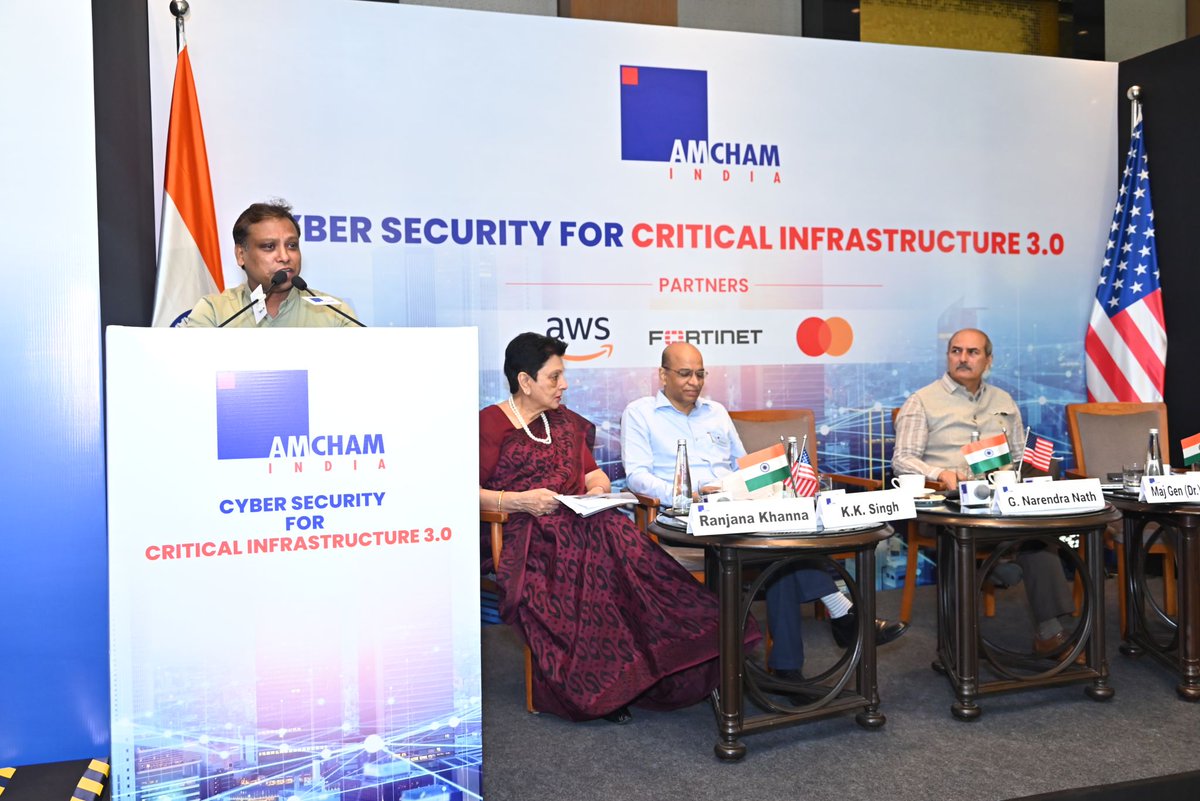
AMCHAM’s 3rd edition of its Cyber Security for Critical Infrastructure conference, bringing together senior representatives from the Government of India, national security institutions, industry leaders and technology experts addresses the rapidly evolving cyber threat landscape.
As critical infrastructure becomes increasingly digital, interconnected and AI-driven, the scale and sophistication of threats are growing—from attacks on energy and financial systems to vulnerabilities across cloud platforms, software dependencies, supply chains and subsea connectivity.
Today’s discussions are focusing on three critical priorities:
🔹 AI-Driven Cyber Resilience for Critical Infrastructure
🔹 Security by Design: Quantum-Safe & Subsea Cable Resilience
🔹 Cyber Security for Finance & BFSI
The message is clear: cyber resilience is a shared responsibility, and collaboration between government and industry is our strongest line of defense.
As the conversations unfold, AMCHAM continues to strengthen U.S.–India cooperation in critical technologies and cyber resilience, advancing dialogue and solutions for a more secure, trusted and resilient digital ecosystem.
#AMCHAMIndia #CyberSecurity #CriticalInfrastructure #CyberResilience #AI #QuantumSecurity #BFSI #USIndia #CriticalTechnologies #USIndiaPartnership
Amazon Web Services (AWS) | Fortinet | Mastercard
📷
AI’s potential is immense. Getting governance right will be critical to unlocking it responsibly.
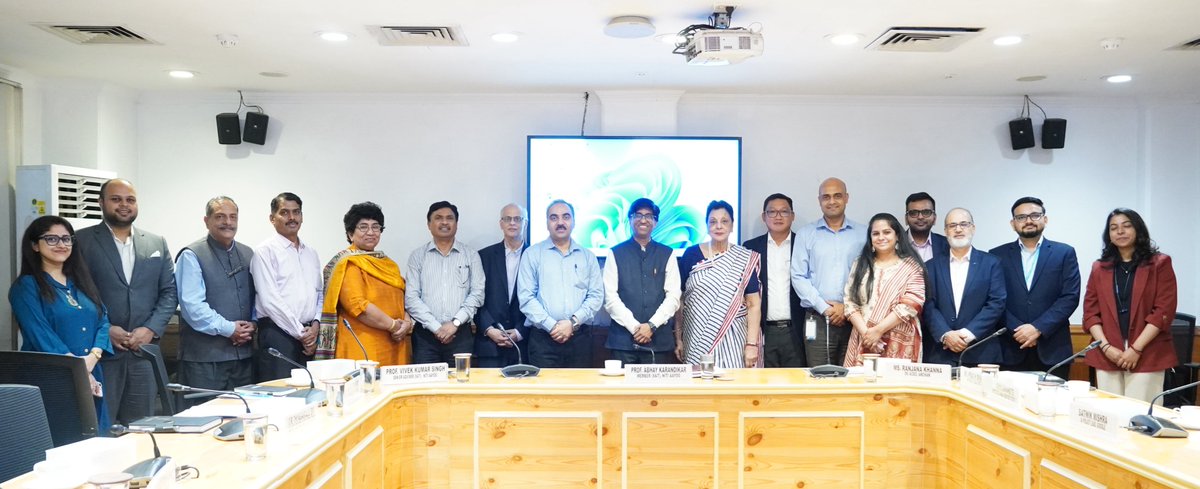
AMCHAM convened a strategic dialogue with Prof. Abhay Karandikar, Member, @NITIAayog and leading technology companies including @awscloud (AWS), @Google, @IBM, @Meta, and @Microsoft , on the evolving landscape of AI policy and governance.
The discussion focused on the rise of generative and agentic AI, and the need for governance by design—embedding safeguards, accountability and human oversight from the outset.
The dialogue underscored the importance of balancing innovation, accountability and trust, while ensuring governance frameworks remain adaptive and do not create unnecessary barriers to responsible AI adoption.
AMCHAM remains committed to strengthening government–industry dialogue to enable responsible AI innovation and scale.
#AMCHAMIndia #AI #AIGovernance #ResponsibleAI #Innovation #USIndia #AIGovernance #ArtificialIntelligence
@PMOIndia@karandi65@NITIAayog