NEW: Trump was told aboard AF1 en route to China but before he picked up Jensen Huang about the US intelligence about the Nvidia chief and a woman assessed to be a Chinese spy @jonathanvswan@julianbarnes@AnaSwanson me https://t.co/IrHYNTRhZS
In late 1969, a father handed scissors to his ten-year-old daughter and asked her to help him commit a felony that could send him to prison for the rest of his life.
The office was dark except for the faint green glow of a Xerox machine. Daniel Ellsberg, 38, fed page after page through the feeder. Each sheet carried the stamp TOP SECRET—each copy a federal crime under the Espionage Act. He was not a radical. He was a Harvard PhD economist, a former Marine officer who had served in Vietnam, a senior Pentagon analyst who had helped shape U.S. strategy. He had held the highest security clearances in the country. He had believed in the mission.
Then he read 7,000 pages that shattered every belief he held.
The documents—later known as the Pentagon Papers—were a classified, 47-volume study commissioned by Defense Secretary Robert McNamara. They traced American involvement in Vietnam from World War II through 1968. The conclusion was devastating and consistent: four consecutive presidents—Truman, Eisenhower, Kennedy, Johnson—had privately concluded the war was unwinnable yet continued escalating it. They sent hundreds of thousands of young Americans into combat knowing victory was impossible—to avoid the political cost of admitting defeat.
By 1969 more than 40,000 U.S. troops were dead. The public was told progress was being made, that the light at the end of the tunnel was visible. The papers proved it was a lie maintained across administrations.
Ellsberg faced a stark choice: protect his career, his freedom, his family—or expose the truth.
He chose truth.
Copying 7,000 pages alone at night was slow, nerve-racking work. Every passing car outside could be the FBI. Every paper jam risked discovery. The penalty was severe: life in federal prison. He had already tried official channels. He approached six senators and several congressmen, begging them to release the documents legally through the Congressional Record. Every one refused.
So he decided to go public.
He brought his children into the room.
Robert was 13. Mary was 10. Robert ran the Xerox machine—feeding pages, collating stacks. Mary sat on the floor with scissors, carefully cutting the words TOP SECRET off each photocopy so the stolen documents would not be immediately identifiable as classified. Ellsberg later explained: “I expected to be in prison very shortly. I wanted them to know their father was doing something in a calm, sober way that I thought had to be done.”
He told Robert directly: this will probably put me in prison. He wanted his children to understand that conscience sometimes demands sacrifice. That doing the right thing is not always safe. That a parent’s greatest legacy is not wealth or status—but moral courage.
In March 1971 he gave the papers to The New York Times. On June 13, 1971, the Times published the first installment. The Nixon administration erupted. For the first time in American history, the government sought a prior restraint order to silence a newspaper before publication. A federal judge granted a temporary injunction. The Times stopped publishing.
Ellsberg responded by giving copies to The Washington Post. When they were blocked, he gave them to the Boston Globe. Then more outlets. The truth spread faster than the government could contain it.
Nixon did not just want the leak stopped. He wanted Ellsberg destroyed.
He formed a secret White House unit called “the Plumbers.” They broke into the office of Ellsberg’s psychiatrist, searching for compromising material to discredit him. They found nothing—but the break-in was a felony. The Justice Department charged Ellsberg with espionage, theft, and conspiracy. He faced 115 years in prison.
The trial began in 1973 in Los Angeles. Prosecutors painted him as a traitor who endangered national security. Then the government’s misconduct began to surface.
The psychiatrist break-in became public. Illegal wiretaps were revealed. Prosecutorial abuse emerged. Most shockingly: Nixon had offered the trial judge the directorship of the FBI—while the trial was under way. Blatant judicial tampering.
On May 11, 1973, the judge dismissed all charges with prejudice, citing “improper government conduct.”
Daniel Ellsberg walked free.
The Pentagon Papers did not end the war overnight. But they changed everything. They confirmed what millions suspected: the government had lied for decades about a war that killed more than 58,000 Americans and millions of Vietnamese. Public opposition surged. Congress began cutting funding. The war that could not be ended politically was ended by exposure.
There was one more consequence Nixon never foresaw.
The same Plumbers who burglarized Ellsberg’s psychiatrist later broke into the Democratic National Committee headquarters at the Watergate complex. Nixon’s obsession with destroying Daniel Ellsberg set in motion the scandal that destroyed his presidency.
Ellsberg lived to 92, dying on June 16, 2023. He spent the rest of his life as an antiwar activist, whistleblower advocate, and lecturer. He never regretted his choice. He never stopped speaking truth to power.
His children grew up understanding something profound: that citizenship sometimes requires courage. That doing the right thing is not always safe. That a father’s greatest legacy is not wealth or status—but moral courage.
In late 1969 he was simply a father in a borrowed office after midnight, feeding classified pages into a Xerox machine while his 13-year-old son collated and his 10-year-old daughter sat cross-legged on the floor with scissors, cutting TOP SECRET off copies.
He could have stayed silent. Kept his clearances. Protected his career.
Instead he handed scissors to his daughter and told her to start cutting.
Because sometimes the most patriotic act is to tell the truth—even when your government calls it treason.
Massie: "I hope Hegseth addresses the 8 articles of impeachment, and doesn‘t get up and misquote the Bible in Quentin Tarantino fashion and do some pull-ups and call everybody fat and gay. I may have just given you half his speech, I don't know."
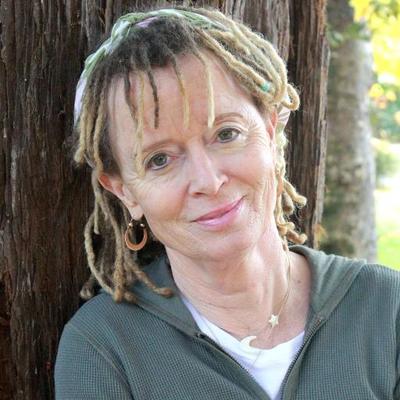
"Sometimes the scary sickening voices seem louder than truth and beauty, but they aren't really. Democracy, the great good thing, one person one vote, is the loudest voice in the land." ~@ANNELAMOTT
We shall fight in D.C., we shall fight in the states and the counties, we shall fight on the House floor, we shall fight on the Senate floor, we shall fight in the public square, we shall fight in the press, and we shall fight in the courts. We shall never surrender to the hate.
I'm sure @JDVance & @SecRubio are feeling confident today that Miller is just the man to steer their way back to support from all the voters who thought Trump was too extreme, chaotic, cruel, reckless and ineffective this week. Who better to recapture straying Latinos?