Should restaurants be required to provide free drinking water? Galen Centre says making water free at eateries could help reduce sugar consumption, improve public health. On #ConsiderThis I ask @ANTeoh3@KRInstitute & @azrulmohdkhalib whether this would change consumer behaviour.
On #ConsiderThis@Melisa_Idris speaks with @azrulmohdkhalib about the Galen Centre’s call for the govt to make free drinking water a condition of licensing for restaurants, and asks @ANTeoh3@KRInstitute if this would change consumer behaviour.
https://t.co/9uCVfx1WzZ
By now, you’ve probably seen how to opt out of Perkeso’s SKBBK.
But when does your coverage end, exactly?
And if you change your decision in the future, can you opt in again? 🧐
Allow me to answer these questions (and more). 🧵
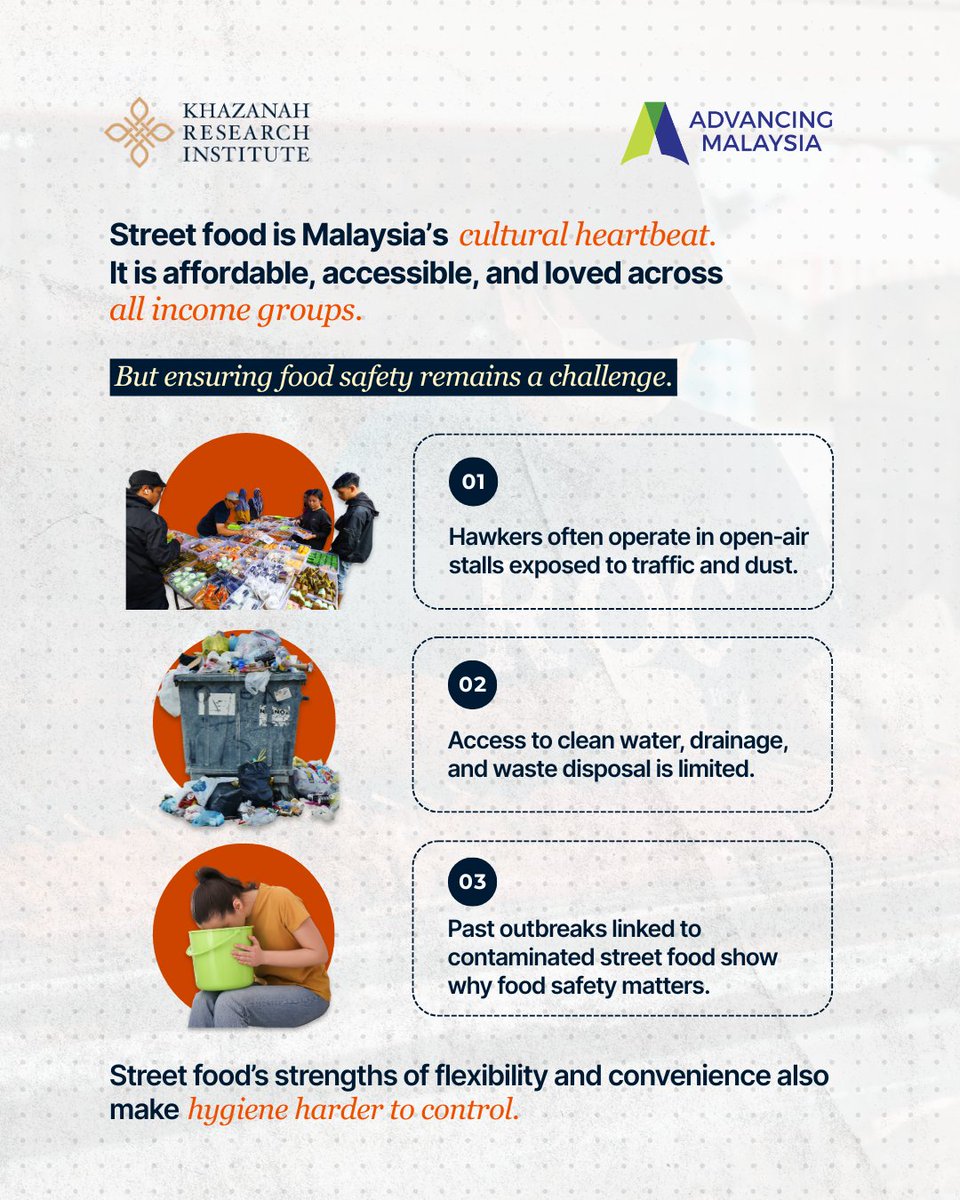
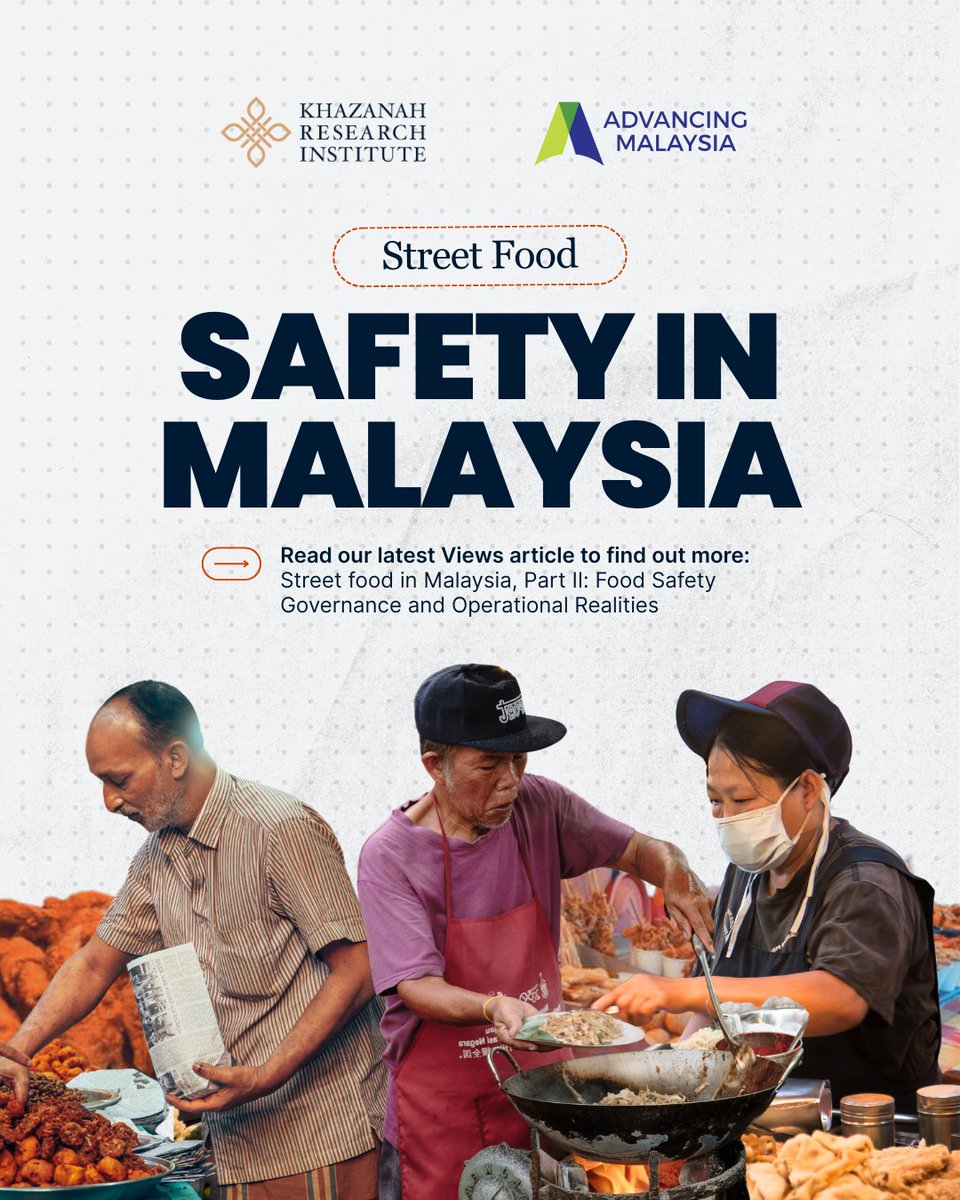
Malaysia's street food is an integral part of our food culture and daily life. Keeping it safe requires more than food safety regulations alone.
Our researchers, Nik Syafiah Anis and Teoh Ai Ni, highlight that while Malaysia has a comprehensive food safety framework, implementation remains constrained by infrastructural limitations, operational realities, and uneven enforcement. Many hawkers work in environments where access to clean water, proper waste disposal, refrigeration, and handwashing facilities is limited, making compliance more challenging.
Strengthening food safety means pairing effective regulations with practical support for hawkers, helping to protect public health while preserving the accessibility, affordability, and vibrancy of Malaysia's street food scene.
Read the full article via our website here: https://t.co/zoZBfapZct
#KhazanahResearchInstitute #KRI #AdvancingMalaysia #StreetFood #FoodSafety
Street food feeds millions of Malaysians every day. But is it feeding us well?
Street food is deeply embedded in Malaysia's food culture. It provides affordable and accessible meals, supports livelihoods, strengthens local economies, and helps preserve our culinary heritage. It also plays an important role in food security and is increasingly recognised as a tourist attraction.
However, as our researchers Teoh Ai Ni and Nik Syafiah Anis highlight, the nutritional quality of street food deserves greater attention. While many street foods are high in calories, fat, salt and sugar, existing policies continue to focus primarily on food safety.
Making street food healthier does not have to come at the expense of vendors' livelihoods. By incorporating nutrition into food handler training and promoting healthier choices among consumers, Malaysia can build a street food ecosystem that is both accessible and nutritious.
Read the full article via our website here: https://t.co/9PrgYcCtRQ
#KhazanahResearchInstitute #KRI #AdvancingMalaysia #streetfood #publichealth
Are you passionate about trade policy, economics, and policy-relevant research?
Khazanah Research Institute (KRI) is seeking a Contract Researcher to support Project TARIFF, a research initiative examining the impact of U.S. tariffs on Malaysia. This part-time role offers the opportunity to contribute to data analysis, research, stakeholder engagement, and the development of research outputs that inform public policy discussions.
Further details on the role, requirements, and application process are available in the post below.
📩 To apply, please submit your CV, cover letter, academic transcripts, and 2 writing samples from previous projects/work to [email protected] with the subject line: Application for Contract Researcher – TARIFF: [Your Name].
We encourage interested candidates to apply and wish all applicants the very best.
Malaysia Perlu Ada Kedaulatan Teknologi, Kemahiran Sendiri dan Kerjasama Dengan Negara Serantau.
“TLDM beli (misil pertahanan) daripada Norway. Lepas itu Norway kata ‘tidak!’.
“Kami tak mahu bekalkan” walaupun dah tandatangan perjanjian.“
Tonton rakaman KRI Opentable Podcast Ep.7: “Bolehkah Malaysia Keluar Daripada Perangkap Gaji Rendah?” di saluran Youtube Khazanah Research Institute.
Klik pautan di sini: https://t.co/X1YmN2SjOC
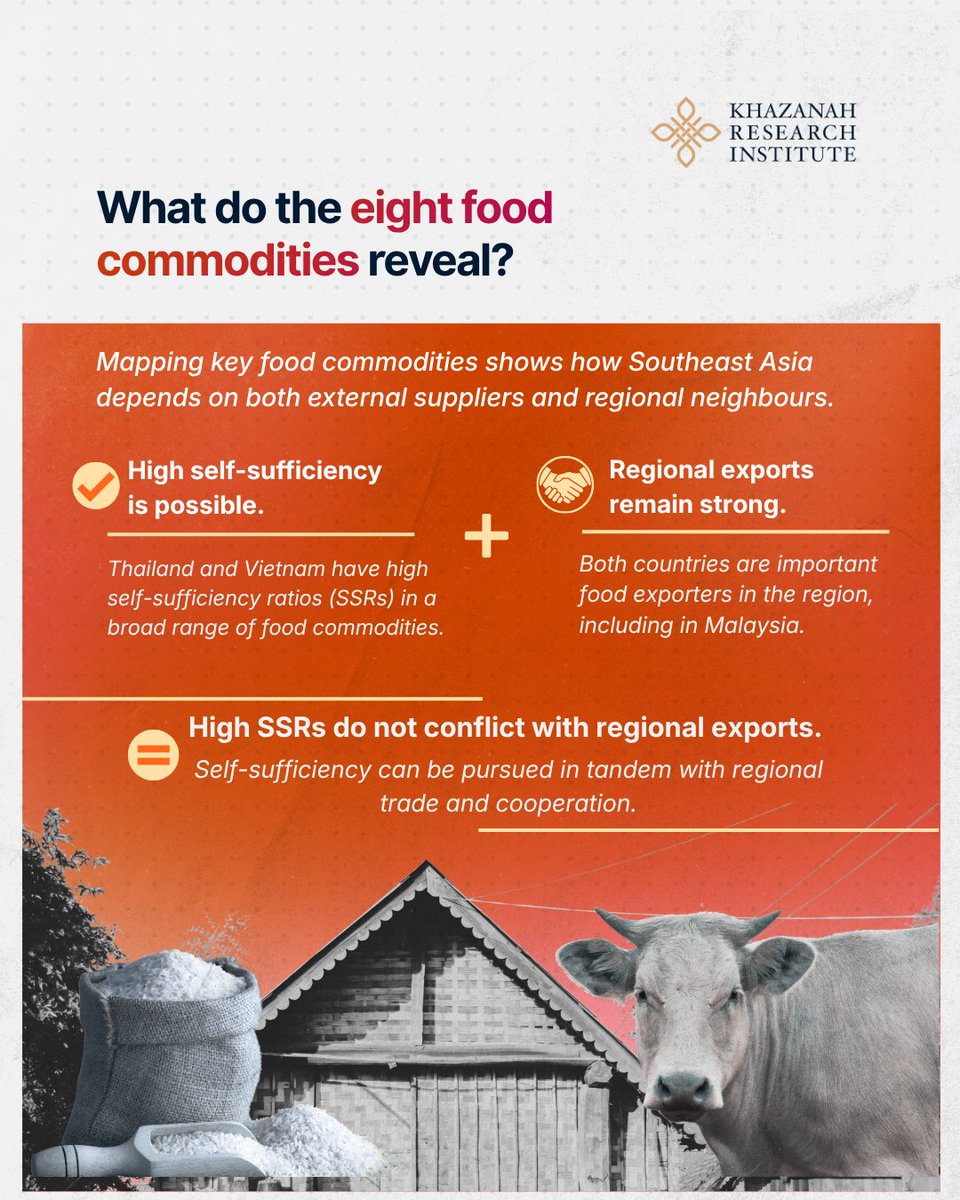
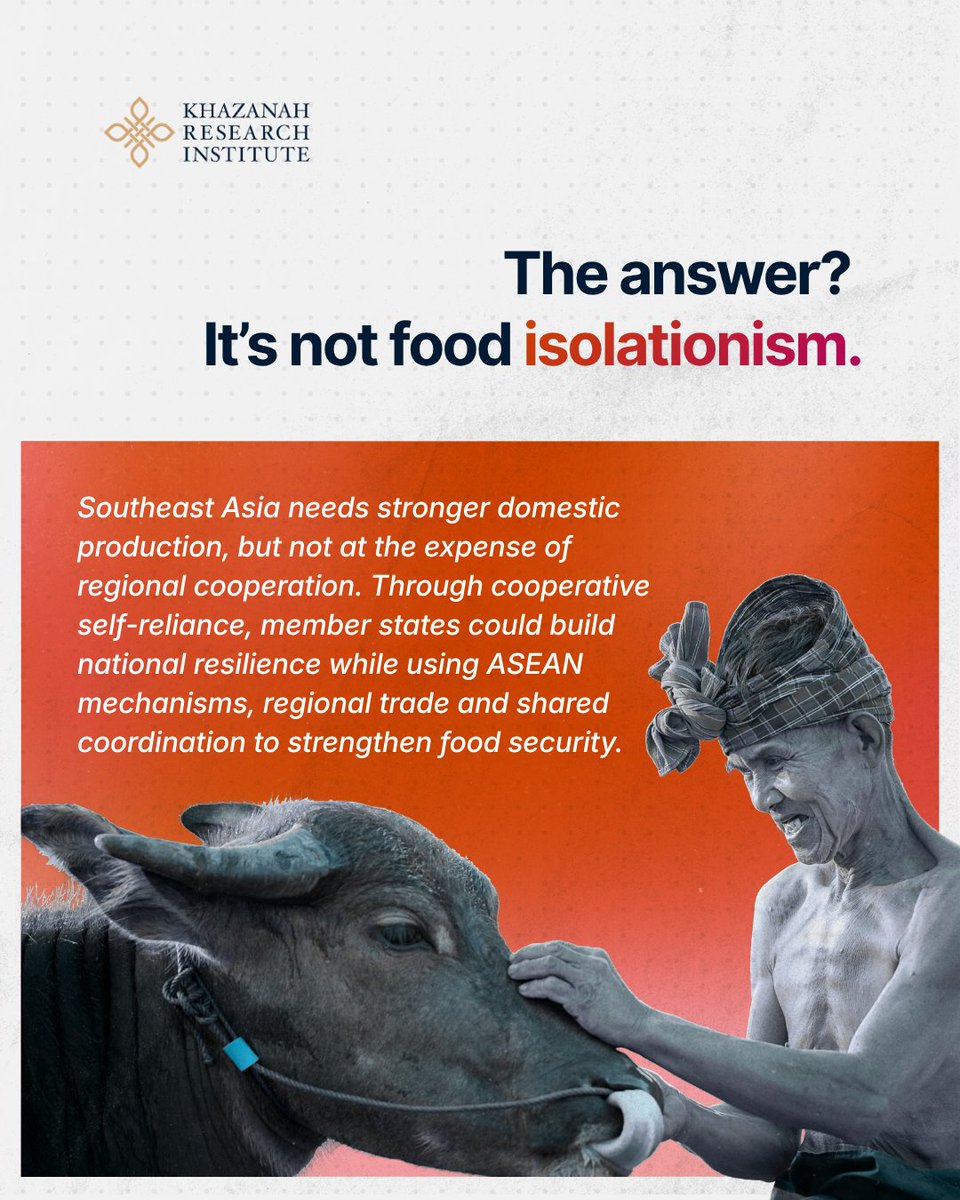
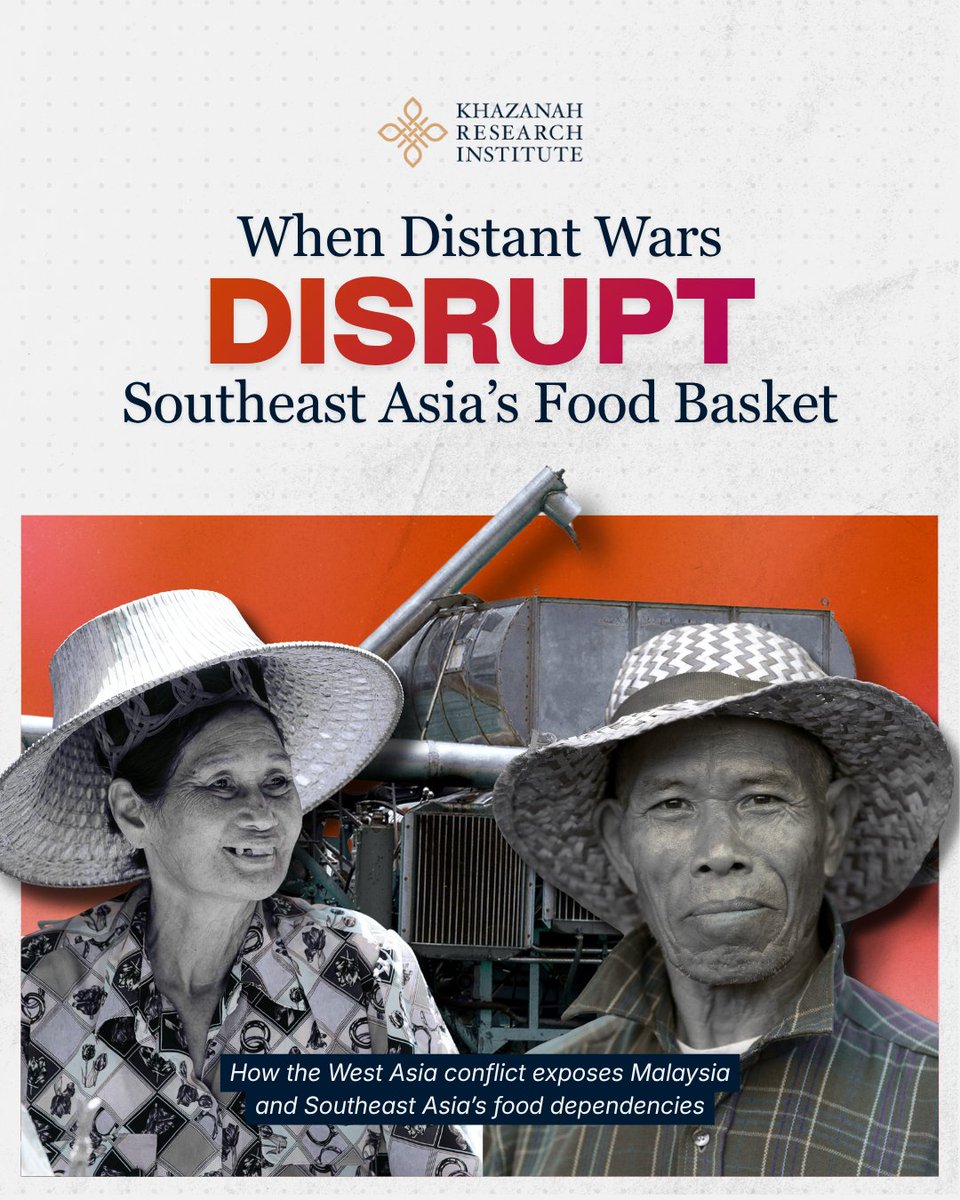
Global shocks do not just weaken food systems; they expose why regional cooperation matters more than ever.
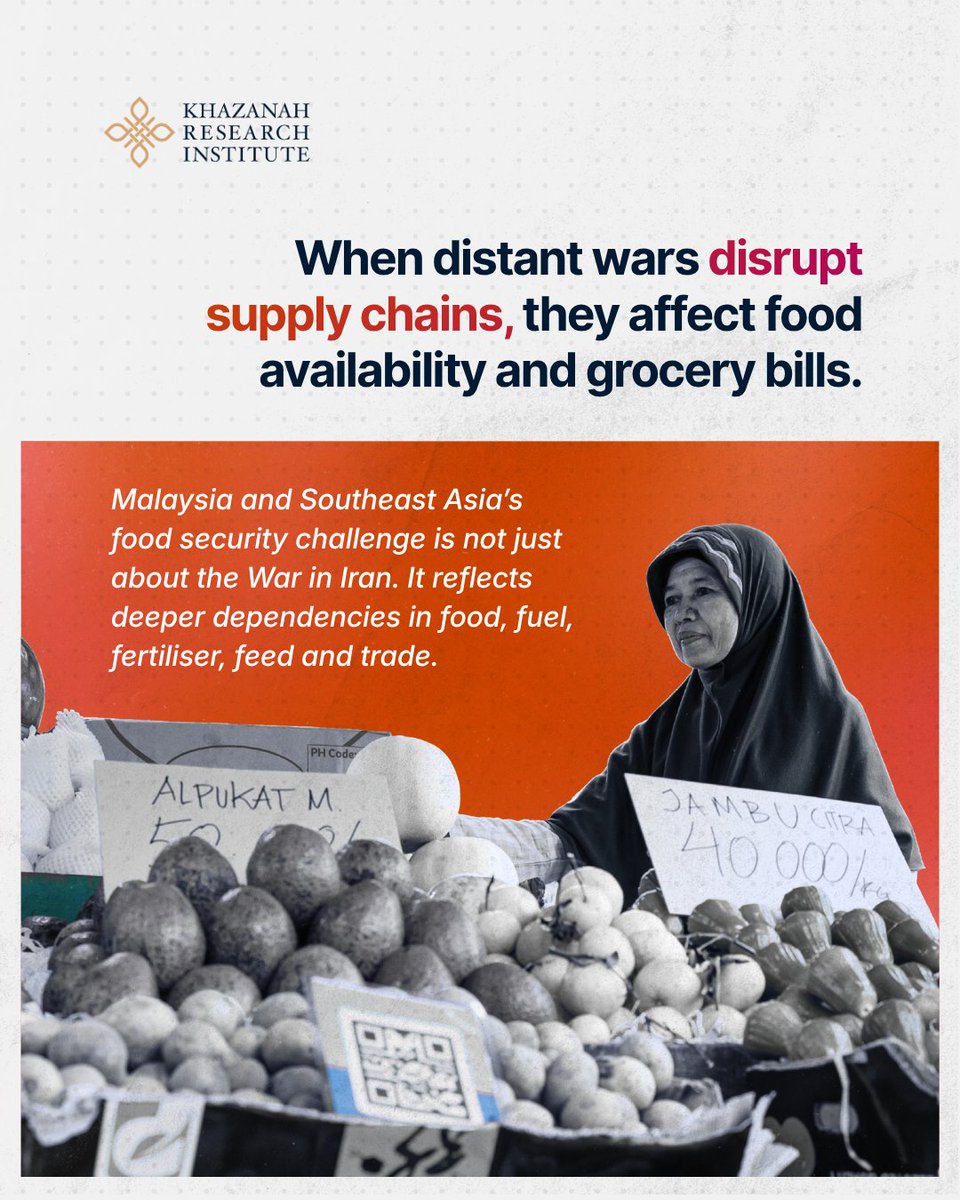
When distant wars disrupt supply chains, the effects are quickly felt in food availability and prices.
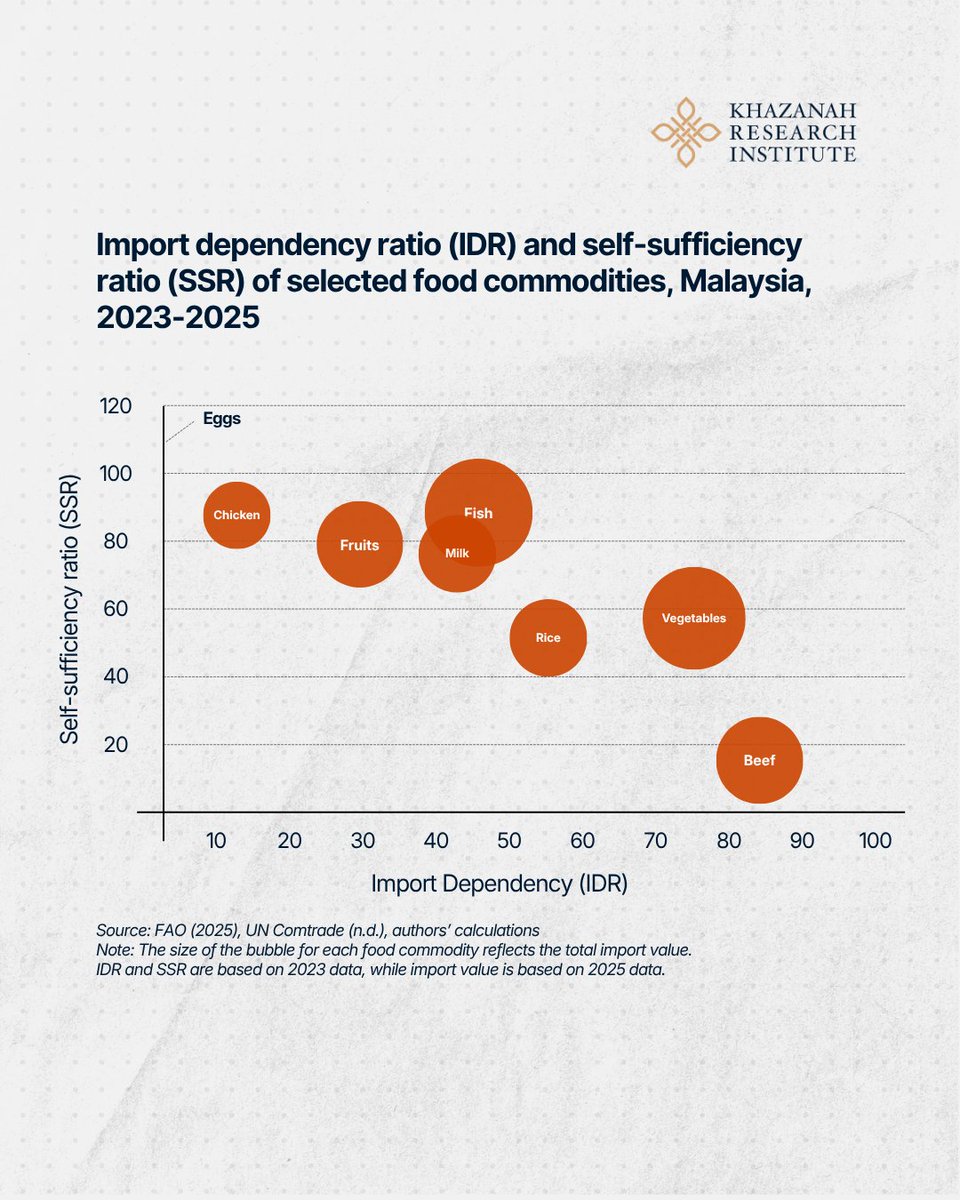
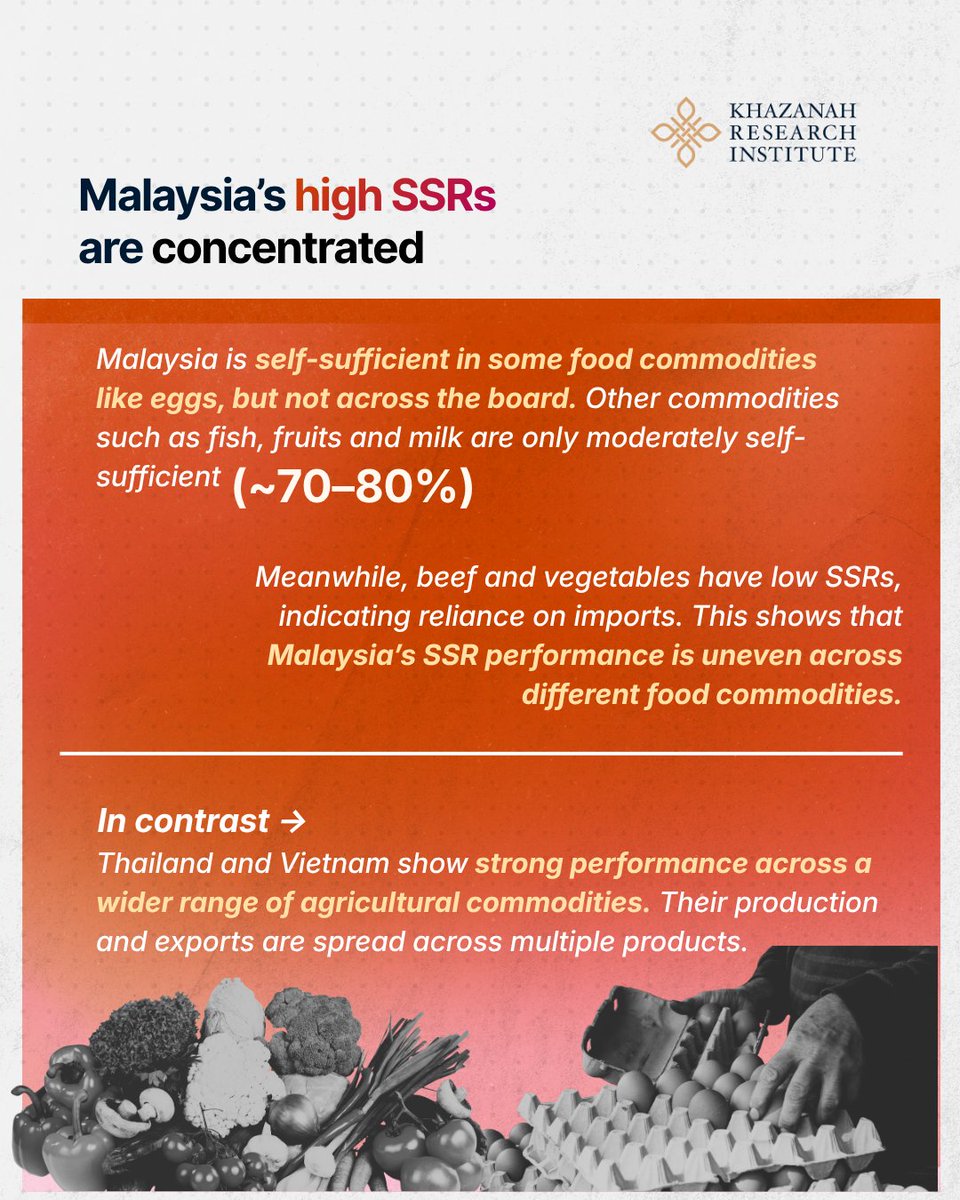
This discussion paper situates Malaysia and Southeast Asia’s food dependencies within a longer geoeconomic arc shaped by US–China rivalry. It argues that current disruptions are not isolated shocks, but reflect deeper structural dependencies across trade, production, agricultural inputs, and regional supply networks.
The researchers, Christopher Choong, Teoh Ai Ni, Nik Syafiah Anis Nik Sharifulden and Adam Firouz, together with visiting researcher Dania Arissa Muhamad Zaharin, find that strengthening food security requires expanding domestic capacity without lapsing into food isolationism. Instead, resilience depends on balancing national production with deeper regional cooperation, anchored in existing ASEAN frameworks.
Read the full discussion paper via our website here: https://t.co/AXeHNj2TaG
#KhazanahResearchInstitute #KRI #AdvancingMalaysia #foodsecurity #geoeconomics
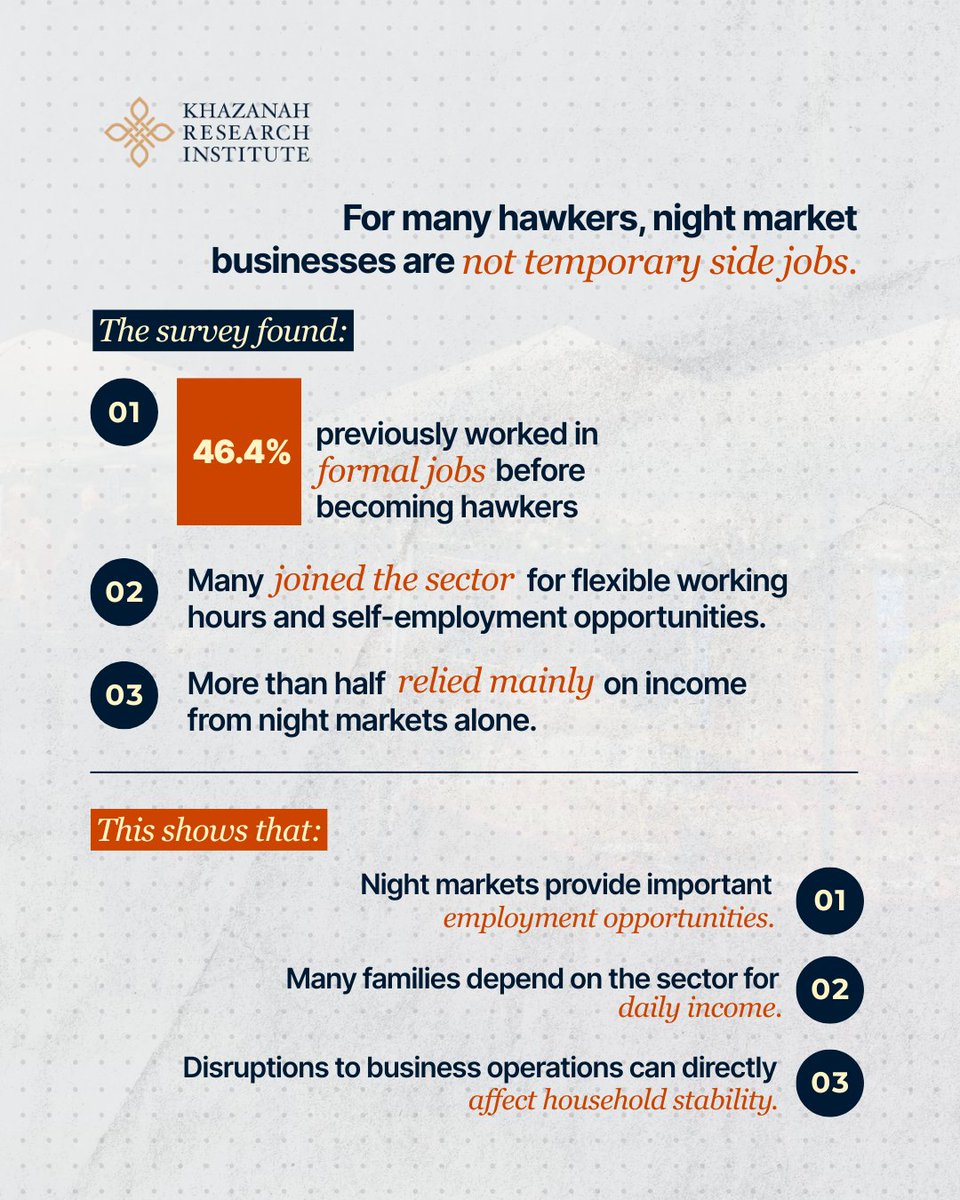
COVID may have ended, but night markets still haven’t recovered.
Today, thousands of hawkers continue to operate under unstable and fragile incomes. Most rely on a single source of earnings, while facing rising costs and limited access to formal safety nets or financial protection. Many are still navigating the long tail of pandemic shocks, leaving them highly vulnerable to any further economic disruption.
Yet night markets remain essential.
Our researchers, Dr. Teoh Ai Ni, Nik Syafiah Anis, and Nur Sofea Hasmira Azahar, together with visiting researcher Govind Nirav Rao, highlight that night markets are not only a livelihood anchor for hawkers, but also a critical source of affordable food for communities. A significant share of B40 households depend on them weekly for meals, underscoring their role in urban food security.
Strengthening night markets means strengthening both livelihoods and access to affordable food, two sides of the same system that cannot be separated.
Read the full views article via our website here: https://t.co/PAiSGrL6Xv
#KhazanahResearchInstitute #KRI #AdvancingMalaysia #nightmarkets #hawkers
Philippines is one of largest consumer and importer of rice. The average yearly consumption per Filipino is about 190kg. Having a regional rice reserve together with ASEAN plus three partners is absolutely crucial given the increased price pressures from
higher logistics costs
“The rain is our holiday. You can’t fight it.” - Hawker, Pasar Malam Sri Sentosa
For hawkers like Mr. Sandaran and Mr. Liew, a downpour can wash away a whole day’s income in minutes. It’s also the only time they are forced to rest.
In Episode 2 of Pasar Malam Kita, we go behind the folding tables. Between shrinking incomes and unpredictable weather, the market has changed—but the hawkers are adapting, using everything from weather apps to new setups to stay in the game.
After decades being in the Pasar Malam, this is more than just a job. It’s their life.
Help keep our night market culture alive. Support your local pasar malam this week and the folks who show up for us, rain or shine.
Who’s the vendor you’ve been visiting for years? Give them a shoutout in the comments!
Share your own pasar malam stories with us here: https://t.co/ZsLx7DGhC3
A project by @KRInstitute x The Fourth Media
#PasarMalamKita
Hello! My team is looking for a Climate Change Programme Lead at WWF-Malaysia. If you’re a leader in climate mitigation & adaptation with a passion in advocating for nature-based solutions & extensive experience in project management, consider applying. Sharing the link below ⬇️
Meet the unsung heroes keeping your local pasar malam alive!
Malaysia's famous pasar malams might seem to magically appear every week, but behind all of it are the people who faithfully show up, rain or shine, to make sure it all comes together.
Pasar Malam Kita is a new series to remind Malaysians just how important pasar malams are not just to our culture, but to the livelihoods of so many communities. Sadly, visitor numbers have dropped since Covid-19, leaving many pasar malam vendors struggling.
Visit your local pasar malam this week to help keep this beautiful Malaysian culture alive — and tag us on social media with the hashtag #PasarMalamKita!
Is there a local pasar malam or vendor we should cover next? Let us know in the comments!
You can also share your pasar malam story with us using the link here: https://t.co/ZsLx7DGPrB
A project by @KRInstitute x The Fourth media
Transit Malaysia has raised concerns over the downgrade of 29 RapidKL bus routes to Rapid-on-Demand DRT services, which coincides with higher DRT fares and its exclusion from unlimited RapidKL passes.
Transit Malaysia says My50 passholders now have to pay an extra RM2 per trip, hitting lower-income commuters the hardest.
“The government’s bus-to-van downgrade decision is regrettable in absence of statistics on unfulfilled DRT trips due to capacity and scheduling issues,” it said.
🧵1
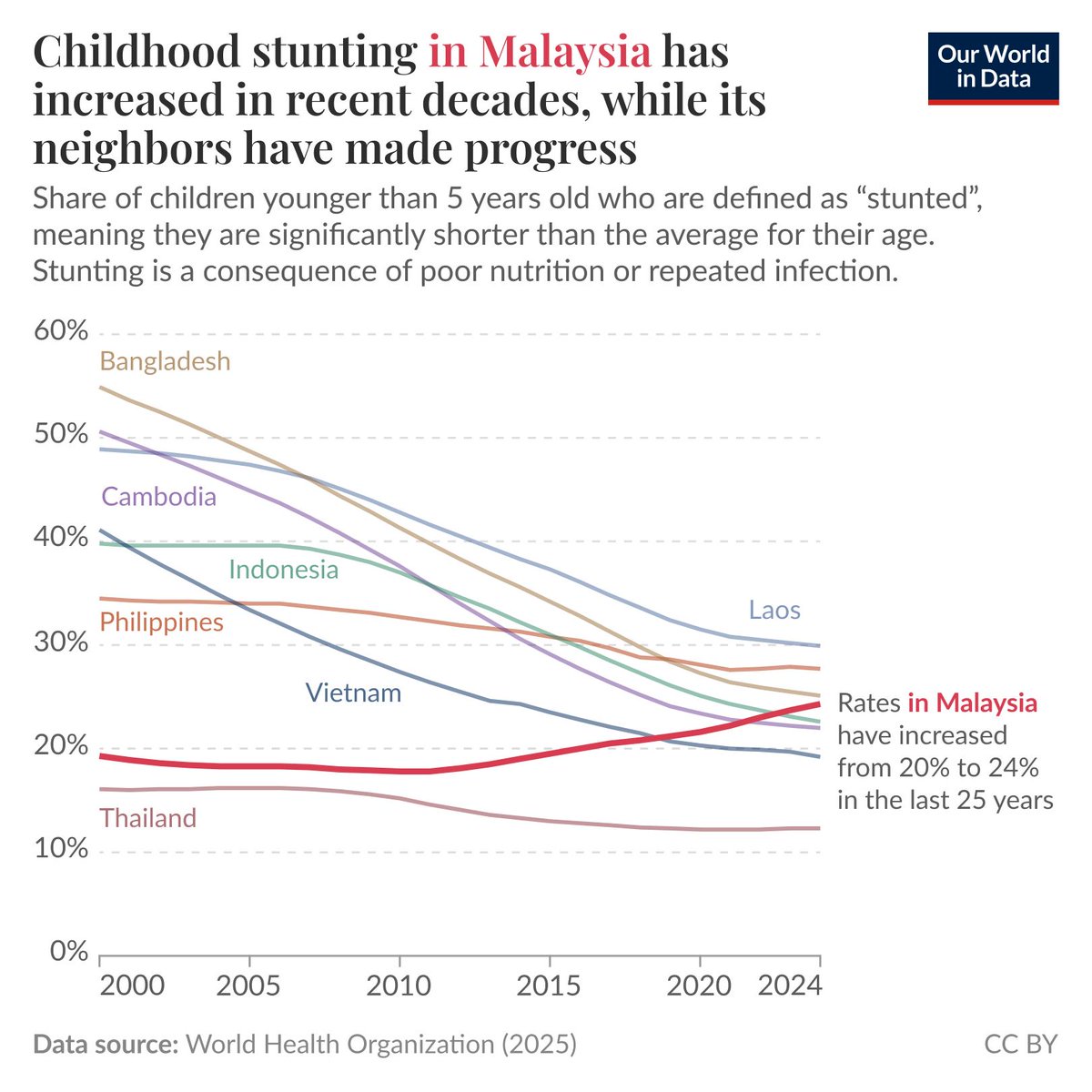
Malaysia is an outlier: richer than its neighbors but doing worse on child nutrition—
If we look at income levels across countries in South and Southeast Asia, Malaysia is far richer than many of its neighbors. Its gross domestic product (GDP) per capita has almost doubled since 2000. It is now more than three times higher than that of Cambodia, Laos, and Bangladesh, and more than double that of Indonesia and Vietnam.
But if we look at measures of childhood nutrition, Malaysia is not doing better. You can see this in the chart. While its neighbors have made progress on childhood stunting — the share of children under 5 who are too short for their age — Malaysia has regressed. In 2000, 20% of children were “stunted”, and this has increased to 24%.
Malaysia also stands out at a global level. When we plot the share of children who are stunted against GDP per capita, the country is a clear outlier for its level of income. Most other countries at this level of economic development have rates below 10%.
Malaysia also does relatively poorly on other measures of malnutrition. On childhood wasting — when a child’s weight is too low for their height — it has one of the highest rates in the region.
The country is off track or worsening on most global nutrition targets.
(This Data Insight was written by @_HannahRitchie.)
Night markets provide a lot of income to the hawkers and it's a win‑win situation for both the consumers and the hawkers.
We joined our researchers and enumerators at Pasar Malam Taman Yulek, Cheras, where surveys were conducted on the landscape, issues, and challenges of night markets in Kuala Lumpur. While on the ground, we asked visitors key questions to capture their real experiences.
Among the questions posed:
1) Why do you like going to night markets?
2) Are night markets important?
3) Will night markets still be relevant in the next 5–10 years?
The responses were diverse and insightful, sparking new conversations about the future of night markets.
#KhazanahResearchInstitute #KRI #NightMarkets




![KRInstitute's tweet photo. Are you passionate about trade policy, economics, and policy-relevant research?
Khazanah Research Institute (KRI) is seeking a Contract Researcher to support Project TARIFF, a research initiative examining the impact of U.S. tariffs on Malaysia. This part-time role offers the opportunity to contribute to data analysis, research, stakeholder engagement, and the development of research outputs that inform public policy discussions.
Further details on the role, requirements, and application process are available in the post below.
📩 To apply, please submit your CV, cover letter, academic transcripts, and 2 writing samples from previous projects/work to jan.ayub@krinstitute.org with the subject line: Application for Contract Researcher – TARIFF: [Your Name].
We encourage interested candidates to apply and wish all applicants the very best.](https://pbs.twimg.com/media/HK6Fv-TaAAAjICj.png)
![KRInstitute's tweet photo. Are you passionate about trade policy, economics, and policy-relevant research?
Khazanah Research Institute (KRI) is seeking a Contract Researcher to support Project TARIFF, a research initiative examining the impact of U.S. tariffs on Malaysia. This part-time role offers the opportunity to contribute to data analysis, research, stakeholder engagement, and the development of research outputs that inform public policy discussions.
Further details on the role, requirements, and application process are available in the post below.
📩 To apply, please submit your CV, cover letter, academic transcripts, and 2 writing samples from previous projects/work to jan.ayub@krinstitute.org with the subject line: Application for Contract Researcher – TARIFF: [Your Name].
We encourage interested candidates to apply and wish all applicants the very best.](https://pbs.twimg.com/media/HK6Fv-RaMAA5H2_.png)









![KRInstitute's tweet photo. Are you passionate about trade policy, economics, and policy-relevant research?
Khazanah Research Institute (KRI) is seeking a Contract Researcher to support Project TARIFF, a research initiative examining the impact of U.S. tariffs on Malaysia. This part-time role offers the opportunity to contribute to data analysis, research, stakeholder engagement, and the development of research outputs that inform public policy discussions.
Further details on the role, requirements, and application process are available in the post below.
📩 To apply, please submit your CV, cover letter, academic transcripts, and 2 writing samples from previous projects/work to jan.ayub@krinstitute.org with the subject line: Application for Contract Researcher – TARIFF: [Your Name].
We encourage interested candidates to apply and wish all applicants the very best.](https://pbs.twimg.com/media/HK6FwF1aEAA0BQJ.png)