Agnes Noy research account: Senior Lecturer at the University of York. DNA, biophysics, modelling, supercoiling, and much more. Active in @agnesnoy.bsky.social
Come to York and fight antimicrobial resistance with Daniel Cole, @dghilarov and Inspiralis Ltd.
MRC DiMeN Doctoral Training Partnership: Computational Drug Discovery Targeting DNA Gyrase to Tackle Antimicrobial Resistance at University of York on https://t.co/tTCCSf6HjA
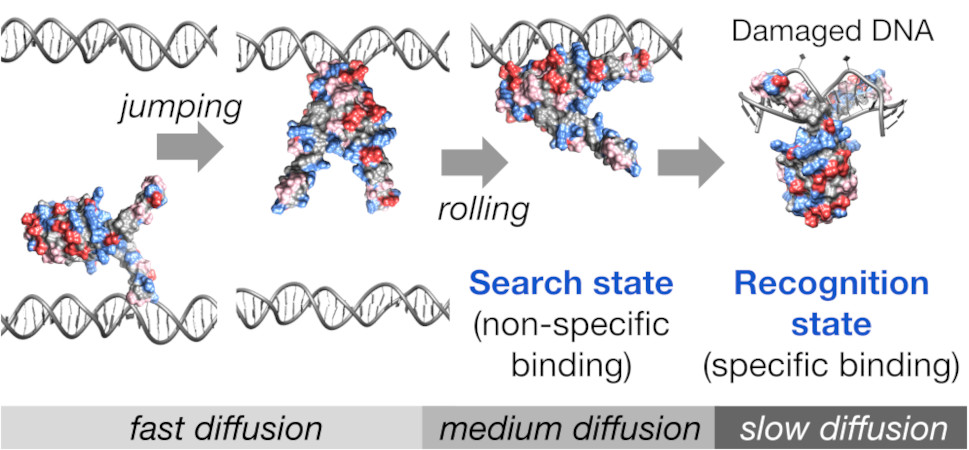
Overall, HU binds DNA in a multi-step process: electrostatic interactions build up gradually until the protein locks onto its target site. This prevents HU from sticking to random DNA along the way.
Check our latest publication in #JACSAu@ACSPublications with @ElliotWChan and @BPSIYork where we describe how the bacterial protein HU binds DNA at atomic resolution. Thanks to @EPSRC and @N8CIR and @hecbiosim for computational resources. See more👇https://t.co/OWgl9rJpK7
The switch to high-affinity HU–DNA binding happens only at the target site, helped by DNA’s own flexibility. It suggests a concerted mechanism, bridging the gap between “induced fit” and “conformational selection.”
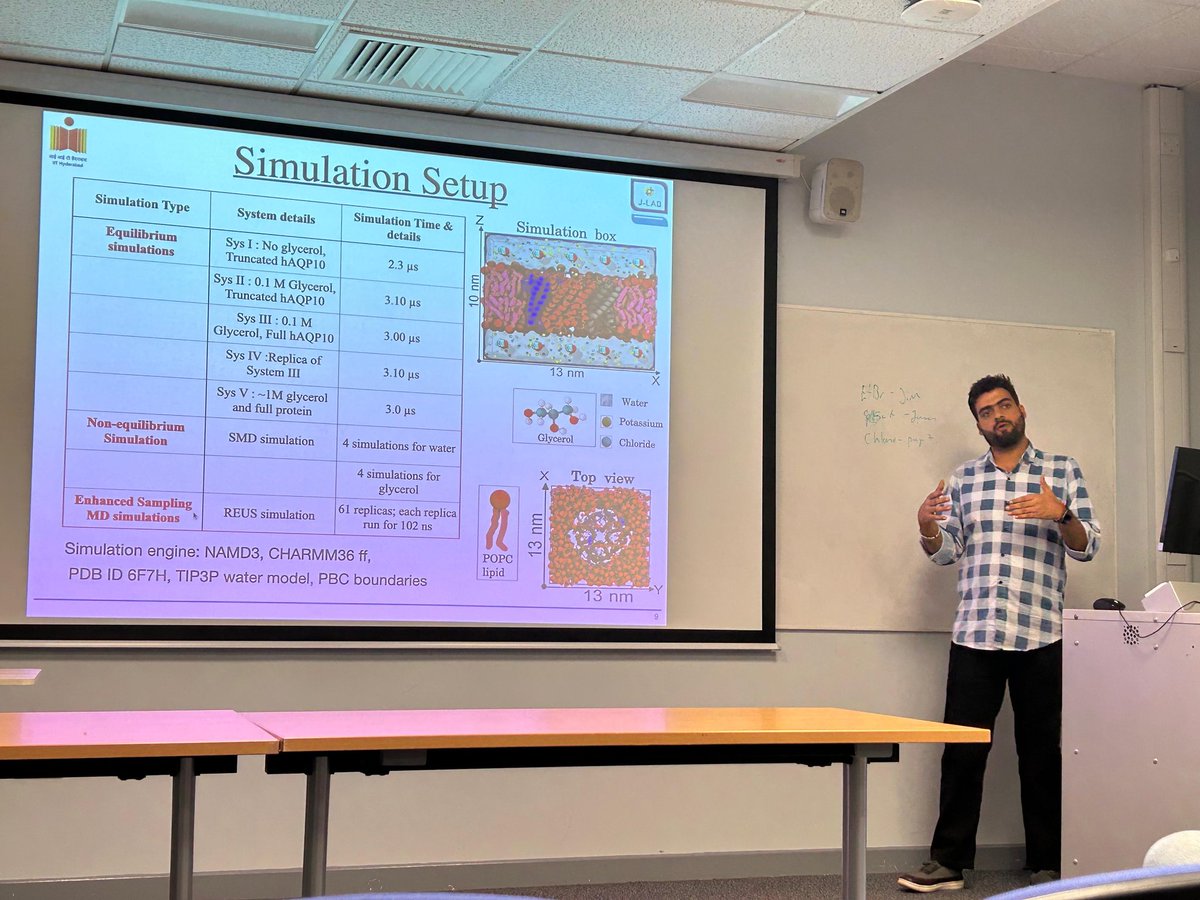
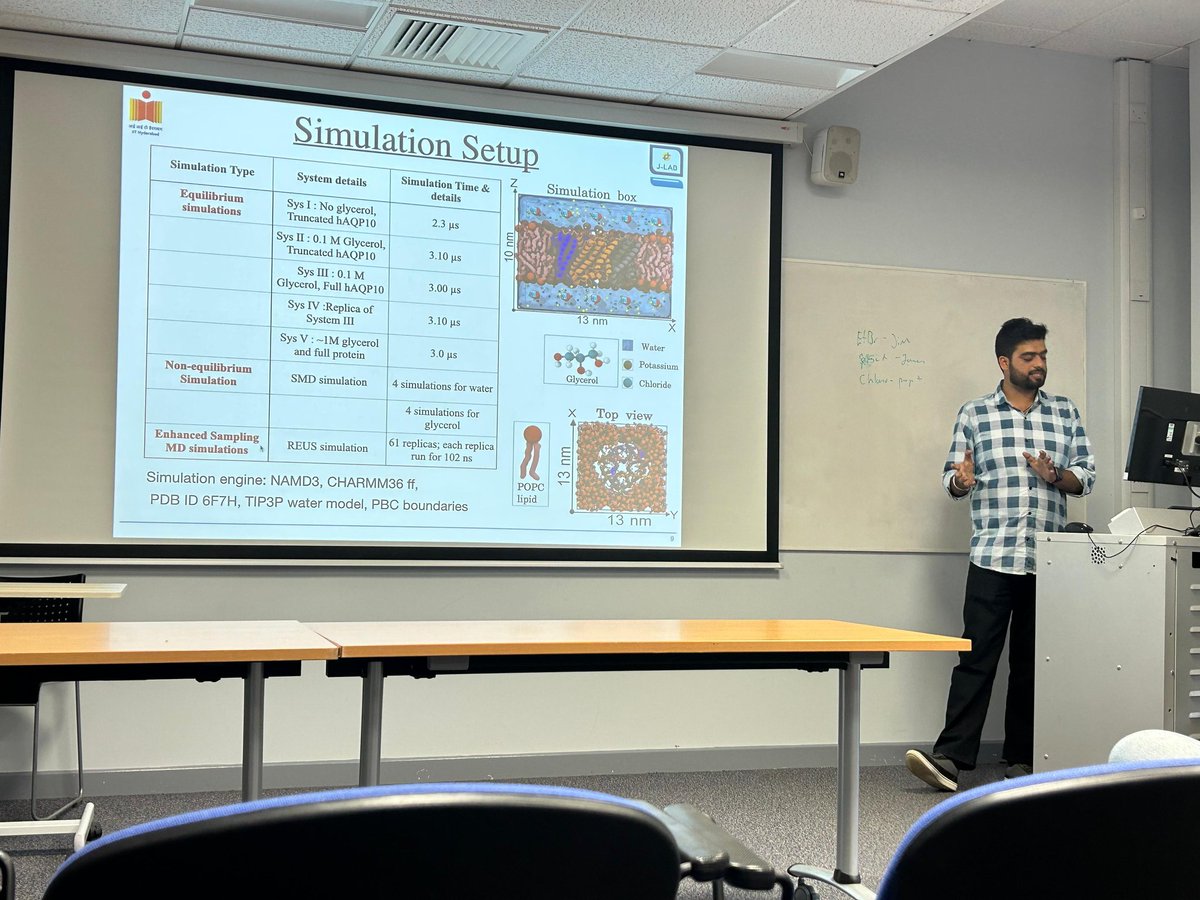
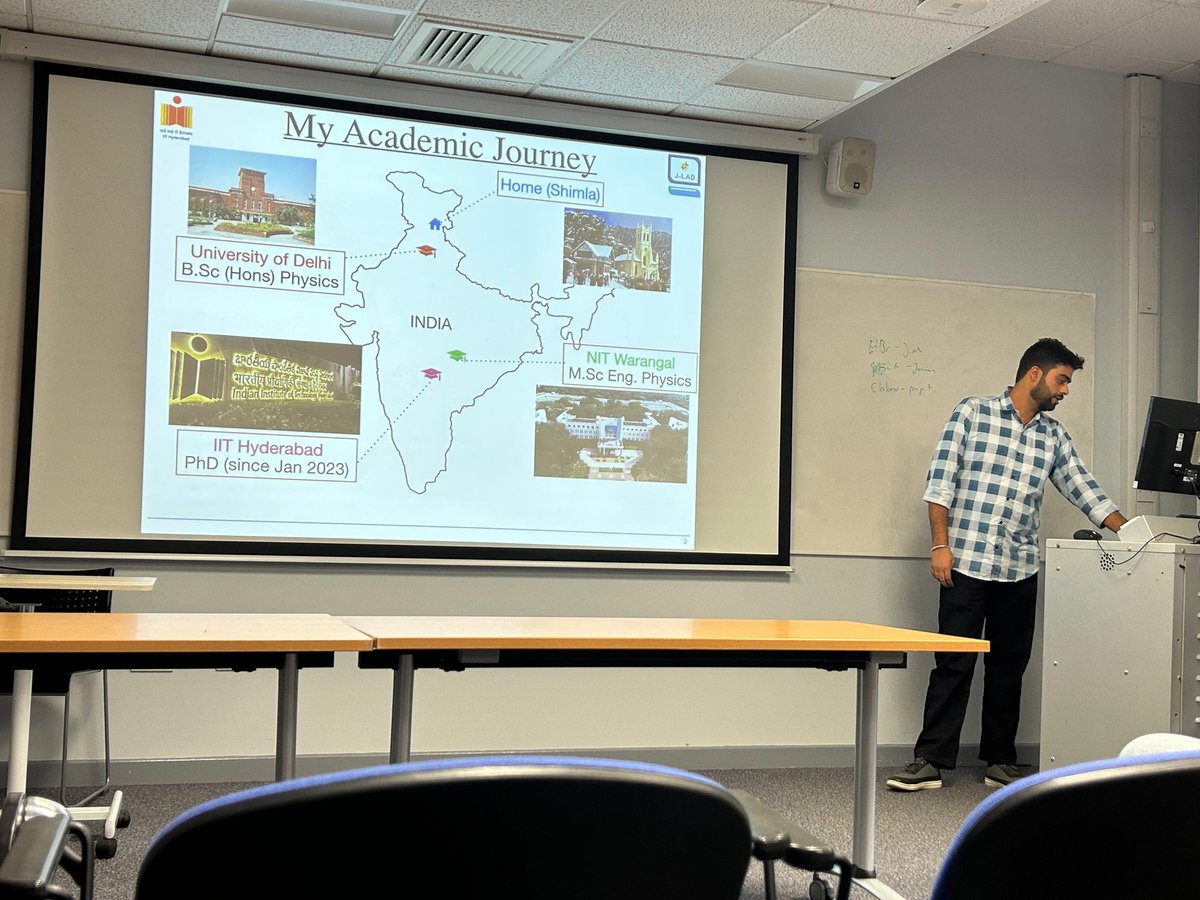
Gave my first talk at the @UniOfYork Grateful to @BPSIYork & @ANoyLab for the opportunity, and to my supervisor @joshiphy for his constant support. It was a truly enriching experience to share my work and interact with such inspiring researchers. Also thnks to @SonamRagha77827
Biophysics, Stat Mech and Machine Learning will meet in Trento from July 7th to 11th, 2025 in our StatPhys29 Satellite Workshop "Molecular biophysics at the transition state: from statistical mechanics to AI": https://t.co/B6P1HW2YrY.
Co-organized with @ai_ngrosso.
🚨🚨Please RT! 📢📢
Still time to submit short talk abstract for EdinPBS2025!
Five themes this year:
· Mechanobiology
· Protein pattern formation
· 4D Genome
· Stochastic biology
· Biohydrodynamics
https://t.co/rIeodmzBHQ
An article talking about ‘Future directions of the prokaryotic chromosome field’. This vision article resulted from of a workshop organized at @lorentzcenter
https://t.co/HsTz3uapWA
Fundamental research into DNA “bubbles” will improve scientists' understanding of how genetic programs unfold to help in disease detection and treatment @ANoyLab https://t.co/aZWanzttPl
Were you interested in our last paper in @PhysRevLet but found it too complex to follow? Then look at this article by @physorg_com, where it is explained in plain terms
https://t.co/XIR6eQ9CGv
Thrilled that the paper has just appeared in @PhysRevLett. Excellent work from Matt Burman's @EPSRC -funded PhD. Thanks to @N8CIR and @hecbiosim for computational resources. Check the updated thread in @agnesnoy.bsky.social!
https://t.co/mqxtR94Cyk
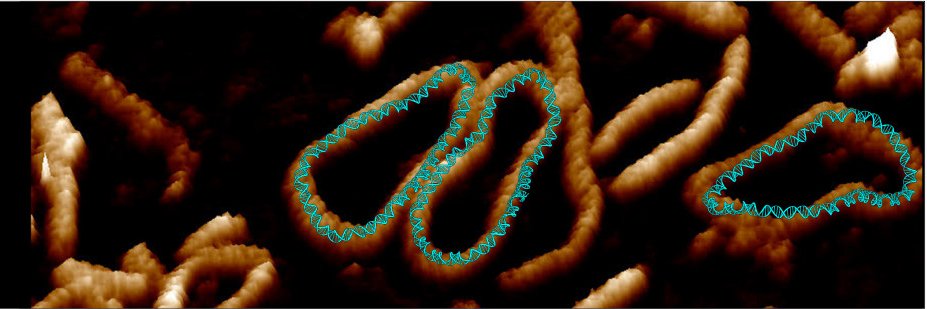
📢 Preprint alert: How the structure of linear DNA is distorted by physiological levels of torsion and tension? 🧬🧬 The answer by all-atom simulations and it is similar from what we saw on minicircles with @alicepyne 👇(1/n) https://t.co/xBs2rImX24
So she was first author on his key paper - in fact she's on most of his key papers, yet she didn't get the Nobel Prize, in spite of the fact they could have given 3 awards, not just 2. Explain to me how STEM is not institutionally sexist.