Hello tweeple, welcome to the Twitter page of the amazing work in Natural farming and Agroecology being done by farmers across the state of Andhra Pradesh
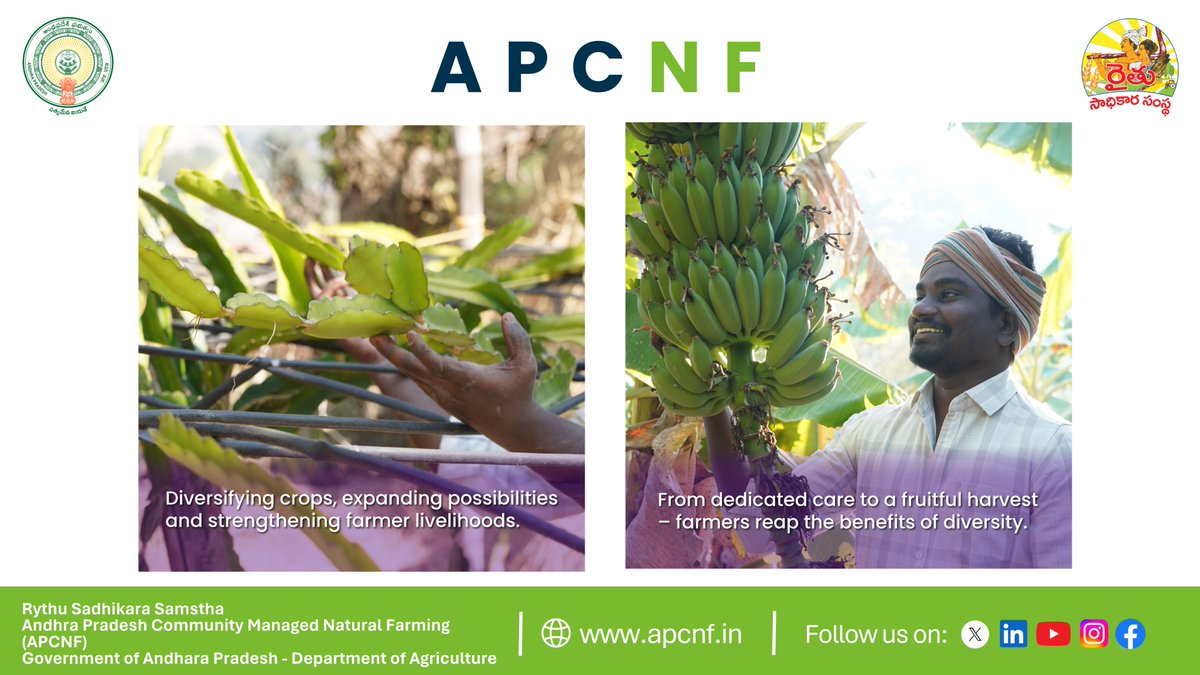
From dragon fruit and banana to ginger, farmers practising #NaturalFarming under #APCNF are demonstrating the potential of diversified farming systems. By integrating different crops and making productive use of their farmland, they are creating a wider range of food and income sources while strengthening farm resilience. These field level outcomes reflect how working with nature can support sustainable agriculture, enhance household food security and create better livelihood opportunities for farming communities.
@vijaythallam@AndhraPradeshCM@ap_agriculture@rajbudithi65@icarindia@AgriGoI
#CropDiversification #SustainableAgriculture #FarmerSuccessStories
Two farmers. Same village. Same Karpura banana variety. But two different outcomes after back-to-back cyclones.
In Dommeru village, East Godavari, a 5-acre conventional chemical banana farm was completely flattened, resulting in a loss of ₹9 lakh just a month before harvest. In contrast, K. Rama Krishna’s 1.5-acre #NaturalFarming banana field stood firm with zero damage, despite the severe winds and heavy rainfall of Cyclones #Arnab and #Murasu. With an investment of just ₹30,000, his healthy crop stands as an example of how Natural Farming can strengthen climate resilience while reducing cultivation costs.
Sharing his experience, farmer K. Rama Krishna demonstrates that healthy soil, stronger roots and resilient crops can make all the difference when extreme weather strikes. Natural Farming is not just about growing crops differently; it is about protecting farmers' investments, livelihoods and future.
@vijaythallam@AndhraPradeshCM@ap_agriculture@rajbudithi65@icarindia@AgriGoI
#ClimateResilience #CycloneResilience #FarmersFirst #SustainableAgriculture
“Farmers must diversify into #NaturalFarming, dairy and horticulture to enhance their incomes and build resilient livelihoods.”
As highlighted by @the_hindu , @vijaythallam, Executive Vice Chairman, #RythuSadhikaraSamstha, emphasised the need for an integrated farming approach in Chittoor district.
Moving beyond conventional crop cultivation towards diverse, sustainable farming systems can strengthen farm incomes, improve family nutrition and create year round livelihood opportunities.
https://t.co/0HnPddmFAi
@AndhraPradeshCM@ap_agriculture@icarindia@rajbudithi65
#FarmerIncome #SustainableAgriculture #PMDS #SeedPelletisation
“#NaturalFarming expansion requires coordinated efforts across all government departments, with an integrated action plan to enhance farmers’ incomes, ensure green fodder for livestock and improve family nutrition,” said Shri T. Vijay Kumar, Executive Vice Chairman, RySS.
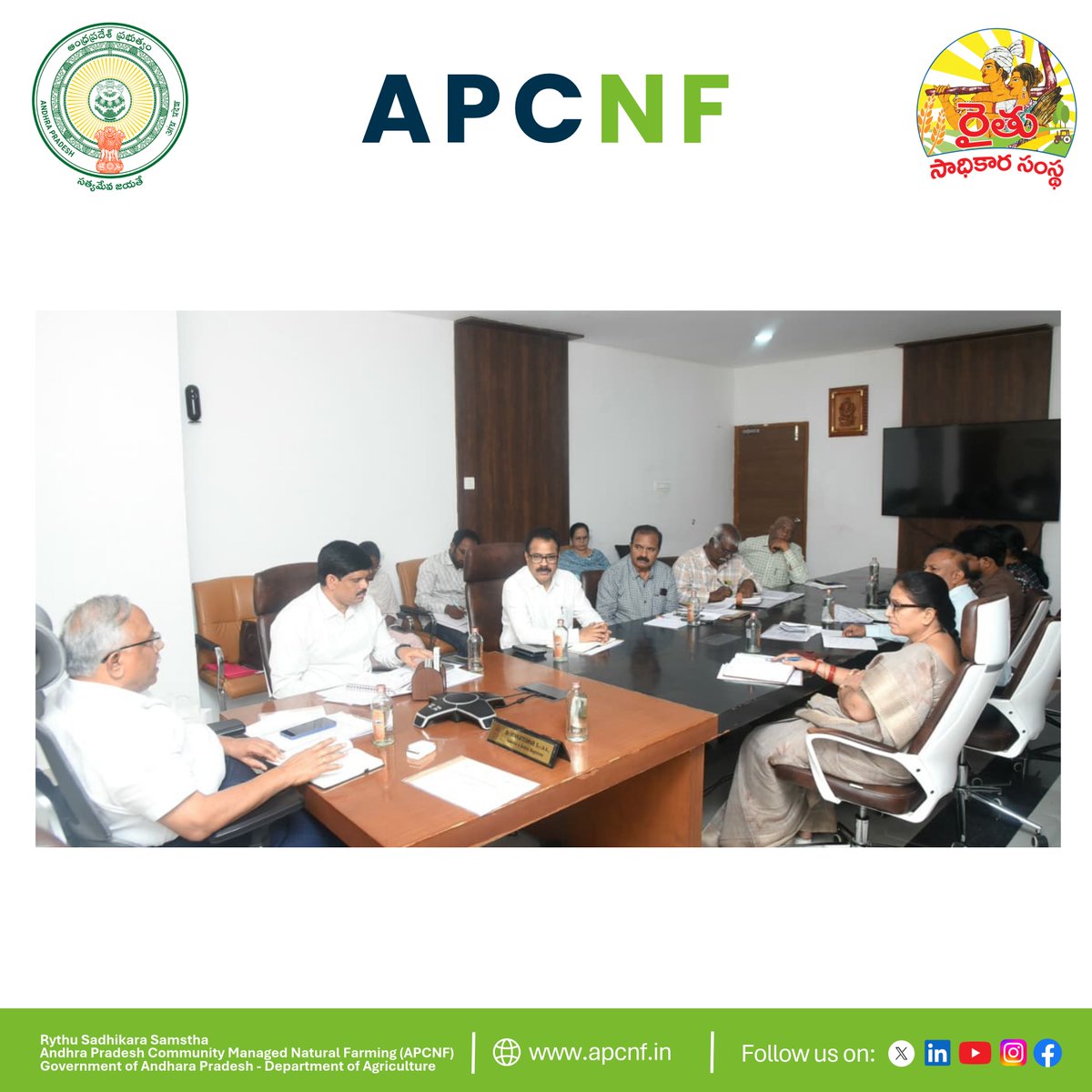
During a review meeting at the Tirupati District Collectorate @vijaythallam emphasised promoting intercropping in mango orchards, expanding #PMDS for fodder availability, integrating diverse crops into paddy systems, bringing fallow lands under cultivation and encouraging backyard nutrition gardens. He called for strong interdepartmental convergence to make Natural Farming a holistic approach to farmers’ prosperity, livestock nutrition, family health and environmental sustainability.
@vijaythallam@AndhraPradeshCM@ap_agriculture@rajbudithi65@icarindia@AgriGoI
#SeedPelletisation #FarmersProsperity
When two successive cyclones put farmers' resilience to the test, one banana field in Dommeru village, East Godavari, stood out. Cyclones #Arnab and #Murasu brought destructive winds and heavy rainfall, flattening conventional Chakkerakeli banana plantations across the region. Around 200–250 acres of banana crops in Kovvur and neighbouring villages suffered extensive damage.
But P. Durga Ravi Prakash’s Natural Farming banana field told a different story. Despite facing both cyclones and nearly a week of waterlogging, the plants remained standing, with healthy leaves and developing bunches.
Sharing his experience, Natural Farmer Durga Ravi Prakash says:
"Even after two cyclones and a week of stagnant water, my banana plants remained strong. The leaves are healthy, and the bunches are developing well. Despite the waterlogging, we have not suffered any major loss."
What made the difference? Healthy soil, strong root systems and better water infiltration.
A powerful field level demonstration of how Natural Farming can strengthen crop resilience when nature turns harsh.
The real strength of a crop begins beneath the soil!
@vijaythallam@AndhraPradeshCM@ap_agriculture@rajbudithi65@icarindia@AgriGoI
#CycloneResilience #ClimateResilientAgriculture #SoilHealth #FarmerStories #BananaFarming #SustainableAgriculture #NatureBasedSolutions #ResilientFarming #FarmersOfAndhraPradesh
When Cyclones #Arnab and #Murasu struck the coastal districts of Andhra Pradesh in quick succession, paddy, banana and papaya crops suffered extensive damage, leaving farmers with huge losses.
Yet, in Dommeru village of East Godavari district, N. Satyanarayana’s Natural Farming Chekkarakeli banana field stood resilient, while the neighbouring conventional chemical farming field of K. Verra Raju experienced crop damage.
Sharing his experience, Natural Farmer Satyanarayana says:
"Despite two successive cyclones and heavy rainfall, my banana crop stood strong. Seeing my field withstand such extreme weather gives me confidence in Natural Farming. Healthy soil and strong plants make all the difference."
Strong root systems, dense canopy and improved soil water infiltration under Natural Farming contributed to the crop's resilience.
Natural Farming – Building resilience from the soil up.
@vijaythallam@AndhraPradeshCM@rajbudithi65@ap_agriculture@icarindia@FoodPlanetPrize@FCGulbenkian@agrigoi
#SoilHealth #FarmerSuccess #SustainableAgriculture #BananaCultivation #ResilientFarming #NatureBasedSolutions #FarmersOfAndhraPradesh
Women are central to building climate resilient communities and sustainable food systems. From contributing to agricultural decisions and managing household resources to sharing knowledge and strengthening community networks, their role extends across every aspect of rural development. Through #APCNF, women's participation in #NaturalFarming reflects how empowering women in agriculture can strengthen local food systems, support family livelihoods and build community resilience.
"Their leadership and participation in agriculture are essential to shaping the climate resilient communities and equitable food systems envisioned under #COP31."
@vijaythallam@AndhraPradeshCM@rajbudithi65@ap_agriculture@icarindia@FoodPlanetPrize@FCGulbenkian@agrigoi@CGIAR_EMD@NITIAayog@UNFCCC@rajshah@soil_institute
#FoodSecurity #ClimateResilience #SustainableAgriculture #LocalFoodSystems #SustainableAgriculture #FarmersForClimate #COP31Türkiye #COP31Antalya #COP31Presidency
What if a farm could produce its own inputs, nurture its own soil and provide a variety of foods from the same piece of land? #APCNF demonstrates how bringing crops, livestock and locally prepared bio-inputs together can create a more interconnected farming system. By working with nature's cycles and strengthening on farm resources, farmers are shaping an approach to agriculture that contributes to climate adaptation, biodiversity and sustainable food systems — priorities at the heart of #COP31.
@vijaythallam@AndhraPradeshCM@rajbudithi65@ap_agriculture@icarindia@FoodPlanetPrize@FCGulbenkian@agrigoi@CGIAR_EMD@NITIAayog@UNFCCC@rajshah@soil_institute
#FoodSecurity #ClimateResilience #SustainableAgriculture #LocalFoodSystems #SustainableAgriculture #FarmersForClimate #COP31Türkiye #COP31Antalya #COP31Presidency
Climate action begins with the way we grow, share and consume food. Natural Farming demonstrates how working with ecological processes can contribute to healthier agricultural landscapes, diverse food production and stronger rural economies. By strengthening soil health, supporting biodiversity and connecting farmers to local markets, community led farming systems offer practical pathways towards climate resilient agriculture.
As the world looks towards #COP31, such grassroots approaches highlight the importance of transforming food systems to secure both livelihoods and the environment.
@vijaythallam@AndhraPradeshCM@rajbudithi65@ap_agriculture@icarindia@FoodPlanetPrize@FCGulbenkian@agrigoi@CGIAR_EMD@NITIAayog@UNFCCC@rajshah@soil_institute
#COP31 #FoodSecurity #ClimateResilience #SustainableAgriculture #LocalFoodSystems #APCNF #SustainableAgriculture #FarmersForClimate #COP31Türkiye #COP31Antalya #COP31Presidency
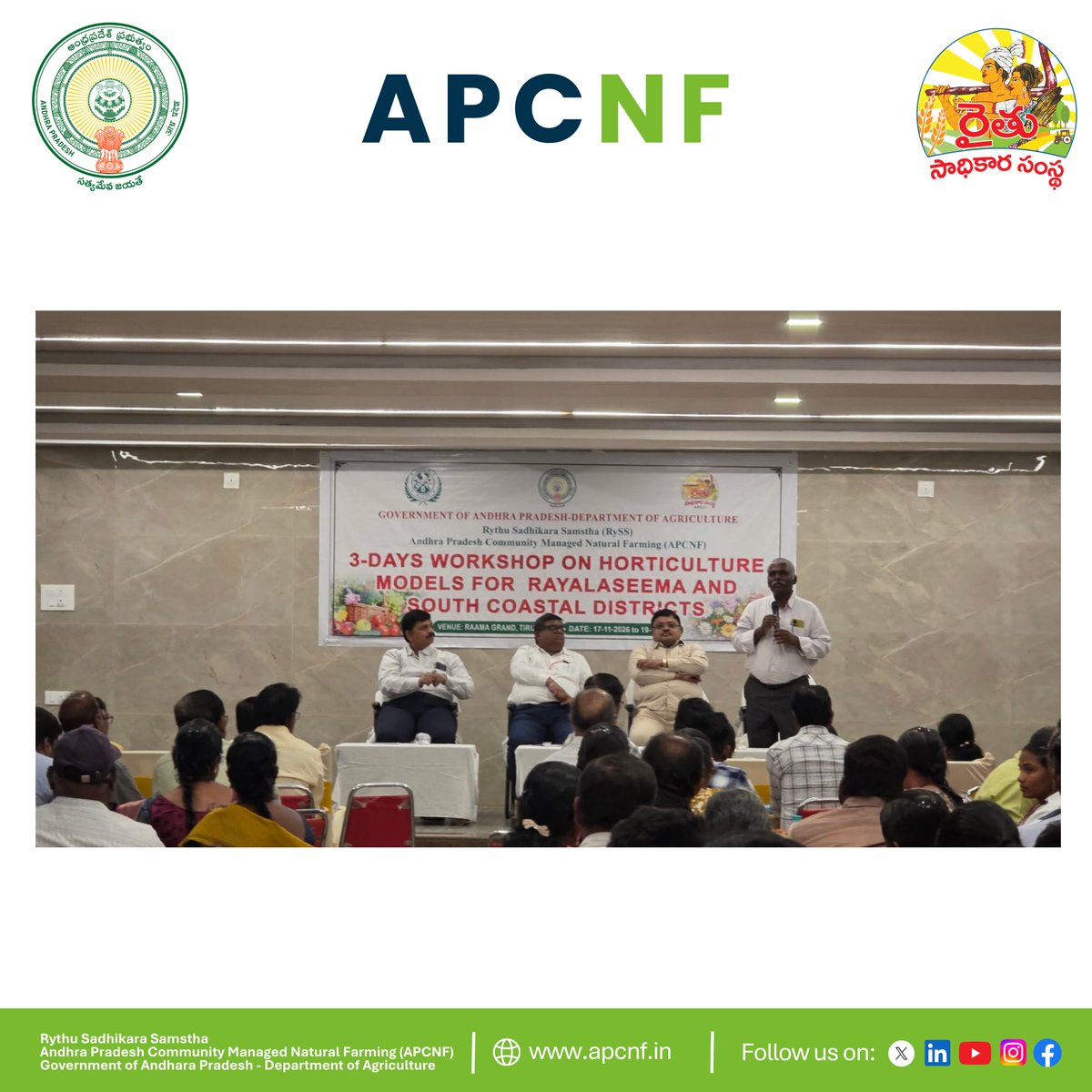
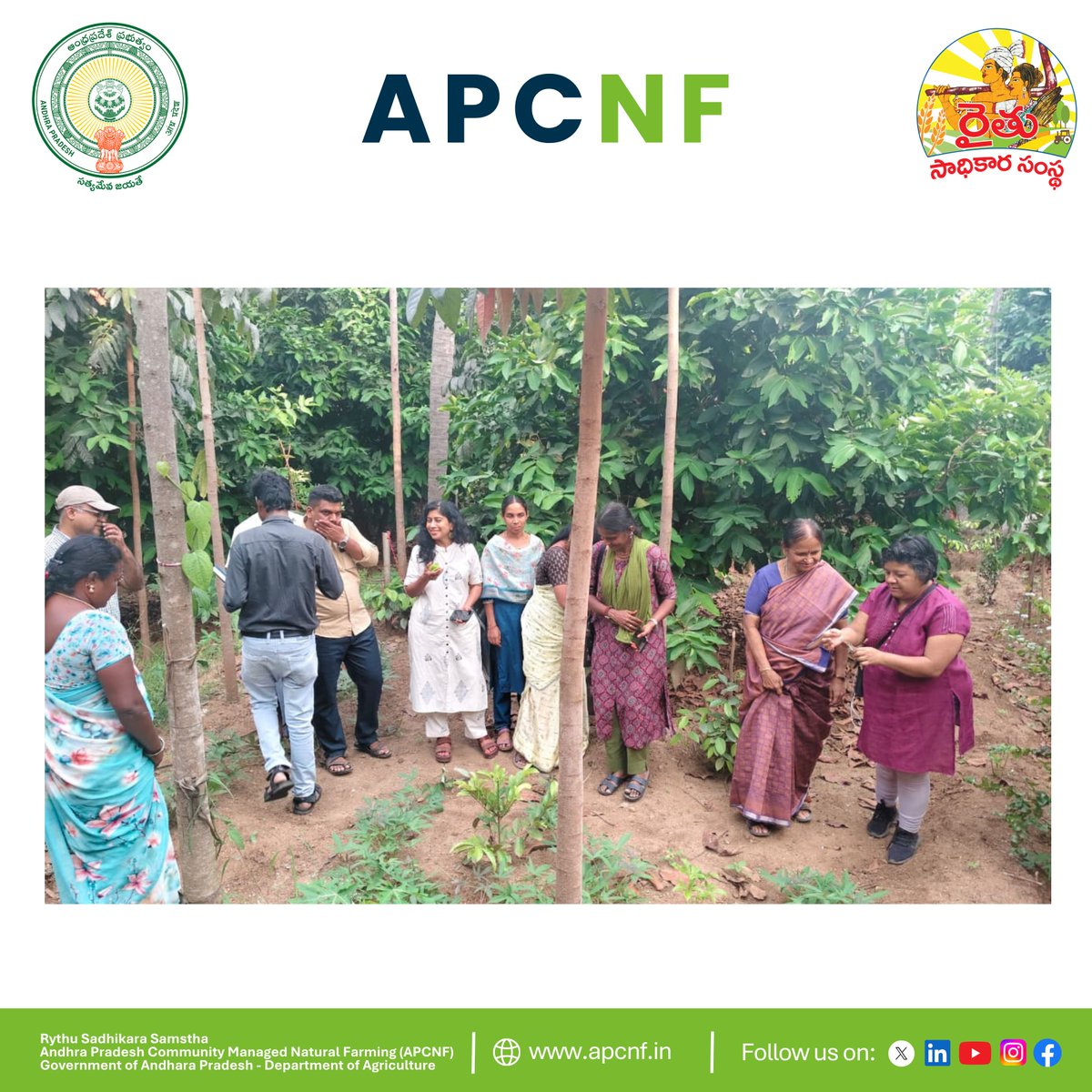
As part of the three day workshop on Horticultural Dryland Models for Rayalaseema and South Coastal districts, the second day featured a field level learning visit to Chinnarampuram village in Chandragiri Mandal, Tirupati district. Participants observed key #NaturalFarming models, including seed pelletisation, drought proofing, half moon structures and Mango Perenniality. The demonstrations highlighted their significance in improving seed germination under rainfed conditions, conserving soil moisture, enhancing drought resilience and promoting crop diversification through intercropping in mango orchards.
During the technical sessions, Chief Technology and Innovation Officer (CT & IO) Shri V. Lakshma Naik discussed the major crops commonly cultivated in the dryland regions of Rayalaseema and South Coastal districts and explored approaches to improving crop productivity and farmers' profitability through Natural Farming. He highlighted the importance of adopting crop perenniality, promoting diversified and multiple cropping systems, reducing cultivation costs and developing sustainable farming models capable of withstanding drought conditions and climate variability while ensuring higher and more stable incomes for farmers.
The programme was attended by RySS CEO and Retd. IAS Officer Shri B. Rama Rao, Senior Thematic Lead Shri C. Chandrasekhar, CT & IO Shri V. Lakshma Naik, Tirupati District Project Manager Shri A. Shanmugam, District Project Managers from the participating districts, Natural Farming Associates, Science Team members and DPMU staff. The field observations and technical discussions aimed to strengthen understanding of innovative dryland horticulture models and facilitate their adoption across the participating districts.
@vijaythallam@AndhraPradeshCM@rajbudithi65@ap_agriculture@icarindia@FoodPlanetPrize@FCGulbenkian@agrigoi
#DrylandHorticulture #ClimateResilientAgriculture #Rayalaseema #SouthCoastalAndhra #CropDiversification #MangoPerenniality #SoilHealth #SustainableAgriculture
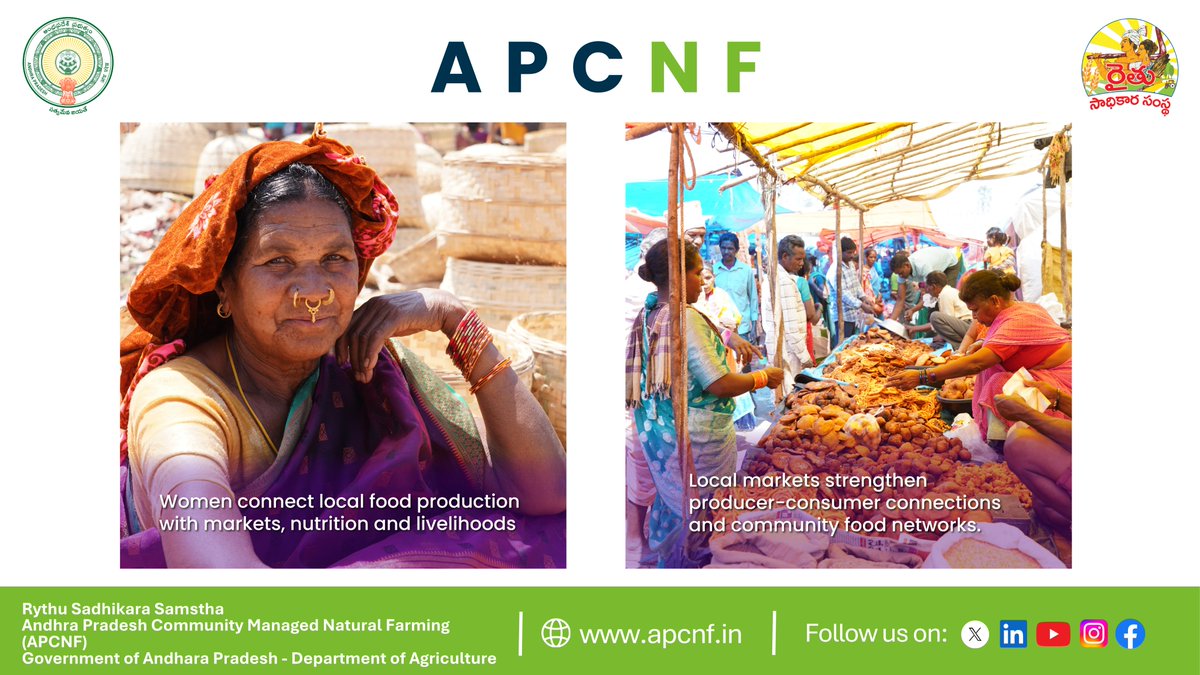
Food security begins with the strength of local food systems. From diverse grains and traditional foods to women led market activities and rural livelihoods, every link plays a role in building resilient communities. As the world looks towards #COP31, these local realities highlight the need to protect agricultural diversity, strengthen local markets and recognise farmers and women led climate resilient food systems.
@vijaythallam@AndhraPradeshCM@rajbudithi65@ap_agriculture@icarindia@FoodPlanetPrize@FCGulbenkian@agrigoi@CGIAR_EMD@NITIAayog@UNFCCC@rajshah@soil_institute
#COP31 #FoodSecurity #ClimateResilience #SustainableAgriculture #LocalFoodSystems #APCNF #SustainableAgriculture #FarmersForClimate #COP31Türkiye #COP31Antalya #COP31Presidency
When the Fields Tell Two Different Stories!
As climate extremes intensify, the resilience of farming systems becomes increasingly important. A recent field experience during a cyclone highlights how farming practices can influence crop survival. While a chemically cultivated paddy field suffered severe lodging, the neighbouring field under five years of PMDS based #NaturalFarming remained standing despite strong winds and heavy rainfall. Such field level experiences highlight the importance of building soil health, strengthening crop resilience and reducing farmers' vulnerability to climate risks. As the world looks towards #COP31, these experiences from Andhra Pradesh reinforce the need to recognise climate-resilient natural farming as a key pathway towards sustainable food systems and farmer security.
@vijaythallam@AndhraPradeshCM@rajbudithi65@ap_agriculture@icarindia@FoodPlanetPrize@FCGulbenkian@agrigoi@CGIAR_EMD@NITIAayog@UNFCCC@rajshah@soil_institute
#COP31 #ClimateResilience #NaturalFarming #APCNF #ClimateSmartAgriculture
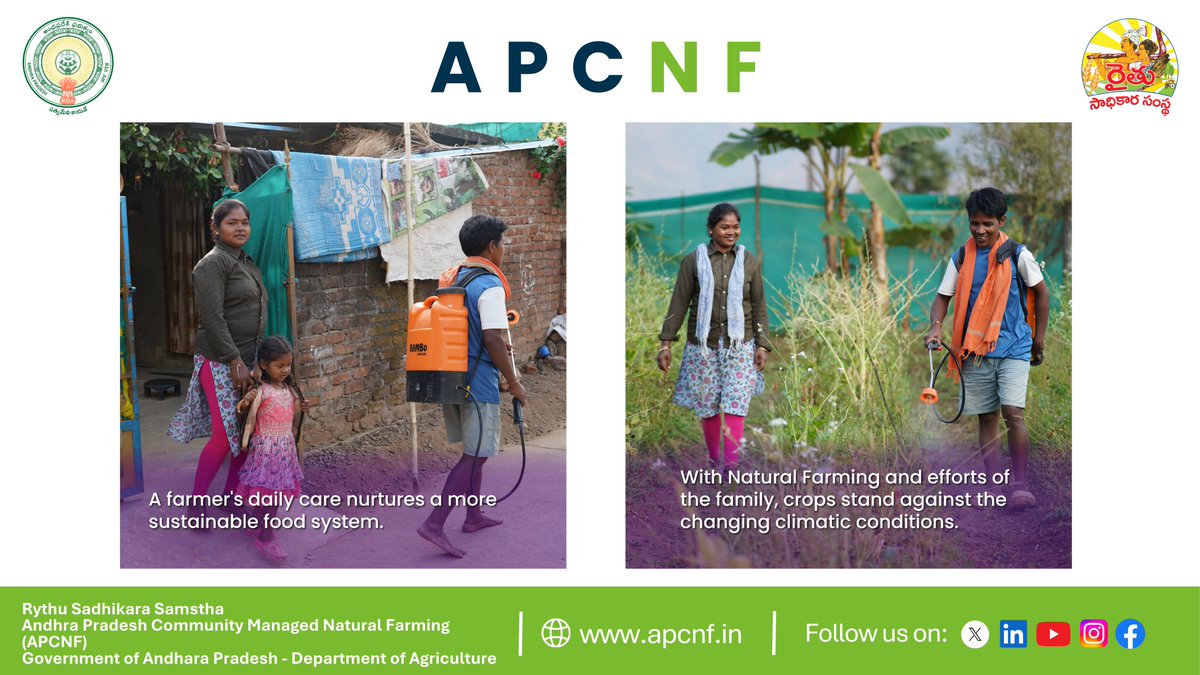
Climate resilience begins with farmers and the choices they make every day. Through #APCNF, farming families are demonstrating how #NaturalFarming practices, shared responsibilities and diversified cultivation can contribute to stronger livelihoods and sustainable food systems.
Their journey reflects an important message for #COP31: climate action must begin at the grassroots, empowering farming communities to protect natural resources, strengthen food security and build a more resilient agricultural future.
@vijaythallam@AndhraPradeshCM@rajbudithi65@ap_agriculture@icarindia@FoodPlanetPrize@FCGulbenkian@agrigoi@CGIAR_EMD@NITIAayog@UNFCCC@rajshah@soil_institute
#ClimateResilience #FoodSecurity #APCNF #SustainableAgriculture #FarmersForClimate #COP31Türkiye #COP31Antalya #COP31Presidency
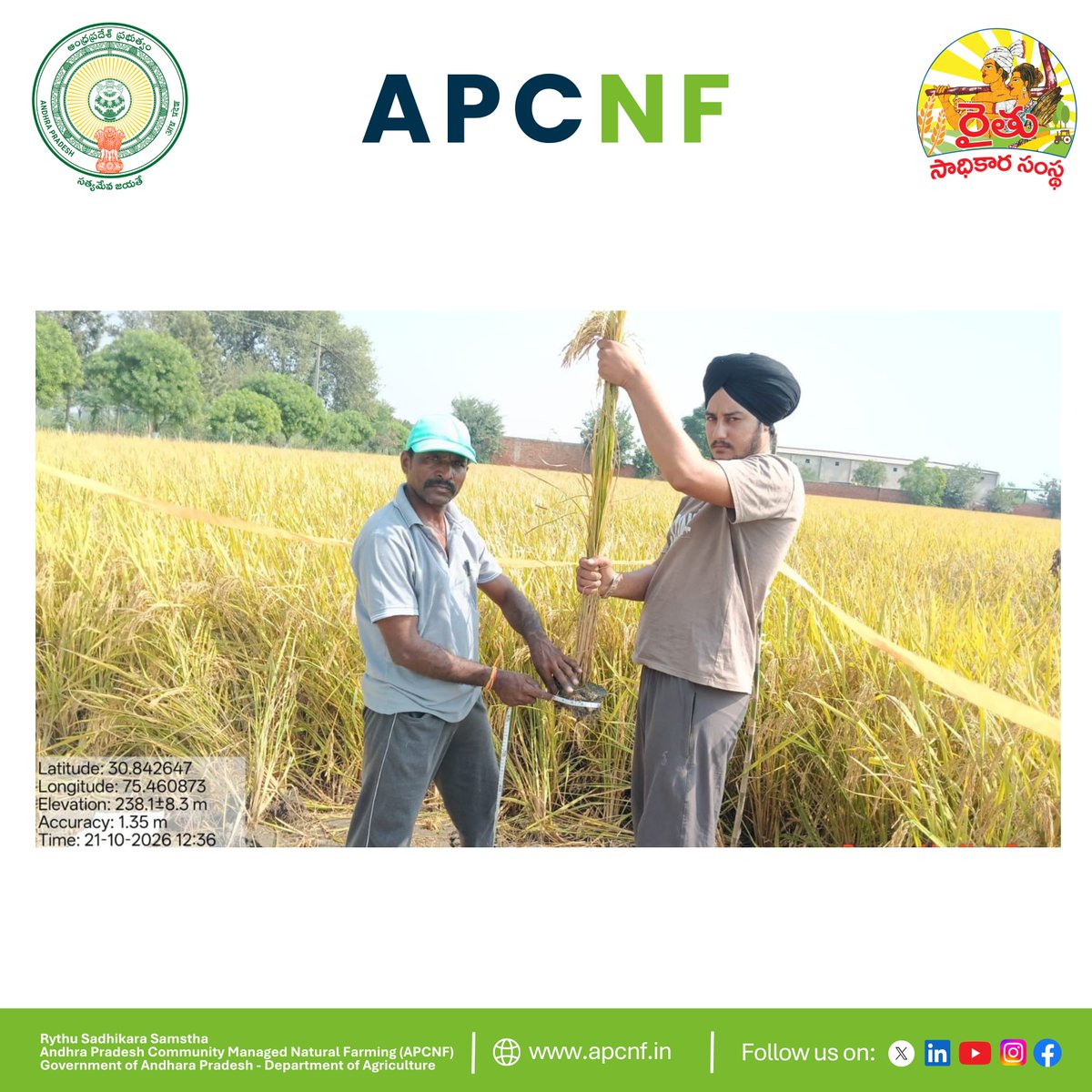
Crop Cutting Experiment Results | Natural Farming and Chemical Paddy, Kharif 2026
Sherpur Kalan Village, Siddawan Bet Block, Ludhiana District
A Crop Cutting Experiment was conducted on 21st October 2026 on the farm of Shri Bhupinder Singh, comparing Natural Farming with his existing chemical practice under identical field conditions.
Of his 12 acres under paddy, 0.25 acre was brought under Natural Farming this season , his first year of practice, established through #PMDS , while the remaining 11.75 acres continued under chemical cultivation. Both plots carried the same variety (PR-8822), the same sowing date (12th July 2026), the same source of irrigation, allowing for a direct comparison.
RESULTS (PER ACRE):
Estimated yield: 29.55 quintals under Natural Farming against 31.86 quintals under chemical cultivation, derived from a dry yield of 6.57 kg and 7.085 kg respectively in a 3 × 3 sq. m crop cutting plot — a difference of 2.31 quintals, or 7.25 per cent.
Cost of cultivation: ₹16,800 under Natural Farming against ₹25,430 under chemical cultivation — a reduction of ₹8,630, or approximately 34 per cent.
Gross income:
₹75,515 under Natural Farming, including ₹1,640 realised from bund crops of Brinjal, Marigold, Chilli and Turmeric, against ₹79,650 under chemical cultivation.
Net income:
₹58,715 under Natural Farming against ₹54,220 under chemical cultivation — an additional ₹4,495 per acre.
The yield under Natural Farming was marginally lower. Net returns, however, were higher, the gain arising from a substantially reduced input cost and from the supplementary income generated by bund crops, which the chemical plot did not yield.
BIO-METRIC OBSERVATIONS:
Measurements recorded in the Natural Farming plot indicated improved root development: an average root length of 22 cm against 19.35 cm, and an average rhizo-sheath circumference of 47.4 cm against 35.4 cm — the latter an indicator of enhanced microbial activity in the root zone.
PACKAGE OF PRACTICES FOLLOWED:
1. Seedling treatment with Beejamrut;
2. Ghana Jeevamrutham at 400 kg per acre;
3. Drava Jeevamrutham at every fifteen-day intervals;
4. Clipping of tips, bird perches and
5. Yellow sticky traps at 20 per acre;
6. Pest and Disease management through Neemastram, Dashaparni and sour butter milk;
7. Sapta Danyakura tonic as a growth promoter — all prepared on the farm.
FARMER RESPONSE:
Shri. Bhupinder Singh responded positively to the results and has indicated his intention to expand the area under Natural Farming in the coming year.
These findings pertain to a single farmer's field in the first year of practice and are presented as a field observation rather than as a generalised conclusion.
@vijaythallam@AndhraPradeshCM@rajbudithi65@ap_agriculture@icarindia@FoodPlanetPrize@FCGulbenkian@PAU_LDH
#CropCuttingExperiment #Ludhiana #Punjab #Paddy #SoilHealth #FarmerIncome #SustainableAgriculture #Agroecology
#CIIPartnershipSummit2026, Visakhapatnam, witnessed encouraging interactions with prominent dignitaries, including Hon’ble Union Minister of Home Affairs,Andhra Pradesh @Anitha_TDP , Hon’ble Directors Shri Madhav and @HeroManoj1 , and other public representatives.
During their visit, the dignitaries explored #APCNF's #NaturalFarming initiatives, with a special focus on the Compact Block Approach for scaling Natural Farming.
The interactions reflected strong appreciation for the importance of chemical free food in promoting better health, expanding Natural Farming through a focused Compact Block approach, and creating greater awareness among farmers about Natural Farming practices.
The discussions highlighted the importance of taking Natural Farming to more farming communities through collective efforts, awareness generation and scalable field-level implementation.
#APCNF continues to showcase Andhra Pradesh's Natural Farming journey, demonstrating how sustainable agriculture can contribute to healthier food systems, resilient farming communities and a better future.
@vijaythallam@AndhraPradeshCM@rajbudithi65@ap_agriculture@icarindia@FoodPlanetPrize@FCGulbenkian
#CIIPartnershipSummit2026 #CompactBlocks #ChemicalFreeFood #SustainableAgriculture #FarmerAwareness
Leading by Example, Inspiring Farmers Through Practice!
What makes Bhimaraju’s journey distinctive is that he doesn’t just encourage farmers to adopt #NaturalFarming. He demonstrates its potential through his own cultivation. By experimenting with #PMDS, #SeedPelletisation and diverse cropping practices on his farm, he shows fellow farmers how these methods can improve soil health, support crop growth and strengthen resilience against climate uncertainties. His own field becomes a living demonstration, helping farmers learn from practical experience rather than advice alone. Through his #BioResourceCentre, field visits and farmer interactions, he builds confidence among fellow farmers to overcome hesitation, experiment with Natural Farming practices and recognise the long term value of protecting their soil. His approach reflects a powerful principle: when a farmer proves a practice on their own land, inspiration grows into confidence, and confidence leads to adoption.
@vijaythallam@AndhraPradeshCM@rajbudithi65@ap_agriculture@icarindia@FoodPlanetPrize@FCGulbenkian
#BioResourceCentre #PMDS #SeedPelletisation #FarmerToFarmerLearning #ClimateResilience #FarmerEmpowerment
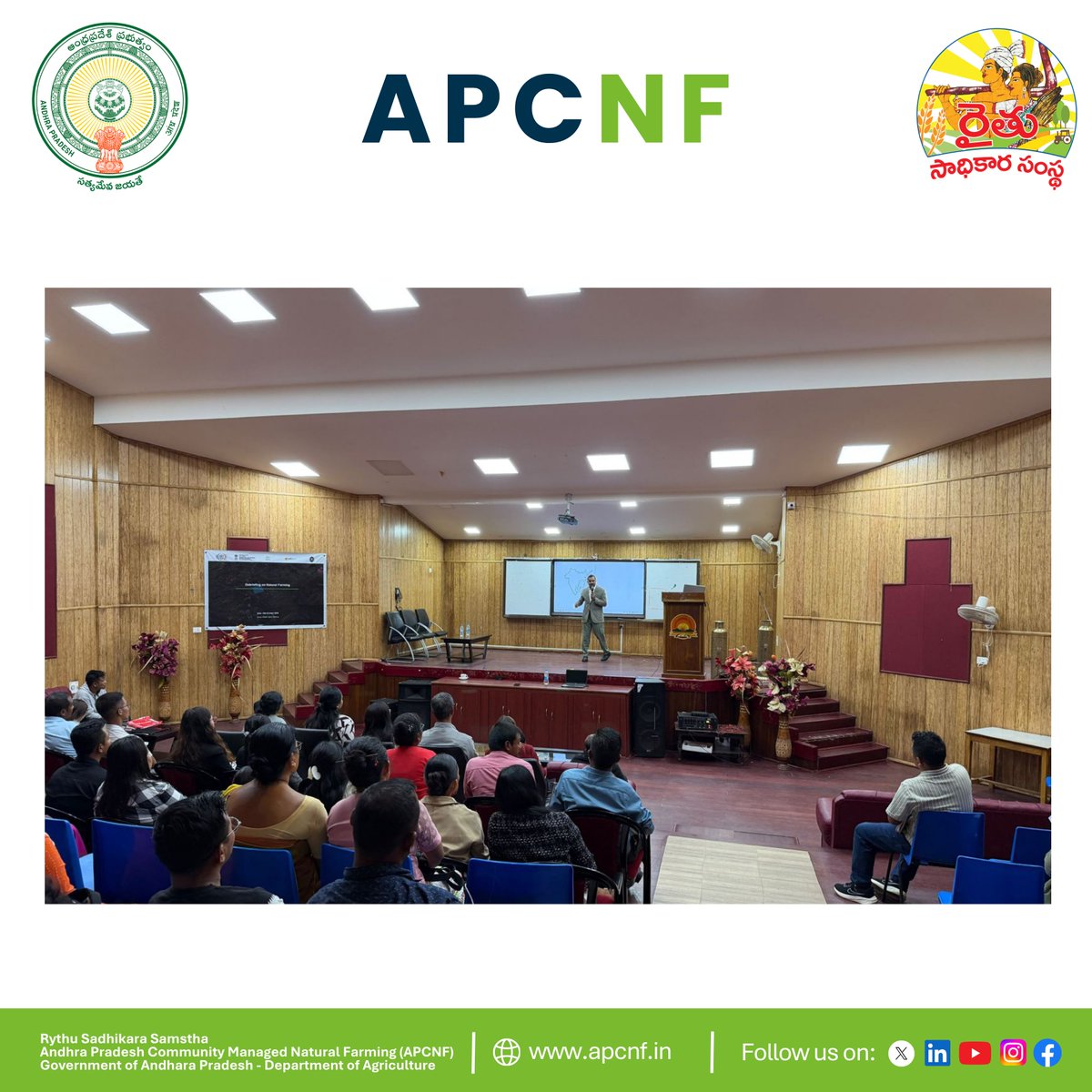
Debriefing on Natural Farming | Shillong, 16th October 2026
A debriefing meeting for the second round of newly deployed ECRPs was held at Shillong, chaired by the COO, MSRLS, who reviewed block-Shri Sampath Kumar, IAS, Additional Chief Secretary, joined the session and interacted with ICRPs from every region. He asked them a simple question — what gives you satisfaction in your Natural Farming work? Their answer was telling: watching farmers adopt #NaturalFarming, and knowing it is building better health in their villages.
Sharing the way forward for expanding Natural Farming to more villages, he underlined the deep link between farming and well being, describing Natural Farming as "medicine and health," and stressed that the demand for Natural Farming must rise from within the community itself. He further directed the COO to ensure that every #MSRLS staff member, including CC–General, actively contributes to promoting Natural Farming.
@vijaythallam@AndhraPradeshCM@rajbudithi65@ap_agriculture@icarindia@FoodPlanetPrize@FCGulbenkian
#APCNF #SustainableAgriculture #SoilHealth #RuralLivelihoods #FarmersFirst
A delegation from Canada, led by Dr. Jayeeta Sharma, Associate Professor, Physical and Environmental Sciences and Director of the #FeedingCityLab, @UofT, visited Dharmapuri district, TamilNadu along with Dr. Geetha Sukumaran (Postdoctoral Fellow, Feeding City Lab, University of Toronto), Mr. Jimmy Cherian (Project Director, Objectif France Inde), Mrs. Ranganayagi (District Coordinator for Women) and Ms. Priya Ranjanarayanan (Founder, Seed Island, Tiruppur). The #TNSRLM Dharmapuri team, along with the RySS district team, participated in the field visit to Palakodu Block. In Erranahalli village, the delegation interacted with SHG women farmers and visited an A-Grade rose farm integrating 40 types of crops, including vegetables and greens, along with ATM, Kitchen Garden and RDS models featuring 28 crop varieties. Dr. Geetha also participated in harvesting vegetables. The team appreciated the remarkable transformation and was impressed by the progress witnessed during the second round of visits. In Mallapuram village, the delegation explored ATM, A-Grade and #RabiDrySowing models, including a two acre arecanut based RDS field and a two acre pure RDS field, showcasing the transformation of a five layer conventional farming model into Natural Farming.
“The transformation we witnessed through #NaturalFarming is truly inspiring. The diversity of crops, integration of farming models and efforts of women farmers demonstrate how Natural Farming can strengthen livelihoods, reduce cultivation costs and build resilient farming systems.” -Dr. Jayeeta Sharma, Director, Feeding City Lab, University of Toronto.
The team also documented farmers' experiences through video interviews, capturing income generation, cost of cultivation and preparation of natural farming inputs.
@vijaythallam@AndhraPradeshCM@rajbudithi65@ap_agriculture@icarindia@FoodPlanetPrize@FCGulbenkian
#WomenFarmers #SustainableAgriculture #FeedingCityLab #SHGWomen #FarmersEmpowerment #Agroecology #ClimateResilientFarming