𝐖𝐡𝐚𝐭 𝐝𝐨𝐞𝐬 𝐢𝐭 𝐭𝐚𝐤𝐞 𝐟𝐨𝐫 𝐡𝐞𝐚𝐥𝐭𝐡 𝐩𝐨𝐥𝐢𝐜𝐲 𝐬𝐲𝐬𝐭𝐞𝐦𝐬 𝐫𝐞𝐬𝐞𝐚𝐫𝐜𝐡 𝐭𝐨 𝐬𝐡𝐚𝐩𝐞 𝐩𝐨𝐥𝐢𝐜𝐲 𝐝𝐞𝐜𝐢𝐬𝐢𝐨𝐧𝐬?
📝 A new blog by Prof Rama Baru, lead author of APO's comparative country study on public-private mix and continuity of care for older persons, draws on findings across four Asia Pacific cities and what the lessons from Kerala, India reveal about bridging the research-to-policy gap.
💡 The answer, Prof Baru argues, lies not just in the findings, but in how researchers engage policymakers from the outset.
➡️ Read the full blog: https://t.co/8iTqUCgbSR
#HPSR #HealthPolicy #HealthSystems #HealthResearch #Ageing
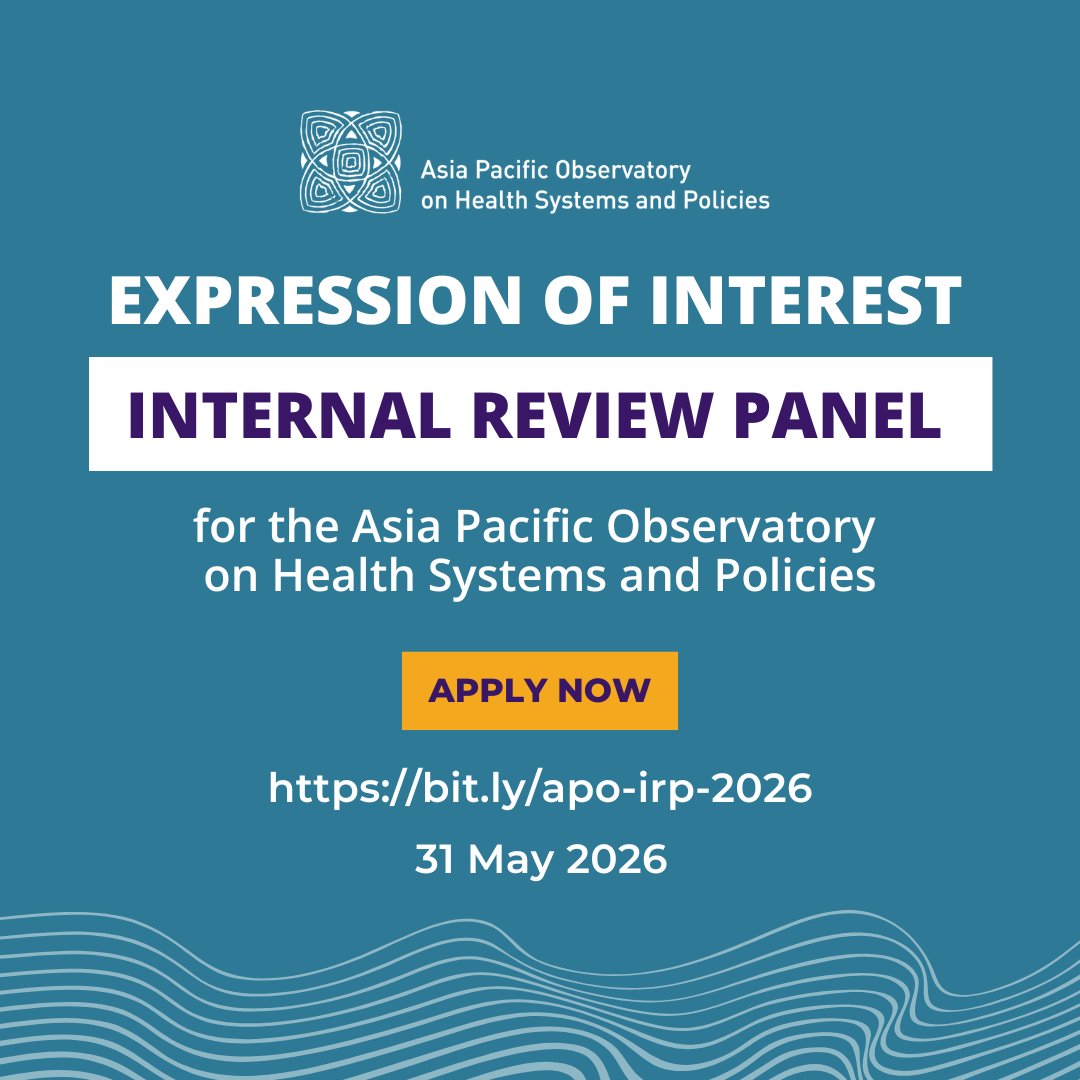
📣 The Asia Pacific Observatory on Health Systems and Policies (APO) is accepting expressions of interest for membership on its Internal Review Panel (IRP).
🔹The IRP provides independent technical oversight to the APO Board and Secretariat by reviewing research quality, advising on policy relevance and shaping APO's strategic research agenda in the Asia Pacific region.
🔹APO is a WHO-hosted regional initiative that generates and brokers evidence to strengthen health systems across South-East Asia and the Western Pacific. Working with a network of over 50 leading research institutions, APO produces policy dialogues, health systems reviews, policy briefs and comparative country studies that inform policymaking.
📋 Terms of Reference: https://t.co/WkB0cEf7w5
📥 Apply here: https://t.co/I2LZfmEWyY
📅 Deadline: 31 May 2026
📩 Inquiries: [email protected]
#AsiaPacific #HealthPolicy #HealthSystems #HealthResearch #HPSR #IRP #APO
🤝 This #WorldHealthDay, we stand #TogetherForScience and #TogetherForHealth with health policy and systems researchers, institutions and partners collaborating toward evidence-informed policymaking.
🌏 The Asia Pacific Observatory on Health Systems and Policies works with over 50 #HPSR institutions from 19 countries across 15 consortia, generating the health policy evidence that policymakers and ministries of health across Asia Pacific need.
Our consortia work across five thematic priorities:
1️⃣ Primary Health Care and Universal Health Coverage
2️⃣ Digital Health
3️⃣ Human Resources for Health
4️⃣ Health Equity
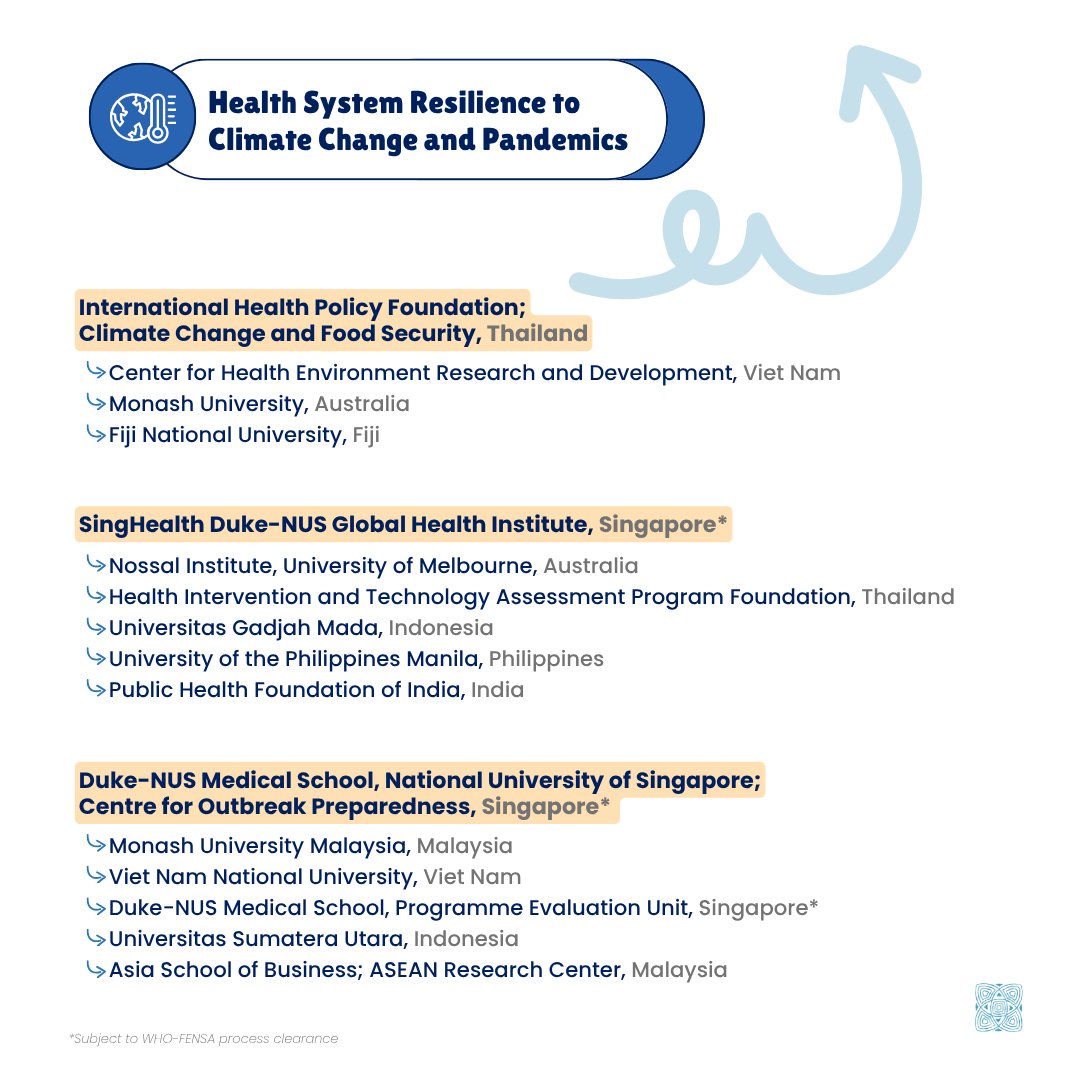
5️⃣ Health System Resilience to Climate Change and Pandemics
The best evidence is never produced in isolation. It is built through relationships, between governments and academic institutions, between policymakers and researchers. By sharing what works and what does not, we build the foundation for stronger, more equitable health systems across Asia Pacific.
#WorldHealthDay2026 #StandwithScience #OneHealth #HealthForAll #HPSR #AsiaPacific #PHC #UHC #DigitalHealth #HRH #HealthEquity #HealthSystemResilience #ClimateChange
The first-ever high-level #OneHealth Summit takes place in Lyon today – a landmark opportunity to strengthen global health and security.
Pandemics. Drug resistance. Food safety. The climate crisis. It’s all inextricably connected.
In this op-ed for the @wef, @RD_WPRO Dr Saia Ma’u Piukala urges @WHO Member States to make the investments necessary to take One Health from slogan to reality – for once and for all.
"There is the issue of context. We make decisions not in the absence of context, but because of context. For example, an archipelago could not be compared with a landlocked country, which is easily accessible when it comes to service delivery.
There is the issue of data comparability. What we often see is that countries don’t have the same data because they’re collecting it differently.
There are also political sensitivities, informal rules, open practices and unwritten histories.
We know policymakers typically want this comparison tomorrow, but to do this work, it takes time."
🗨️Excerpt from @AP_Observatory Director Nima Asgari's (@N_Asgari) talk at the #HPSR Network Convergence Forum 2026 in Cebu, Philippines.
🤝Thank you to the @DOHgovph and @results4dev for convening this forum and to colleagues across the HPSR community for the rich exchange.
#HealthPolicy #HealthSystems #HealthResearch #APO #AsiaPacific #APAC
📍APO is in Cebu for the #HPSR Network Convergence Forum 2026!
Grateful to @DOHgovph and @results4dev for convening this forum as well as to all the researchers, policymakers and health practitioners who are doing the hard work of bridging evidence and action.
Pleased to be joined by #APO consortia partners @NUSingapore and @UGMYogyakarta.
#HealthPolicy #HealthSystems #HealthResearch #AsiaPacific
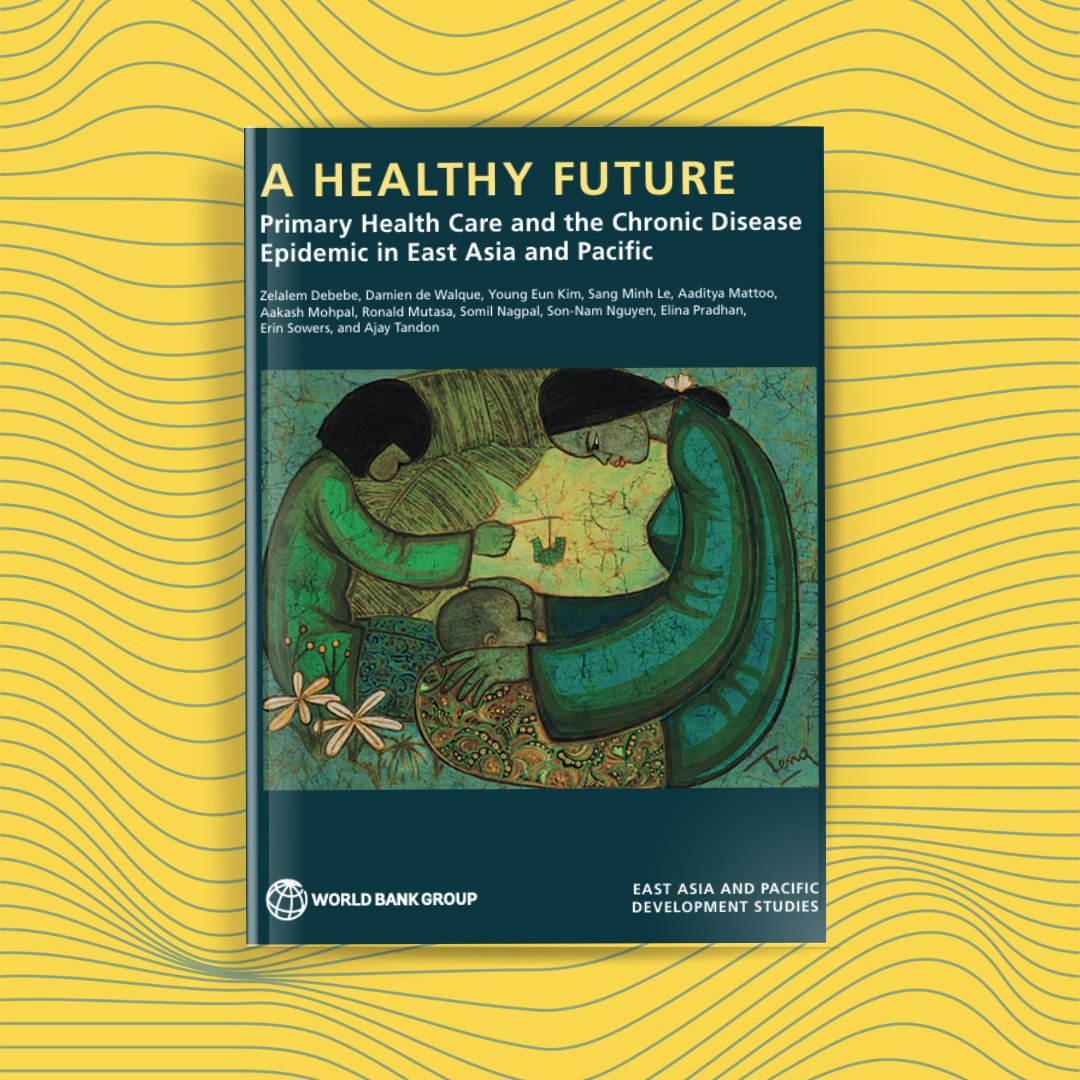
📣𝐍𝐄𝐖 𝐑𝐄𝐏𝐎𝐑𝐓: A Healthy Future: Primary Health Care and the Chronic Disease Epidemic in East Asia and the Pacific
🌏 The @WorldBankGroup's latest publication examines how countries across East Asia and the Pacific can strengthen primary health care (#PHC) systems to address the growing burden of noncommunicable diseases (#NCD)—particularly cardiovascular disease, diabetes and cancer—where service delivery often remains focused more on treatment than prevention.
💡If not addressed, health costs could rise sharply. For example, Fiji may need to increase health spending 2.5 times by 2050 just to address the growing burden of NCDs.
📝Because strong PHC systems are essential to prevention and long-term management of NCDs, the report includes cross-country comparable insights on how PHC systems are structured, financed and delivered across the region. The analysis draws on the expert survey and document reviews conducted by the Asia Pacific Observatory on Health Systems and Policies (@AP_Observatory), working with ministries of health (#MOH) and 10 partner institutions across the region.
📕 Learn more:
https://t.co/LFvxmG4pcl
#PrimaryHealthCare #NoncommunicableDiseases #EastAsiaPacific #HealthPolicy #HealthSystems #HealthResearch #HPSR #WorldBank #APO
🧭A shared framework toward a healthier #AsiaPacific
🤝Together with representatives from ministries of health, schools of public health and policy institutes from Cambodia, Indonesia, Lao PDR, the Philippines, Singapore, Thailand and Viet Nam, #APO joined a consultative exchange convened by @NUSingapore Saw Swee Hock School of Public Health and China Medical Board on strengthening capacity to use data for health policy and health systems decision-making.
💡A key outcome was a shared agreement among representatives to move forward in building a collaborative regional network and to use #APO’s Health Systems in Transition (#HiT) Review template as a common framework to assess and compare health system performance across #ASEAN.
📘#APO's flagship publication, the #HiT, is among the most downloaded publications across @WHOSEARO and @WHOWPRO. The #HiT template offers a practical foundation for advancing health policy and systems research (#HPSR) and strengthening evidence-informed policy dialogue.
👉Access it here: https://t.co/JMdpLUzlCa
#HealthPolicy #HealthSystems #HealthResearch #HealthforAll #APAC
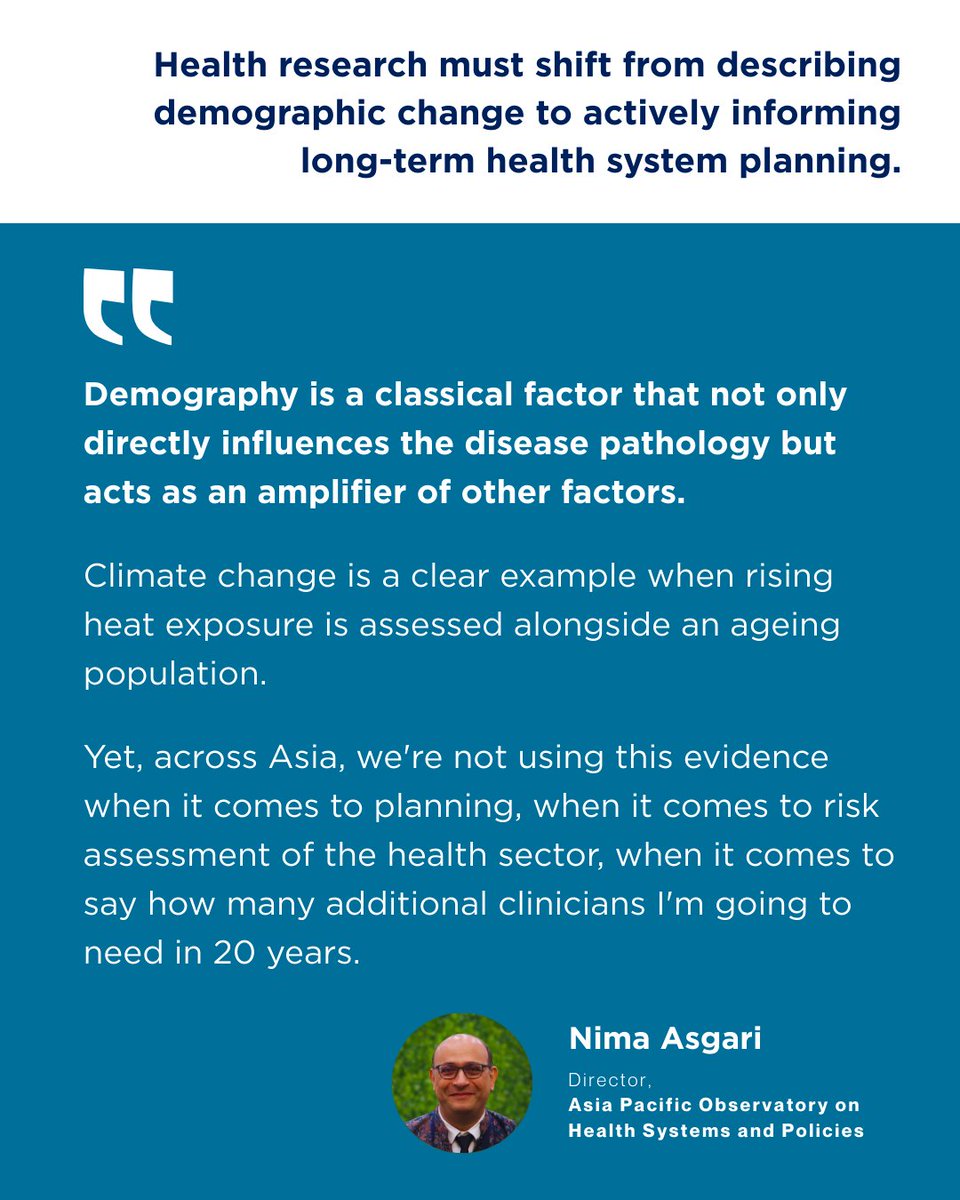
🌏Health system resilience to climate change is a planning challenge today.
At #PMAC2026, thoughtful moderation by Dr Jemilah Mahmood sharpened the focus on health system resilience in the face of climate risk.
As climate change intensifies risks, health research must adapt from describing demographic shifts to actively informing health system planning.
Evidence has to be used in policy decisions that shape health systems decades ahead.
#HealthPolicy #HealthSystems #HealthResearch #HPSR #HealthSystemResilience #ClimateResilience #ASEAN
‼️DOH, KINILALA NG WHO SA PAGKABILANG SA COUNCIL OF CHAMPIONS TO END VIOLENCE AGAINST CHILDREN‼️
DOH Secretary Ted Herbosa ay kinilala ng World Health Organization - Philippines bilang kinatawan ng bansa sa Council of Champions to End Violence Against Children.
I am deeply concerned by multiple reports of health personnel and medical facilities in Iran being impacted by the recent insecurity, and prevented from delivering their essential services to people requiring care.
In recent days, there have been reports of health workers assaulted, and at least five doctors detained, while treating injured patients. I call for the release of any health worker in detention. Healthcare personnel should never face intimidation.
@WHO has confirmed that the Khomeini Hospital, in the western city of Ilam, came under attack earlier in January. Violence was reported inside and around the facility following the transfer of injured people to the hospital. Medical services and supplies were disrupted and affected.
We have also confirmed that multiple health facilities were damaged across Iran in recent weeks, including 10 prehospital emergency posts, where more than 50 paramedics were injured and over 200 ambulances damaged. Tear gas was also reportedly used at Sina Hospital in Tehran.
The recent crisis, according to reports, has strained the health system. It is imperative that health facilities are protected and be able to deliver their critical health services in an unimpeded manner. This is fundamental to the provision of health care required by all people who need services, especially during times of crisis.
Healthcare should never be a target.
📍 #APO at #PMAC2026
We’re grateful to be at the Prince Mahidol Award Conference this week—hosting, moderating and participating in conversations that put primary health care, universal health coverage and health systems resilience at the center of regional dialogue.
#PHC#UHC #HealthSystems #HealthPolicy #AsiaPacific