Since my Twitter birth my #spaceart profile location has always been The Shoulder of Orion...
Now all those moments are lost... 😥🌧️💫
R.I.P Rutger Hauer you inspired me for decades to dream and create...
https://t.co/m4tHXsNNH5
🚀🔥 Starship is officially an orbital rocket.
On September 28, Flight 14 became the first Starship mission to reach orbit—and it deployed 26 operational Starlink V3 satellites along the way.
The flight wasn’t perfect. Booster 21 lost an engine during ascent but still completed its return and Gulf splashdown. Ship 41 also lost a Raptor during ascent, forcing SpaceX to shorten the planned mission.
Despite that, Starship achieved orbital insertion, deployed all 26 satellites, and later completed a controlled reentry and Pacific splashdown.
After years of testing, Starship has finally crossed the orbital threshold. 🌎🛰️
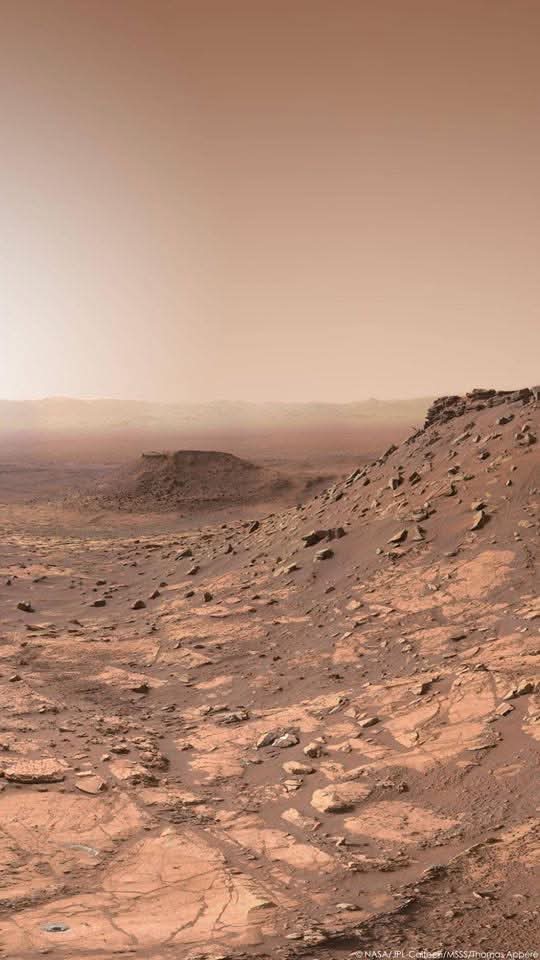
Gale Crater, Through Curiosity’s Eyes
Two years ago, NASA’s Curiosity rover paused in Gale Crater and looked back across a landscape that feels almost impossible: a dry, sculpted world of layered hills, wind-carved ridges, and ancient lakebed stone — all under a thin Martian sky.
In the distance, the crater rim rises like a far-off mountain wall, a reminder that this entire scene sits inside a giant impact basin some 154 kilometers across. What looks like quiet desert was once a place of water, sediment, and time stacked in stone.
These are natural colors — not a painter’s flourish, but the rust, gold, and muted blue-gray that Curiosity actually saw.
Credit: NASA
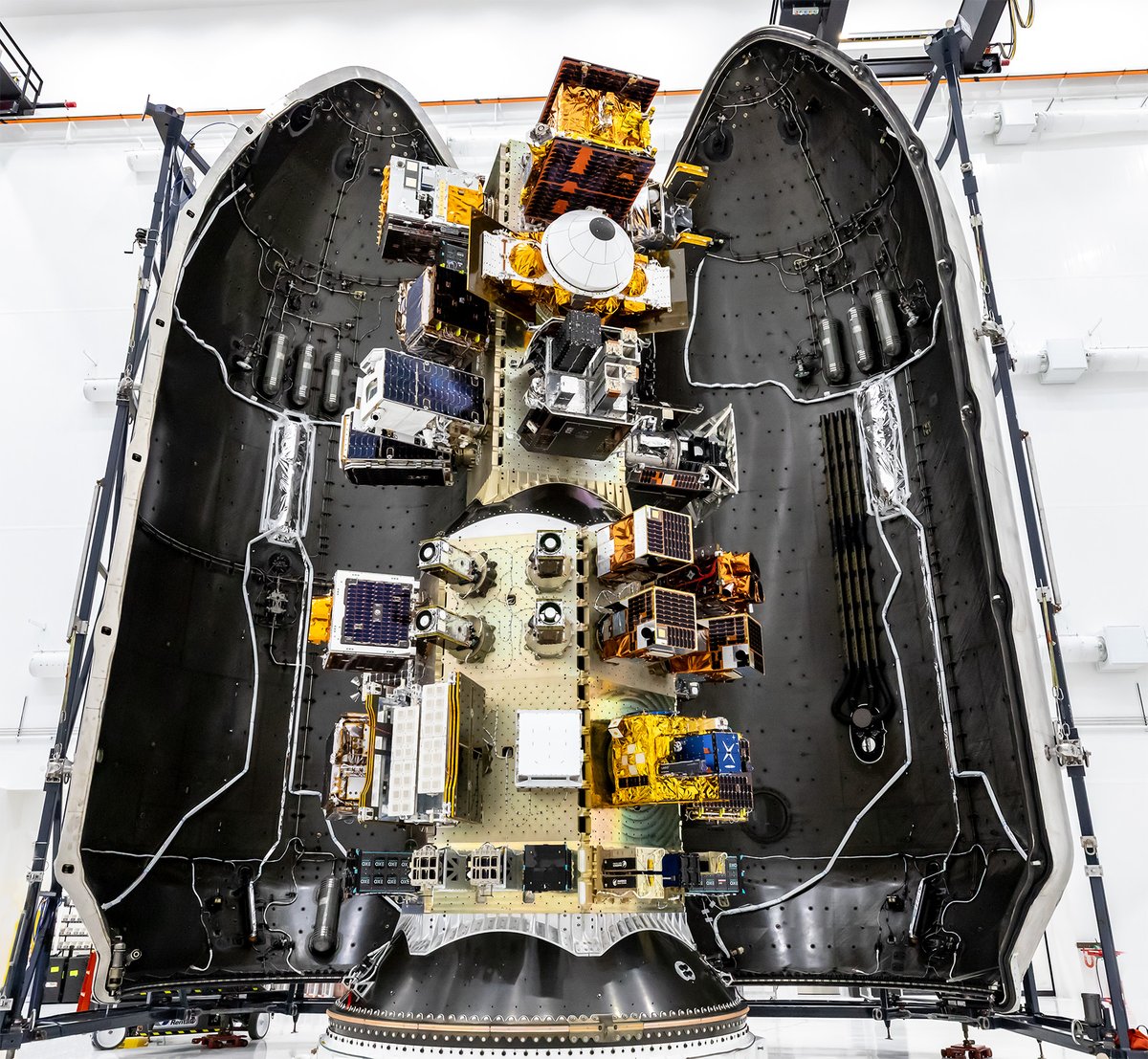
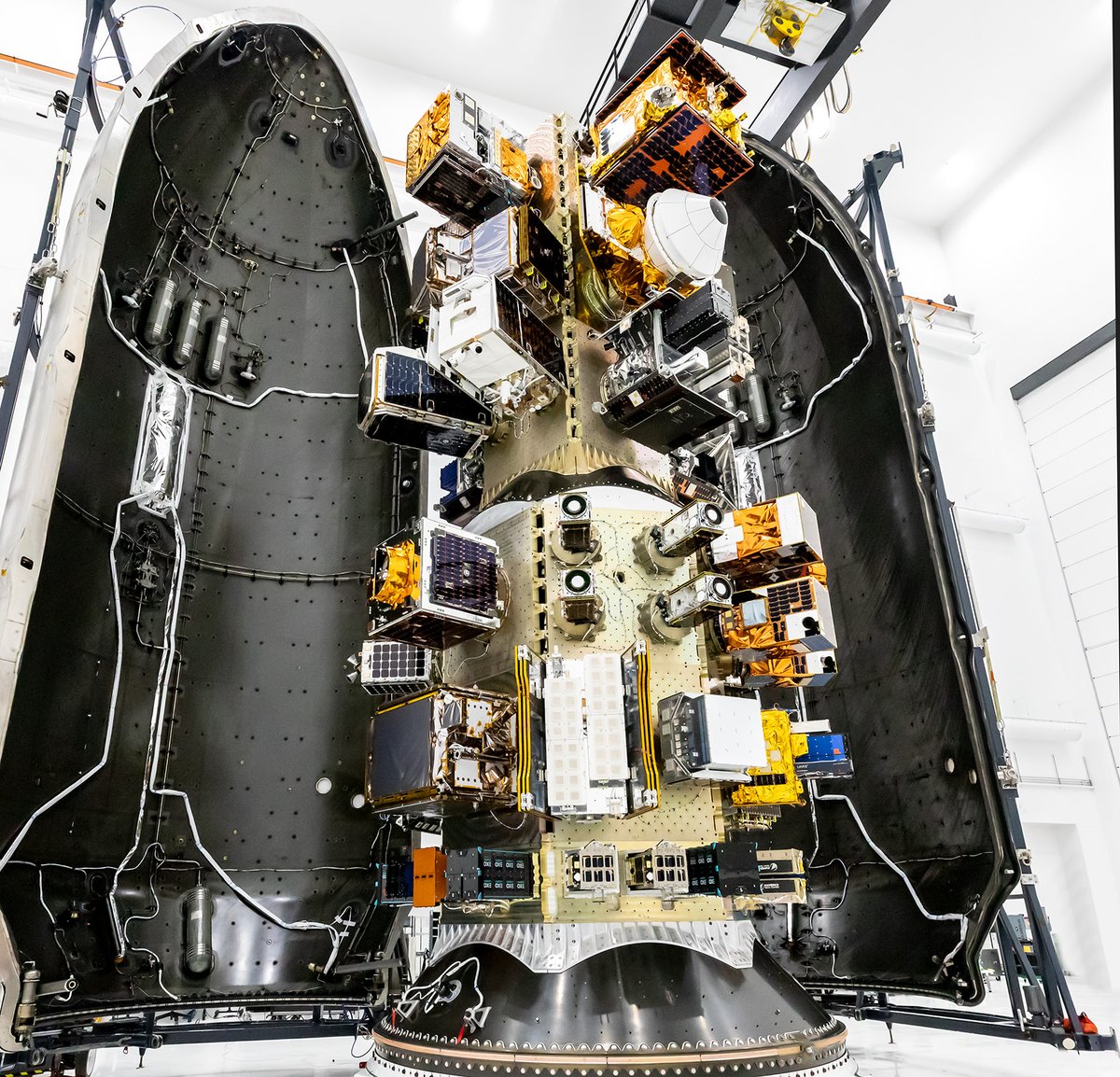
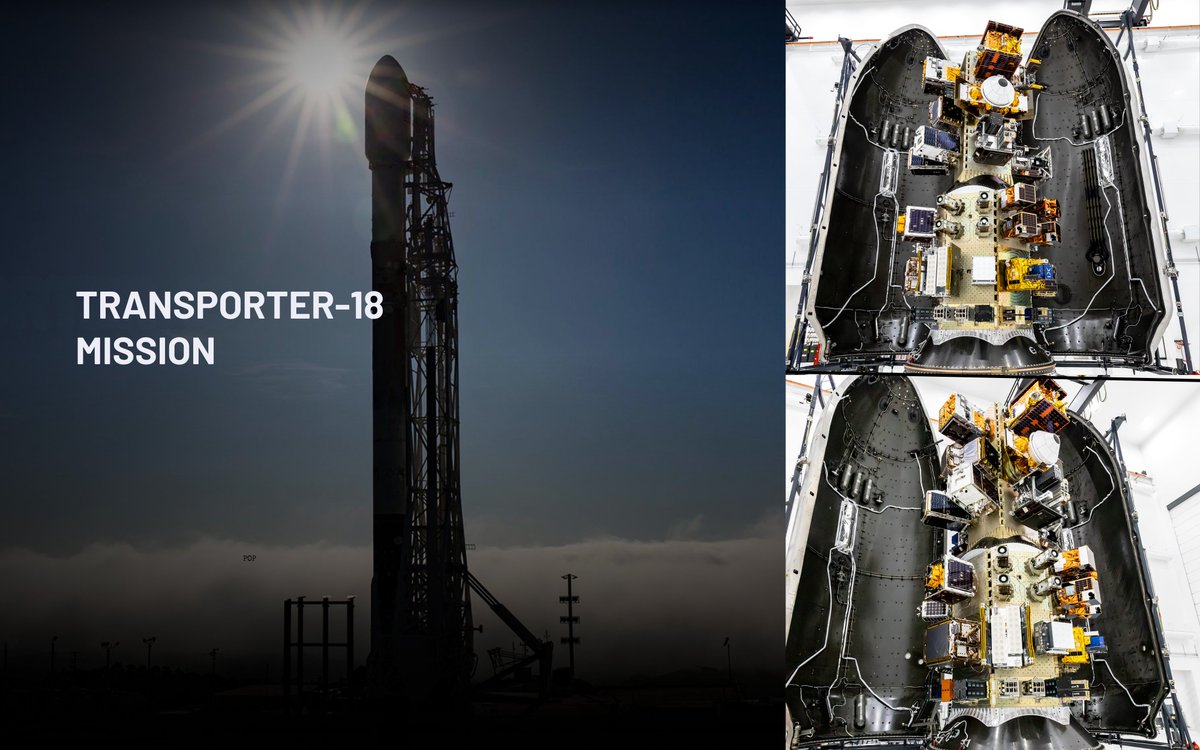
Up next, Falcon 9 will launch 130 payloads to orbit from California aboard the Transporter-18 mission. Liftoff is targeted for 11:22 a.m. PT → https://t.co/ITRKTeX0fu
Falcon 9 is ready for Transporter-18
Just a few hours ago, SpaceX launched Crew-13 from Florida, sending four astronauts toward the International Space Station
Now, just ~3 hours later, another Falcon 9 is preparing to launch from California carrying 130 payloads
And some of the technology onboard is wild:
• Google Project Suncatcher M1 — testing AI chips in orbit
• Starfish Space Otter — autonomous satellite servicing
• Cowboy Space Reason-1 — laser power beaming from orbit to Earth
• Carbon Mapper Tanager-2 — monitoring methane and CO₂ emissions
• TakeMe2Space MOI-1A — orbital AI computing
The Falcon 9 booster is also flying for the 25th time and will attempt another landing back at Vandenberg
Three Falcons. One Thursday.
Crew-13 already up this morning. Transporter-18 from Vandenberg next with 130 payloads, including Google's Project Suncatcher AI chips. Falcon Heavy closes the night with NROL-97 from 39A at 11:53 p.m. ET.
Same company. Three pads. About 13 hours.
Who else does that on a weekday? 🚀
For my audience that only casually follows aviation, here’s the story that’s mind-blowing for us geeks & will eventually become a much bigger story for the public.
The SR-71 is an icon. Elon Musk named one of his kids after the precursor to it. Every fanboy knows it & visiting one at a museum is awe-inspiring.
Bringing one back to flying condition is something I never thought possible. On retirement, most jets are given to a museum in a way the military could conceivably return them to service, but some are deliberately disabled. The SR-71 was one of the latter.
Except, apparently, for one. One that was pulled from display a few years ago. And now we hear they quietly recruited people that used to work on it, presumably to return it to flight.
It’s like hearing that we’ve gone to Alabama & decided to rebuild the Saturn V rocket on display, we’ll pull an Apollo capsule from a museum & we’re going back to the moon.
This will be a huge undertaking, but if true & they restore one to flight…I will fight like hell to be at the maiden flight.
In that regard, since I don’t know where to actually submit an application, I am hereby formally tossing my hat in the ring to fly it. For my country.
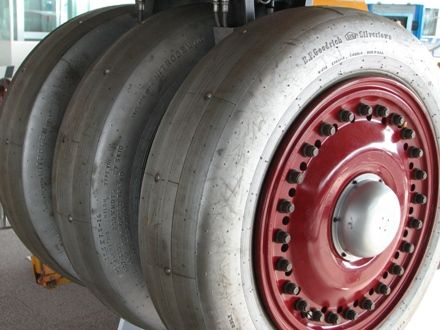
Imagine being B.F. Goodrich rep and getting a call from NASA or the Skunk Works:
"Ever hear about the crazy aluminum-infused tires you guys built for us for the SR-71 Blackbird? No? Ok... Well, here's the wikpedia entry on the plane. Yeah... We need more of them."
WELL, WELL, WELL. The missing Blackbird apparently has a job waiting for her. Remember NASA 844? The SR-71 that mysteriously disappeared from its display at Armstrong after 26 years? Aviation Week is now reporting that NASA has been contacting former SR-71 personnel and asking them to help put her back in the air.
Not preserve her. Not move her to another museum. Return her to flight.
NASA 844 is the last SR-71 ever built and the last Blackbird ever flown. Her final flight was October 9, 1999: Mach 3.21 at 80,100 feet. Bringing her back after nearly 27 years would be an extraordinary engineering undertaking. The aircraft is only one piece of the problem. NASA would effectively have to reconstruct portions of an entire support ecosystem that disappeared with the Blackbird program.
Yes, I am doing the happy dance.
Somewhere Kelly Johnson just looked over at Ben Rich and said, “See? I told you they’d need her again.”
https://t.co/dbFDtPG4Dz