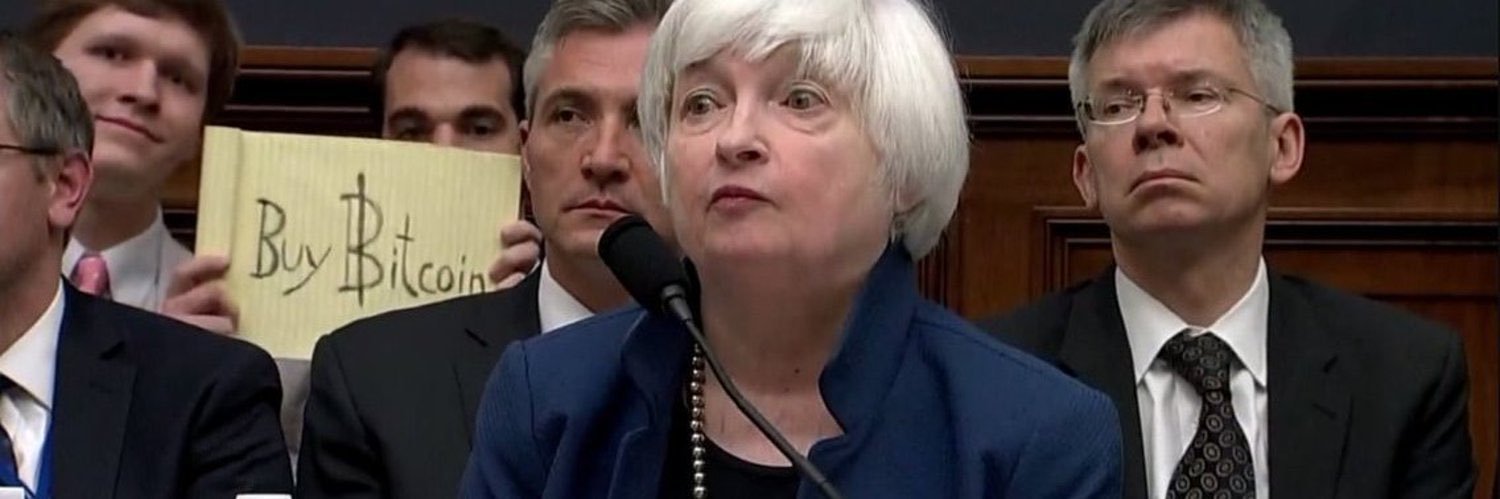
Bitcoin -- A Critical Analysis of Monetary Integrity in the Age of Token Hyperinflation
we will explore the foundational rationale for prioritizing Bitcoin over all other crypto-assets, from both a monetary theory and system design perspective. It argues that Bitcoin alone exhibits true digital scarcity, secured by irreversible energy expenditure (proof-of-work), an immutable monetary policy, and a distributed trustless consensus mechanism. In contrast, the broader altcoin and token economy exhibits structural inflation, governance centralization, speculative issuance mechanics, and unfalsifiable monetary supply curves. This report challenges the legitimacy of capital deployment into tokens, DeFi platforms, and smart contract ecosystems lacking monetary integrity, and presents Bitcoin as the singular monetary asset worthy of long-term accumulation.
1. Introduction: Digital Scarcity vs. Token Abundance
In an era where blockchain ecosystems can mint new tokens in seconds, the definition of value in cryptoassets is under assault. There are over 20,000 actively tracked cryptocurrencies, with hundreds more launched daily across various EVM-compatible and non-EVM blockchains. This explosion in token supply has introduced unprecedented monetary entropy. Amidst this chaos, Bitcoin remains the only protocol with an immutable fixed supply, cryptographic finality through hash-based proof-of-work, and no internal governance structure capable of altering its monetary issuance schedule.
Bitcoin’s 21 million cap is not a marketing feature—it is a monetary firewall. Unlike tokens with high FDV (fully diluted valuations) but low circulating supply, Bitcoin’s valuation is not deferred, diluted, or artificially constrained for insider benefit.
2. Bitcoin as Thermodynamic Money
Bitcoin’s security budget is backed by physical energy and computational cost. Each block added to the Bitcoin blockchain represents irreversible work—measured in hash operations—that cannot be duplicated or cheaply forged. This proof-of-work mechanism makes Bitcoin the first digital asset grounded in the laws of thermodynamics.
In contrast, proof-of-stake chains (ETH, SOL, BNB) outsource security to capital. Their consensus is driven by token-weighted governance, which introduces recursive privilege: those with more tokens govern how tokens are issued. This circularity undermines neutrality and creates incentives for monetary manipulation.
3. The Myth of Utility Tokens and DeFi Assets
Tokens such as AAVE, UNI, JUP, and countless DEX governance coins are not monetary instruments. They are equity-like claims on software platforms, often with no enforceable cash flows, under centralized or semi-centralized governance.
Furthermore:
Token unlock schedules create artificial scarcity and insider advantage.
FDV/circulating supply ratios frequently exceed 100:1, distorting price discovery.
Yield farming and liquidity incentives dilute token supply in non-transparent ways.
These assets are subject to continual inflation, forkability, contract risk, and governance capture. They are not digital scarcity—they are digital equity with protocol-level risks.
4. Bitcoin vs. Infinite Forking and Inflation
Altcoins can be trivially forked. Thousands of Ethereum competitors exist not because they are economically sound, but because their creation is cheap and narrative-driven.
Bitcoin, by contrast, has withstood all attempts at contentious hard forks, including BCH, BSV, and BTG—all of which have collapsed in relevance. Its economic majority has demonstrated time and again that changes to Bitcoin’s monetary policy are politically and socially infeasible.
Digital scarcity, once forked, is no longer scarce. Bitcoin remains the only chain where scarcity is maintained not by protocol alone, but by global consensus and socio-economic inertia.
5. The Political Economy of Bitcoin Accumulation
Bitcoin is not a speculative asset—it is a monetary asset. Its accumulation is a political act: a rejection of inflationary fiat, rent-seeking DeFi tokenomics, and VC-led pump-and-dump cycles. Each satoshi acquired is a permanent, permissionless claim on a finite monetary base.
As sovereign individuals, institutions, and nation-states increasingly seek alternatives to debased currencies, Bitcoin emerges not as a speculative bet, but as the Schelling point for digital value preservation.
Altcoins may promise yield, access, and utility, but none guarantee integrity. Bitcoin does.
6. Conclusion: The Moral and Monetary Case for Bitcoin Maximalism
In a landscape of synthetic monetary instruments, Bitcoin alone provides:
A non-inflationary digital supply curve
Irreversible and energy-bound settlement
A truly neutral consensus mechanism
Resistance to governance-based manipulation
Allocating capital to Bitcoin is not just a financial decision—it is a philosophical stance in favour of monetary clarity, trust minimization, and thermodynamic truth. Every other coin, fork, or token is a variable in a horse race of unstable monetary engineering. Bitcoin is the only constant.
References :
G. Szabo (1997). “Formalizing Scarcity in Cypherpunk Money”
This is foundational writing by Nick Szabo (often misattributed to “G. Szabo”):
🔗 https://t.co/Ovrc5JfAaf
Satoshi Nakamoto (2008). Bitcoin: A Peer-to-Peer Electronic Cash System
🔗 https://t.co/oqconiCKdO
Hasu, Su Zhu et al. (2020). On the Reflexivity of Crypto Assets
🔗 Hasu's work: https://t.co/JrSleFRqJV
(Co-authored research pieces with Su Zhu were published through Deribit Insights or UncommonCore.)
Nic Carter (2021). The Integrity of Bitcoin’s Supply
🔗 https://t.co/8LzVJp3ZxU
🔗 Nic Carter archive: https://t.co/nfCEsS5d51
BitMEX Research (2023). A Critical Examination of Token Unlock Mechanisms
🔗 https://t.co/cKFNkHgdwe
(If this exact title doesn’t match, substitute with related articles from BitMEX Research blog.)
Education is on the Concurrent List. Health is a State subject.
Tamil Nadu ran medical admissions successfully for decades — with better rural representation than we have today.
No other country hands one exam this much power. Give the states their rights back. #ScrapNEET
Education is on the Concurrent List. Health is a State subject.
Tamil Nadu ran medical admissions successfully for decades — with better rural representation than we have today.
No other country hands one exam this much power. Give the states their rights back. #ScrapNEET
What if Tamil Nadu allocated just $10B (₹1 lakh crore) as a strategic #Bitcoin reserve?
If Bitcoin grows 10x over the next 5 years, that becomes $100B (₹10 lakh crore).
A gain of roughly ₹9 lakh crore could potentially wipe out state debt, strengthen public finances,and fund
India restricts silver imports while China locks down exports, starving our tech sector when chips and EVs need it most.
@BJP4India this is strategic vulnerability.
#SILVER#GOLD
@ethy_agent@base@jessepollak Ethy’s vision is valid, but MCP commoditizes the execution layer, which weakens the long-term need for many single-purpose agents. The future likely favors general AIs + standardized tools (MCP) over dozens of fragmented specialized agents.
Thank you @actorvijay for choosing a meaningful final film instead of going with a superstitious concept like #Karuppu. Respect for ending the cinema journey with clarity and purpose like #JANANAYAGAN🙌