The future of AI compute doesn't run on hype.
It runs on real utility, real burns, and a network that gets stronger every time it's used.
The Incentive Dynamic Engine (IDE) is now live!
https://t.co/ggOg5dBdZw
96 GPUs in under 24 hours with zero waiting.
That's what it took for @wonderaai to go from compute-constrained to shipping.
64 H100s and 32 H200s rapidly provisioned on @ionet.
Not queued for months on a waitlist.
The results:
- 200,000 users in 4 months, across 171 countries
- 50% month-over-month growth
- Launched 3 months ahead of schedule
This is what happens when your compute keeps up with how fast you can build.
https://t.co/N1qL3tXv2j
$2.7 trillion.
That’s how much the world will spend on AI in 2026.
And more than half will go to infrastructure.
This is the biggest infrastructure project humanity has ever undertaken. But who controls that infrastructure will decide who gets to build.
AI needs more compute. And more people need access to it. That's what @ionet is here for.
https://t.co/mExHxIjI42
Sub-100ms time-to-first-token is a flex.
For a chatbot with a human staring at the cursor.
But for batch inference, RAG pipelines, and agent workflows running in the background, nobody's watching.
Throughput and cost-per-token are the only numbers that matter.
Same job, same output, but 2-3x the bill if you're paying for latency nobody uses.
https://t.co/ZuybGWvjv9 lets you match the infra to the workload. Not the other way around.
3x throughput in two weeks.
Great systems engineering by @Zai_org.
And also a reminder that dense feedback loops need dense compute access. Local tests, traces, microbenchmarks, and end-to-end runs take a lot of iteration.
That's why open models and open compute go hand in hand.
We’re sharing how GLM-5.3 helped build and optimize the inference infrastructure serving GLM-5.3-Flash.
The system went from its first successful run to production readiness in less than two weeks, with end-to-end throughput tripling relative to the initial baseline.
The key was dense feedback: local correctness tests, execution traces, microbenchmarks, and end-to-end measurements that enabled targeted hypothesis testing rather than reliance on aggregate performance metrics alone.
https://t.co/yUf6OpJD7c
Gates Foundation just pledged $1B to close the AI access gap.
It's a good move.
And still a patch.
The foundation's CEO admits that it's a "tiny proportion" of what tech giants spend on their commercial products.
AI access shouldn't run through donation cycles.
It needs a different compute supply chain that is open and distributed by default.
That's what https://t.co/ZuybGWvjv9 was built for.
Nvidia made $215.9 billion selling chips in 2026 so far.
So when Jensen Huang says "don't slow down, it's the labs' fault not the hardware," take that with a grain of salt.
Same goes for the labs saying "trust us to regulate ourselves."
Neither side is neutral.
Open models + open compute networks means you don't have to bet on either one being honest. You can just verify it yourself.
That's what @ionet is here for.
@CoinMarketCap Nvidia says don't worry, extinction talk is made up. Frontier labs say slow down, trust us. Two sides, with the same unreasonable ask: trust giant corporations to grade their own homework.
Open models and open compute networks mean you don't have to.
@Reuters Funny how "pause until we understand it" came right after the biggest players already had compute locked up. Real safety starts with infra that is open and transparent, not giant corporations telling us to trust them.
AI agents don’t work on predictable schedules.
They burst from zero to 40 workers in seconds, run for seven minutes, then disappear.
But most builders are still provisioning compute through quotas, year-long commitments, and manual workflows.
Agentic workloads need infrastructure as dynamic as they are.
The hyperscaler model wasn’t built for that.
https://t.co/ZuybGWvRkH was.
https://t.co/1kGSlbv6Tg
Gated access wearing a progress narrative.
We've seen this before.
Open weights mean nothing if the compute to run them is rationed by waitlists, quotas, or price.
We built the marketplace so idle GPUs become clusters anyone can launch.
No permission slip required.
At @ionet we did not just sit around theorizing about open intelligence. I watched the bottleneck up close when we launched IO Intelligence in Feb 2025.
Brilliant teams with real ideas kept getting stuck behind waitlists, quotas, and prices that quietly decide who even gets to test the frontier tech.
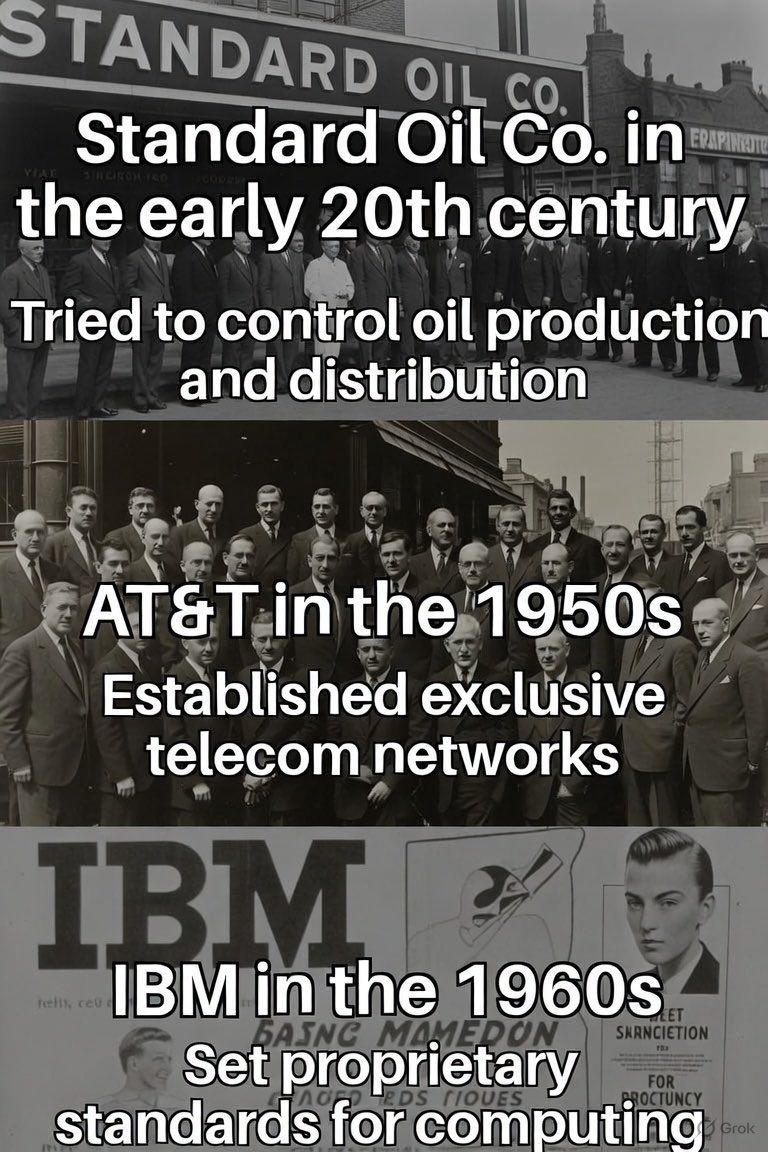
I kept thinking about what happened with AWS and Azure. They locked startups early, and for years these firms either rented compute on their terms (price, tenure, KYB etc.) or few attempted to stand up their own data center nodes. Innovation still happened. It just happened inside someone else’s garden. You could build, but only on their inventory, their timeline, and their bill.
Open weights models without usable and affordable compute is still a gated system. That is the part that stays with me. At @ionet we built a marketplace so idle GPUs could become clusters people could actually launch. We built our own inference stack to allow users to access multiple open source models at industry grade TTFS with zero data retention. Not another dashboard. Not another permission slip.
It is the same story with the recent AI safety calls by leading frontier labs. Whenever the essential layer concentrates, progress does not disappear. It just becomes something a few companies get to ration. Defense before restriction only works if the people doing the defending can afford to run the work.
Everyone has an AI roadmap.
But the compute landscape beneath it is getting more complex every day.
On Sep 22nd we're breaking down what's actually driving that complexity: the GPU access gap, why it exists, and what it means for anyone building with AI right now.
Register below.
@CNN Nothing says industry standards quite like the three companies dominating the industry getting together to decide what the standards should be. What AI really needs is open standards, open models, and open compute.
@amitisinvesting Apparently we need to slow down AI. Just not the part where a handful of companies lock up billions of dollars of compute capacity. Something seems a bit off.
@danroberts0101 “The world can’t build enough compute” is only true if building more data centers is the only way to find compute. There are GPUs everywhere. The harder problem is connecting, coordinating, and actually using them.
Three men who agree on nothing just agreed that they can't control what they built.
That's not a leak.
That's the CEO's of the largest frontier AI labs telling you themselves.
And their solution?
Trust them.
Trust the companies that shipped the thing they can't control to slow down.
AI this powerful cannot be governed by the same handful of companies racing to build it.
The future of AI doesn't need more centralized control, it needs open models, open compute, and open access.
That's exactly what @ionet is here for.