Congress has an opportunity to put energy efficiency on the 2027 agenda. Learn why they should, how efficiency has benefited Americans, and more at this Dec. 3 webinar:
https://t.co/ax1Hw1sreY
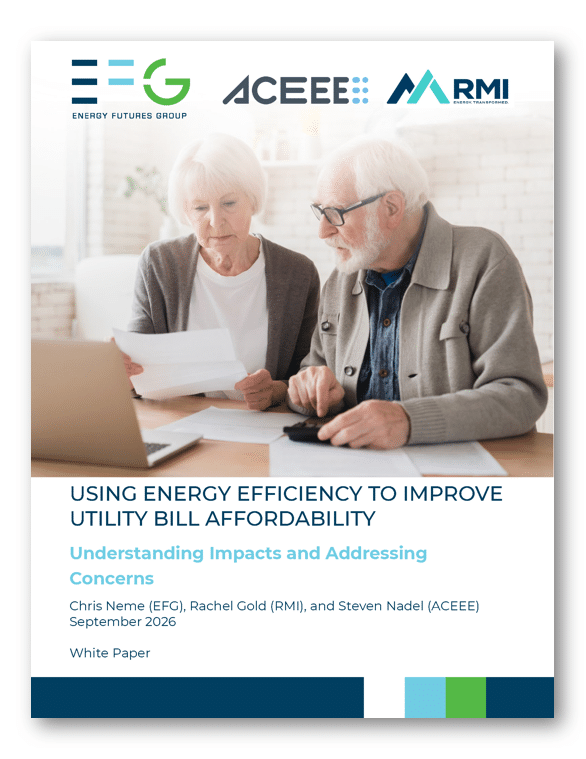
The report shows that efficiency programs are not a significant contributor to rising electric rates, documents the ways in which efficiency programs lower electric system costs, and illustrates how such programs can sometimes even reduce electric rates.
https://t.co/x8OO2AvCxZ
PA lawmakers are weighing efficiency standards for appliances and water fixtures that would help cut utility costs over time.
Annual utility bill savings would approach $291 million by 2035, and total consumer savings could reach $7.7 billion by 2050.
https://t.co/UB4bCYDygw
The Senate ENR Committee heard testimony on S.5338 last week, which would create more obstacles to setting a new efficiency standard, like adding more steps to the process of approving a new standard and also make it easier to cancel old ones.
https://t.co/8Q9FJf4v11
Energy Efficiency Day is on October 7th this year!
Energy efficiency helps us save money 💰, cut pollution 🏭, and create jobs 👷.
It's a win-win-win. How will you celebrate #EEday this year?
https://t.co/rxClcqRqeA
"A Department of Energy proposal that would set hurdles for updating efficiency standards for appliances and equipment should be withdrawn, as consumer, environmental, and health organizations argued in a series of comment letters to the agency."
https://t.co/didHeXN5bm
When the standards are in full effect, drivers will save about $180 on gas while using each set of tires. Some tire manufacturers and politicians trying to score points apparently think those $ savings don’t matter for Californians. They couldn’t be more wrong.
For too long, big tire companies have sold replacement tires that come with a hidden cost for drivers: they are less efficient than the ones that come with new cars, so you have to buy more gas to go the same distance. 🧵
Manufacturers already make a range of efficient tires for new cars. For replacement tires, they will have six years to adapt and update models that don’t meet these standards as they refresh their product lines.
California's new standards will ensure that replacement tires are as efficient as the ones on new cars.
That will save drivers at the pump. It's an affordability win.
@ConsumerFed joined consumer, environmental & health advocates to celebrate the @CalEnergy's adoption of first-in-the-nation efficiency standards for replacement tires.
"We welcome CEC's adoption of this long-awaited regulation."
-Karim D. Marshall, CFA
https://t.co/OeYrVPulv6
Californians win with new standards ensuring replacement tires are as efficient as the ones on new cars:
💰 Saves $1 billion (each year!) in fuel costs
🛞 Preserves "safety, performance, and innovation” says major tire maker
🌤️ Reduces air pollution
A bill introduced last week by Sen. Mike Lee would make it virtually impossible for DOE to update energy efficiency standards for equipment and would give the executive branch new powers that could be used to weaken or revoke existing standards.
https://t.co/XAGLVQt0Gr
“We write to express our strong opposition to the DOE recently proposed rule for the Appliance and Equipment Standards Program. The proposed rule would make it substantially harder for DOE to build on this progress and adopt new efficiency standards..."
Today, SEEC Building Resilient Housing Task Force Co-Chairs @CongressMin & @RepJohnnyO, with 37 colleagues, sent a letter to DOE Secretary Chris Wright opposing a recently proposed rule that will make it substantially harder to adopt new cost-saving, efficiency standards.
Here’s just some of what energy efficiency improvements and demand flexibility measures made between now and 2050 could do.
Learn more in our new report.
https://t.co/VqHAOZ4P6x