Instagram a dépensé des mois sur son nouveau logo pour… changer trois lettres qu’on n’arrive plus à lire 😂 Le “r” ressemble à un “z”, le “s” à un “a”… Bienvenue chez Instagzam™ 🎉 Le camera icon, lui, a eu la sagesse de ne pas bouger.
#Instagzam#Rebranding#Instagram
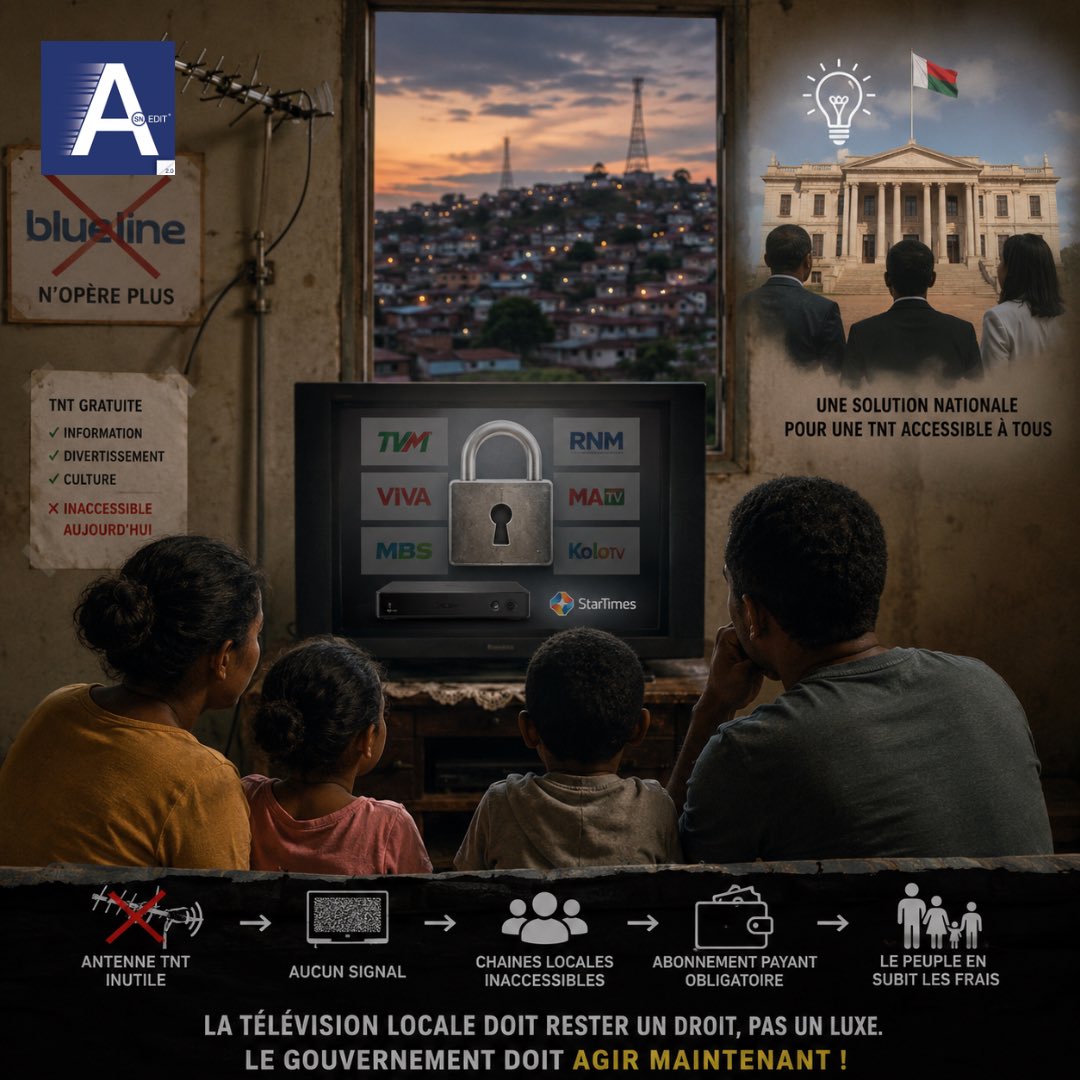
🇲🇬 La TNT locale est un droit, pas un abonnement ! L'État doit déployer une TNT publique et gratuite en HD pour tous les Malgaches. 📺✊ #TNTGasy#Madagascar
Arabahina tratry ny taom-baovao malagasy! 🎉🌺
Isan’andro vaovao, fanantenana vaovao — Ho tsara sy ho finaritra anie ny taona ho avy ho antsika rehetra! 🇲🇬✨
Happy Malagasy New Year! Every new day brings new hope — May the coming year be good and joyful for all of us!
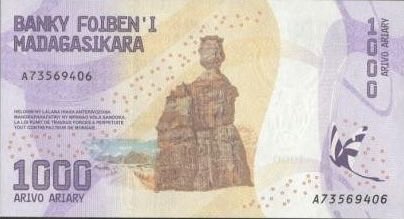
🇲🇬 Madagascar might cap its highest banknote at just 1,000 Ar — that's less than $0.25. Imagine your biggest bill being worth less than a penny candy. The future of cash just got… very small. 💸 #Madagascar#Economy#Currency
Taombaovao Malagasy: Madagascar’s Ancient New Year Celebration
Every year, as the March moon waxes and the harvest season draws to a close, the island of Madagascar stirs with a celebration older than any calendar hanging on its walls. This is Taombaovao Malagasy — the Malagasy New Year — a festival of purification, ancestral memory, and collective renewal that has survived conquest, colonisation, and the march of modernity.
A Name with Many Lives
The name of the celebration has evolved over the centuries. Before the political unification of Madagascar by Radama I (1810–1828), it was known as Alahamadibe. With the arrival of Christianity in 1810, the term Fandroana — meaning “royal bath” — was preferred. Today, the term “Malagasy New Year” was adopted to mark a difference with previous names and to emphasise the national, popular character of the festival.
When Does It Fall?
Unlike the January 1 celebrations familiar to much of the world, the traditional Malagasy New Year is celebrated every March, with the first full moon of the year occurring the night before New Year’s Day. The Malagasy ephemeris, which is based on star movement, plays a central role in determining the timing of this celebration.
Thirteen lunar months of 28 days each structure the Malagasy year, beginning with the first moon of the month of Alahamady. The earliest written record of this tradition dates to 1648, in a work called Histoire de la Grande île de Madagascar, which mentions that the first month of the year begins with the new moon of March. This book, authored by Étienne de Flacourt — who lived in Madagascar from 1648 to 1655 — is the oldest known historical source describing the Malagasy New Year.
The Values at Its Heart
Taombaovao Malagasy helps convey and spread the seven foundations of Malagasy philosophy: faith in Zanahary (the Creator), the value of Aina (life), fahamasinana (the sense of the sacred), fihavanana (solidarity and mutual aid), fahamarinana (fairness and justice), fahasoavana (happiness), and the link to ancestral heritage.
The Malagasy New Year is not simply a party reserved for a royal family or a specific ethnic group — it embodies national unity, transcending religious, ethnic, and social distinctions.
The Rituals
The celebration is rich with ceremony. Among its most important rituals is the Afo tsy maty — the eternal flame — and the Fandroana, or ritual bath, which is a symbol of purification and renewal.
After the blessing ceremony of Tsodrano, comes the Tatao — a shared plate of rice cooked in milk and sprinkled with honey. This is accompanied by the Fafy rano, a rite of benediction marking the entry into the new year.
The New Year’s celebration lasts several days and includes a wide range of activities: dancing, music, hira gasy performances, traditional games, lantern displays, kabary speeches, and an abundance of zebu meat.
Suppression and Survival
The festival’s path through history has not been without hardship. In 1897, the French colonial authorities abolished this festival, leading the Malagasy to celebrate it in secret. The colonial administration viewed the celebration as pagan and feared it would strengthen the Malagasy people’s connection to their ancestors, their culture, and their sense of identity — a bond incompatible with colonial control.
Since the 1990s, the celebration has been seeing a resurgence. Today, it is a national celebration lasting two days, observed throughout the entire territory.
A Living Tradition
In recent years, the festival has found new expressions beyond Madagascar’s borders. In 2025, the REcyclerie in Paris hosted the TAOMBAOVAO festival, celebrating the Malagasy New Year with workshops, concerts, and free cultural events, organised by Malagasy Women Empowerment and Ala Tetikasa.
Within Madagascar itself, the Taombaovao Malagasy Fidiovana carries messages of peace, social cohesion, and national identity, marking the transition into the new year as both a spiritual
Madagascar for the Malagasy — But Who Really Holds the Reins?
The Karana Question at the Heart of an Explosive Political Transition
March 2026
Madagascar is going through one of the most turbulent periods in its contemporary history. Since the military coup of October 2025, the country has officially been led by Colonel Michaël Randrianirina, self-proclaimed president of the “Republic of Refoundation.” He seized power on October 14, 2025, after a military overthrow of elected president Andry Rajoelina, and was officially installed as head of state on October 17, 2025.
For many Malagasy people, the message seems clear: Madagascar belongs to the Malagasy. But in the bustling commercial streets of Antananarivo or Mahajanga, a different economic and political reality takes shape — one shaped by a minority that, without holding any official power, controls a remarkable share of the island’s wealth: the Karana.
A Ghost at the Top
On paper, a colonel runs the country. In practice, many are questioning the true nature of power. The SADC — the Southern African Development Community — demanded a clear democratic roadmap before March 2026, putting pressure on a regime whose legitimacy is challenged at the regional level. Former president Marc Ravalomanana has denounced an interim period that already exceeds constitutional limits, noting that the Constitution does not allow an interim of more than 60 days.
Meanwhile, local observers point to a deeper reality: the true economic levers of the country remain in the hands of a handful of Karana families — a community of South Asian origin that has been rooted in Madagascar since the late 19th century.
The Karana: Masters of the Economy, Strangers in Their Own Country
The Karana originate from the Kathiawar peninsula in the Indian state of Gujarat, and migrated to Madagascar primarily during the second half of the 19th century. Today, their population is estimated at between 15,000 and 25,000 people — a tiny minority in a country of more than 26 million — yet their economic weight is wildly disproportionate.
Although representing no more than 0.1% of the total population, the community of Indian origin plays an essential role in the country’s economy, contributing roughly one third of Madagascar’s GDP. A few major Karana families control entire sectors of the economy: real estate, banking, energy, automotive, and industrial equipment.
Yet this same community cannot, for the most part, vote, own land, or access the highest political offices. When Madagascar gained independence in 1960, the vast majority of Karana did not receive Malagasy citizenship. The nationality law only passed citizenship to children born of at least one Malagasy parent, meaning statelessness was handed down from generation to generation.
The ISTs: The State Knocks on the Door of the Great Fortunes
In the post-coup context, the transitional government has wielded a powerful tool: interdictions de sortie du territoire — exit bans, or ISTs. On October 31, 2025, the Interior Ministry made public a decision imposing travel bans on a range of political, administrative, and military figures, including former president Andry Rajoelina himself.
Within days, several political figures, business operators, and associates of the former regime were targeted by these measures — seen by some as a turning point in the fight against political and financial misconduct, and by others as a weaponization of justice.
Karana businesspeople were also caught in the net. In cases involving gold trafficking and the trade of precious wood, several Karana merchants have been subject to exit ban proceedings.
And then, within hours, some of those bans were quietly lifted. Karana who had been barred from leaving Madagascar suddenly found their freedom of movement restored. No official explanation. No press release. Just a sudden reversal that raises serious questions.
Une aide n'est pas un péché. Aidons les autres comme nous.
Bonjour à tous,J'aimerai demander une aide financière qui me permettrait de faire face à mes grosses difficultés :
https://t.co/8O4Nuc9uSm
#Help#Aide#Family#Matter#Love#Leetchi#Social#Love#Life
@elonmusk Who told you that I've read your tweet. @elonmusk if you think that this is the most interesting place, allow us to make some reaction on a tweet #love#Like#Hate