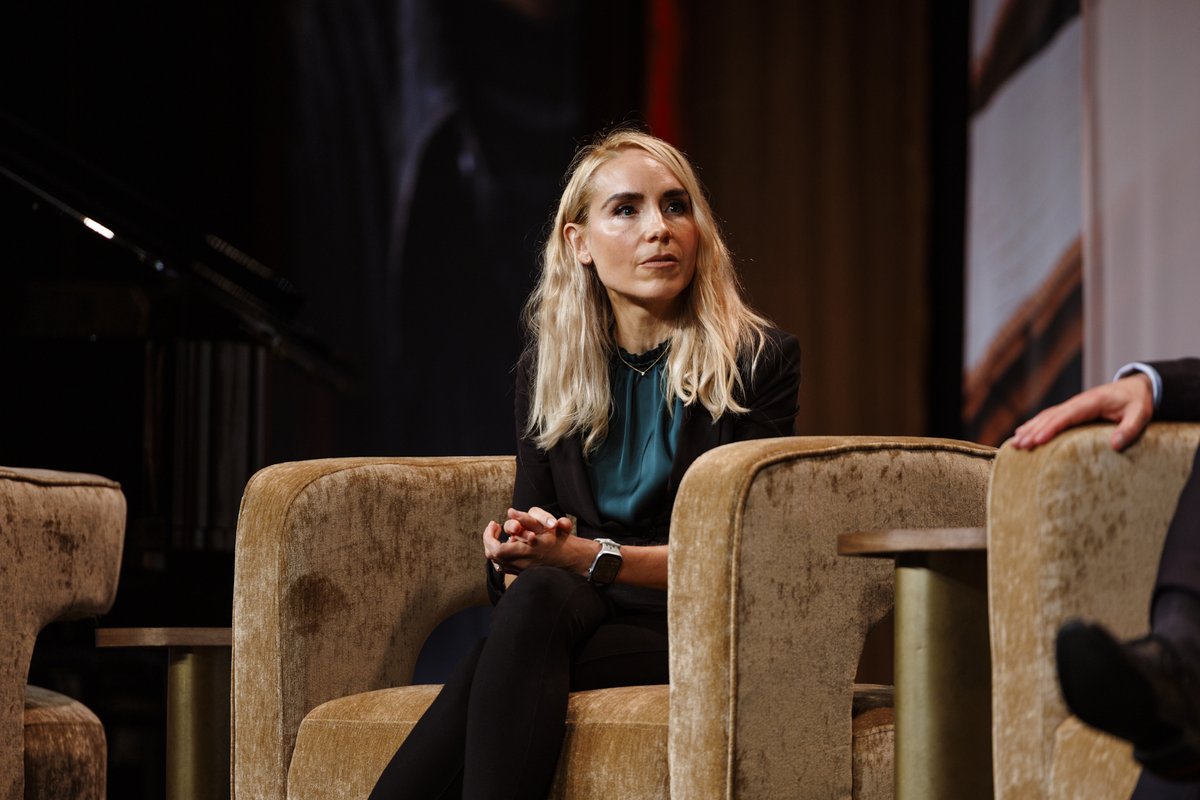
“We have become absolutely convinced that decline is not inevitable. But that it takes a movement of people — dense networks of leaders — who will live sacrificially, humbly, and counter-culturally to reverse that decline.”
Speaking at ASPIRE 2026, Baroness Philippa Stroud — Executive Chair of the Alliance for Responsible Citizenship (@ARC_Conference) — endorsed the conference’s mission to create a network of Australian leaders who will work to cultivate the cultural, social, and economic foundations of our nation.
She reflected on the significant contributions made by many Australians, especially FORM’s founder, the Hon. @JohnAndersonAC, to ARC since its inception in 2023.
Like ARC, ASPIRE is committed to articulating the West’s “better story” — fostering a community of courageous changemakers who can support the renewal of our civilisation.
Earlier this week in London, FORM Australia hosted a small gathering of Australians to reflect on the West's current malaise and consider strategies for personal and cultural renewal.
The Hon. @TonyAbbott AC opened the evening with some preliminary observations about the state of Australia and the broader West.
We were also delighted to be joined by author and intellectual @roddreher, who shared his insights on the rise of radical voices on the Right, the need to understand young men’s experiences in the West, and the necessity of individual courage and conviction in forming resilient communities and families.
Like most of those present, Dreher is in London this week to attend the @ARC_Conference, whose mission aligns closely with that of FORM and ASPIRE. Both movements are committed to articulating the West’s “better story” and raising up courageous leaders to seek the revitalisation of our civilisation.
“I’m not going to stand here and chastise my own generation for warring against the worst of modernity — especially when it is so often joined by greater temperance, personal responsibility, and most importantly, a return to the Christian faith.”
At ASPIRE 2026, young leader Zachariah Maxwell set the scene for Gerrard Holland’s powerful keynote address on the issues facing the next generation of Australians.
Maxwell acknowledged the bleak outlook facing Generation Z — especially young men and boys. Yet he suggested that rather than merely being a “lost generation”, Zoomers are the first to realise that they are lost. They are seeking answers.
Maxwell cautioned older people against ignoring young people’s concerns, arguing that failing to listen “will only build more resentment and fuel the kind of intergenerational warfare that seems to be brewing.”
He identified the importance of raising strong leaders of integrity who will recognise and address the challenges facing young men — and young people more generally — while simultaneously calling them away from resentment and towards personal betterment.
@JohnAndersonAC
“Here is the difficult truth we must face: Many of our current structures — however well intentioned — place increasing emotional demands on very young children at precisely the developmental stage when they are least equipped to manage them.”
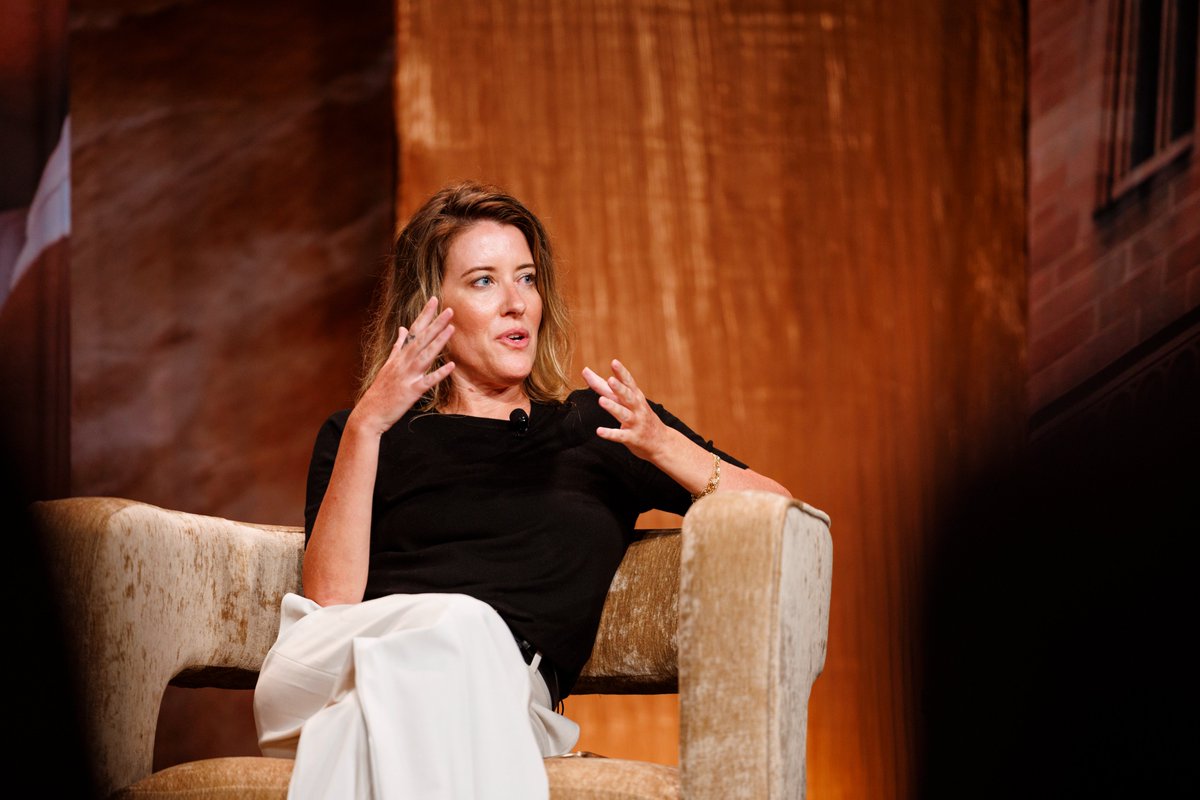
Speaking at ASPIRE 2026, clinical social worker and parenting expert @EricaKomisarCSW presented confronting evidence on the formative role of parents in early childhood development — and the extent to which that role is being neglected.
She pointed out that Australia’s future citizens are not being formed in parliaments or boardrooms, but in homes, early centres, and childcare contexts. For this reason, family support and childcare policy is central to our national prosperity and resilience.
As she noted, the foundations laid during early life “shape everything that follows — our personalities, our sense of security, our capacity for resilience, our values, and our beliefs.”
Lawmakers, parents, educators, childcare workers, and cultural leaders all have a role to play in confronting the facts about early childhood development and courageously shaping future generations.
“We need to move to an immigration policy which does discriminate. It discriminates on the basis of what’s in the national interest… It is not a right to come to this country; it’s a privilege to come to this country.” (@JoshFrydenberg)
At ASPIRE 2026, some of Australia’s most eminent former parliamentarians reflected on a pressing dilemma in light of the terrible Bondi Beach shooting — namely, how to maintain social cohesion without eroding fundamental freedoms.
A common conviction was the need to rediscover what @JohnAndersonAC called the “rightness” of our cause: “Why are we not deeply convicted of the rightness of a set of institutions that have produced human flourishing on a scale that no other sections of humanity down through history have known and experienced and lived?”
Josh Frydenberg highlighted the need to “double down on our democratic inheritance”, while historian @ProfStonebraker urged hearers to reconnect with the story of Western civilisation and the fundamental Christian spiritual truths on which it is built.
Paul Kelly (@australian) asked @HonTonyAbbott whether, in the face of radical Islam and antisemitism, Australia’s immigration was too high and should be recalibrated. Abbott replied by noting that our current approach has “imported division.”
“It’s very difficult for someone who believes… in a Caliphate or in Sharia law, or for instance in the leading role of the Communist Party… to honestly subscribe to the Australian Citizenship Oath. So yes, I do think we have to have a big reconsideration of our immigration program, and I think there’s got to be a lot more focus on Australian values and our national interest.”
Given the stakes for social cohesion and order, Frydenberg said that the Government needed to treat legal immigration as “a matter of self-defence.”
“I think our system, for all its imperfections, is infinitely superior to those otherwise on offer.” (John Howard, 25th Prime Minister of Australia)
During his welcome address to the inaugural ASPIRE Conference, former Prime Minister John Howard struck a note of optimism — reflecting on Australia’s resilient institutional heritage.
Despite the challenges we face, he argued, there is nothing fundamentally wrong with the foundations upon our nation stands.
According to Howard, our robust parliamentary system, incorruptible judiciary, and free press each play important roles in securing the rights and freedoms of our citizens — and he emphasised the centrality of each of these factors to any successful democracy.
He encouraged ASPIRE attendees to “bring the best of what we have” — to shun “hubris” in their pursuit of constructive solutions to the acute problems of our day.
“If there is a crisis today, we’ve had a housing crisis for the last two hundred years.” (@DrCameronMurray)
In a controversial and wide-ranging panel discussion at ASPIRE 2026, chaired by @CISOZ Executive Director Michael Stutchbury, housing economist Cameron Murray challenged the idea that Australia is facing an unprecedented housing crisis.
He argued that the market has experienced cycles since the early nineteenth century — insisting that it will ultimately self-correct.
CIS Senior Fellow @parnellpalme pushed back, suggesting that red tape was resulting in a “housing crisis of the place that you want to live”. “Our cities are becoming cities of old people, where young people can’t get a toehold.”
Former Treasurer Peter Costello suggested that housing prices have been affected by what he called “abnormally high immigration” over the last three years. However, he said the other factor affecting the housing situation was “cheap money”, which has driven up asset prices.
The robust and constructive discussion offered thought-provoking insights into #productivity, #economic growth, #immigration, #housing, and #family formation — challenging conventional wisdom on a range of key #policy issues.
@JohnAndersonAC
“…they’re not actually against women-only spaces… They’re against you not believing the lie that somebody else that is claiming to be the opposite sex is that thing. It’s scarier than just opposing women or men-only spaces.” (@salltweets)
Speaking at the inaugural ASPIRE conference, Sall Grover — founder and CEO of women-only social media app “Giggle” — tells the story behind the world’s first legal case to test the strength of sex-based versus gender identity rights (Tickle vs Giggle). It was the headline that echoed around the world: “Sex is changeable.”
But the implications of the landmark decision go far beyond the preservation of women-only spaces. It is a battle for truth, and for the foundational freedoms and rights upon which our civilisation is built.
As Grover says, “Once the state can force you to believe something that is not true, or to accept something that is so blatantly not true, they can force you to accept anything.”
@JohnAndersonAC
"There is a rule of thumb that is reaffirmed time and time again throughout history: If a dictator is re-arming, readying the country for war, and openly telling his military and countrymen that a great battle is approaching, then I think it is prudent to believe him.” (John Lee, @HudsonInstitute)
Senior defence analyst Dr John Lee argues that Australia is not facing a distant or hypothetical threat. It is facing one that has been openly declared, methodically prepared for, and dangerously ignored.
Drawing on the Chinese Communist Party’s unprecedented peacetime military buildup, Xi Jinping's repeated calls to "be ready for war," and the 14 grievances Beijing issued against Australia in 2021, Lee makes the case that the real risk is not invasion. It is the slow erosion of Australian sovereignty until meaningful independence is no longer possible. He argues that Australia's geography makes it irreplaceable to allied deterrence, and that every dollar not spent on defence is a gift to Beijing.
“We need a re-embrace of the foundations — a compelling story of freedoms that embraces both our rich Westminster democratic tradition and a Christian vision of freedom. Our disease is a spiritual anaemia and the cure requires an infusion of moral rigour.” (John Steenhof)
At ASPIRE 2026, the Principal Lawyer of the Human Rights Law Alliance (HRLA), John Steenhof, highlighted some of the key threats to freedom of expression and religion in contemporary Australia. He warned that these fundamental freedoms are being eroded in the name of safety and social cohesion.
Yet the solution to our current crisis of social cohesion is not to further abandon freedom, ban expressions, and prohibit protest. The problem goes much deeper than this — calling for a rediscovery of Australia’s foundations: our Westminster democratic heritage and the Christian conception of liberty that undergirds it.