A group of creative, passionate writers & teachers of sociology got together to write a new kind of textbook, offered directly to students for $1 per chapter.
Historically, women have been more religious than men in the U.S., going back decades in surveys.
That’s still true today, at least when it comes to prayer frequency and the importance people attach to religion in their lives. But the differences are less stark than they used to be.
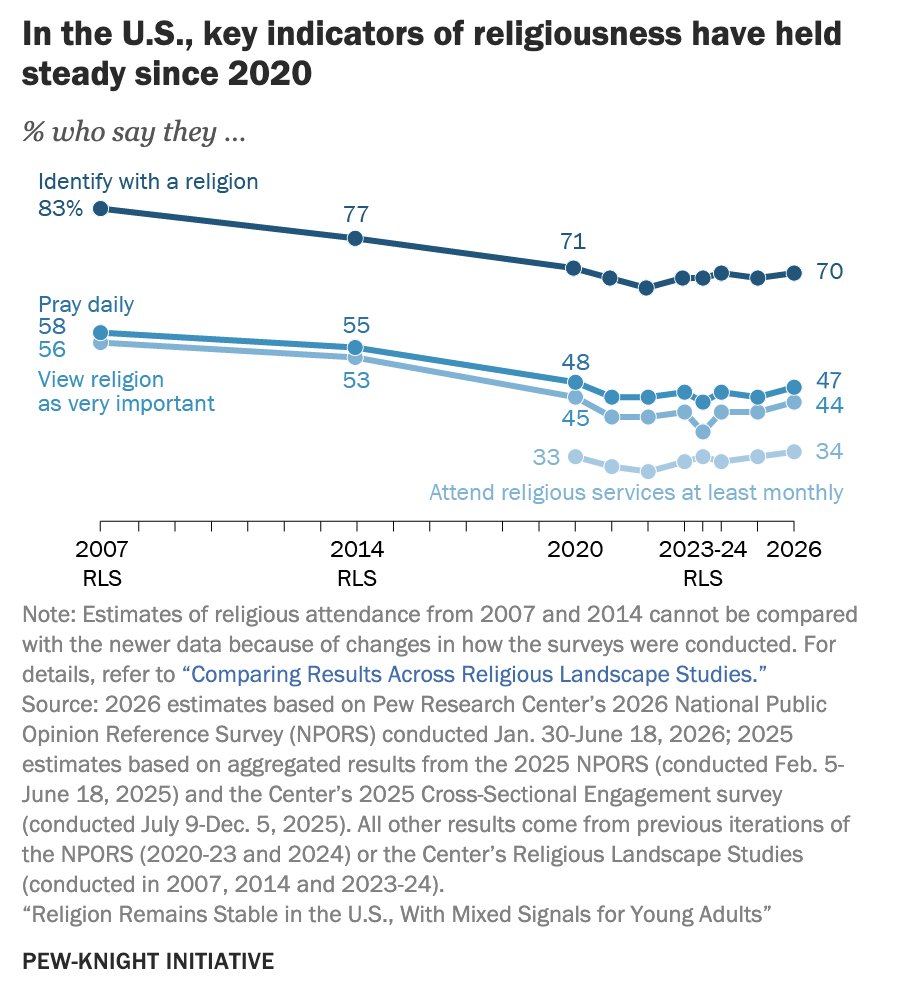
After prolonged decline, religion in the U.S. has shown signs of strength and stability in recent years.
Since 2020, steady percentages of U.S. adults have said they identify with a religion, pray daily, consider religion to be very important in their lives and attend religious services at least monthly.
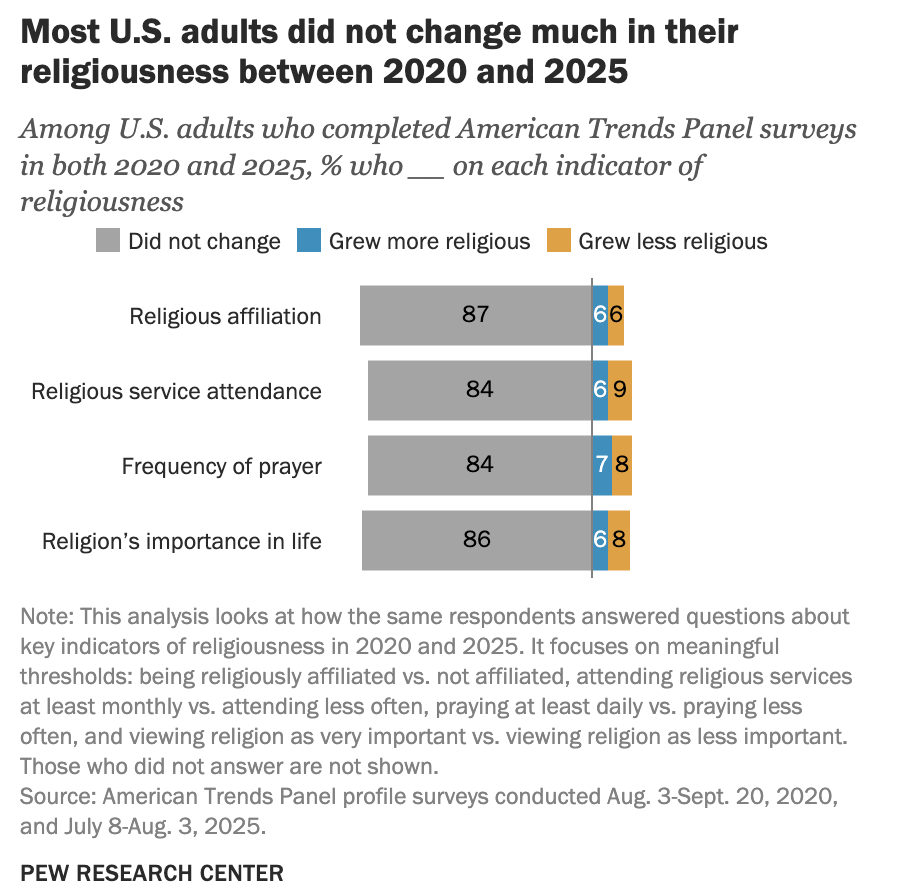
We analyzed how the same 5,835 U.S. adults changed religiously between 2020 and 2025.
Most Americans gave the same answers to our core questions about religion in 2025 that they gave in 2020.
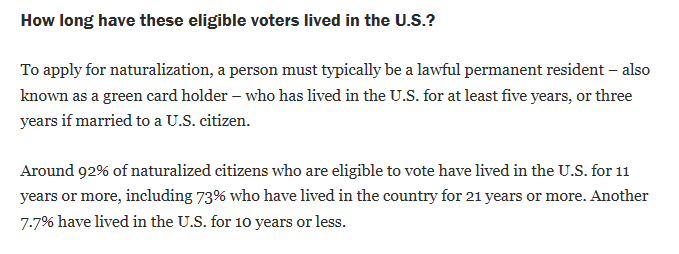
1 in 10 eligible voters in the US are naturalized citizens. While born abroad, the vast majority of these "new" Americans have been here a long time: 92% have lived in the US for at least 11 years, including 73% who have lived here for at least 21 years.
“Americans tend to vastly overestimate the size of minority groups. This holds for sexual minorities, including the proportion of gays and lesbians (estimate: 30%, true: 3%), bisexuals (estimate: 29%, true: 4%), and people who are transgender (estimate: 21%, true: 0.6%).”
Election season brings a flood of polls. Polls are an excellent tool for understanding what the public thinks, but how can you tell if a poll is trustworthy?
Here are a few simple tips for evaluating election polls before you share them ⤵️
#ElectionPolls#PollTransparency
Trump’s approval rating has dropped in every religious group since the beginning of his second term.
Today, White evangelical Protestants are the only religious group in which more people approve than disapprove of Trump’s job performance (58% vs. 40%).
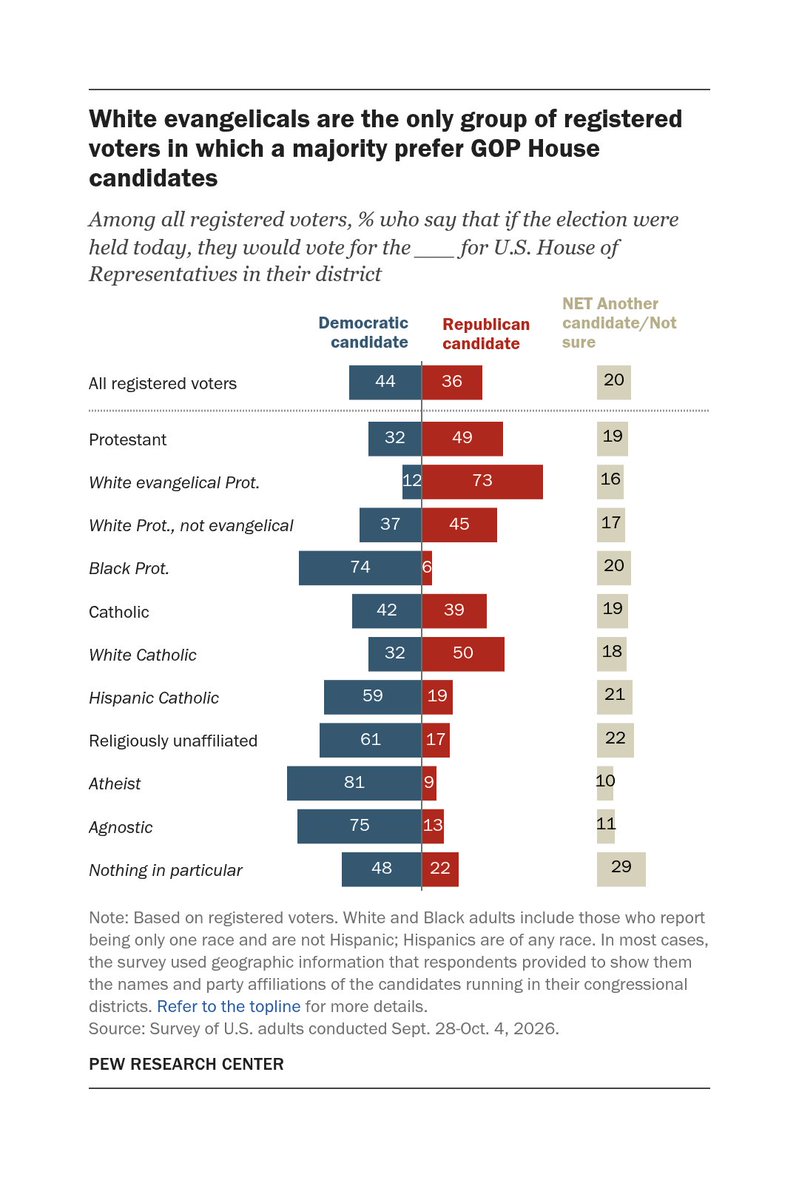
Religious groups differ widely in their 2026 midterm preferences.
White evangelical Protestant and White Catholic voters prefer Republican candidates for the U.S. House of Representatives.
In every other religious group we analyzed, voters are split about evenly or favor Democrats.
How has wealth inequality changed?
Wealth is spread unevenly across U.S. households. The gap in wealth between upper- and lower-income households has grown wider since 2001.
#WealthInequality#EconomicInequality
How can you tell if a poll is trustworthy? We're the pollsters. Now it's your turn to be a pollSTAR. ⭐
This election season, ask these 5 questions before sharing poll results, and remember to look at trends and other polls, not just one poll.
1. Who conducted and sponsored the poll?
✅ Do: Look for an established polling organization with relevant experience. Check whether the poll clearly identifies both the organization that conducted it and the sponsor.
❌ Don’t: Assume a poll is trustworthy because it looks professional or a familiar account shared it. Be cautious if the sponsor or pollster is not disclosed.
2. Did they show their work?
✅ Do: Look for a clear explanation of who was surveyed, how they were selected and how the poll was conducted.
❌ Don't: Trust a poll that doesn’t explain how the results were produced.
3. Who was the poll intended to represent?
✅ Do: Check whether the poll surveyed U.S. adults, registered voters, likely voters or another group. Make sure the headline accurately describes that population.
❌ Don't: Treat findings from one group as if they describe another. A poll of registered voters, for example, does not necessarily represent all U.S. adults, and not all registered voters will ultimately cast a ballot.
4. How were people selected for the poll?
✅ Do: Look for methods that give people in the target population a known chance of being selected, such as sampling residential addresses or telephone numbers.
❌ Don’t: Confuse a poll that anyone can take, such a survey posted on social media or a survey of website visitors, with a representative public opinion poll.
5. Are the questions clear and neutral?
✅ Do: Look for the exact questions and response options. Are they clear, straightforward and balanced?
💡Also try: Reading the questions out loud. Do they sound fair and neutral?
❌ Don't: Rely only on a headline or summary. Be cautious of vague language, one-sided choices, or leading or loaded questions.
#ElectionPolls #PollingMethods #Election2026
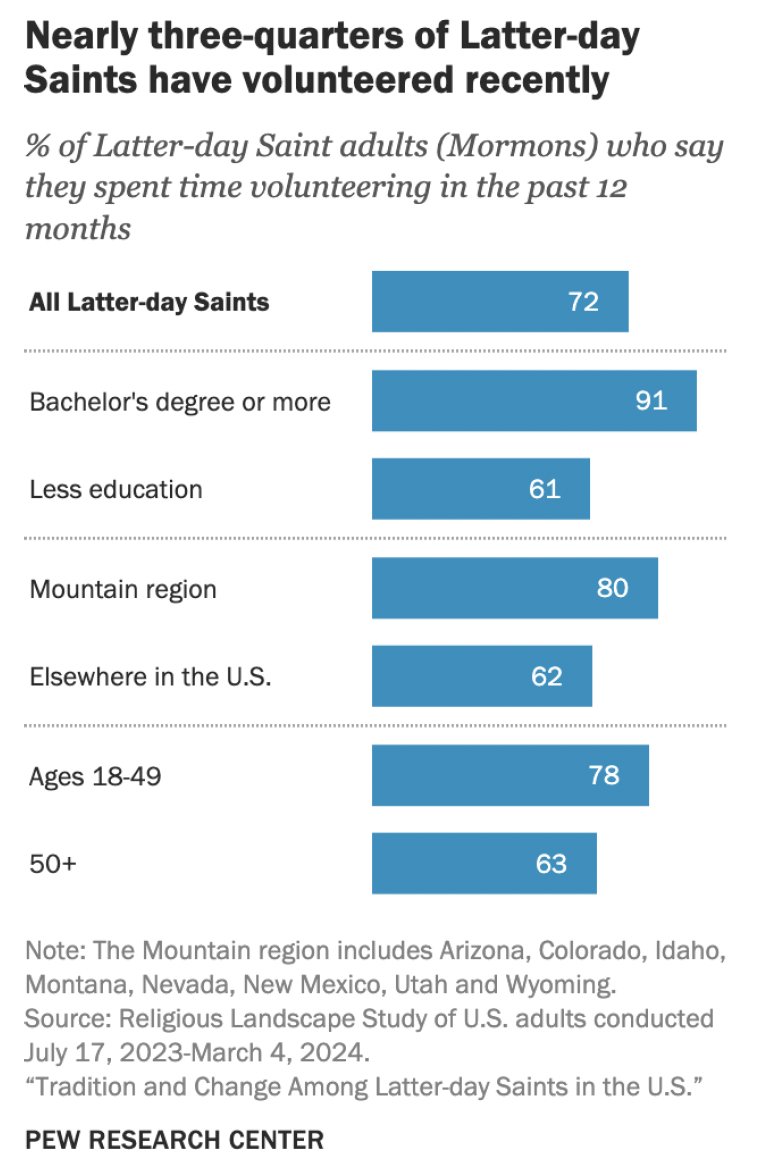
Latter-day Saints have strong communal ties and high social trust, which set them apart from U.S. adults as a whole.
For example, 72% of Latter-day Saints say they spent time volunteering in the past year, while 41% of all U.S. adults say the same.
#LatterDaySaints
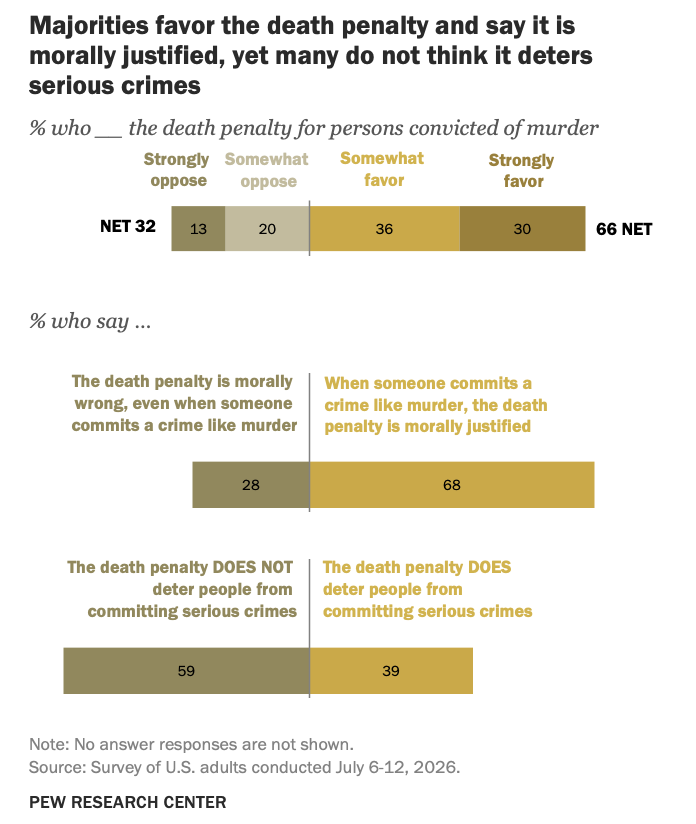
About two thirds of U.S. adults favor the death penalty and say it is morally justified, even though many say it does not deter serious crimes.
#DeathPenalty#JusticeSystem
NEW: Oliver Lipps, Daniel Oesch, Roujman Shahbazian, "No Stalled Revolution: The Closing Gender Gap in Early Careers in Europe and the United States" https://t.co/OaeiYVOQUV
53% of Hispanics typically describe themselves by their country of origin, compared to 27% who use pan-ethnic terms like Hispanic, Latino, Latinx or Latine.
18% most often describe themselves as only American.
#HispanicHeritageMonth
There is growing evidence that Republicans have become somewhat less likely than Democrats to participate in polls, particularly in the past three presidential elections.
In 2020 and 2024, weighting our post election polls by party improved accuracy by about 1-2 percentage points per candidate.
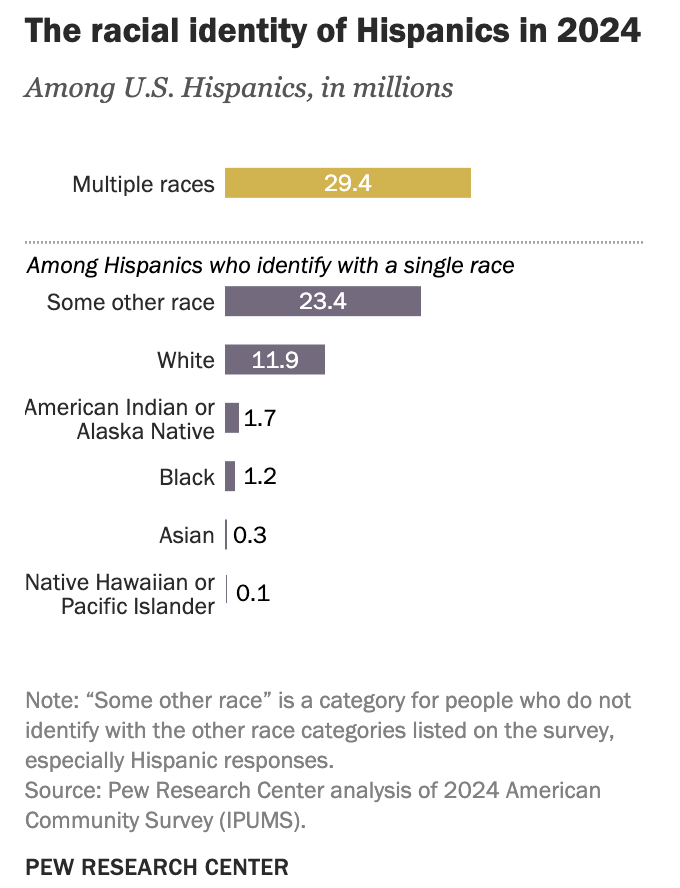
While the federal government currently counts Hispanic origin separately from race, many Hispanics do not experience these identities separately.
When asked about their race, among U.S. Hispanics who identify with a single race, most label themselves as “some other race.”
#HispanicHeritageMonth
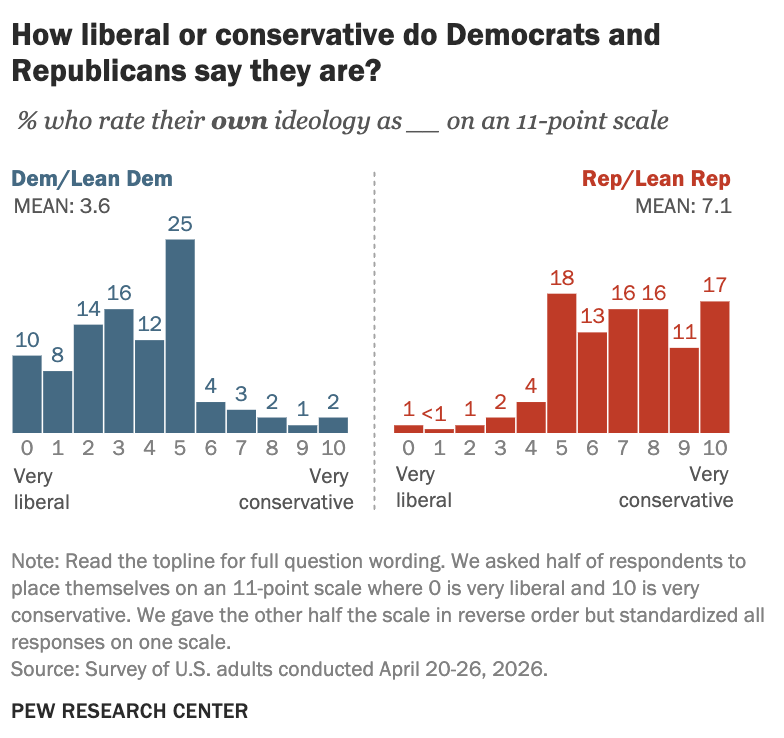
How do Americans view themselves ideologically? 🤔? 🤔
On an 11-point scale from very liberal (0) to very conservative (10), Americans in both parties averaged closer to the middle than one of the ends.
#PoliticalIdeology#USPolitics