I created a bunch of free interactive tools for teaching sociology concepts w/ real data, useful for other fields too: https://t.co/Ibggu7RRfF #teaching#sociology#socialscience#Data
@emollick You don't even have to know what you want! Just tell Claude students struggle with something & you need help, then go read a book or do laundry or whatever & return to see what it cooked up. It's a whole new world of teaching and course design!
@emollick I'm astounded by how easy it is to build interactives specifically tailored to individual lesson plans, datasets, or points you want to emphasize! And nearly zero effort to design virtually anything you think would help students learn a difficult topic.
@Marc__Watkins Also, I mean...is the book any good? If she used AI for help with stuff, or even to draft passages, but it's a great story that's engrossing and intriguing, I think probably I don't mind?
@claudeai I used it to create an interactive visualization for students, showing how different gene variants arrived in ancient Briton - shows human migrations & likely changes in physical appearance traits: https://t.co/gI0Fb6bbhJ
@emollick If you use AI and work way ahead, are you then expected to do more work? Are others expected to keep up with you? Do you get to read a book in your office until you get what you need from coworkers to do the next step? No one knows!
@emollick It leads to weird bottlenecks. If 1-2 ppl in a workflow use AI but no one else does, the 1-2 ppl get way ahead in their work & wait around for others to finish their steps. Can definitely lead to tension around how long tasks should take.
For those following the SNL "Sister" debate about caregiving, this new @CDCgov report will be of interest. 21% of women and 16% of men providing care to a family member (exc children) https://t.co/m1ROuabX7K
Far more US wealth comes from car dealers, dentists & liquor distributors than from tech billionaires. Economists @omzidar & Eric Zwick tell @galendruke on GD Politics how the merely rich shape politics. Their book is The Everywhere Millionaire @HenryHolt https://t.co/o2mmKNWJzH
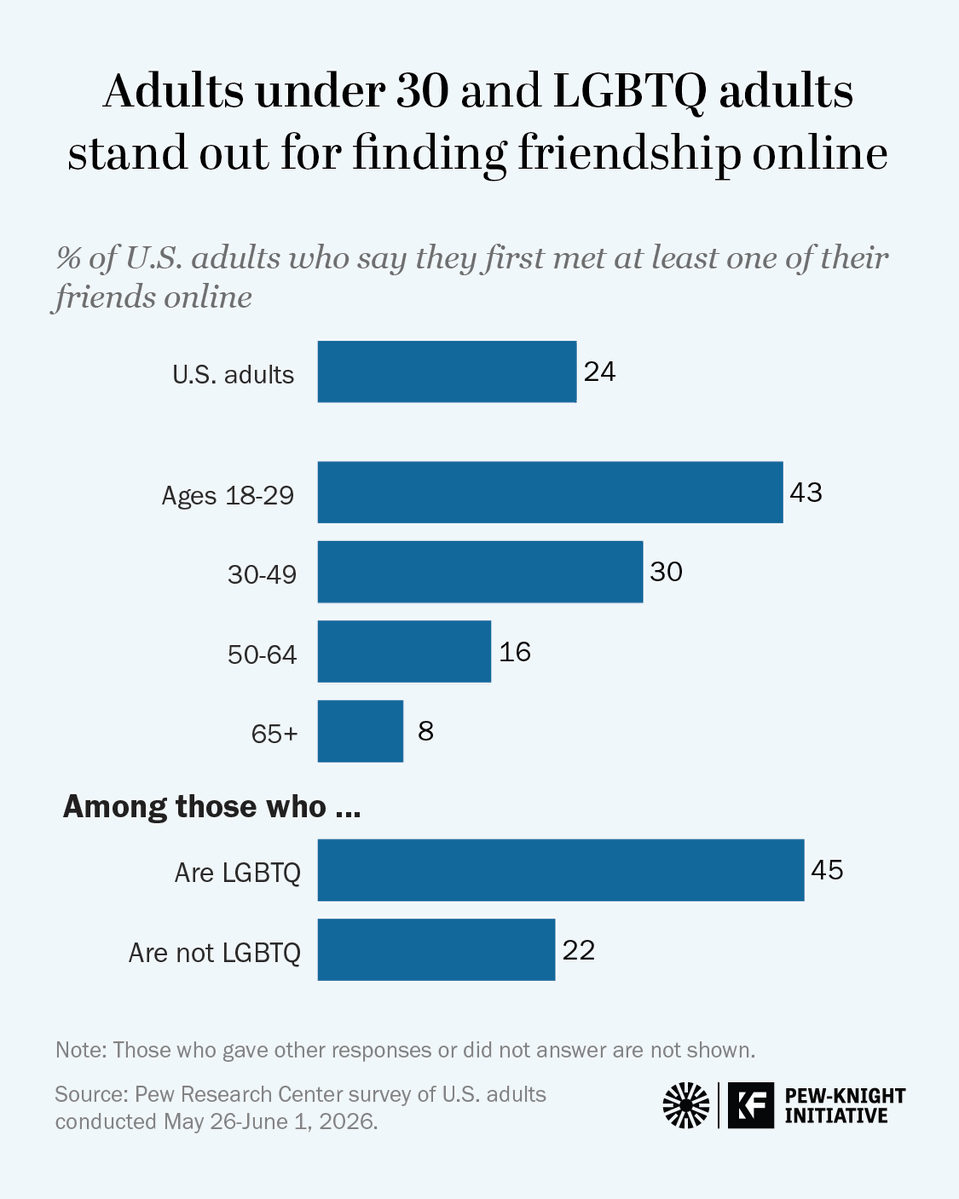
About a quarter of U.S. adults have friends they first met online, and that share is higher for young adults and LGBTQ Americans.
👥💻 Have you ever made friends online? If you have, tell us how the internet brought you together in the replies.
#PewKnightInitative #OnlineCommunity #InternetFriends
@omzidar I've loved learning about your research, for my sociology classes I pulled in your & oth data to create an interactive - decide who to tax to close the deficit or fund new programs: https://t.co/KwcVGxAeiD
@galendruke I got excited after the episode, pulled in Treasury and Census data to create an interactive: decide who to tax to close the deficit or fund new programs https://t.co/KwcVGxAeiD
Most single-and-looking Black adults say a caring and compassionate partner is important.
But women place more importance than men on some characteristics: 81% of women say financial stability is extremely or very important in a partner, compared with half of men. #Dating
Check out the @pewresearch Future of World Religions Data Explorer!
It describes the religious future we project for 201 countries and territories, 7 religious groups and 6 geographic regions.
https://t.co/h01Qke14hk
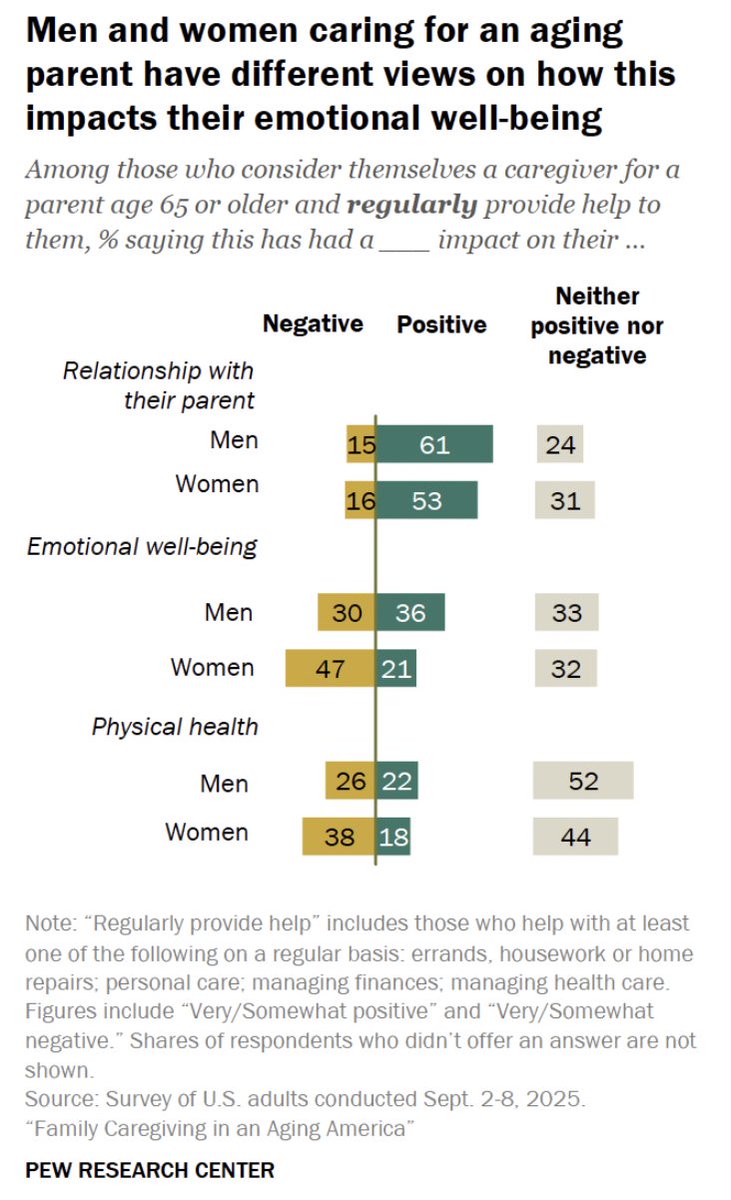
28% of women with an aging parent, spouse or partner consider themselves a caregiver to that person, compared with 23% of men, according to our 2025 survey.
Men and women caring for a parent are about equally likely to say it has had a positive impact on their relationship with that parent, but women are more likely to report it negatively affects their health and well-being.