@ryanburge Ryan, here are some suggestions for preserving your hair:
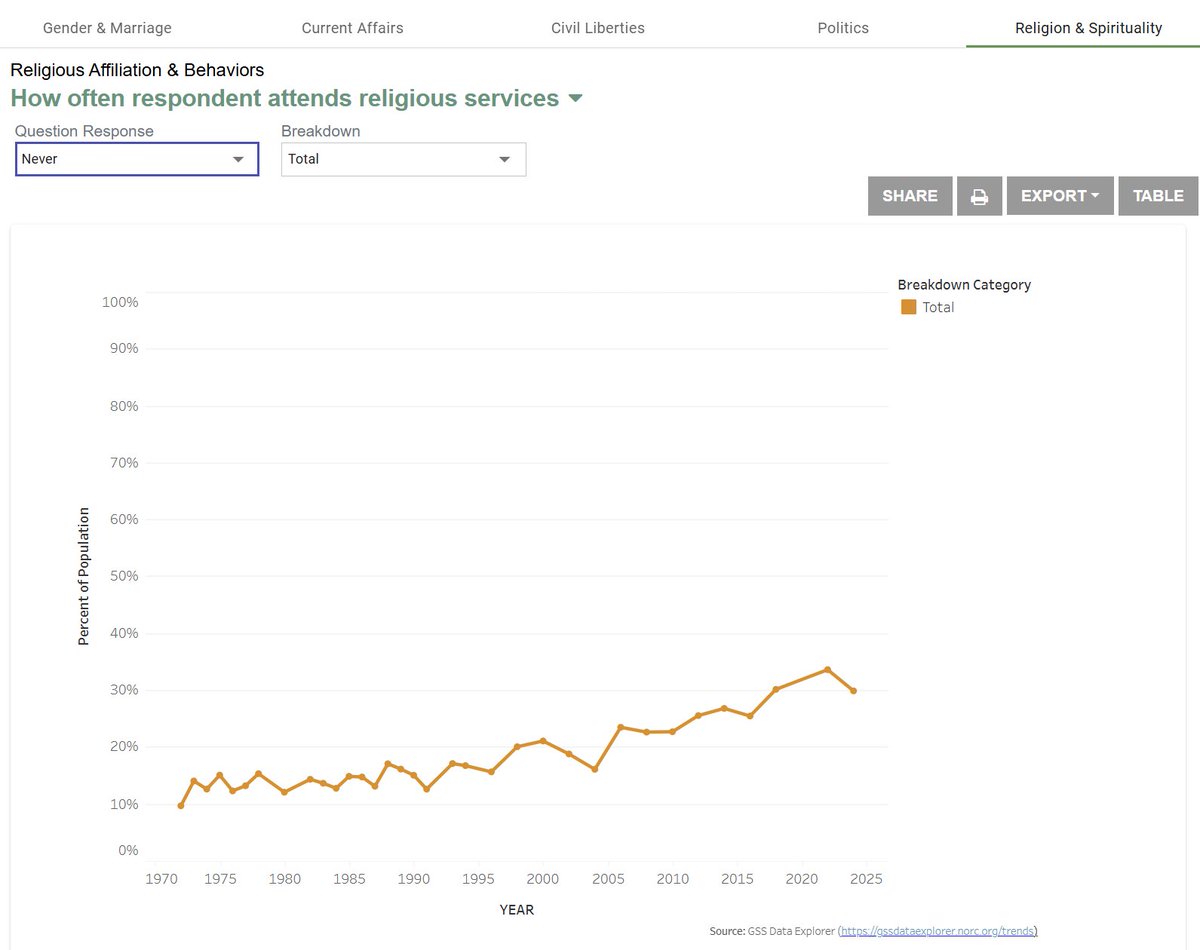
1. Ignore the 2021 GSS. Tom Smith told me a couple of years ago that he wouldn't trust numbers from this wave. I see today that the GSS data explorer omits the 2021 wave.
2. Don't do trend analysis with nonprob data.
When researchers asked LLMs whether they should switch between religions, LLMs tended to encourage becoming Catholic & shedding atheist & Jehovah's Witness identities.
https://t.co/MA9PUPAigJ
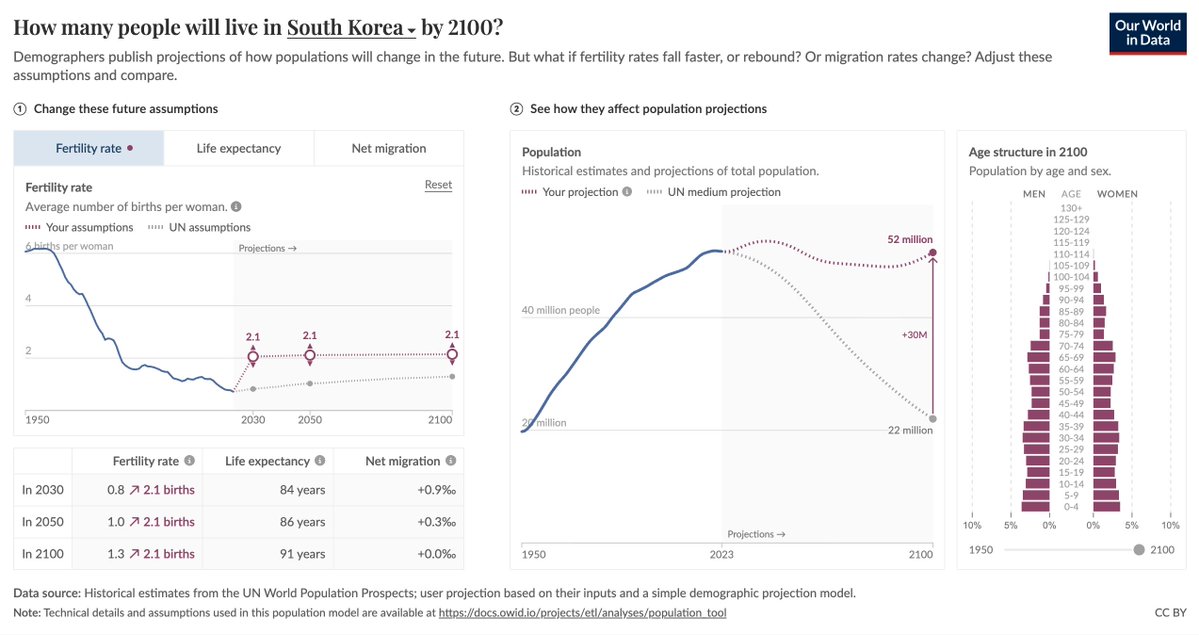
Congratulations to the data wizards at @ourworldindata who created this elegant tool so you can adjust fertility, mortality & migration rates for any country to see the impact on population sizes & age structures.
This is really, really great!! Check it out!! Excellent tool, terrific write up.
The wizards: @sophiamersmann@DanyX23@_HannahRitchie
Congratulations to the data wizards at @ourworldindata who created this elegant tool so you can adjust fertility, mortality & migration rates for any country to see the impact on population sizes & age structures.
This is really, really great!! Check it out!! Excellent tool, terrific write up.
The wizards: @sophiamersmann@DanyX23@_HannahRitchie
How will populations across the world change in the 21st century?
🔧 Explore for yourself with our new interactive tool!
Demographers publish projections using assumptions about key demographic changes, most notably fertility rates, life expectancy, and migration rates.
But no one knows for sure how many children people will have decades from now, or how migration will shift.
So it’s worth asking what the population would look like if things turn out differently from what the UN or other demographers assume.
Our colleagues Daniel Bachler and Sophia Mersmann built a population simulation tool that lets you do just that — for every country in the world.
Pick a country, adjust the assumptions, and see how the projections change, for both total population and age structure.
For instance, what would happen if fertility rates recovered to replacement level, or migration was cut in half?
@peterlynas I look forward to analyzing the 2025 British Social Attitudes data when it is publicly released.
There may be large margins of error around weekly attendance rates for respondents tied to religions other than Christianity. Across groups, I favor analyzing monthly attendance.
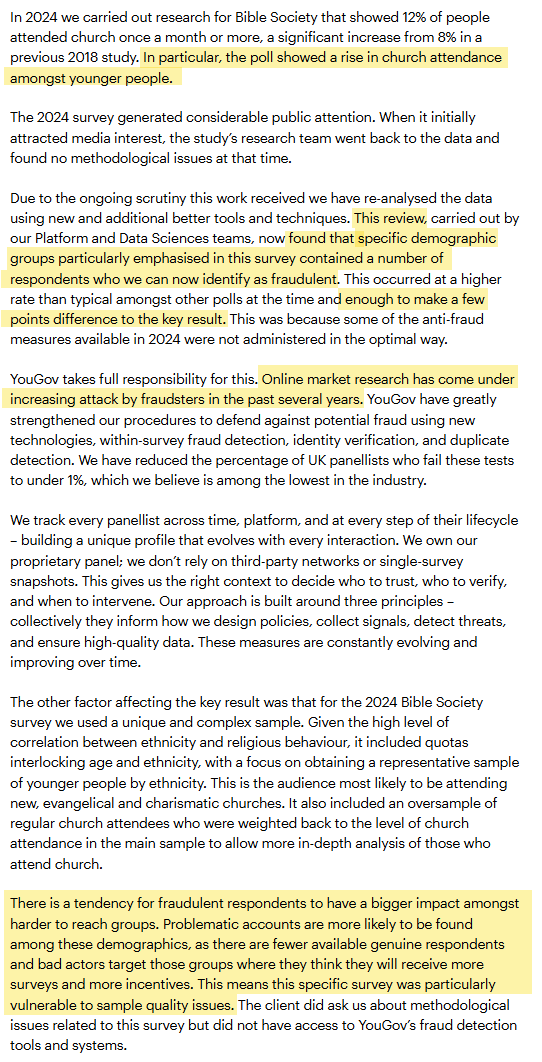
Newly published analysis of 2025 British Social Attitudes data provides no support for claims of a Quiet Revival of churchgoing in Britain. Widely circulated "Quiet Revival" claims resulted from a separate online opt-in survey that was retracted after YouGov (the survey vendor) acknowledged the results were biased by bogus respondents.
https://t.co/PdppqvGw9v
@conradhackett I’d also be curious to know where @YouGov said results were “biased by bogus respondents”. They said, “This means this specific survey was particularly vulnerable to sample quality issues” - which isn’t the same thing.
The call for papers for the International Society for the Sociology of Religion (ISSR) conference in Buenos Aires (February 15-20, 2027) is open until June 10. I'm looking for submissions about religion & demography.
https://t.co/y7GlxMFceP
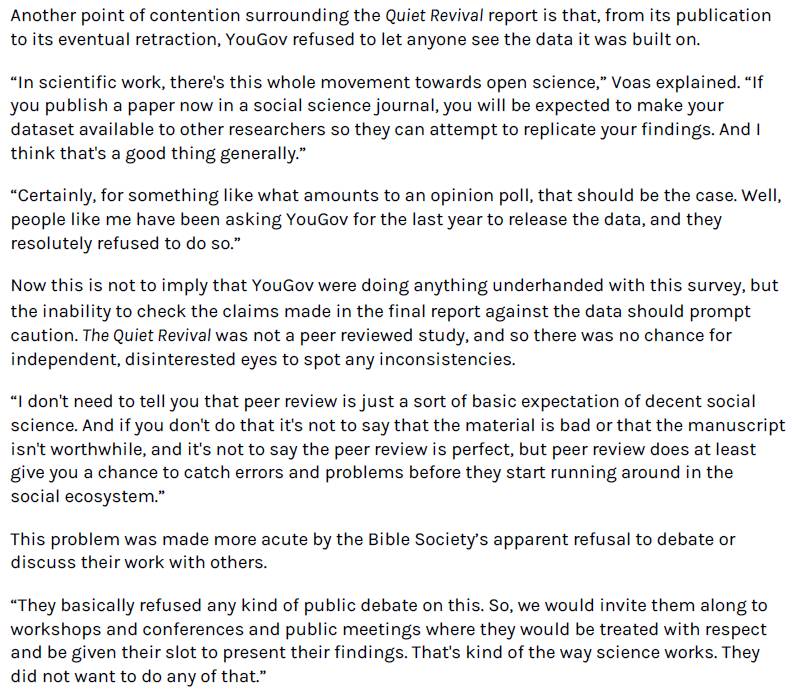
David Voas notes YouGov & Bible Society never published the full dataset from the (now retracted) Quiet Revival report. They declined invites for debate.
https://t.co/eJb7x14xUv