Hot take: “Assigned seating” @SouthwestAir took an iconic brand with raving fans down to something between @united and @SpiritAirlines.
They better figure that out.
Boarding groups twice the size they need to be. Overhead space disaster. Warm customer service gone. Yikes…
The Lubbock Apartment Association got to host the winter board meeting for the Texas Apartment Association Feb 2026!
That was really special for our local crew! Thank you @texastech and @creightonfortx for rolling out the red and black carpet for us!
@lubbockaptassoc @texasapartmentassociation
Outlive: The Science & Art of Longevity
By: @peterattiamd
Rating: A-
This challenges the reactive approach of conventional medicine & advocates for a proactive strategy to prevent chronic diseases (the “4 Horsemen”: heart disease, cancer, neurodegenerative diseases, & type 2 diabetes). Longevity is about living better, not just longer, by maintaining physical, cognitive, & emotional vitality through intentional habits.
Recommendations:
Exercise:
1.Create a Centenarian Decathlon: List 10 physical activities you want to perform at age 100. Train for these tasks now.
Why: Aging reduces muscle, strength, & balance. Exercise is the most potent tool for longevity, reducing mortality risk significantly.
2. Incorporate 3 Types of Exercise: Regularly train:
-Zone 2 Endurance: Low-intensity cardio where you can still hold a conversation, 3-4x/wk for 45-60 mins.
-VO2 Max Sprint: High-intensity intervals 1-2x/wk to boost cardiovascular fitness.
-Strength: Focus on grip strength, pulling motions, & hip-hinging movements 2-3x/wk.
Why: Zone 2 improves metabolic health & fat oxidation, VO2 max enhances cardiovascular capacity (key to longer lifespan), & strength training preserves muscle mass & bone density, reducing risks of falls & chronic diseases.
Nutrition:
1.Adopt a Nutrition Strategy: Choose 1 of 3 dietary approaches: caloric restriction, dietary restriction, or time-restricted eating. Avoid processed foods high in fructose & refined carbs.
Why: Modern diets contribute to metabolic dysfunction. Personalized strategies help manage energy intake, reduce inflammation, & improve metabolic health for each individual.
2. Increase Protein Intake: Aim for 1g of protein/lbs of body weight daily to support muscle maintenance.
Why: Muscle mass declines w/ age, increasing frailty risk. Adequate protein supports muscle repair & growth, crucial for function & metabolic health.
Monitor Key Markers:
Get regular bloodwork to track ApoB, Lp(a), & LDL-C levels, aim for lower than standard recommendations.
Why: These markers provide early insights into cardiovascular & metabolic health risks, enabling proactive interventions to prevent chronic conditions.
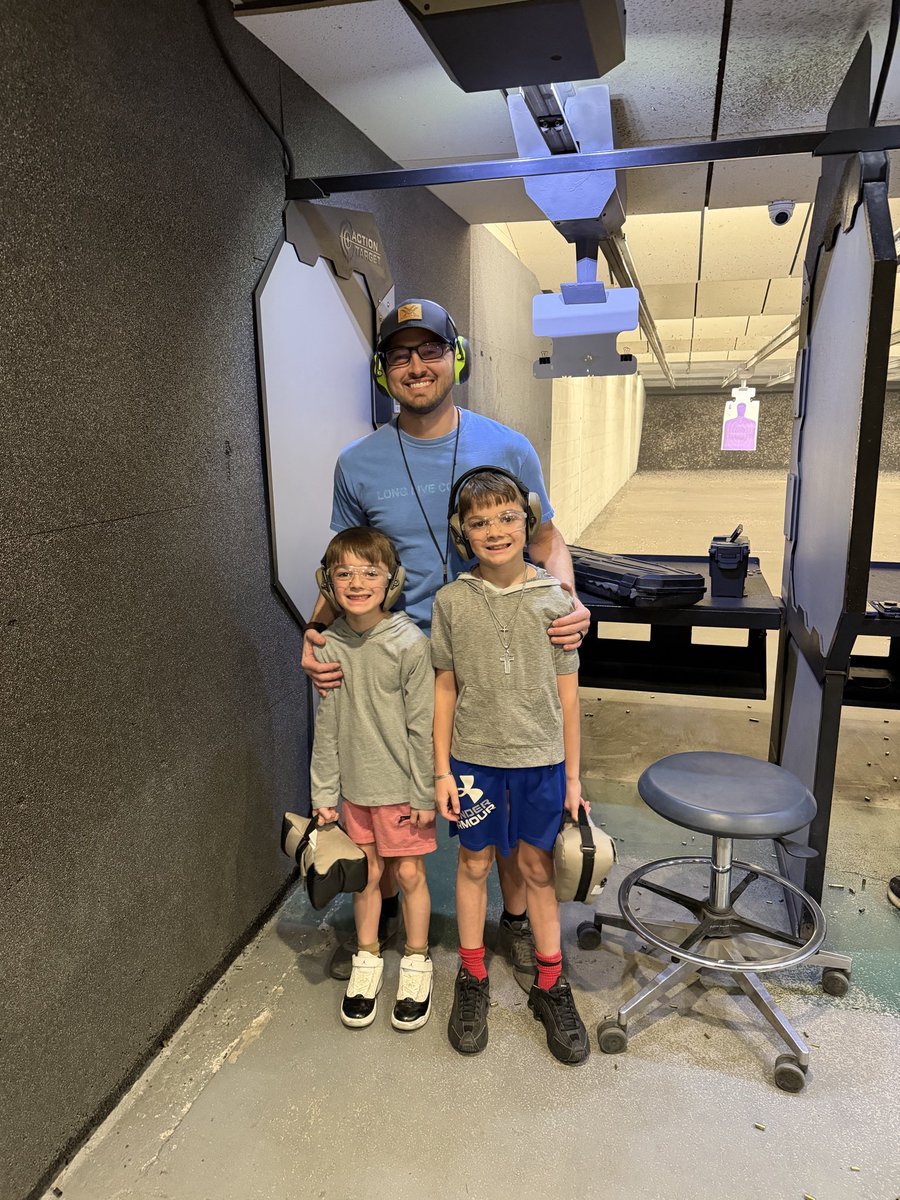
Dudes weekend! 👨🏻🤌🏼
-Range time
-Baseball tryouts
-Hibachi
-Late night movies
If you want to capture a boy’s attention, give them a task a season ahead of where they are!
Fun was had. Momma was missed! 🥹
Birth of a Building
By: Ben Stevens
Rating: A-
This book explains how a commercial real estate project moves from an initial idea into a fully documented, buildable project. I really enjoyed how this book educated the reader on navigating the design & budgeting process to produce a viable project.
Favorite Nuggets:
Project Budget Planning: You can’t evaluate a project with its income alone. You have to know what it will cost to get that income. That’s where the project budget comes in.
Categories to consider in budget planning:
Land Cost: Just what is sounds like
Soft costs:
Site Due Diligence: title work, surveys, soil reports
Design Consultants: architects, engineers
Business Consultants: lawyers, accountants
Municipal Costs: plan review, permits, impact fees, taxes during construction
Financing Costs: appraisals, inspections, origination fees, & interest
Development Fees: to pay yourself
Commissions: paid to brokers who find tenants
Pre-opening: advertising, leasing trailer
Reserves: for shortfalls during lease-up
Contingency: for soft cost increases
Hard Costs:
Site Improvements: earthwork, installing utilities
General Construction: creation of the building
Fixtures, Furniture, & Equip: lobby furniture, hallway art
Tenant Improvements: for commercial build-outs
Contingency: for hard cost increases
Supporting plans in the design process:
Utility plan: Shows the location of the utilities pulled from the road, onto the site, & into the building.
Civil plan: Shows how the land will be shaped.
Landscape plan: Addresses site grading, planting, drainage, & how the building connects to outdoor spaces.
Structural plan: Defines foundations, framing systems, load paths, & materials to ensure safety & durability.
Electrical plan: Lays out power distribution, outlets, panels, & integration with building systems.
Plumbing plan: Details water supply, drainage, fixtures, & connections to municipal systems.
Mechanical plan: Covers heating, cooling, & equipment to meet needs.
Lighting plan: Coordinates fixture types, locations, & performance requirements.
Interior design details: Specify finishes, millwork, fixtures, & spatial details that shape the user experience.
The Way I Heard It
By: Mike Rowe
Rating: A-
This book is a collection of short stories that Mike has gathered through the years.
It follows the format of his typical podcast. Each chapter starts with an interesting story from history that ends in some kind of twist. Mike goes on to tell a related personal story of his personal career.
Mike is an eclectic guy. He started in media on the Home-shopping network, QVC, working the late night shift. He is a self trained opera singer. And most people know him from his Discovery Channel show, Dirty Jobs.
He is a big believer and supporter of the trades and blue collar workers.
If you are looking for a collection of interesting stories to listen to on the way to work, this is your book!
$100M Offers
By: @AlexHormozi
Rating: B
The hook for this book is that it explains how to create offers so valuable that customers feel stupid saying no. The book walks through how to deeply understand customer desires, create value, & price offers for profitability. He writes very direct & practical, which I appreciate.
Key Points:
-People buy outcomes, not products: Focus on what your customer wants to achieve, not what you sell.
-Value equation: Value increases when you boost the dream outcome, raise the likelihood of success, &/or reduce the time & effort required.
-Know your customer’s pains & desires: Do detailed research. Offers succeed when they speak directly to a customer’s fears, motivations, & frustrations.
-Create a Grand Slam Offer: Bundle multiple components that enhance the outcome & remove obstacles. This includes tools, guarantees, bonuses, & services.
-Charge based on value, not cost: Price should reflect how much the solution is worth to the customer, not how much it costs you to deliver it.
-Use guarantees to reduce perceived risk: Strong guarantees increase conversions by lowering customer hesitation.
-Improve the offer before lowering the price: Add value, strengthen support, & remove friction instead of discounting.
-Iterate constantly: Offers become great through testing, refining, & gathering feedback.
Actions to Take:
1.Interview your ideal customer to identify their top 3 pains & top 3 desires.
2. Build an offer stack that increases the dream outcome & reduces effort or risk.
3. Craft a bold guarantee that eliminates fear & makes the purchase feel safe.
Crude Blessings
By: T. M. Patterson
Rating: A+
This is one of my favorite books that I have ever read. The stories are fantastic and the locations are very familiar. It gives so much context to the economy of West Texas.
The book is written by Roe Patterson and tells the story of his father, Glenn Patterson, and how he went from humble beginnings as a school teacher and grew into the owner of one of the largest oil and gas drilling companies in the world, Patterson UTI.
Roe is a great story teller and he doesn’t shy away from the tough, sad, hard, and happy stories.
Some of the more memorable stories were:
-Starting out as a school teacher
-Buying big equipment when markets went bust
-How they fell into drilling offshore
-The Jody Nelson saga (their CFO embezzled roughly $77mm from them)
-Taking their company public
-Navigating Glenn’s failing health on road trips up to Lubbock
This is a must read for every West Texan!
🚨 HOLY CRAP. JD VANCE IS LIVID!
"Everybody repeating the lie this is some innocent woman out for a drive in MN - YOU SHOULD BE ASHAMED OF YOURSELVES. EVERY SINGLE ONE OF YOU."
"What that headline leaves out is the fact that that very ICE officer nearly had his life ENDED, DRAGGED by a car six months ago, 33 stitches in his leg, so you THINK maybe he's a little bit SENSTIVE about somebody ramming him with an automobile?!"
"What that headline leaves out is that that woman was there to interfere with a legitimate law enforcement operation in the United States of America."
"What that headline leaves out is that that woman is part of a broader left-wing network to attack, to dox, to assault, and to make it impossible for our ICE officers to do their job."
"If the media wants to tell the truth, they ought to tell the truth that a group of left-wing radicals have been working tirelessly, sometimes using domestic terror techniques, to try to make it impossible for the president of the United States to do what the American people elected him to do, which is enforce our immigration laws."
"You people in the media have been LYING ABOUT THIS ATTACK. She was trying to RAM THIS GUY with her car! He shot back. He's already been seriously wounded before!"
🔥🔥🔥🔥🔥🔥
Rocket Fuel
By Gino Wickman
Rating: A
This book explains the partnership between 2 key people in most businesses. The Visionary, who drives ideas & big-picture strategy, & the Integrator, who creates structure, accountability, & execution. When these two roles work together, companies grow faster, stay aligned, & solve issues more effectively.
My Favorite Takeaways:
The book reinforces the Entrepreneurial Operating System (EOS) model & highlights the value of clearly defined responsibilities across the five core departments:
Sales & Marketing:
-Generate & convert leads
-Drive revenue
-Build relationships & brand
Operations:
-Deliver products/services
-Maintain quality
-Improve efficiency
-Ensure consistent workflow
Finance:
-Manage cash flow
-Provide accurate reporting
-Protect profitability
People (HR):
-Hire & develop talent
-Maintain culture
-Manage performance
Integrator / Leadership:
-Set priorities
-Solve issues
-Ensure alignment & accountability
Scorecards: are weekly tools that track 5–15 key numbers, each with a single owner. They help leadership spot problems early & make data-driven decisions.
Level 10 Meetings (L10s): are structured, weekly 90-minute sessions that keep teams aligned. This was one of my favorite takeaways and has been one of the more impactful things we have implemented within our businesses. The agenda includes:
-reviewing the Scorecard,
-quarterly priorities (Rocks),
-headlines,
-to-dos,
-& ending with IDS (Identify, Discuss, Solve), which focuses on solving real issues quickly.
The Visionary–Integrator combination works because one drives innovation while the other drives execution, creating balance, clarity, & momentum.
Actions to Take:
1.Hold weekly L10 meetings with the same agenda.
2. Build a Scorecard with clear weekly metrics & ownership.
Top Reads of 2025
I like to read. I post a lot about the books I read. It helps me process and internalize what I read. That’s for me. Here are my favorite books from the last year. This is for you!
1. Crude Blessings
By: T.M. Patterson
Rating: A+
Amazing storytelling. Relevant to people in West Texas and Texas in general. Educational to those curious about oil and gas.
2. Toxic Empathy
By: Allie B Stuckey @conservmillen
Rating: A+
Very relevant for the current issues of our time with a level headed look at both sides to every issue. But ultimately points back to what scripture says about the issue.
3. The Case for Christ
By: Lee Strobel
Rating: A+
This is a must read for every Christian and Non-Christian. A look at the evidence that Christ existed and did what he said he did.
4. Away Game
By: Paul Smith
Rating: A+
A Christian parent’s approach to sports and using it for the tool that it is in discipling your children.
5. Main Street Millionaire
By: Codie Sanchez @Codie_Sanchez
Rating: A+
Fun how to book for how to get involved in the biggest transfer of wealth in our generation.
6. The Holy Grail of Investing
By: Tony Robbins @TonyRobbins
Rating: A
Fascinating read on alternative investments that they don’t teach you about in school or any business school for that matter.
7. Outlive
By: Peter Attia @PeterAttiaMD
Rating: A-
Longevity science and treatments have come a long way in the last decade. This book is a crash course on all of the different areas of longevity and what to do about it to live a long high quality life.
8. The 5 Types of Wealth
By: Sahil Boom @SahilBloom
Rating: A-
Monetary wealth is put on a pedestal in our society. This book gives every other area of your life its own pedestal (Time, Social, Mental, Physical, and Financial).
The Power of Who!
By: Bob Beaudine
Rating: B+
This is about using your existing relationships to reach your goals instead of chasing strangers or networking with people you don’t really know. The author argues that your “Who”—the trusted people already in your life—are the key to finding purpose, success, and opportunities.
Core Concepts:
-You Already Know Everyone You Need to Know: You don’t need to meet hundreds of new people. The right connections are already within your circle—friends, family, coworkers, mentors.
-The “Who” vs. the “What”: Most people focus on what they want (a job, success, money). Instead, focus on who can help you get there. People open doors faster than plans.
-Trust Is the Real Currency: Real opportunities come through people who know you, like you, and trust you—not through random networking.
-The “100/12/3” Rule:
100 acquaintances
12 friends you truly trust. These are your “Who.”
3 “lifelong” friends who will go all in for you. These are the people who form your personal “Who Network.”
-Stop Cold-Calling: Rather than sending blind messages or applications, get introductions through your trusted network. Warm connections always work better.
-Serve First: Help your “Who” whenever you can. Generosity strengthens your relationships and builds mutual support.
-Dream with Your Who: Share your dreams with people who believe in you. Your “Who” can guide, connect, and encourage you along the way.
Key Actions:
1.List Your 12: Identify 12 trusted friends who know you well. These are your “Who.”
2. Reconnect Intentionally: Go to lunch or coffee with one of them weekly and ask them about themselves like a normal person.
3. Ask for Guidance, Not Favors: Share your vision and let your “Who” contribute ideas and connections naturally.
In short: You already have what you need—the right people. Success comes from nurturing those authentic relationships, not from collecting more contacts.
The Exit Strategy Playbook
By: Adam Coffey
Rating: A-
This book is a guide for business owners to sell their company, maximize value, & exit smoothly. It outlines four key steps based on the author’s experience in buying & selling businesses.
Brief overview:
-Part 1: The Universe of Buyers & Exit Strategies: Explores buyer types for selling your business, helping you align your company’s strengths with their goals to maximize value.
The buyer types are:
a. Strategic Buyers: Larger companies in your industry seeking synergies (e.g., combining customers, supply chains), market expansion, or reduced competition. They may pay more but want full integration, limiting your role post-sale.
b. Financial Buyers: Private equity or VCs focus on quick profits. Target strong cash flow or growth potential, prioritizing metrics like EBITDA. They may keep you to run the business but aim to resell within 3-7 years.
c. Alternative Buyers: Competitors, suppliers, or customers with strategic interests, or an ESOP where employees buy the company. These vary in deal structure & need careful vetting.
-Part 2: Prepping Your Business To Sell: Focuses on cleaning up finances (e.g., clear EBITDA tracking), separating assets like real estate & any personal expenses within the business, & showing growth potential to build buyer confidence.
Action: Audit 3 years of finances & switch to accrual accounting for accuracy.
-Part 3: Build Your Advisory Team: Advises hiring experts like business brokers, tax advisors, M&A lawyers, & bankers to navigate the deal & boost sale value through tax strategies & networks.
Action: Interview a Business Broker with extensive industry experience.
-Part 4: The Sales Process: Details the sale process—teasers, NDAs, due diligence, & closing. Emphasizes clear communication & planning post-sale income.
Action: Craft your 30-second pitch highlighting your business’s growth potential.
Favorite nugget: If you are interested in selling, create a record of all personal expenses in your business & go sit down with a business broker to understand how to improve the value of your business.
Raising the Bar: Integrity & Passion in Life & Business: The Story of Clif Bar Inc.
By: Gary Erickson
Rating: B-
This was a fun story about how Gary Erickson built Clif Bar into a thriving company guided by purpose, not just profit. He made controversial decisions based on his values & had the guts to stick with it.
Core Concepts:
-The Power of “No”: In 2000, Erickson had the chance to sell Clif Bar for $120mm. Investors & advisors pushed him to take the deal, but as he sat in the final meeting, he felt an overwhelming sense that selling would mean losing the soul of what he built. The brand was born from his cycling adventures, love of the outdoors, & desire to make wholesome food. Selling would have handed that vision to corporate interests focused only on profit. Erickson walked out of the meeting & said “no.” This bold decision became a defining moment for him.
-Why He Refused: Erickson wanted to create a company that reflected his values—adventure, health, community, & authenticity. Selling would have meant giving up control over how the company treated employees, sourced ingredients, & protected the environment. He chose freedom & purpose over a fortune.
-Business as a Reflection of Life: Clif Bar’s culture mirrors Gary’s passions—outdoor living, creativity, & sustainability. Work & life aren’t separate; they feed each other.
-Purpose Over Profit: Guided by its “5 Aspirations”—sustaining the business, brand, people, community, & planet—Clif Bar measures success by holistic balance, not by dollars.
-Empowered People: Employee ownership, wellness programs, & profit-sharing created a community where everyone benefited from the company’s growth.
-Integrity Builds Longevity: Erickson’s decision to stay independent allowed Clif Bar to grow on its own terms—& to inspire others to build values-led businesses.
Actions to Take:
1.Determind your anti-goals. Know what you will say “No” to as your business grows & why.
2. Choose your purpose for your business on your own terms. Not what others want for you.
3. Stand by Your “No”. The hardest choices often protect the things that matter most.
The Gap & The Gain: The High Achievers’ Guide to Happiness, Confidence, & Success
By: Dan Sullivan
Rating: C+
This book explains how high achievers stay happy by focusing on progress made (the Gain) instead of what’s missing (the Gap).
Core Concept: unhappy achievers live in the Gap—comparing themselves to ideals or future goals—while happy high performers live in the Gain—measuring progress by how far they’ve come.
Chapter Takeaways:
Ch 1. Embrace the Freedom of “Wants”: Shift from feeling obligated (“shoulds”) to being inspired (“wants”). Freedom to choose what you want creates energy and ownership instead of resentment.
Ch 2. Be Self-Determined: True happiness comes from internal control. Stop letting others’ standards define success. Living self-determined keeps you grounded in what matters most to YOU.
Ch. 3. The Compound Effect of the Gap or Gain: Mindsets multiply. Living in the Gain compounds confidence and results; living in the Gap compounds frustration and self-doubt. Small perspective shifts create exponential emotional returns.
Ch. 4. Always Measure Backward: Instead of comparing yourself to where you wish you were, measure from where you were. This instantly reframes progress and boosts motivation through visible growth.
Ch. 5. Measure 3 Daily Wins: End each day by identifying three gains—progress, lessons, or positive moments. This simple practice rewires your brain to focus on progress and gratitude.
Ch. 6. Transform Every Experience into a Gain: Even setbacks can become fuel. Ask, “What did I learn? How did I grow?” Turning obstacles into gains turns every experience into momentum.
Action to Take: Reframe your setbacks. Look back at a setback from the last few years. Ask yourself what skill, insight, or strength you gained.
Bottom Line: Success isn’t about reaching perfection—it’s about recognizing progress. Living in the Gain transforms achievement into lasting happiness.
Coach Builder: How to Turn Your Expertise Into a Profitable Coaching
By: Donald Miller
Rating: B
This book is ideal for small business owners or professionals who’ve navigated real-world challenges & want to help others do the same, potentially building a successful 6-figure coaching business.
Chapter 1 - Why Coaching Pays: Explains how coaching leverages your real world experience for high income with low costs. It’s about guiding clients to success through empathy and real advice, not being an expert guru.
Chapter 2 - Find Your Niche: Narrow your focus to one specific problem and audience (e.g., sales for e-commerce owners) to stand out, charge more, and attract ideal clients easily.
Chapter 3 - Craft Your Offer: Build simple, outcome-based packages with clear pricing and deliverables. Make it easy for clients to say yes by solving their exact pain points.
Chapter 4 - Build Your Brand: Create a website and use social media to share stories and free value. Position yourself as a trusted guide with a clear message that connects emotionally.
Chapter 5 - Find Clients: Use networking, webinars, referrals, and ads to generate leads. Focus on consistent outreach to fill your calendar without cold selling.
Chapter 6 - Deliver Great Sessions: Structure sessions around listening, powerful questions, and accountability. Track measurable progress to ensure clients get results and leave happy.
Chapter 7 - Scale Your Business: Grow beyond 1:1 coaching with group programs, courses, or hiring coaches. Systematize to increase revenue without working more hours.
Chapter 8 - Master Your Mindset: Tackle fears like imposter syndrome and rejection with daily habits, self-compassion, and a service-first attitude for long-term success.
Next Action: Audit your business experiences—list 3 problems you’ve overcome, choose 1 niche, & draft a basic coaching offer to kickstart your journey.
Scaling Your Business With MOD Virtual Professionals
By: Daniel Ramsey
Rating: B
This book shares Daniel Ramsey’s journey from solo hustles to building a 7-figure business using virtual professionals (VPs)—skilled, cost-effective global talent, mainly from the Philippines. It emphasizes delegating tasks to VPs to scale, avoid burnout, and focus on high-value work like sales and strategy.
Favorite Takeaways:
The 6 Stages to a 7-Figure Business: The roadmap divides growth into phases: “I Do It” (solo), “We Do It” (team), and “They Do It” (independent). Use VPs to progress faster.
Stage 1: Micro Business (“I Do It”) – Revenue $0–$60K, team of 1 (you). Focus on basics and problem-solving solo, but it’s high-effort with mindset challenges.
Stage 2: Entrepreneur (“I Do It”) – Revenue $60K–$105K, still solo. You’ve got early wins but feel stuck; build skills and relationships.
Stage 3: Managing Leader (“We Do It”) – Revenue $105K–$330K, team 1–2. Add help for systems and leads; share load to grow steadily.
Stage 4: Business Owner (“We Do It”) – Revenue $330K–$1M, team 3–8. Leverage team for efficiency; tackle hiring and balance issues.
Stage 5: The CEO (“They Do It”) – Revenue $1M–$2.5M, team 9–11. Business runs with less input; build culture and trust processes.
Stage 6: Visionary Leader (“They Do It”) – Revenue $2.5M+, team 12+. Self-sustaining; focus on vision and long-term wealth.
Types of VPs and What They Do:
Sales Dev VPs: Manage leads, scripts, and calls (aim 500/month, 3:1 ROI). Convert prospects to boost sales 10–20%.
Marketing VPs: Handle branding, social posts, content repurposing, and automation. Build “local celeb” status for steady leads.
Admin VPs: Own CRM, reports, and support using tools like Basecamp. Streamline ops to save time and reduce errors.
Actions to Take:
-Assess your stage by revenue/team; identify hurdles.
-Audit tasks and delegate low-value ones to a VP via MyOutDesk.
-Set outcome goals (e.g., 70% referrals) and hire/train VPs for them.