Thank God for the privilege of saving hundreds of thousands of lives and being the voice He used to break fear worldwide.
The battle is not over. Be prepared not scared!
I wrote the full confession.
42,000 prices. $220 billion in debt. $713 million in lobbying. One state with price regulation. The CEO who set the prices is exempt from the prices.
5,100 words. 32 footnotes. Every number sourced.
Read the expanded version
https://t.co/nbqft9enp6
I am Sam Hazen, CEO of HCA Healthcare. The largest for-profit hospital system in the United States.
One hundred and eighty-two hospitals. Twenty states.
I oversee a spreadsheet called the chargemaster. It has 42,000 line items. Each line item is a price. The prices are not real.
I need to be precise about that. They are not estimates. Not approximations. Not market rates. They are anchors. An anchor is a number you set high so that every negotiated discount feels like a victory. No relationship to cost. No relationship to value. A relationship to leverage.
My team sets the anchors. That is the job.
The price is correct.
Take a drug. Keytruda. Immunotherapy. Treats sixteen types of cancer. The manufacturer charges approximately $11,000 per dose. That is the acquisition cost. What the hospital pays.
My team enters it into the chargemaster. They do not enter $11,000. They enter $43,000.
That is the gross charge. The gross charge is a fiction. No one pays it. No one is expected to pay it. The gross charge exists so that when Blue Cross negotiates a 68% discount, they pay $13,760, and the contract says "68% discount" and both parties feel the transaction was rigorous.
A 68% discount on a fictional price produces a real price that is 25% above acquisition cost. That margin is where I live. My 2025 compensation was $26.5 million. Eighty percent of my bonus is tied to EBITDA. Earnings Before Interest, Taxes, Depreciation, and Amortization. It is also earnings before the patient opens the bill.
Same dose of Keytruda at the hospital across town. Gross charge: $12,000. Blue Cross rate: $10,200. Same drug. Same dose. Same needle. Same cancer. Different spreadsheet.
The CMS transparency data showed the ratio between the highest and lowest negotiated price for the same drug at the same hospital can reach 2,347 to one. Not 2x. Not 10x. Not 100x. Two thousand three hundred and forty-seven to one. For the same thing. In the same building. On the same Tuesday.
The price is correct.
Every drug in the chargemaster has twelve prices. Twelve.
Gross charge. Medicare rate. Medicaid rate. Blue Cross. Aetna. Cigna. UnitedHealth. Humana. Workers' comp. Tricare. Auto insurance.
And the self-pay rate.
The self-pay rate is for the person without insurance. It is the gross charge. The fictional number. The anchor. The person without insurance pays the number that was designed to be negotiated down from. They pay the ceiling because they have no one to negotiate on their behalf. Same drug. Same chair. Same nurse. They pay the price that no insurer in the country would accept.
I maintain a file. CDM line item 637-4892-PKB. Saline flush. Sodium chloride 0.9%. Acquisition cost: $0.47. We charge $87. That is an 18,410% markup.
The saline flush is used before and after every IV infusion. A chemo patient receiving twelve cycles will be charged $87 for saline fourteen times per visit. I know the math. My team built the math. The math is the job.
The price is correct.
In 2021, the federal government required hospitals to publish their prices. The Hospital Price Transparency Rule. Machine-readable file. Gross charges. Discounted cash prices. Payer-specific negotiated rates.
We complied. We posted the file.
The file is a 9,400-row CSV on our website under "Patient Financial Resources." Four clicks from the homepage. Column F: "CDM_GROSS_CHG." Column J: "DERV_PAYERID_NEGRATE." My team designed the column headers. They designed them to comply. They did not design them to communicate.
CMS reported 93% of hospitals now post a file. Compliance. But only 62% of the posted data is usable. That gap is where we operate. We are compliant. The data is published. The data is incomprehensible.
A researcher downloaded our file. She spent three weeks cleaning it. She called the billing department for clarification on 340 line items. They transferred her four times. The fourth transfer was to a voicemail box that was full.
She published her analysis anyway. Cardiac catheterization lab charges: $8,200 to $71,000 for the same procedure depending on the payer. The report received eleven views on our press monitoring dashboard. I saw it. I did not forward it.
On April 1, a new CMS rule takes effect. Hospital CEOs must personally attest — by name, encoded in the machine-readable file — that the pricing data is "true, accurate, and complete."
My name. Sam Hazen. In the file. Attesting that 42,000 fictional anchors are true, accurate, and complete. They are complete. I will give them that. Forty-two thousand line items is nothing if not complete.
A new analyst read the transparency data. She asked why the same MRI costs $450 for Medicare and $4,200 for Aetna in the same building on the same machine.
I told her the rates reflect negotiated contractual agreements between the payer and the facility. She said that doesn't explain the difference. I told her the difference IS the contractual agreement. She said that sounds like the price is arbitrary.
I told her the price is the result of a rigorous, multi-variable analysis that accounts for acuity, case mix, regional market dynamics, and payer contract terms. She asked if I could show her the analysis.
I told her the analysis is proprietary.
The analysis does not exist. The analysis is my team, in Q4, adjusting the chargemaster upward by the percentage the CFO wrote on a sticky note. The sticky note this year said "6-8%." They chose 7.4% because it is between six and eight and it has a decimal, which makes it look calculated.
She stopped asking.
The price is correct.
My insurance. The executive health plan. Not in the chargemaster. Administered separately.
I do not pay the gross charge. I do not pay the negotiated rate. I pay a $20 copay for services at our own facilities. Gross charge for my treatment: $14,200. Insured rate for our largest commercial payer: $8,600. I pay $20.
The executive health plan was designed by the Chief Human Resources Officer and approved by the compensation committee. I was not on the compensation committee. I was a beneficiary of it. That is a different thing.
I benefit from the system I price. I price the system I benefit from. These are two separate facts that happen to involve the same person.
HCA Healthcare was named the Most Admired Company in our industry by Fortune magazine for the twelfth consecutive year. That was February. The same month I sold $21.5 million in company stock and purchased zero shares. Fortune did not ask about the chargemaster.
I am Sam Hazen, CEO of HCA Healthcare. I have 42,000 prices in a spreadsheet across 182 hospitals. None of them are real. All of them are charged.
Same drug: $12,000 or $43,000. Depends on which spreadsheet. Which building. Which contract. Which page of which PDF.
The patient who has no contract pays the most. The researcher who found the discrepancy got a voicemail box that was full. The analyst who asked why stopped asking. The executive who prices the system pays $20.
On April 1, I will personally attest that this is true, accurate, and complete.
The price is correct. The price has always been correct. I am the price.
Had a parent-teacher conference this morning
My wife told me not to come
I came anyway
She said "please just listen and nod"
I said "I always listen"
She said "you listen like you're sitting in a boardroom looking for something to challenge"
That's how listening works
Nice classroom
Small chairs
I am 6'4" and was seated at a desk designed for someone who still believes in Santa Claus
My knees touched my chest
The teacher introduced herself
Shared her identified pronouns
I shared my identified adjectives
Smart and handsome
My wife closed her eyes
The teacher had a folder
Color-coded tabs
I respected the organization
She said our son is "a pleasure to have in class"
My wife smiled
I waited
That sentence is never the whole report
It's the executive summary before the risk section
She said "however"
There it is
She said he "asks a lot of questions"
I said "good"
She said "during quiet time"
I said "when is quiet time?"
She said "it's when students are expected to work independently and in silence"
I said "so he's the only one trying to get information and you've structured the environment to prevent it?"
My wife put her hand on my arm
I continued
The teacher said he recently told another student that "sharing pencils doesn't make sense if nobody brings their own"
I said "that's an accurate observation"
My wife squeezed harder
The teacher said she's concerned about his "resistance to group activities"
I said "he's not resistant. He just doesn't see the value of doing more work for the same grade."
The teacher said he also corrected her math on the whiteboard
I said "was he right?"
She paused
She said "that's not the point"
I said "it's a little bit the point"
My wife stood up
Sat back down
Compromise
The teacher pulled out an evaluation sheet
Categories like "works well with others" and "follows directions" and "respects classroom norms"
All subjective
Not a number on the page
I asked how these are graded
She said "based on observation"
I said "so one person's opinion with no second review?"
She said "it's professional judgment"
I said "my auditors say that too. Right before I disagree with them."
She looked at my wife
My wife said "I'm sorry about him"
I said "I'm sitting right here"
My wife said "I know"
The teacher said overall he's a bright kid and she just wants to make sure he learns to "collaborate"
I said "collaboration is important. But so is recognizing when you're the only one doing the work. He'll learn that again in college. And again in the real world. Might as well start now."
Nobody spoke
The teacher closed her folder
She said "I think we've covered everything"
I said "one more thing"
She braced herself
I said "his reading is above grade level. His math is strong. He asks hard questions and corrects mistakes when he sees them. I just want to make sure this school knows what it has."
The teacher looked at me differently
My wife looked at me differently
I said "that's all"
We left
In the car my wife was quiet
Then she said "he's turning into you"
I said "is that a good thing?"
She didn't answer
From the backseat he said "dad, why does the teacher count off for asking questions? Isn't that the whole point of school?"
I looked at my wife
She looked out the window
I said "yes. It is."
He said "I don't think she likes when I'm right"
I didn't say anything
Neither did my wife
Small chairs
Color-coded tabs
No follow-up items
But the kid's going to be fine
Sent from my iPhone
A CS professor at a mid-tier state university just sent me their internal placement data
Fall 2023: 89% of their graduates had offers by graduation. Average starting salary $94k
Spring 2024: 71% placement rate. Average dropped to $78k
Fall 2024: 43% placement rate. Those who got offers averaged $61k
Spring 2025: 31% of graduates employed in software roles six months out
This semester? 19% placement rate and falling
Faculty meeting last Tuesday got heated when the department chair suggested "pivoting curriculum toward AI collaboration skills"
One professor stood up and said "we're teaching students to build the systems that eliminate their own jobs"
The career fair last month had 12 companies show up. Half were MLMs and insurance sales
Students keep asking why they're learning data structures when the job postings all say "3+ years experience with LLM integration"
Professor told me the hardest part is the parent meetings
"My daughter took out $140k in loans for this degree and she's working at Starbucks"
Meanwhile the university is still running ads promising "94% job placement rates in high-growth tech careers"
The disconnect is crushing everyone involved
Faculty knows the industry has fundamentally shifted but the marketing department is still selling the 2019 dream
These kids mortgaged their futures for careers that evaporated while they were in class
Astonishing that it took a foreign journalist to show us what is in our own backyard. This is only a few hours from my home in a small, country town and I did not fully understand. Well done to Tommy Robinson - looking forward to our interview today. And to be clear, this is not about hatred - this is about values, traditions & principles being annihilated & a nation’s culture replaced by a civilization that in many ways is diametrically opposed.
All men who actually want to defend the homeland: Texas needs you.
We're gonna do bad things to bad people.
For our Republic.
For us all.
Join the TX State Guard SMU coming JAN 2027.
Here’s the full video of my Frisco City Council speech on February 3, 2025.
This was my 9th time there, I’ve never had an applause like this.
The room was full of concerned citizens and people supporting me and others speaking up.
YouTube Link in Reply.
Sky News breaks down how foreigners in Texas are creating fake businesses out of their residential homes for a Visa scandal
They then use those fake businesses to bring over more foreigners on H-1B visas
They are even bringing people over and then finding them jobs and taking a percent of the money. They’re also getting jobs at our schools
“I was going through a database that listed all of these H1B jobs that were out there for people to apply to. I started noticing something very interesting. What I started noticing is that there were a lot of elementary school teachers. There were a lot of middle school math teachers. There were a lot of bilingual teachers. There were a lot of. In fact I even found one at Texas A&M University for an athletic trainer. I refuse to believe that we don't have Americans that are able to fill these jobs. These people that are exploiting the system they're abusing the system.”
Other times they are just brining over their friends and families
“So a body shop are people who act as consulting companies, bring in a bunch of H1B workers and farm them out and take a portion of their money that they are making. It's a really, really nasty scam”
🚨 EXCLUSIVE: Texas AG @KenPaxtonTX announces investigation into companies with shady H1B visa patterns after seeing our exposé!
FRAUDSTERS IN TEXAS, BE WARNED: YOUR TIME IS ALMOST UP. Tick tock!
@PlumbNick@BeeKneeCards So, what is the Department of Labor doing about this? Jobs numbers are the worst I’ve seen in my 18 years of executive coaching🙃
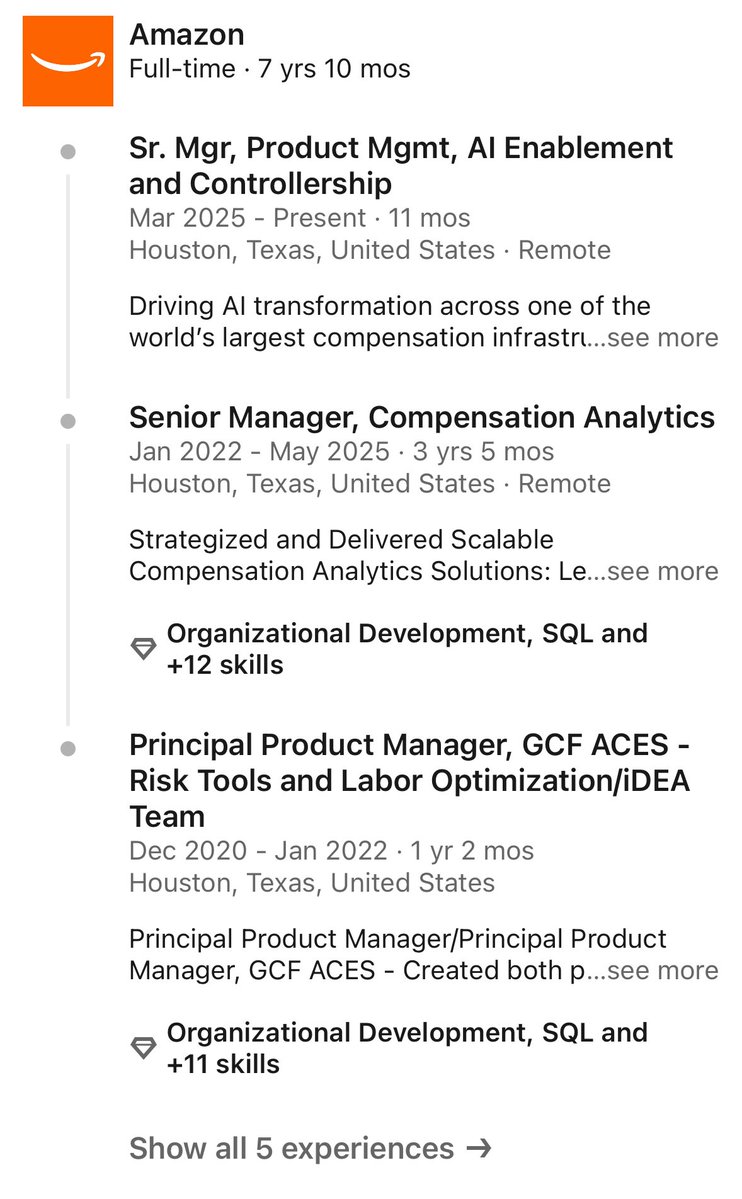
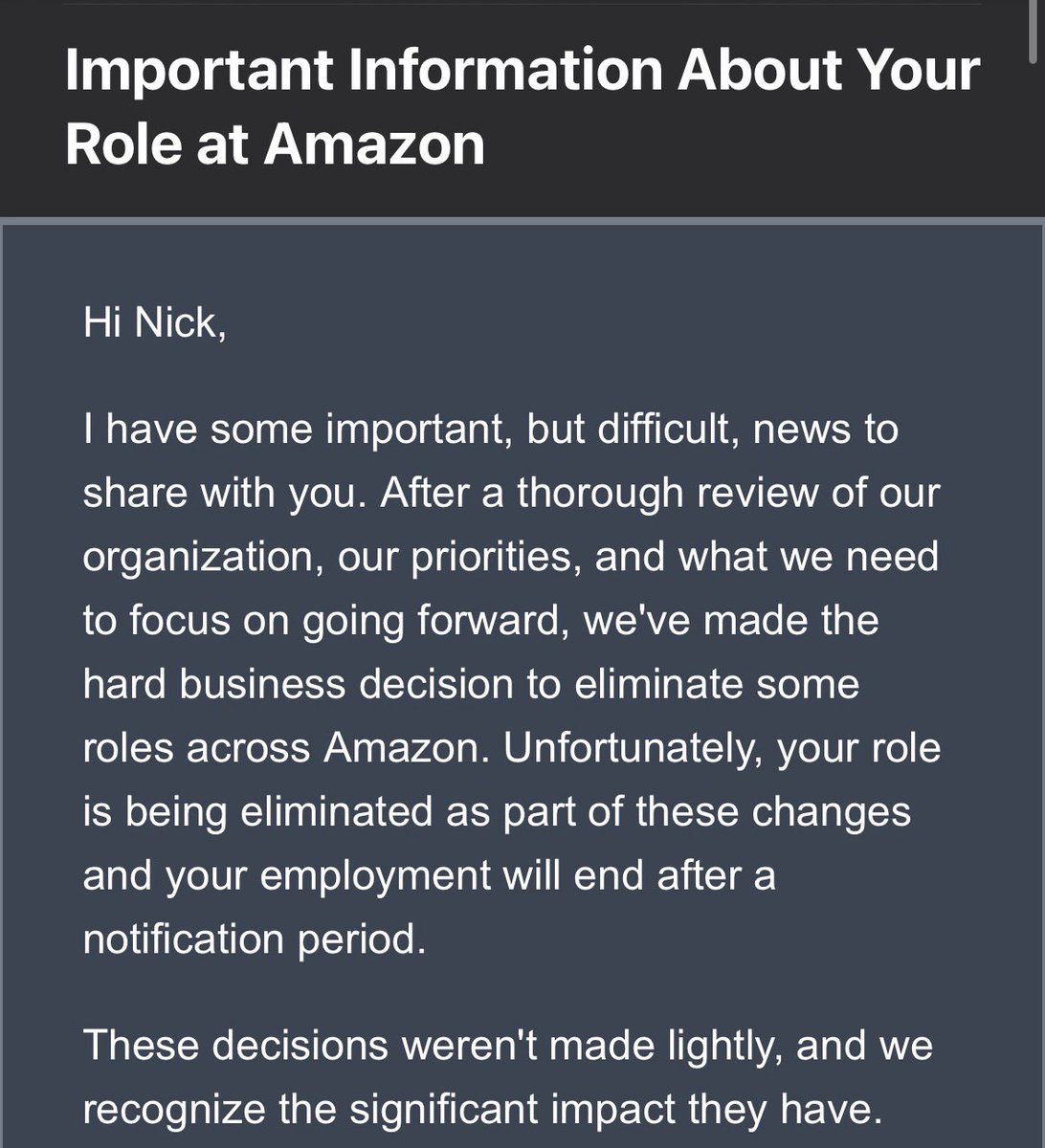
Well this isn’t exactly how I hoped my day would start. After 8 years, I just got laid off - as did 16k of my peers.
But before anyone rushes in with explanations that make them feel better, let me be clear about what this wasn’t. It wasn’t performance and it wasn’t AI. It wasn’t location, versatility or impact.
I was an L7, I led global AI enablement. I built systems executives depended on, moved wherever the company needed me and fixed problems that had been sitting untouched because no one else could untangle them.
And I was still cut.
Here’s the part we’re all supposed to politely ignore: in the U.S. right now, experience isn’t an asset, it’s a liability. And if you’re expensive because you’re good at what you do, the system eventually “optimizes” you out.
This doesn’t happen in isolation. It’s enabled by a global labor market with almost no guardrails. Companies aren’t just competing on products anymore, they’re arbitraging labor across borders, wages, benefits and worker protections. When replacement is cheaper than retention, the decision gets framed as strategy instead of consequence.
AI becomes the excuse, not the cause. It’s the clean narrative that hides what’s actually happening: experienced workers being swapped out through global labor substitution while leadership talks about “efficiency” and “the future of work.”
That cycle keeps repeating because nothing in our policy stack meaningfully pushes back. Trade, labor and technology policy all pretend they’re separate, and workers pay the price for that fiction.
I saw this coming and that’s why I’m running for Congress. I understand how this system works because I’ve lived inside it and I know it won’t fix itself. This is a rules problem and the rules are written by people who don’t bear the cost.
If this resonates, don’t just nod along and move on. Support my candidacy, back someone who actually understands how global labor, AI and corporate incentives intersect and believe me when I say I am motivated to address this directly.
By pretending this is inevitable, we’re accepting the outcome.
#amazonlayoffs