@gurjota If he is happy growing it's all good for person. We all take rest after some time, get bored and search for new meaning. Hope he has good journeey
The story of a little girl and a mountain!
In February 1983, Brigadier Gyan Singh, a former artillery officer, arrived in Uttarkashi to run an adventure course & was so impressed by the girls who participated that he offered 7 of them scholarships.
One of them, the third of 5 children of a local border tradesman, bluntly told him that scholarships were not enough & girls like her whose parents were pressing her to get married needed a proper career option
The next morning Gyan Singh, who ran the National Adventure Foundation, asked them to start the paperwork for a women's organization to help other girls find adventure. And with those first 7 girls, the Bhagirathi Seven-Sisters Adventure Club was born.
The Brigadier, or 'Chote Chacha' as they affectionally called him, returned to Delhi, but returned as promised on June 1st with camping and trekking equipment to organize adventure camps for girls.
That summer they had two batches, from Jamshedpur and Meghalaya, and soon the Bhagirathi Seven Sisters Adventure Club was not just doing well, but in the national news and even featured in the popular Doordarshan show Ghar Bahar.
In May the next year, the girl who first asked the Brigadier for an option for a career in mountain climbing was one of the selections for an Indian expedition to Mount Everest.
And on the 23rd of May 1984, Bachendri Pal became the first Indian woman to ascend Mount Everest, one day before her 30th birthday!
There are some powerful secrets in Odyssey that you can only understand if you speak Greek. Let me give you an example.
The Odyssey, apart from being a literary work, also conceals a profound philosophy that most people are unaware of, not intentionally, but because this philosophy cannot be fully understood in the English language; it can only be grasped in Greek, thanks to the richness of its philology and the etymology of its words.
The three most important suitors who die are Antinous, Eurymachus, and Amphinomus. In English, these names mean nothing, but in the Greek language, they carry great significance due to Homer's deliberate choice of them.
The name Antinous means the one who opposes rational arguments, the irrational one ('anti' + 'nous' = mind/intellect).
Antinous is the first to speak, the most irreverent of all, and the first to be killed. Odysseus reveals his true self, he has changed after ten years fighting at Troy and another ten struggling against the seas. The first trial he faces upon his return is a war within his own mind, his reason. That is why Homer creates Antinous as his first enemy: the one who fights against logic, according to his name. Odysseus triumphs over him.
Next comes Eurymachus. He is warlike but also two-faced. His name means the broad, great fighter ('eurys' = wide/broad + 'machos' = fighter). Eurymachus puts Odysseus in a dilemma and tries to shift the blame onto Antinous. He personifies discord and duplicity, a man without morals, capable of anything to avoid punishment. Yet Odysseus overcomes this obstacle as well, which symbolizes moral superiority. He does not yield, and his mind is not poisoned.
Third is Amphinomus. His name means the one who distorts the law ('amphi' = around/both sides + 'nomos' = law). He is the most compassionate of the suitors. Amphinomus tries twice to discourage the other suitors from murdering Telemachus. Odysseus even tries to warn Amphinomus to leave the house before the final battle. Nevertheless, Amphinomus stays and dies along with the others.
Through this, Odysseus, and by extension Homer, teaches us that in life, sacrifices are required, even when they demand that we show no compassion when the goal is more important and serves a greater purpose that will improve things overall. These are sacrifices that most people, even brave and heroic ones, cannot make.
That is why there are many people, but few are truly brave and heroes.
In 1919, 1 man bought a Ghost Ship & challenged the entire British Navy. They tried to bankrupt him with a Zero-Price war, but he won by turning a ferry ticket into a vote for Freedom. From building India’s 1st aircraft factory in secret to carving railway tunnels through impassable mountains, he was the Industrial Guerilla who taught a colony how to fly, sail, & drive. Discover the man who made Made in India a threat to the Empire.
He is the man who looked at the British "No Entry" signs across Indian industry & decided to build a sledgehammer.
After WWI, the British shipping giant BI (British India Steam Navigation) had a total monopoly on Indian waters. No Indian was allowed to own a large-scale shipping line. On 5th Apr 1919, just days before the Jallianwala Bagh massacre, an Indian man, with no background in shipping, Walchand Hirachand Doshi spotted a ship called the SS Loyalty in Bombay harbor. It was a hospital ship being sold after WWI. W/o waiting for a license, he bought it & launched the SS Loyalty, the 1st ship of the Scindia Steam Navigation Company.
The British tried to sink him financially. They started a Price War, dropping ticket prices to almost zero to bankrupt Walchand. Walchand did not blink. He appealed to Indian pride. He told the public: "Even if their tickets are free, if you travel with them, you travel in chains." Indians chose to pay for Walchand's tickets. He broke the 100 yr British naval monopoly. This is why 5th April is still celebrated as National Maritime Day.
The British govt in India had a strict policy: "India will produce raw materials; Britain will produce machines." They flatly refused to give a license for an Indian car factory. Walchand realized he could not wait for permission. He went to the USA & met Walter Chrysler.
He told Chrysler, I want to build an Indian car for Indian roads. Chrysler was impressed by his grit. Together, they bypassed British red tape to set up Premier Automobiles (the birthplace of the legendary Padmini/Fiat). He proved that an Indian could build an engine, not just a bullock cart.
During WWII, the British were desperate for aircraft maintenance in the East but did not want Indians to know the secrets of aviation. Walchand did not ask the British. In Oct 1939, Walchand was returning from the United States (where he had gone to explore setting up a car factory, including talks with Chrysler).
On a Pan Am Clipper flight from San Francisco to Hong Kong, he had a chance meeting with American industrialist William D. Pawley (president of Intercontinent Corporation and involved in aircraft manufacturing for China). Pawley was on his way to China to support aircraft production there (for the Chinese government amid the war with Japan).
During the flight, Walchand discussed his ambitions with Pawley, who shared insights from his China operations. This conversation sparked the idea for an aircraft factory in India. With the help of Maharaja of Mysore, he set up Hindustan Aircraft Ltd. (now HAL) in Bangalore in 1940. When the British realized what he had done, they were furious but had to nationalize it because they needed the planes for the war effort.
Every time we see a Tejas/a Sukhoi take off today, remember that the runway was laid by Walchand’s defiance in 1940.
Walchand’s company, Hindustan Construction Company (HCC), was responsible for the Bhor Ghat & Thull Ghat railway tunnels. British engineers said the Sahyadri mountains were too tough for Indian contractors. They wanted to give the contracts to London firms. Walchand took the contract, used indigenous techniques, & completed the tunnels ahead of schedule & at a lower cost. He proved that Indian Civil Engineering could move mountains.. literally.
Despite being 1 of the richest men in India, Walchand was a symbol of the Swadeshi spirit. He would walk into boardrooms with British Lords & present his papers in Marathi/Gujarati if he felt they were being condescending. His agenda was clear: "I do not want to be a rich man in a poor country; I want to be a productive man in a rich country.
Walchand Hirachand was the Architect of Infrastructure. If Tata built the Steel, Walchand built the Speed.... the ships, the cars, & the planes. He was the 1st Indian to understand that true independence is the ability to move our own people on our own machines.
He was the man who turned "Made in India" from a dream into a Turbine. He did not just compete with the British; he made them irrelevant in their own specialized fields.
Going to Paris?
The Louvre is a must-see, but pro travelers know there's way more to explore.
10 masterpieces in Paris that aren't in the Louvre. 🧵
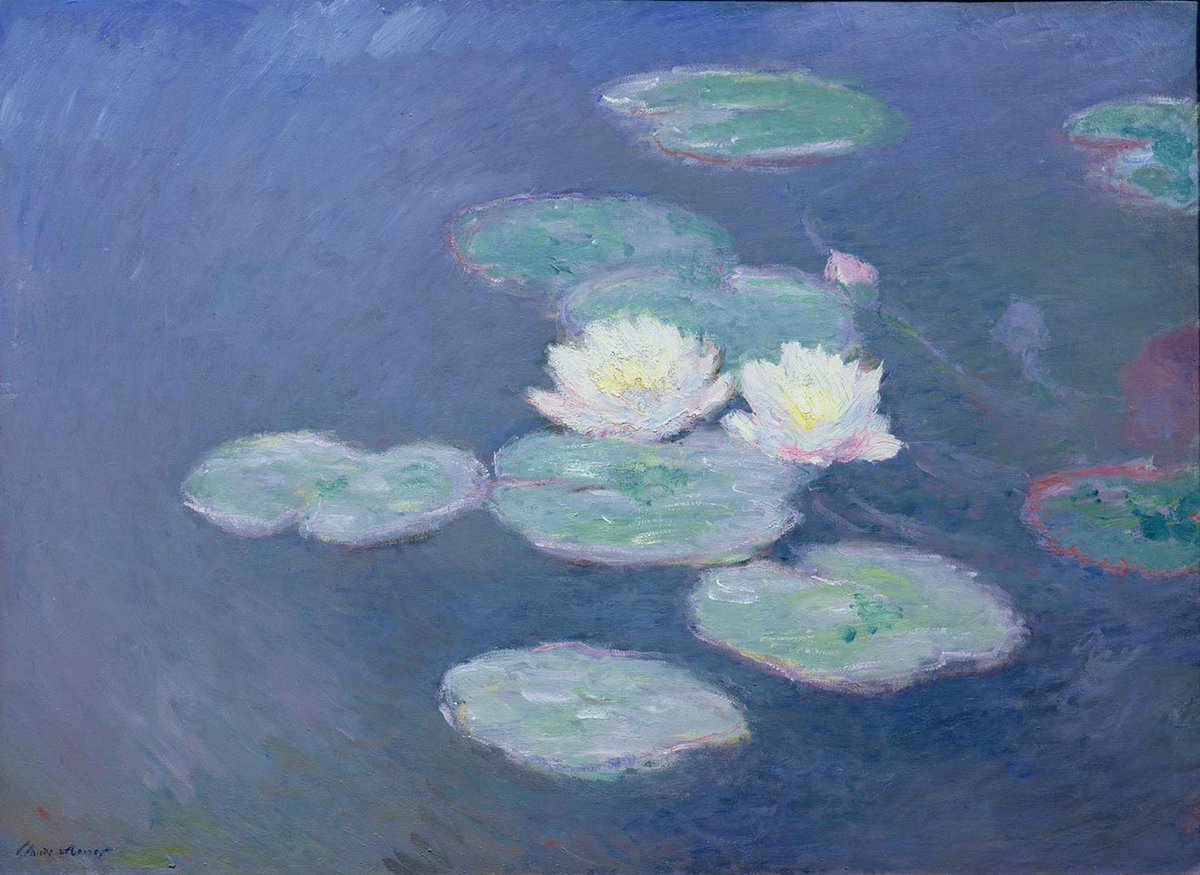
1. Water Lilies" (Nymphéas) by Claude Monet
Where: Musée de l'Orangerie
When Barack Obama entered the Hiroshima Peace Memorial Park on May 27, 2016 — becoming the first sitting U.S. president to visit the city destroyed by the United States in August 1945 — the world focused on his speech. Cameras showed the wreath at the cenotaph. Headlines rightly emphasized the weight of the moment. But almost no one noticed a short, quiet Japanese man standing among the official delegation.
His name was Shigeaki Mori. He was eight years old on the day of the atomic bombing. By 2016, he was the only person who knew the names of all twelve Americans who died in Hiroshima — U.S. prisoners of war whom America had never fully accounted for.
Mori spent forty years finding them. Not for money. Not by order. Simply because he believed the dead should have names.
He was born in Hiroshima on March 29, 1937. On the morning of August 6, 1945, he was crossing a small bridge about 2.5 kilometers from the epicenter. The blast threw him into the stream below. Decades later, he recalled:
“I climbed out and saw a woman stumbling toward me. Her body was covered in blood, her organs hanging out. Holding them, she asked where the hospital was. I cried and ran away.”
He was eight. And there were no hospitals left.
Mori survived. He grew up in postwar Japan, worked ordinary jobs — in a brokerage, later at a piano factory — but dreamed of becoming a historian. He never got a formal degree. So he became one on weekends.
In the 1970s, a professor showed him a document: a list of twelve American airmen shot down over Japan in 1945. They were crew members of two B-24 bombers — Lonesome Lady and Taloa — captured and held in Hiroshima, just 400 meters from where the bomb exploded.
They died from their own country’s bomb.
For decades, their story was barely acknowledged. Families were told only: “missing, presumed dead.” No details. No truth.
Mori decided to find it.
Without funding or institutional support, he spent decades reconstructing their fate — comparing archives, tracking records, even locating surviving crew members. One by one, he restored their identities.
Then he wrote letters.
In broken English, he contacted families across the U.S. — often seventy years too late — explaining what had happened to their sons, brothers, husbands.
In 2008, he published his research, which eventually led the U.S. government to officially acknowledge the deaths of the twelve American POWs in Hiroshima.
In 2016, a documentary introduced his story to a wider audience. During Obama’s visit, Mori was invited to attend. In his speech, Obama mentioned the victims — including “twelve Americans held in captivity.”
For the first time, a sitting U.S. president publicly acknowledged them on Japanese soil.
After the speech, Obama approached Mori — a small, elderly man who bowed politely. Then, unexpectedly, the president opened his arms.
They embraced.
The image went around the world.
In 2018, at age 79, Mori visited the United States for the first time. He attended memorial events, spoke publicly, and finally met some of the families he had written to for decades.
When asked why he devoted his life to Americans who died beside him, Mori answered:
“My work was not about people from an enemy country. It was about human beings.”
Shigeaki Mori died in Hiroshima on March 14, 2026. He was 88 years old.
That bag has a name. It's a bindle. And in the 1930s, about 250,000 American teenagers actually packed one and walked out the door to ride freight trains, looking for work after the crash wiped out their families' savings.
They were called boxcar boys and girls. Many were just 16 or 17. They left because there was no food at home, or because they didn't want to be another mouth their parents couldn't feed. One boy left home with the 72 cents his mother pulled from her purse, the last of her money. About 4 million Americans were on the road in those years.
The cartoon image we know traces back to two artists. Charlie Chaplin's Tramp character, the little guy in baggy pants with a stick, debuted in 1914. He became a global icon. Walt Disney later said Chaplin was one of the inspirations for Mickey Mouse. Then in 1958, Norman Rockwell painted a runaway boy carrying a bindle for the Saturday Evening Post cover. That picture is the one that stuck in our heads.
The actual life behind the bag was hard. People who lived it called themselves hobos, and they were strict about the word. A hobo was a worker who traveled. A tramp only worked when he had to. A bum didn't work at all. Hobos hated being mixed up with the other two.
They followed the harvests. Strawberries in spring, hops in summer, apples in fall, potatoes in winter. Pay was a few dollars a day, sometimes less.
Riding freight trains was illegal and could kill you. Railroad police, who they called bulls, beat them off the cars. You could slip and get crushed between cars. Or freeze to death sleeping in a boxcar in winter. A British poet named W.H. Davies, who wrote a memoir called The Autobiography of a Super-Tramp, lost his foot trying to jump onto a moving train.
So they built their own world. Their camps near rail yards were called jungles. They shared a stew called Mulligan, where everyone threw in a potato, or a piece of meat, or whatever they had. They left messages for each other on water tanks: a nickname, a date, and the direction they were heading, so the next person passing through could see who had been there. They had a phrase for someone who died on the road. He caught the Westbound.
In 1900, a town in Iowa called Britt, with about 2,000 people, decided to host them. Every August since, hobos and rail riders show up to crown a Hobo King and Queen, with crowns made from coffee cans. The convention is still running. There's a Hobo Memorial Cemetery in Britt for the ones who caught the Westbound.
The cartoon turned it into a childhood dream. For a quarter-million American kids in the 1930s, it was just the bag you grabbed before walking out the door.
Van Gogh died broke because nobody wanted his paintings. He sold maybe one during his entire life. The art world thought his style was too immature. His brother Theo, an art dealer, kept him alive by sending money constantly.
When Van Gogh passed in 1890, his brother, Theo died just six months later. That left Theo's wife Jo as a 28 year old widow with a baby and about 900 paintings nobody wanted, plus hundreds of letters.
Here's what actually mattered. Van Gogh had written hundred of letters letters to Theo and Jo explaining individual paintings and his life as an artist. He told them the stories behind each work, what he was trying to express, what each one meant to him.
After both brothers died, Jo remembered these letters and published them.
That's what made him famous. People could read Van Gogh's own words about each painting. The works stopped being random art and became stories he had experienced. The paintings got context directly from him explaining what he was doing. Jo gave the world Van Gogh's voice attached to his work.
By the time she died in 1925, he had gone from total unknown to art historical icon.