Matt Abrahams teaches public speaking at Stanford. His best framework sounds insane: do not try to calm down before you speak.
Alison Wood Brooks proved why at Harvard in 2014.
She ran three experiments at HBS. She made participants do high-stakes karaoke, public speaking, and a brutal math test under loss-framed time pressure. Before each task, she randomly assigned them to say "I am calm," "I am excited," "I am anxious," or nothing.
The karaoke study used 113 people singing "Don't Stop Believin'" on a Wii. Voice-recognition software scored pitch, rhythm, volume.
"I am excited" group: 80% accuracy.
"I am calm" group: 69%.
"I am anxious" group: 53%.
Same song. Same hardware. Same room. The only variable was the four words people said before they opened their mouths.
The math experiment ran 188 participants on a difficult IQ test framed as a financial loss. The "get excited" group scored 8% higher than the calm group. The speech experiment had independent judges rate persuasiveness, competence, confidence, and persistence. Excited group beat calm group on all four.
The mechanism is arousal congruency. Anxiety and excitement share the same physiology. Elevated heart rate, narrowed attention, cortisol spike, palms sweating. The body is in a high-arousal state and cannot be talked out of it on the timeline you have before you walk on stage.
"Calm down" tries to drag the body from high arousal to low arousal. The body resists. You spend cognitive bandwidth fighting the floor of your own nervous system, which is the same bandwidth you needed to deliver the talk. The fight is the failure.
"Get excited" keeps the high-arousal state and assigns it a useful label. Same chemistry, different cognitive frame. The energy now serves the task.
Brooks tracked heart rate across all three studies. The "excited" group's pulse stayed elevated. They didn't calm down. They stopped trying to.
Greeting the anxiety accepts the body. Managing it fights the body. The body always wins the fight.
The arousal is loaded. Excitement is just calling it by name.
Over 10,000 patients gained access—each life touched by prostate cancer highlights the need for greater awareness, support, and access to care. We’re committed to driving progress, supporting patients, and advocating for earlier detection.
Learn more: https://t.co/7zQEwfkZlb
#ProstateCancer #ProstateCancerAwareness #PROstate
Are you attending the 6th Annual Urology Advocacy Summit with @AmerUrological? We’re ready for an education-packed week and look forward to seeing you there!
We’re excited to meet with others in the #urology industry, participate in engaging forums, and learn more about how we can innovate care in this changing healthcare landscape at the #LUGPA Regional Meeting with @UrologyUS! Be sure to say hello if you see us!
Are you attending this year’s International Prostate Cancer Update? We’re looking forward to learning more about new developments in prostate cancer treatment, diagnosis, and prevention. See you there!
The patient experience goes beyond medicine.
At Accord BioPharma, we understand the complexities that come with providing quality, compassionate care. Learn more by reading about our therapeutics areas: https://t.co/txyBRFpZyr
Each patient has unique needs.
That’s why we aspire to understand our patients’ experiences to help create specialized care that addresses key needs for each individual.
Learn more: https://t.co/txyBRFqxnZ
Better value. Better results.
That’s what we hope to achieve by using our team’s insights and expertise to create new therapies. Learn more: https://t.co/030WY9iguu
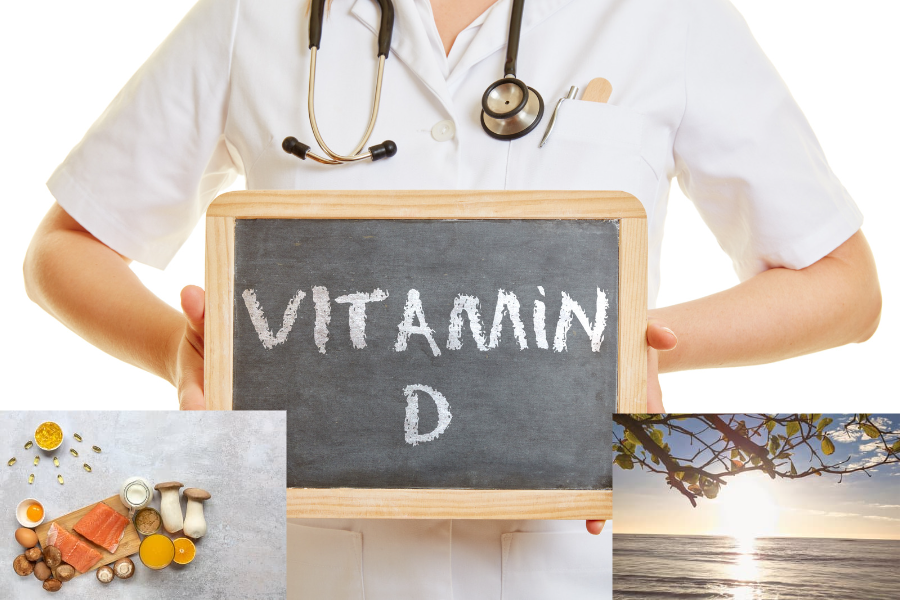
Did you know that vitamin D is good for #prostatehealth? On top of good hygiene, there is also increasing evidence that #VitaminD promotes resistance to infections and that men with higher levels were at lower risk for #ProstateCancer. Learn more here: https://t.co/mAIMsmbCkS
Sadly, exercise is not on the radar for many men with prostate cancer, and it ought to be, because it extends life, improves quality of life, and slows the progression of prostate cancer.
February is Black History Month and we know 1 & 6 Black men will be diagnosed with prostate cancer in their lifetime. What can you do?
✅ Get screened.
✅ Take charge. Get our wellness guide, exercise, and eat a plant-centric diet - https://t.co/3x89A7otUK