… Our project is looking at how microsimulation could help locally target support and incentives to match the best improvements to the houses and households that most need them. 5/5
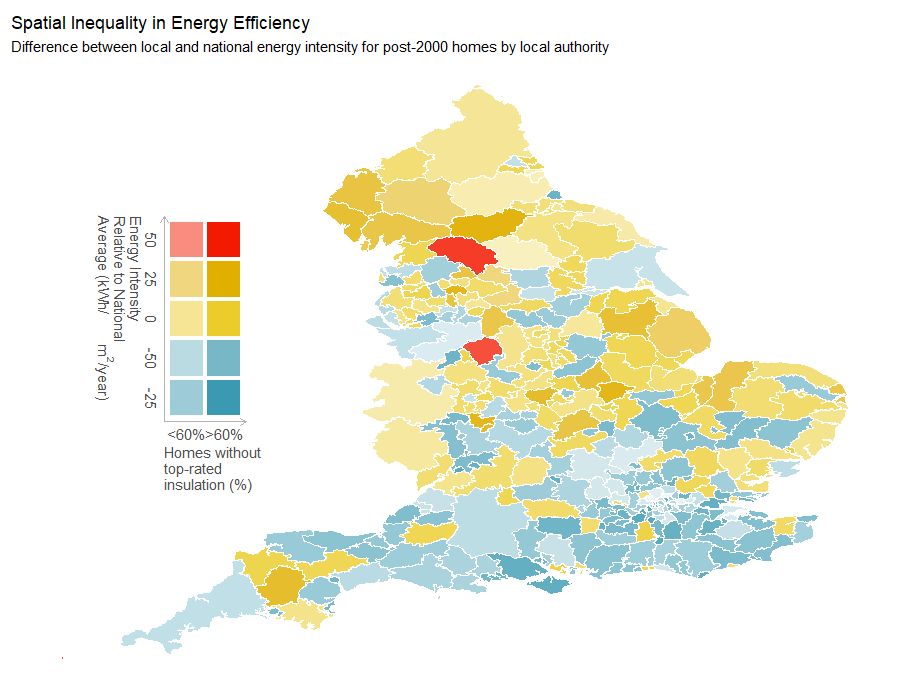
A post on our @EECi_Cambridge blog about our household energy microsimulation project taking a look at Yorkshire and the Humber. Spatial inequality in energy efficiency can have a compounding effect alongside other socio-economic inequalities… https://t.co/VhsXBqIZnl 1/5
… this reflects the proportion of older homes that have been retrofitted in the area, often mirroring underlying socio-economic inequalities. With fuel prices rising, financially vulnerable households in inefficient housing are going to be more at risk of fuel poverty… 4/5
Great talk by @CaitHRobin on spatial inequality in urban sensor distribution and the concept of 'sensor deserts'. Food for thought in any discussion on smart cities - plus some nice and tidy data visualisation! #SAD2022
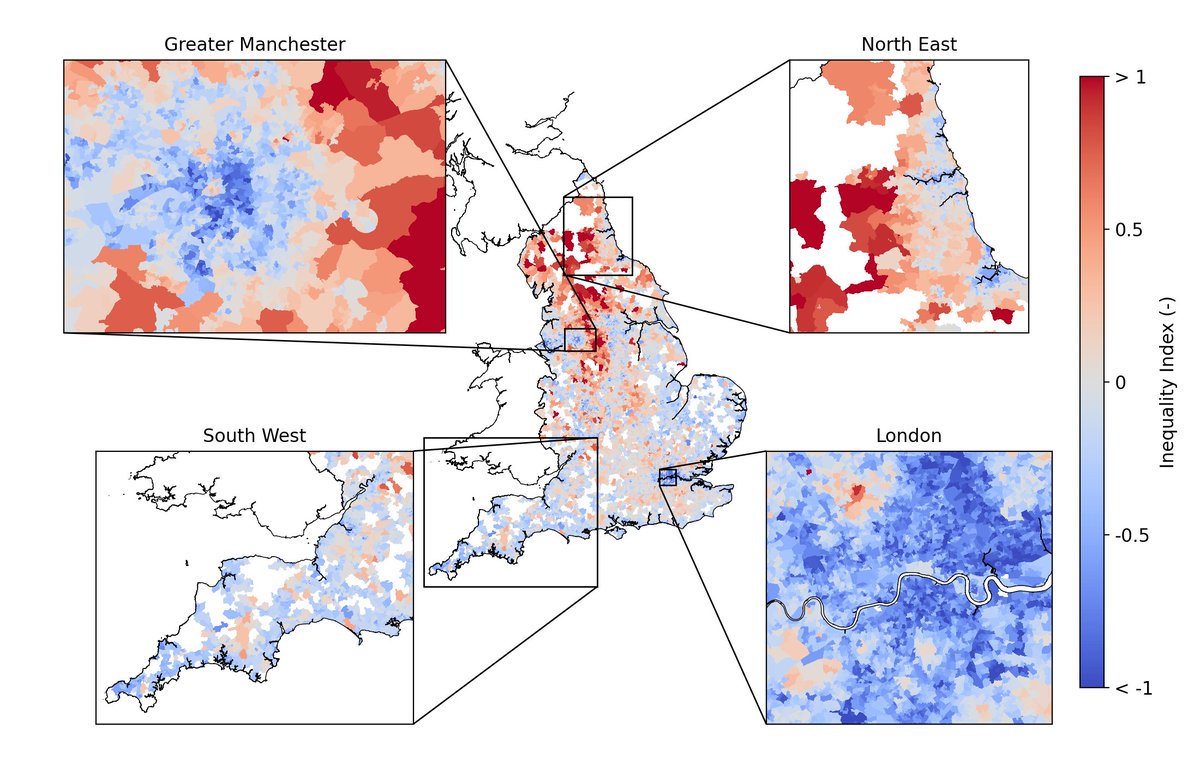
@darribas Must say it was quite cool to see this being used to shape a policy discussion - regardless of the politics there was plenty of data storytelling in this white paper.
A great explainer thread on the use of spatial stats in the #levellingupwhitepaper - shows an interesting pattern in the spatial distribution of inequality (despite the technical nuances and caveats @darribas points out)
Plenty of folks better placed to deliver hot takes so I'll spare you mine... But, by my own account, the most statistically sophisticated fig in the full #levellingupwhitepaper is one on spatial stats(!). A🧵to unpack it. Gist: not wrong, not right either, but definitely cool!👇
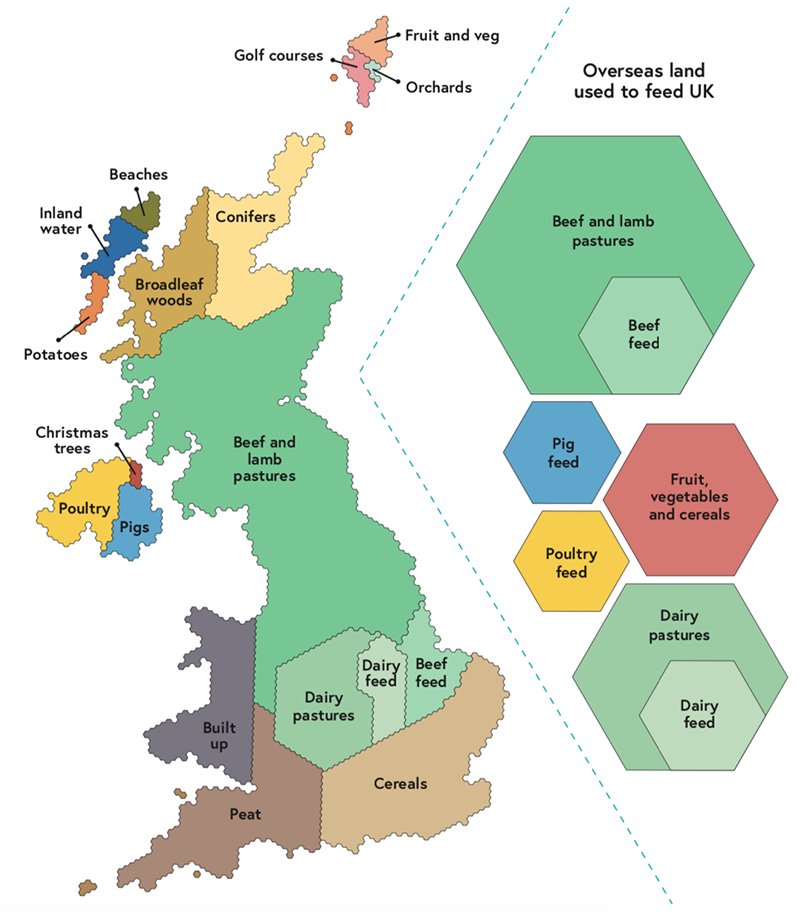
Today seems like a good day to share this amazing graphic of UK land use
(I estimate solar farms cover less than one tenth of one percent of the UK – 0.08%)
https://t.co/W6LdsR0fun
Awesome bit of data story telling on gender equality - great idea to take a relevant symbol (in this case the '=' and '+') and turn into a visualisation system!
These differences are related to underlying socio-economic inequalities across the country (which inefficient housing can compound). Policies to decarbonise residential buildings need to be locally tailored and targeted to account for inequality. 3/3
Recently wrote a piece on my current work on energy efficiency of homes and why people in some parts of England pay far more than others to heat their homes https://t.co/e3au4S4q3R via @ConversationUK - co-authors @RuchiChoudhary_ @nickmalleson @DrPatriciaTernes 1/3
Homes built since 2000 in rural and northern areas have worse energy efficiency than their southern counterparts. This can lead to a difference of up to £200 a year and a difference in heating emissions of nearly 1 tonne CO2... 2/3
@timbolord Exactly - affordability and financing requirements for retrofits are not uniform across the country. Our project is developing tools that could help with locally tailoring and targeting efforts - although there are certainly things that could be done without the help of models.
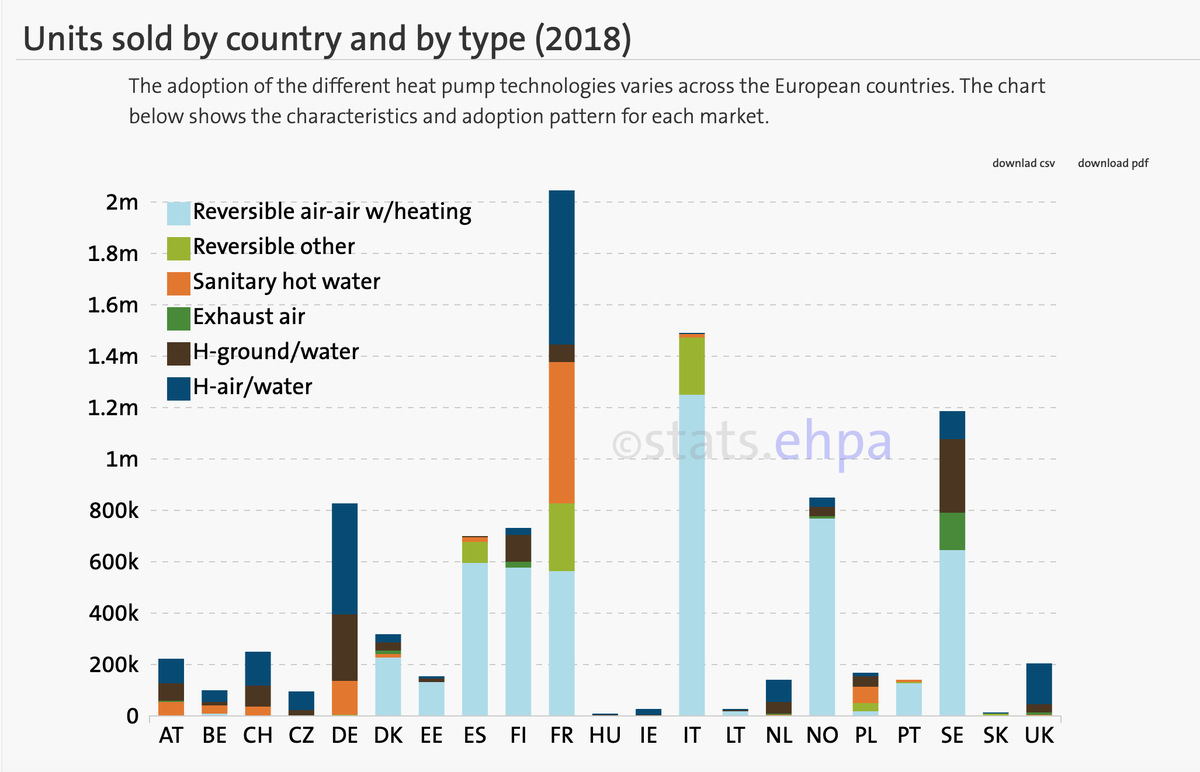
Great to see new grants for heat pumps. Though, in my latest preprint I argue that equal investment in heat pumps throughout the country will result in increased inequality in places such as rural areas/the north due to colder climates = less efficient. https://t.co/JFA3t3M0B0
Good point by @keithalexander - heat decarbonisation policy and planning in the UK needs to evolve to fit long term ambitions. Retrofit is great - but new builds and installations lock in patterns of energy consumption, why not make sure these fit with our net zero ambitions?
The "ripping out your boiler" net zero fearmongering is a distraction from the fact that many UK households would happily be installing heat pumps right now if the government did more to enable it.
After advising PhD & Master students for over a decade, there is one thing I find most students need to unlearn: the half-ass work mentality acquired during years of tests and homework. Let me explain (thread 🧵). 1/N #AcademicTwitter