Statement : IFF condemns the internet shutdown in parts of Central Delhi. No suspension order has been made public.
New Delhi, 20 July 2026
The Internet Freedom Foundation (IFF) condemns the suspension of mobile internet services imposed today, 20 July 2026, in parts of Central Delhi, including the area around Jantar Mantar. The shutdown coincided with the 'Chalo Sansad' march called by the Cockroach Janta Party (CJP) on the opening day of the Monsoon Session of Parliament, where thousands of students and young people had gathered to press their demands. Permission for the march was refused. Prohibitory orders were imposed under Section 163 of the Bharatiya Nagarik Suraksha Sanhita, 2023. Routes to Parliament were sealed, and metro stations including, Patel Chowk, Rajiv Chowk and Janpath were closed. Amid reports of the use of force to disperse protesters, mobile internet was then switched off, reportedly "as a precautionary measure". We urge the immediate restoration of all telecommunication services in the capital and an end to internet shutdowns across India.
The developments of today are of immense consequence to the future of our democracy. The voices gathered at Jantar Mantar, and the residents of the national capital, need to be heard the loudest, not silenced en masse.
No order has been made public
At the time of release of this statement, no copy of any suspension order has been published by the Ministry of Home Affairs, the Department of Telecommunications, the Government of NCT of Delhi or the Delhi Police. Residents of the capital do not know which authority directed the shutdown, on what grounds, over which precise areas, for which services, or for what duration. An unpublished order is an unaccountable order. It cannot be challenged before a court, and the judicial review guaranteed by the Supreme Court becomes illusory. Some reports further indicate the deployment of network jammers in parts of Central Delhi, including near Jantar Mantar. Jamming equipment finds no sanction in the legal framework for the suspension of telecommunication services at all. If jammers were deployed, the government must disclose under what legal authority.
Binding safeguards violated
On 10 January 2020, the Supreme Court in Anuradha Bhasin v. Union of India, (2020) 3 SCC 637 held that the freedom of speech and expression, and the freedom to carry on trade or business through the medium of the internet, are protected under Articles 19(1)(a) and 19(1)(g) of the Constitution. The Court directed that every order suspending telecom services must be published. Reasons must be recorded in writing. The restriction must be proportionate, adopting the least restrictive measure available. It cannot continue indefinitely. It is subject to judicial review, and to scrutiny by a review committee.
Parliament has since replaced the framework of the Indian Telegraph Act, 1885. Under Section 20(2)(b) of the Telecommunications Act, 2023, telecommunication services may be suspended only on the occurrence of a public emergency or in the interest of public safety, on the grounds specified in that provision, and for reasons recorded in writing. The Telecommunications (Temporary Suspension of Services) Rules, 2024, notified on 22 November 2024, give effect to this power. A suspension order may be issued only by the Union Home Secretary or the State Home Secretary. An officer not below the rank of Joint Secretary may act in unavoidable circumstances, subject to confirmation by the competent authority within twenty four hours. Every order must clearly define the geographical area and the specific services suspended, and cannot remain in operation beyond fifteen days. Every order must also be published. A Review Committee must meet within five days of the order and record its findings on whether it complies with Section 20(2).
These safeguards are not being followed
If we account for today's shutdown against this legal architecture. The order is unpublished, in breach of Anuradha Bhasin and the Suspension Rules, 2024 alike. No recorded reasons are available to the public despite little to no reports of violence and consistent calls for the protest to be peaceful by the CJP and other organisers. The precise areas and services covered are undisclosed and so is the duration. Whether the competent authority even issued the order cannot be known. Whether the Review Committee will examine it cannot be verified. While the Suspension Rules prescribe no outer time limit for publication, a gap we have previously flagged, it cannot cut against the spirit of the Anuradha Bhasin judgement. A blanket suspension across densely populated parts of the capital, imposed as a "precaution" against a march to Parliament, is the opposite of a narrowly tailored, least restrictive measure. A shutdown timed to a protest restricts the freedoms of speech and assembly at the very moment they matter most.
The human cost of a shutdown
Access to the internet is a digital right on which the exercise of our fundamental freedoms now depends. When the network goes dark in Central Delhi, a journalist at Jantar Mantar cannot file her report or broadcast live. A street vendor on the surrounding roads cannot accept a UPI payment. A gig worker loses a day's earnings. A parent cannot confirm that a child who joined the march is safe. Cutting off communications prevents people from reaching out for help and manufactures panic in a moment which demands calm. These costs fall hardest on daily wage earners and small traders who can least absorb them. Internet based communications also promote trust between people and their government.
A pattern, not an aberration
Delhi has seen this before. On 19 December 2019, mobile services were suspended for the first time in the capital's history during the protests against the Citizenship (Amendment) Act, in areas including Seelampur, Jamia Nagar and Mandi House. On 26 January 2021, the Ministry of Home Affairs suspended internet services in Singhu, Ghazipur, Tikri, Mukarba Chowk, Nangloi and their adjoining areas during the farmers' protests. According to the #KeepItOn coalition's report released in March 2026, India recorded 65 internet shutdowns in 2025, the highest of any democracy in the world, and accounts for 920 of the 2,102 shutdowns documented globally since 2016. We have consistently advocated against the harm these disruptions cause, from Jammu and Kashmir to Rajasthan, and from Haryana to Manipur, where a shutdown in 2023 ran for over two hundred days. The orders are rarely published on time, and the findings of review committees never see daylight.
Our demands
We call upon the Government of India and the Government of NCT of Delhi to:
1. Immediately restore all suspended telecommunication and internet services in Central Delhi.
2. Publish forthwith every suspension order passed on or around 20 July 2026, together with the reasons recorded in writing, as mandated by Anuradha Bhasin and the Telecommunications (Temporary Suspension of Services) Rules, 2024.
3. Disclose the issuing authority, the grounds, the precise areas and services covered, and the period of operation, and clarify whether network jammers were deployed and under what legal authority.
4. Place the order before the Review Committee within five days as required by the Rules, and make its findings public.
5. Reform Section 20(2)(b) of the Telecommunications Act, 2023 to provide for independent prior authorisation and real consequences for unlawful suspensions.
IFF will file applications under the Right to Information Act, 2005 seeking copies of the suspension orders and the records of the Review Committee, and is examining further legal remedies.
Delhi and all of India deserve better.
Remember the polar bears.
Remember the rhinos.
Remember the elephants.
Remember the orangutans.
Remember the whales.
Remember the rainforests.
Remember the coral reefs.
Remember the glaciers.
The future of each now rests in human hands.
An Open Letter to the Jantar Mantar protestors:
My dear young friends,
I address you today not as a politician or an MP, but as someone deeply troubled by what is happening to your generation of young Indians.
This is personal for me. I was born to a middle-class family: my father was a salaried newspaper employee, my mother a homemaker, with three children to educate on one income. For a family like ours, merit was not a slogan. Scholarships, fair examinations, honest results — these were the only way one salary could carry three children's dreams.
I went to school in Mumbai and Kolkata, to college here in Delhi, topped the University and earned admission into IIM — and chose instead to follow my passion for international affairs, in America, on a scholarship. Nothing was inherited; everything was earned by hard work and yes, Exams.
So I know that a fair, merit-based system is the only ladder for young people from lower and middle-income families to climb up. When that ladder is broken — papers leaked, examinations cancelled, trust destroyed — the children of the rich and powerful do not suffer. They have other ladders. It is your dreams, and your families' sacrifices (and tragically, in some homes, young lives themselves) that are betrayed.
To the young people gathered at Jantar Mantar, and those raising your voices peacefully across India: this country hears you. Your anger is not indiscipline — it is the anguish of a generation that did everything right and was still betrayed . You are not alone.
And to the millions of young Indians watching quietly: your generation is not a problem to be managed. You are the answer to India's future. Do not lose hope. This ladder will be rebuilt — by you, and by every Indian who stands with you.
To Shri Sonam Wangchuk-ji, my heartfelt appeal: please end your fast. You have awakened the conscience of the nation; that is what a fast is meant to do. India needs your voice for the long road ahead.
With Parliament in session again from Monday, we will have an opportunity to raise the students’ issues in the highest forum of our democracy. That’s where the problem should be addressed, not by fasting unto death. Please heed my plea.
And finally, to the Government: I respectfully urge you to reach out and engage in the dialogue our democracy owes its young citizens. That is not weakness; that is statesmanship.
"Racism must be opposed by all means that humanity has at its disposal."
Today and every day, let us honour #NelsonMandela’s legacy by taking action. By speaking out against hate and standing up for human rights.
#NoToHate#FightRacism
Not every "opinion" online is human.
Bots shape the Internet at massive scale, and they're getting harder to spot. Time to see who's really behind the screen.
Hard truth: The gym isn't hard. Getting to the gym is hard. The conversation isn't hard. Starting the conversation is hard. The project isn't hard. Opening the document is hard. The activation energy is where 90% of resistance lives. Once you're in motion, the task is easy. The start is everything.
The death penalty does not deliver justice.
It is an inhumane form of punishment, puts innocent lives at risk, and has no place in the 21st century.
I remain fully committed to the universal abolition of the death penalty – firmly & without exception.
@KaushikDhi51869@Pandey10Khush@MattooShashank I’m visiting India as a NRI and i would absolutely discourage people from visiting the Northern States (minus the mountain states) because of how unsafe & unclean they are. Let’s not even talk about the constant scammers never leaving you alone.
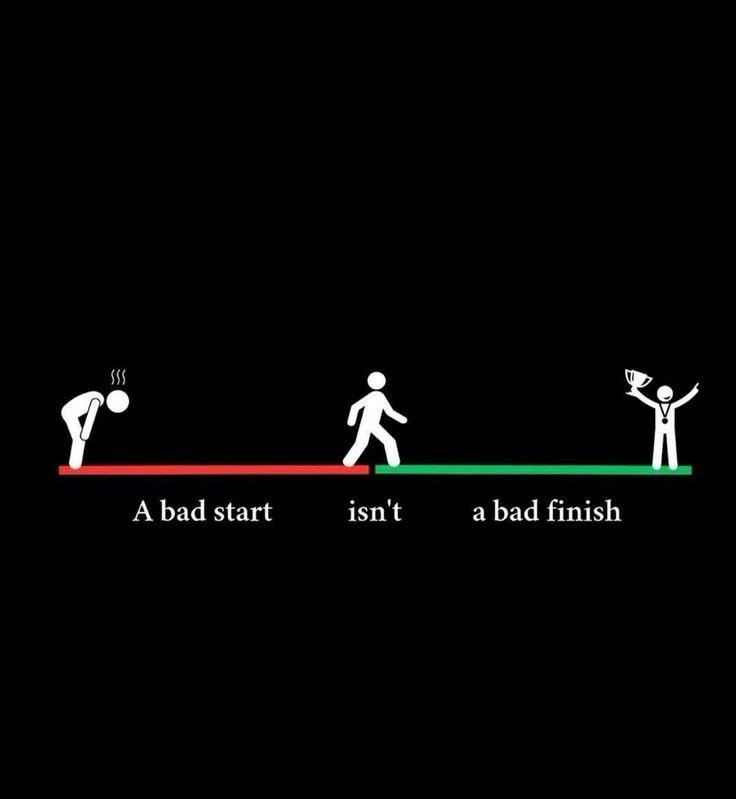
I'm a big fan of the "GPS Theory" when you miss a turn, your GPS doesn't judge you, it recalculates. No matter how many detours you take, it finds another way forward. Life works like that too. You'll make mistakes, but your destination doesn't vanish. The route just changes.
I have a soft spot for people rebuilding themselves after life breaks them open. Because I know what it feels like to lose your sense of who you are, to look in the mirror and not recognize the person staring back. Healing isn't about moving on, it's about meeting every version of yourself that pain created and learning to love the one that survived. You see all the ugly parts, the bitterness, the fear, the numbness, and you realize they were only ever trying to protect you. It's messy, disorienting, and so unbelievably brave. To anyone in that stage right now, you got this. Don't rush to be better. Just be honest. Healing isn't about finding who you were, it's about becoming who you needed back then. The people who rebuild from their ruins never return as who they were. They come back softer in the right places, stronger in the quiet ones. There's a kind of power that comes from facing everything that was meant to break you, and it never leaves your eyes again.