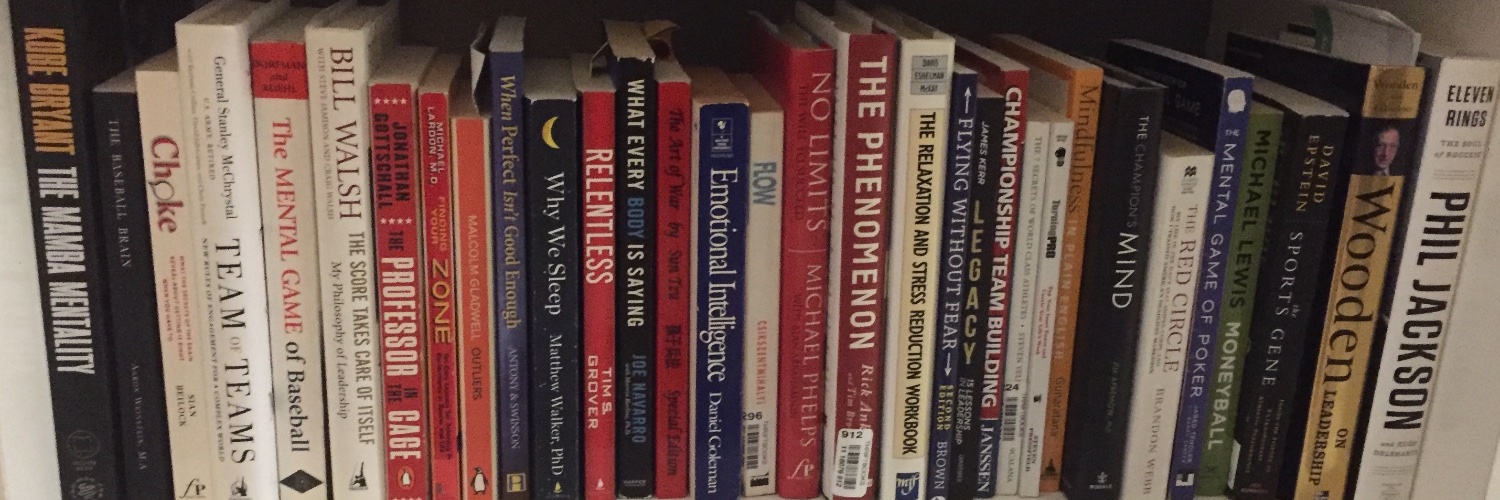
Excited to officially release my first book titled, "The Baseball Brain: Mental Game Training for the Developing Ballplayer." The book is based on my consulting work with the CSUN Baseball Team and can be found on Amazon. #mentalgame#baseball
https://t.co/N6l4g7Zjye
CATCHERS FOOD FOR THOUGHT
After watching the hockey game last night,thought this might be of value to catchers/hitters?
Hockey goalies use various techniques to train their vision and improve their ability to track the puck and anticipate plays. Here are some common vision training methods:
1.Reaction Ball Drills: Goalies use small, irregularly shaped reaction balls that bounce unpredictably. This trains their eyes to quickly focus and their body to react to sudden changes in direction.
2.Focus and Peripheral Vision Exercises: Goalies practice shifting focus between near and far objects (e.g., looking at a puck close up and then at a player further away) and use drills to improve their peripheral vision, helping them track the play even when it’s not directly in front of them.
3.Light Board Drills: Some goalies use light boards (e.g., FitLights or similar systems), where they react to lights or targets that appear in random locations. This sharpens their reflexes and visual attention.
https://t.co/WQAzBv7UZK Ball Tracking: Coaches often toss tennis balls at goalies during off-ice or on-ice drills, forcing them to track the ball’s speed and trajectory, mimicking the unpredictable nature of a puck in play.
https://t.co/olwpxbqMSc Training Apps and Tools: Specialized apps or visual acuity software are sometimes used to improve focus, eye-hand coordination, and tracking. Goalies might also use strobe glasses that create a flickering effect to force their brains to work harder to track objects, which improves visual focus under pressure.
6.Puck Tracking Drills: On-ice drills like facing a high volume of shots from different angles, through screens, or deflections help goalies enhance their ability to track the puck amidst chaotic situations.
7.Eye-hand Coordination Workouts: Exercises like juggling or hand-eye coordination tools (e.g., rapid ball catching and tossing drills) help goalies develop quicker reflexes and better tracking of fast-moving objects.
8.Visualization Techniques: Goalies often use mental imagery and visualization exercises, picturing game scenarios, tracking shots, and focusing on their reactions to develop muscle memory and improve their real-time decision-making.
By training their vision with these methods, goalies improve their ability to track the puck, anticipate shots, and make quicker and more accurate saves.
News: MLB just released a study on pitching injuries. The conclusions are no surprise: Chasing velocity and "stuff" at all levels of baseball are impacting arms in a negative way. More specifics in here, including when they're seeing the most injuries: https://t.co/hPE7hsVtj1
Just after winning the 2006 Golden Globe Award for Best Actor in a Motion Picture Drama (Capote), Philip Seymour Hoffman explained the approach that helped him reach the top of his profession.
In reply to a question about what advice he’d give to aspiring actors, Hoffman said,
“This is something a teacher told me years ago, and he’s right: even if you’re auditioning for something that you know you’re never going to get or for something you read and didn’t like—if you get a chance to act in a room that somebody else has paid rent for, then you’re given a free chance to practice your craft. And in that moment, you should act as well as you can.”
“Because when you act as well as you can,” Hoffman says, “there’s no way the people who have watched you will forget it.”
So it leads to opportunities, but more importantly, “at the end of the day, all that matters is the work. Everybody knows that. If I show up one day and the work I’m doing isn’t any good, then I’m just a guy who’s not acting well…
So I would say it to anybody starting out: if you’re given a chance to act, take those words and bring them alive. If you do that, something good will transpire ultimately.”
Takeaway 1:
Philip Seymour Hoffman saying that good things inevitably transpire when you just focus on doing whatever you're doing as well you can reminded me of a piece of advice from Steve Martin.
“Despite a lack of natural ability,” Martin writes in his memoir, he would go on to put together one of the most decorated careers in the history of entertainment (five Grammy Awards, an Emmy Award, a couple of Lifetime Achievement Awards, an Honorary Oscar, and on and on).
Someone stood up in an audience once and asked Martin, how do you become successful?
“You have to become undeniably good at something,” he said. “Nobody ever takes my advice, because it’s not the answer they wanted to hear…but I always say, ‘Be so good they can’t ignore you.’ If you are just always thinking, ‘How can I be really good?’—people will come to you.”
Takeaway 2:
I've written before about a trait often possessed by those who reach the heights of their profession:
They do what they do, not as a means to some end (money, fame, awards, etc.), but for the sake of doing it. To them, as Hoffman said, the work is all that matters. To them, as Ryan Holiday once told me, “the work is the win.”
You control the effort, he says, not the results. You control how well you act, not whether or not you get the part. “So ultimately,” Ryan told me, “you have to love doing it. You have to get to a place where doing the work is the win and everything else is extra.”
- - -
“She brought so much love, energy, and cheerfulness to the work that she could not but succeed.” — Louisa May Alcott
Follow @bpoppenheimer for more content like this!
"The pressure was when I had to be the number one pick and taking care of my family forever..
All this is cake and this is what it's all about..
The pressure is all behind me and this is what I love to do" ~ @bryceharper3#PMSLive
18 years ago, a struggling actor named Bryan Cranston made a shift that changed his life.
His mindset (and how you can use it to change yours):
Bryan was going from audition to audition but not getting parts.
He was trying to win the job each time.
But he had the job wrong...
Old mindset:
The purpose of an audition was to get a job.
New mindset:
The purpose of an audition was to serve the script in a unique way that only he could do.
Whether he got the job or not was up to someone else.
This mindset shift was an inflection point in his career. Bryan has been busy ever since, starting with guest roles on Seinfeld to 6 Emmy awards for Breaking Bad.
Takeaway:
Attachment to outcome gets in the way of our best work. This is true in business, in art, in life.
Goals are important because they set a direction. But goals are in the future.
If you are overly focused on your goal in the moment, it will block your authentic best.
As the Stoic Philosopher Seneca wrote:
“The more you seek to control external events, the less control you will have over your own life.”
If this resonates, comment below and follow @mattschnuck for insights on inflections in life, entrepreneurship and 25 years in business.
"I have a sports psychologist and a sports psychiatrist that I talk to probably two or three times a week..
Between us we try and come up with a positive message to help the team move forward every week" ~ Nick Saban #PMSLive
Nice self-talk from LA Rams defensive tackle Aaron Donald...
Athletes can learn to take charge of their mindset through self-talk...self-talk that mediates:
-attention (focus on task)
-intensity (alert, energised, and ready)
-intent (positive execution of actions)
Tiny 🧵👇🏻
LeBron James on his preparation for games
“The #1 thing is Sleep…. A lot of people don’t see what I do - but I get to the arena 5 hours before a game to start prepping - mentally, physically & spiritually.”
The Power of Sleep �
"Early in my career, I used to think of players as assets...I used to think of teams as portfolios.
The truth...is that a player's character matters
The heartbeat matters
The player's impact on others matters
The tone he sets matters."
A beautiful speech by Theo Epstein