When someone is clearly better than me at something, I don't just compare myself to them.
I start using their success as evidence that I'm not good enough.
Then I get afraid of looking incompetent, perform worse, and use that as more proof.
That's a vicious loop.
The displacement happening in Mogadishu is crazy.
Families are being pushed out of places they've called home, while the city keeps changing around them.
Mogadishu is developing, but development has a human cost when the people living there aren't part of the equation.
A common point between people with low self-esteem is that they never finished what they started.
They once studied some foreign language, but never got fluent. They once invested a bit, but never got wealthy. They once learned some musical instrument, or played some sport, but never pushed themselves hard enough.
Every time you give up in a half-hearted way, you accumulate a bit of frustration that slowly transforms into anxiety towards yourself, and into anger towards the world.
Raising your standards and following through your own commitments is the therapy.
Stand tall. Dont crack. Endure. You can die tomorrow. Today you do the only thing you can do. You fight. You rage on. You do what you came to do. You finish what you started. No matter how much it costs. How long it takes. Or how much it hurts. Because you said you would.
Sometimes the hardest part isn't failing.
It's having to pause something that's finally starting to work.
You were just getting comfortable.
You were finally seeing progress.
Then life asks for your attention somewhere else.
A pause isn't the same thing as starting over.
Some places make people quieter without asking them to be.
You walk into a mosque and the phone goes down, voices get softer, and people settle into silence.
The atmosphere does the teaching.
I started a new job today.
By the end of my first day, I was already being told tomorrow would be harder.
I don't know exactly how I'm going to do it yet.
But tomorrow morning, I'll have to figure it out.
I went outside the city yesterday.
Less traffic. Less noise. More open space.
People sitting outside, greeting each other, moving slowly.
By the time I left, I was doing the same thing.
Maybe our surroundings shape us more than we think.
A crowded bus can still feel private.
Everyone keeps to themselves, looks at their phone, avoids conversation.
Then one person starts talking loud enough for everyone to hear.
Suddenly, your quiet ride isn't so private anymore.
A few years ago, I hardly saw anyone exercising this early.
Now, around 5AM, mostly the same group are out walking and jogging before the city gets busy.
Some habits arrive quietly, then suddenly they're everywhere.
Some people become part of a place without owning it.
Visit the same Cafe often enough, and you'll start recognizing the people before you recognize the menu.
Every day I pass a man selling cigarettes from the middle of the road.
He didn't wait for customers to find the shop.
He brought the shop to the customers.
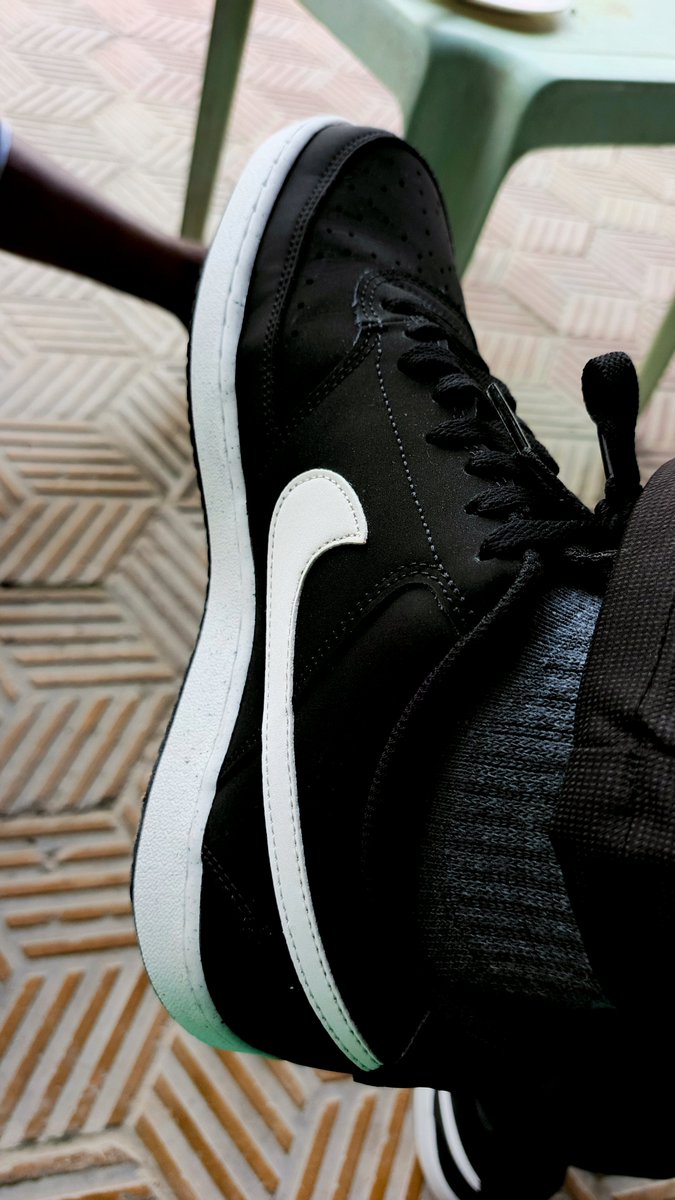
I bought these sneakers and didn't like them at all.
I wore them for a little while, then started wearing another pair and forgot about them.
No they're the shoes I wear the most.
I still don't know why I didn't like them when I first bought them.
There's an unwritten rule on the buses here.
You make room.
The bus is already crowded, but when someone gets on, people squeeze in a little more.
If there's no seat, you stand and hold on.
If an older person, woman or child needs your seat, you give it up.
You sit close to strangers and mostly keep to yourself.
And when the driver starts stopping every few seconds to pick up more passengers, somebody will eventually complain that he's putting too many people in the bus.
The driver's answer usually is simple:
If you want to go fast, take a tuk-tuk.
The bus is for everybody.
I think that's the part that's easy to miss.
Everybody gives up a little comfort so everybody can get where they're going.
I've been spending enough time in the same tea shop that I've started noticing it's unwritten rules.
The older customers usually ask for less sugar.
The regulars don't have to ask at all.
The waiter already knows.
And there's one customer who reminds him every single day because he got an order wrong one time.
There aren't many places where hundreds of people can gather and the room becomes quieter instead of louder.
A mosque has always fascinated me for that reason.