بأقصى نقطة شمال العراق 🇮🇶
و بأعالي جبال السليمانية 📍
نقش الملك العراقي الأكدي ( نارام سين ) قبل 4299 عام صورته هناك
كأنه يخبرنا و يخبر العالم . . بتبعية هذه الأرض للعراق ❗
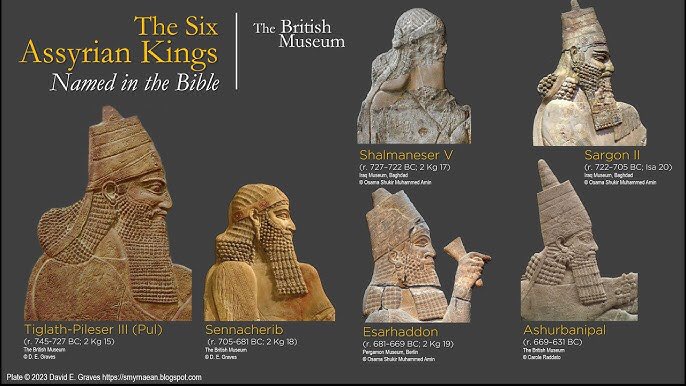
#Assyrian#Assyria#كردستان
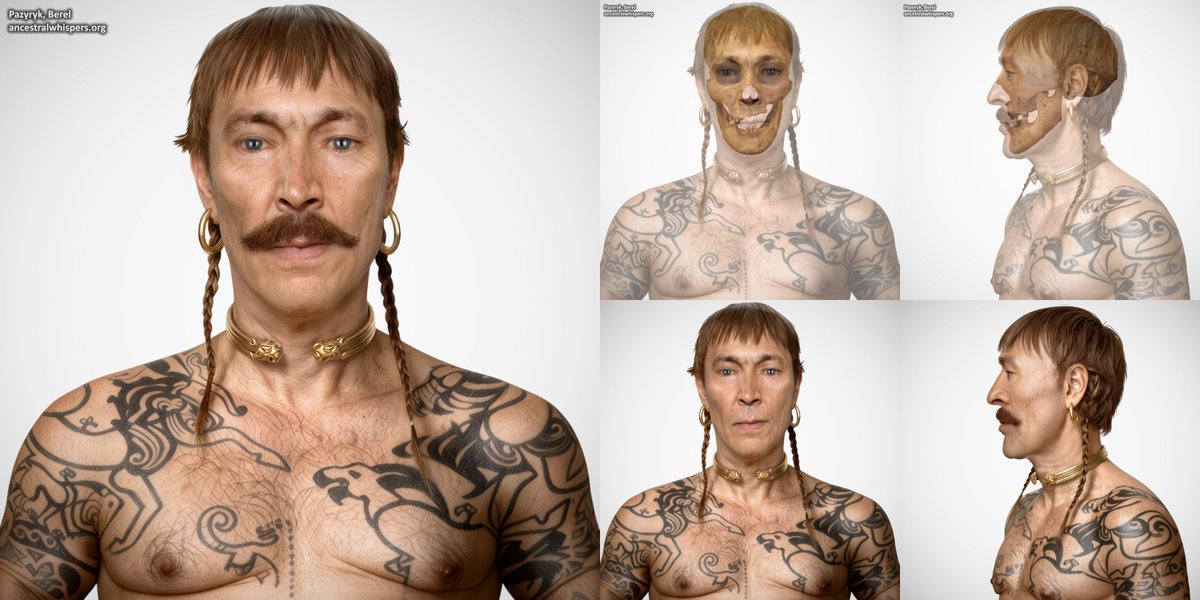
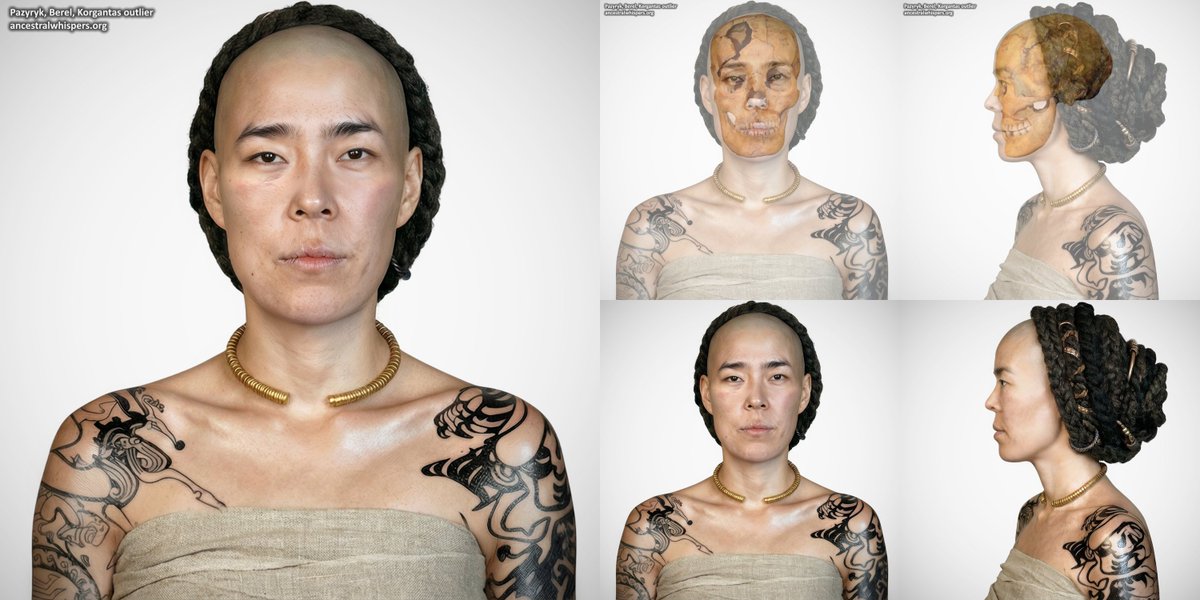
Facial reconstructions of a 2,300-year-old Pazyryk Scythian male and a female outlier from the same kurgan in Berel, Kazakhstan
The man and woman, approximately 30-55 years old and 18-25 years old, respectively, were buried in the same kurgan, richly furnished with grave goods. Morphologically, the two individuals differed: the man displayed a mix of Caucasoid and East Asian traits, with a stronger leaning toward Caucasoid features, similar to other cranial remains from this set, and was likely of local Pazyryk Iranic Scythian elite origin. In contrast, the woman exhibited more pronounced East Eurasian features. Individuals with such traits appear in both common and elite burials, such as at the Ak-Alakha-3/5 cemetery. Archaeologists and anthropologists have speculated that the female outlier may have been incorporated into the elite stratum of Pazyryk society and is possibly associated with the Korgantas culture.
Both skeletons show evidence of post-mortem trepanation. The male skull bore an irregular perforation resulting from blunt trauma, later refined with a sharp tool. The female skull exhibited a rectangular perforation (64 × 35.8 mm) with cut marks, along with the excised fragment (42 × 33 mm), suggesting a deliberate opening after death, likely as part of the mummification process.
Cranial measurements indicate that the man had a medium-large cranial length of 185 mm, a medium-large cranial width of 147 mm, and a large cheek width of 139 mm. The woman had a large cranial length of 182 mm, a medium-large cranial width of 143 mm, and a large cheek width of 135 mm (Kitov, 2023).
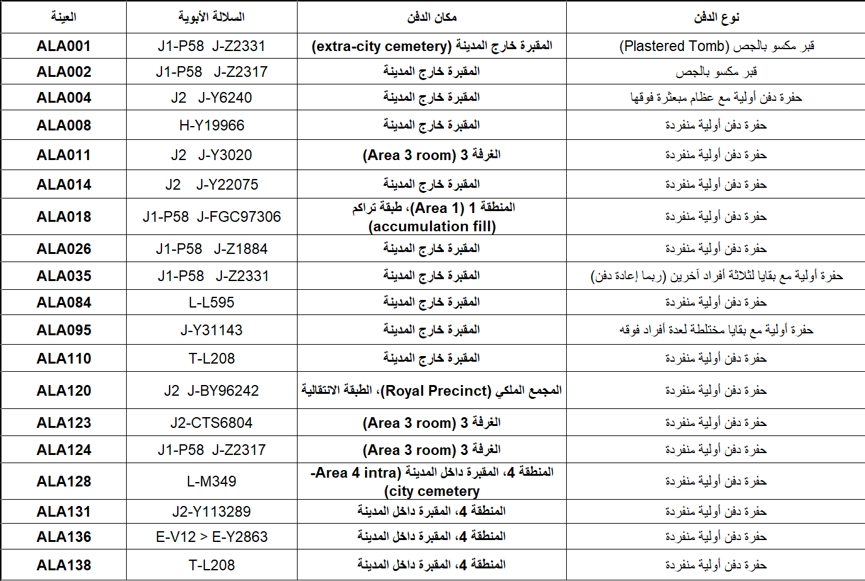
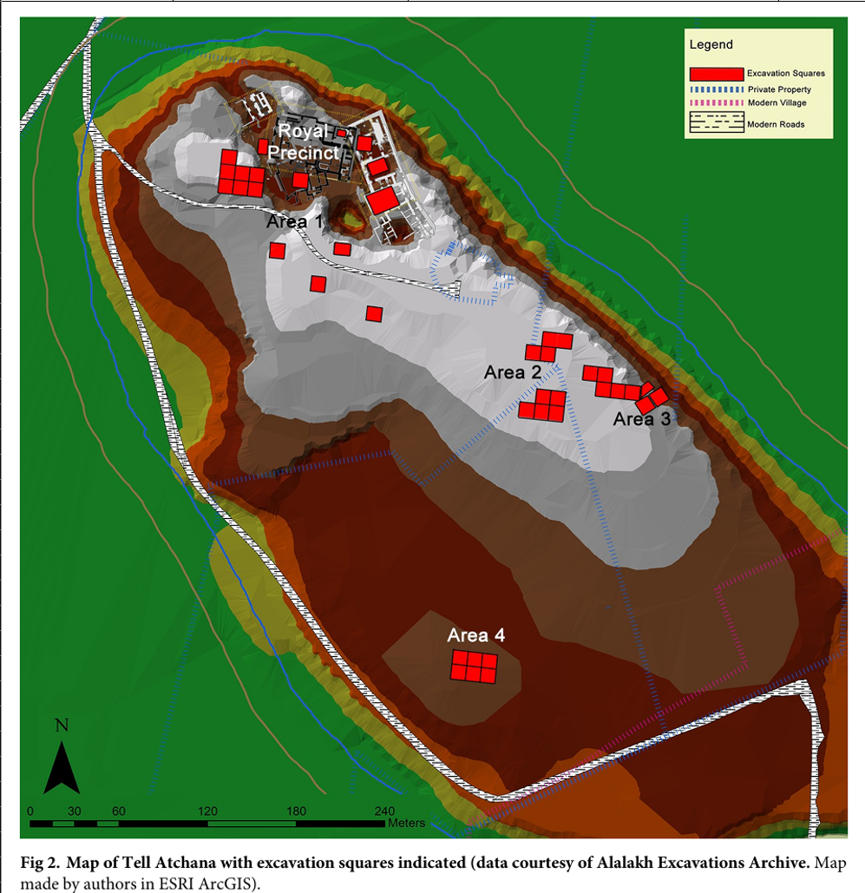
توزيع العينات داخل مدينة أللاخ
لم تقتصر الدراسة على مقبرة واحدة، بل شملت أفرادًا دُفنوا في سياقات أثرية مختلفة داخل المدينة وخارجها، منها المقبرة خارج الأسوار(Extra-city cemetery)، والمقبرة داخل المدينة (Area 4 – Intra-city cemetery)، والمجمع الملكي (Royal Precinct)، والغرفة 3(Area 3 Room)، والمنطقة 1 (Area 1). ويُظهر هذا التنوع أن العينات تمثل شرائح مختلفة من المجتمع، وليست عائلة واحدة أو موقع دفن واحد، مما يمنح نتائج الدراسة قوة أكبر في تمثيل التركيبة الجينية لسكان أللاخ خلال العصر البرونزي.