I graduated from The Master's Seminary in 1991, so I was there when the school was just beginning. Dr. George Zemek taught me how to get my theology and doctrine from the Bible. It is hard work to get your theology and doctrine from the Bible, and that is why most get their theology from the churches they attend, books, podcasts, or blog posts.
Some of the uninspired books that people learn their theology from are written by people who have read the works of other people, who have read the works of other people, who read the works of people who studied the Bible a long time ago. They don't realize they are three or four steps or generations removed from actually studying the Bible for themselves. It never dawns on them that learning theology from uninspired works is not studying the Bible.
Extra-biblical, non-inspired works can be helpful, but the Bible "Sola Scripture" (since it is reformation month), should be our primary source of doctrine, not what people tell us the Bible teaches. Yes, as a young believer you learn doctrine from what you are taught at church or the person discipling you (Mt. 28:19-20; Titus 1:9). Pastors are called upon to "teach sound doctrine" (1 Tim. 4:6; Titus 2:1), "doctrine conforming to godliness," (1 Tim. 6:3), and "instruction" that produces "love from a pure heart and a good conscience and a sincere faith" (1 Tim. 1:5).
This is what Dr. Zemek taught me about learning theology and doctrine from the Bible:
1. Scan as many resources from different theological persuasions as you can, writing down all the key Scripture references they use to support a particular doctrine. Theologians are often selective in the Scriptures they use, not mentioning Scriptures that might upset their theological system or camp. By looking at the Scriptures used by people from opposing theological positions, you get a broader range of key Scriptures to study in their contexts. (The New Treasury of Scripture Knowledge is a very helpful resource for finding key cross references.)
2. After collecting as many key Scripture references that relate to a specific doctrine, read and study each of those Scriptures in the flow of their contexts, writing down what they teach about the doctrine being studied.
3. After looking up, reading, and studying all the key Scripture References, then synthesize what they teach so that no Scripture contradicts another. Since the Holy Spirit inspired the Word of God (2 Tim. 3:16-17; 2 Pet. 1:20-21), and since the Holy Spirit, being God, cannot err, so the Scriptures cannot err. If you find Scriptures that contradict each other, then either your interpretation of one, or the other, or both are wrong. Study harder.
4. After reading, studying, and synthesizing all key Scriptures related to a certain doctrine, THEN read extra biblical resources to see what you can learn from others who have studied the Bible (the hermeneutical "checking principle.") Refine and adjust your understanding of the doctrine being studied.
Dr. Zemek would have us read some from uninspired works, but most of class time was spent looking up key cross references in their contexts. Day after day we heard, "turn to . . . in your Bibles." We would then study what that particular passage taught in its context, make observations and application. Dr. Zemek would also point out key nuances of Hebrew and Greek. Then we would move on to the next text. Dr. Zemek modeled for us in class, how we were to learn theology in our studies and future ministries.
I am afraid many seminaries have drifted away from encouraging their students to study the Bible for themselves. They have students read a great volumes of uninspired works, but not study the Bible for themselves as a priority. As a result, students graduate having never learned theology and doctrine from the Bible. They think their doctrine is based on the Word of God, when in reality it is based on the pre-digested, uninspired works of men. In honor of Reformation month, may our cry always be "Sola Scriptura."
The Truth In Love conference is back for 2024! Join us January 26-28, 2024, for a weekend of teaching and fellowship on the most important truths of the Christian faith.
Register today at https://t.co/WNR6BcgxZ1!
#TruthInLove#Conviction#ChristianConference
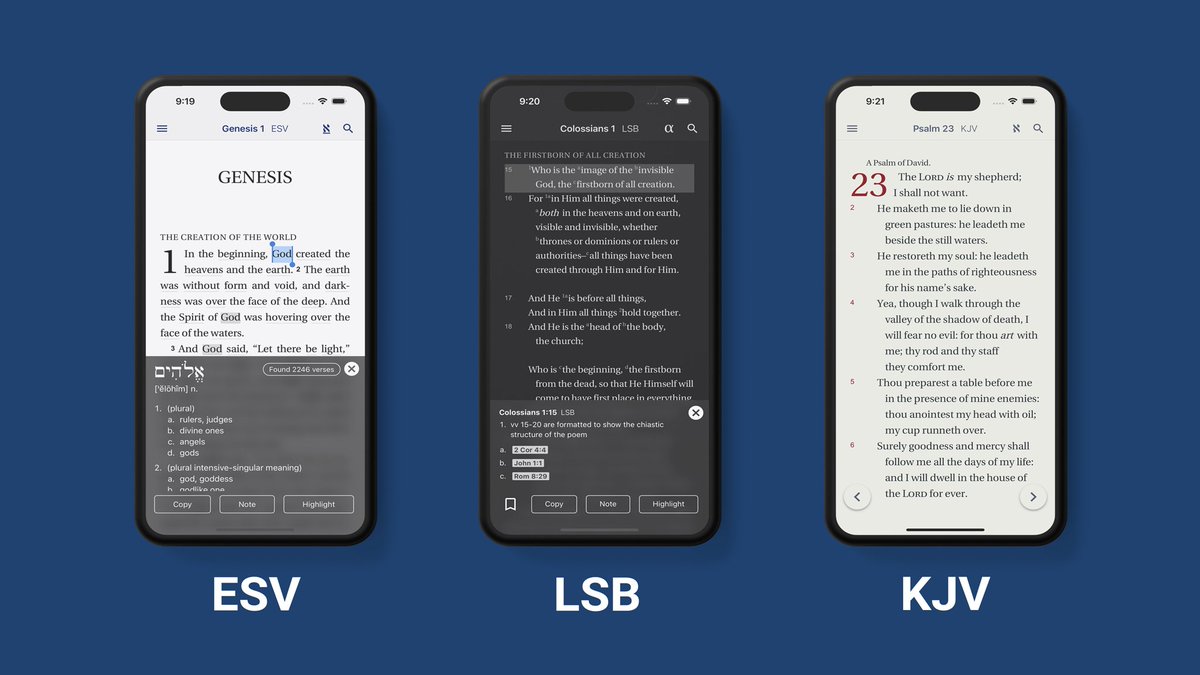
New @literal_word app update!
• Added ESV, LSB, KJV. Includes Hebrew/Greek lexicons, cross-refs, and footnotes.
• Up to 6 color-coded bookmarks to help keep your place.
• Still 100% free with no ads.
Download the app:
https://t.co/lIxcMPtdVC
This book is outstanding. We just bought 100 copies. We are giving it to all new members and are likely going to teach it in our Home Bible Studies. I commend it to you. Thank you Pastor Tom and TWU for your ministry. I was at NBC this week. Tremendous. We thank God for you.
Give the gift of reading this Christmas with the BRAVE Books treasure box.
Our treasure box comes with 10 BRAVE Books, a map of the Freedom Island Universe, an activity book, and other goodies that your kids will love!
Get yours at https://t.co/qYSw2YpWlP
If only children's entertainment still taught kids about resilience and believing in themselves... oh wait. Thank you for this positive, wholesome story @BraveBooksUS@bethanyhamilton! Our latest @prageru kids storytime: https://t.co/18T1c0SaOo
Hamilton - An American Surfing Musical😆😂
We had to do it! In honor of the new children's book, @BraveBooksUS & I present to you a musical story of my journey to overcoming my fears.
Check out "Surfing Past Fear" here! https://t.co/aR4CUQgQ9s 💛🤗🕊
Another reason to buy my new children’s book: It would make a great gift for your child or grandchild’s new teacher to read it to the classroom. At least you’ll know one book in their school will be anti-woke! https://t.co/Xc1v8Jy3mp @BraveBooksUS
https://t.co/RUpcexo4v6