I'm seeking #PhD candidates to join my group @CinvestavIra, Mexico. If you have masters in plant science and passionate about plant-pathogen interaction, please reach out to me.
For more details: https://t.co/GiA5PolZMq
Out now from the Open Wild Wheat Consortium: ‘Origin and evolution of the bread wheat D genome’. 46 Tauschii genomes shed new light on the bread wheat D genome history. Almost 40% of the D genome gene content resulted from secondary hybridization events.
https://t.co/p2P9LQXPiU
Latest results of the Open Wild Wheat Consortium. Origin and evolution of the bread wheat D genome, including 46 high-quality Aegilops tauschii assemblies.
https://t.co/f1VVTMZIrY
Check out our recent preprint on the Aegilops tauschii pangenome facilitating gene discovery and providing new insights into origin and evolution of the bread wheat D genome. Emile @AndreaGonz64@AbroukMichael@simonkrattinger@BrandeWulff @kaustcda https://t.co/nFaHAvd64k
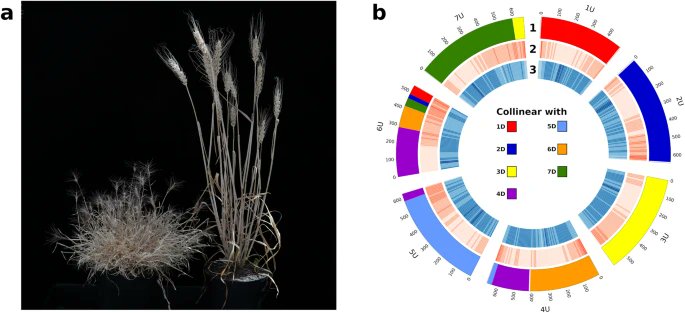
Our last publication with the release of the reference sequence for the wild wheat Aegilops umbellulata. https://t.co/T25G06ZGoV
@simonkrattinger@yajunwang21 @kaustcda @KaustResearch
In our next webinar, @yajunwang21 and Guotai Yu @kaustcda will talk about wheat genomics. Join us to learn how genomics accelerates gene cloning in the large and highly complex Triticeae genomes.
📅Thursday 5, October
🕚11:00am EDT, 5:00pm CEST
👉Register https://t.co/9ujlbCaSym
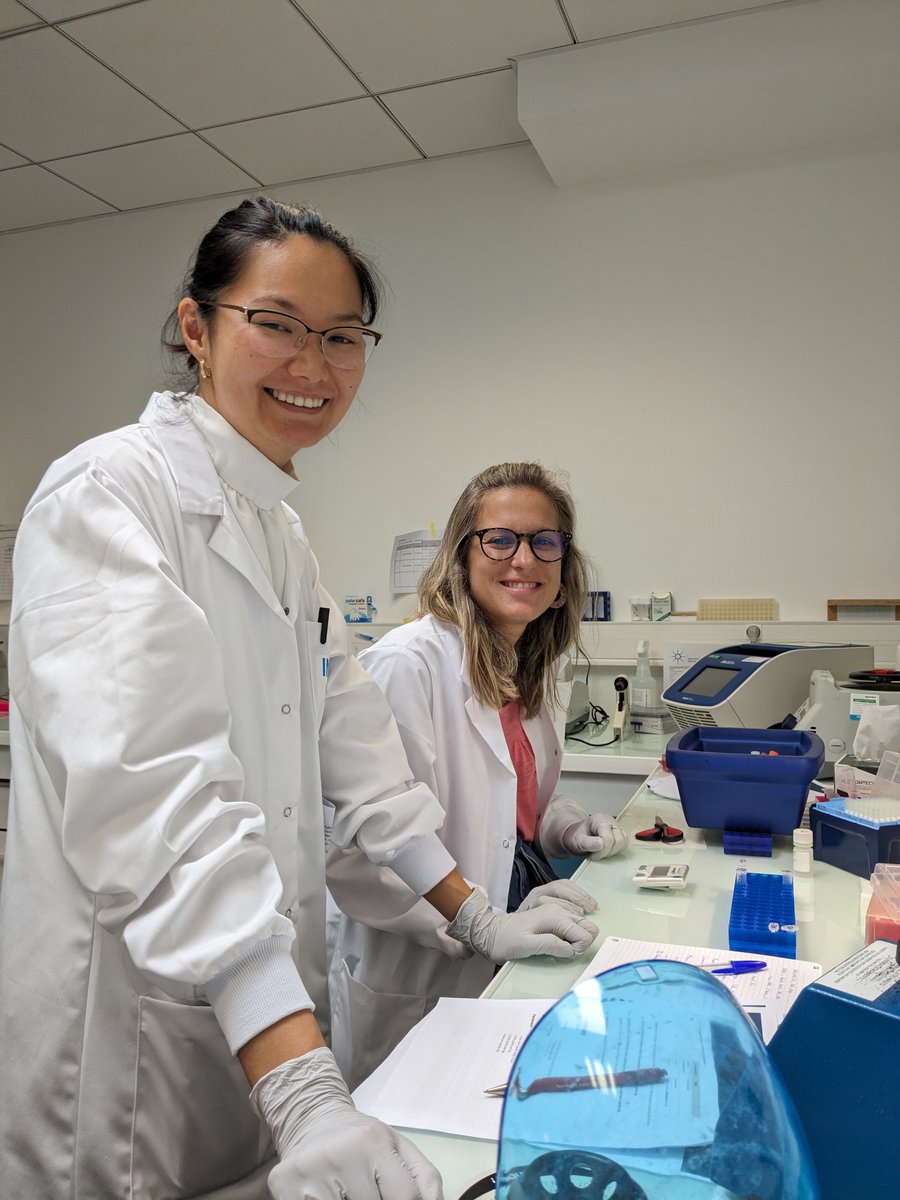
Kymbat Zhakupova from @kaustcda spent 4 weeks at CNRGV to train on HMW DNA extraction and ULR ONT library preparation.
Thank you Kymbat for the fruitful scientific interactions and for your kindness and your energy!
In our next webinar, @yajunwang21 Yajun Wang and Guotai Yu @kaustcda @brandewulff will talk about how the Wheat genomics facilitates the discovery of kinase fusion proteins as major players in rust resistance.
💻: Register https://t.co/9ujlbCaSym
Wild and Domesticated Einkorn Genomes Sequenced https://t.co/BxHkchBKPz | Einkorn (Triticum monococcum) was the first domesticated #wheat species, and was central to the birth of agriculture and the Neolithic Revolution in the Fertile Crescent around 10,000 years ago @AgBioWorld
Very grateful to have been able to contribute to this collaborative effort with 28 authors. We show e.g. that two LTR retrotransposon families preferentially insert in einkorn centromeres, contributing to their dynamic evolution. @thomaswicker314
https://t.co/6KyDQWyWDu