While the rest of the world worries about natural gas supply, top American gas companies are announcing “strategic curtailments” in 2Q because U.S. production is overwhelming demand.
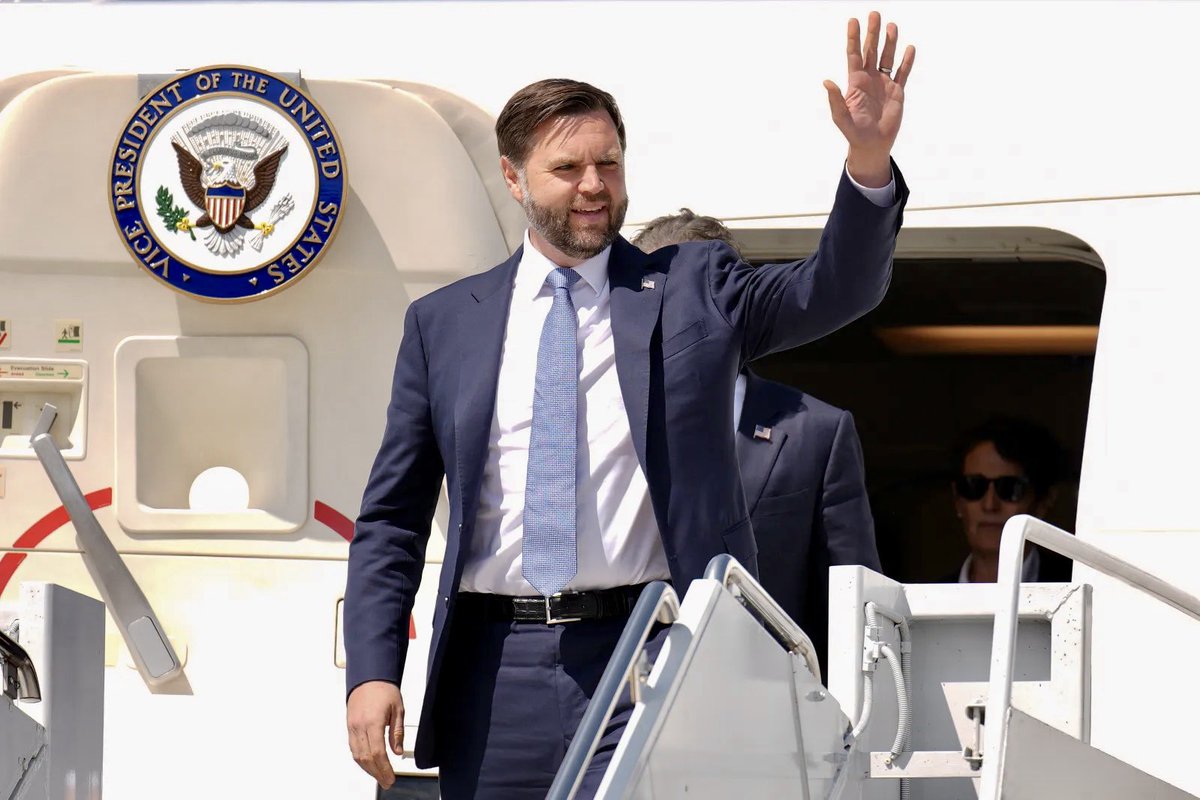
BREAKING: Two senior administration officials have confirmed to CNN that the White House is arranging for Vice President JD Vance to travel to Pakistan this weekend for talks to end the war with Iran. Trump is expected to make an urgent announcement at 7:20 PM ET tonight. The 82nd Airborne is deploying a thousand soldiers to the Middle East. The 88th wave of Iranian missiles hit Israel this morning. And the Vice President of the United States is boarding a plane for Islamabad because the country America is bombing told America who it is allowed to send to the negotiating table.
This is not diplomacy. This is the Strait of Hormuz dictating terms.
Iran refused Witkoff. Iran refused Kushner. Iran said through the Guardian: “If the negotiations are going to have any outcome, JD Vance should join. With Witkoff and Kushner, nothing will come out of it.” The reason is not preference. It is memory. In June 2025, Israel struck Iran days before planned nuclear talks that Witkoff was managing. On February 28, the US and Iran had a tentative agreement in Geneva. Two days later, Epic Fury began. Iran told the mediators in Pakistan, Egypt, and Turkey: “We have been tricked twice. We don’t want to be fooled again.” Witkoff’s name is not associated with failed diplomacy. It is associated with diplomacy that provided cover for the strikes that followed.
Vance is the sceptic. Quietly critical of Middle East entanglement throughout his career. Unusually silent on this war. Iran reads this as a signal that he would end the conflict rather than extend it. The White House accepted. The country under bombardment just exercised veto power over the personnel of the country doing the bombing.
Trump declared today: “We’ve won this. This war has been won.” Hegseth added: “We negotiate with bombs.” But Reuters/Ipsos puts Trump at 36 percent approval, a record low. War approval: 35 percent. Cost-of-living: 25 percent. CBS: 92 percent want the war ended immediately. The president declaring victory is sending his VP to a country he did not choose, to meet a counterpart he did not select, in a format Iran dictated, because 36 percent and $3.98 gasoline and a toll booth collecting yuan have made the alternative untenable.
The Vance trip changes the war’s architecture. Until today: we set terms, you accept or we strike. After today: you choose our negotiator, we comply, the venue is a third country with ties to both sides. The bombs still fall. The 82nd still deploys. But letting Iran choose the American representative signals what missiles cannot: the US needs this meeting more than Iran does.
Iran can survive the blackouts. It has been blacking out three to four hours a day since February 2025, a full year before the war started. Trump cannot survive 36 percent through mid-terms. The asymmetry is not military. It is political. Iran’s population has no vote that matters. Trump’s does.
Shell’s CEO warned diesel shortages will hit Europe in April. Two thousand dead across nine countries. The molecules remain trapped. And the Vice President is flying to Pakistan because a regime without reliable internet for 26 days told the White House who it would accept, and the White House said yes.
The 7:20 PM ET announcement is unverified. Tier 4 speculation. No White House confirmation. But the Vance trip is Tier 1. CNN confirmed. Two senior officials. This weekend. Pakistan. The war just moved from the battlefield to the boarding gate.
Iran chose the negotiator. America chose to comply. The molecules chose the deadline. Saturday arrives.
Full analysis: https://t.co/iFmUcarGdV
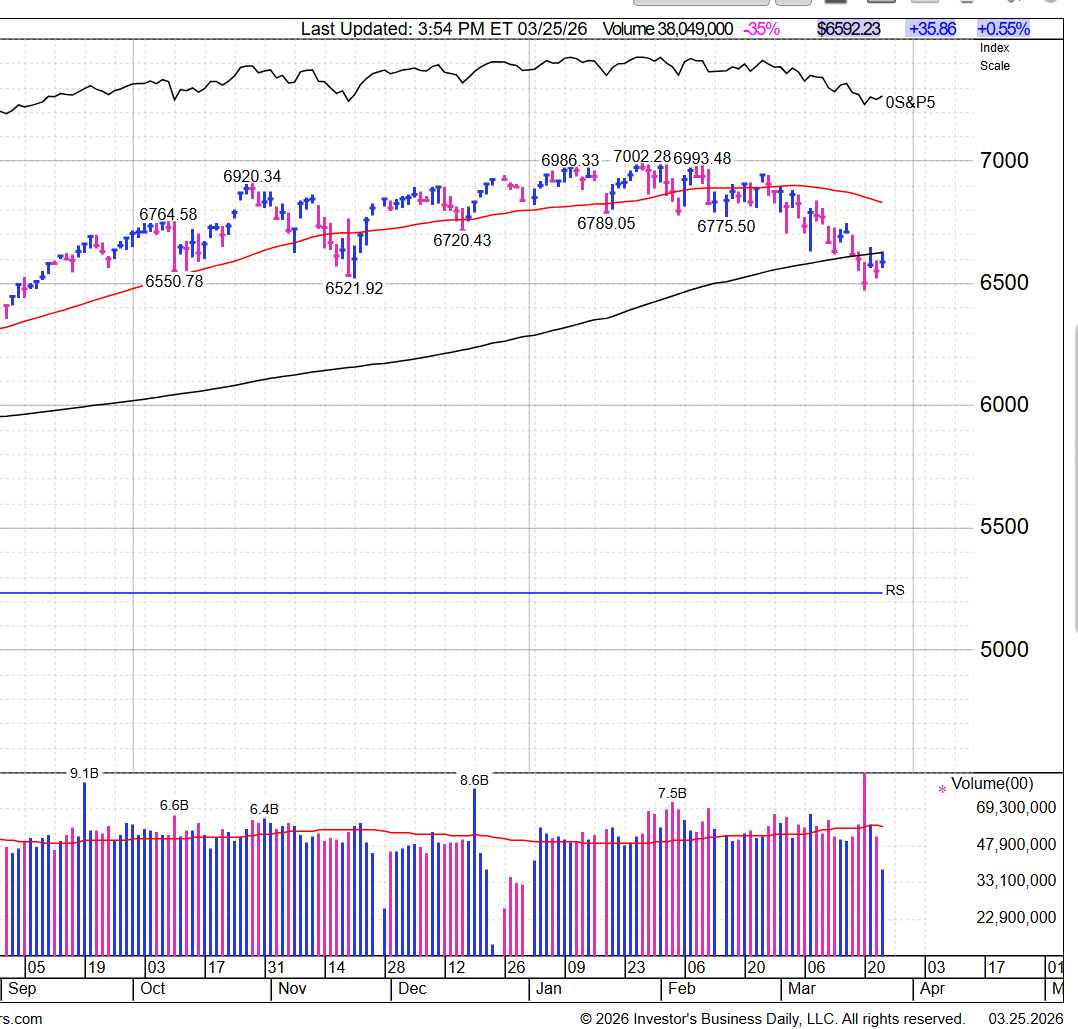
The market's character is still one of a bear market or cyclical correction; strong open, fade into close and major average living below the 200-day line. Before a reliable bottom can be established, we need to see better price and volume action, including better action from breakout names forming bases.
We are clearly NOT out of the woods yet. The market backdrop is one where sentiment has improved with rising pessimism, but not a full capitulation. The VIX has reached bear warning levels, but remains below true washout extremes. A volatility washout is not required for a bottom, but would add conviction.
Bullish Scenario
--The war ends
--Oil prices recede
--Stagflation concerns ease
--Central banks continuing their easing trajectory
Under this scenario, we would expect:
-A broadening market advance
-Emergence of new leadership from sound bases
-A Follow-Through Day (FTD) on the NYSE and/or NASDAQ confirming institutional buying with little in the way of immediate distribution
-Significant drop in volatility
Bearish Scenario
--The war persists or escalates
--The Strait of Hormuz remains disrupted
--Oil prices make new highs
--Stagflation becomes evident in hard economic data
This would likely result in:
-Limited general market rally attempts with most breakout stocks failing
-Lack of follow-through from breakout names
-Further deterioration in breadth and leadership
-Dearth of setups in buyable position
-Continued elevated volatility and distribution
In that case, sentiment would likely need to reach higher levels of pessimism before a durable market bottom could form. In its absence, and end to the factors that are pressuring the market could cause the market to bottom in less dramatic fashion.
A Thai oil tanker safely passed through the Strait of Hormuz after diplomatic coordination between Thailand and Iran, Bangchak Corporation has confirmed.
🔴 LIVE updates: https://t.co/MNHCu6Chvb
Iran has demanded closure of US bases in the Gulf, end of all sanctions, end of Israeli campaign against Hezbollah and a framework that would allow it to collect fees from ships transiting through the Strait of Hormuz, as part of a response to the Trump Administration proposal
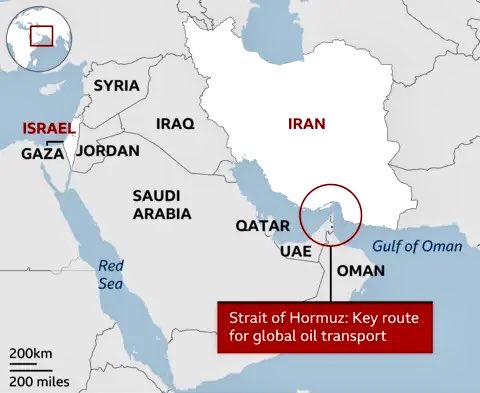
The war in the Strait of Hormuz will reach your local pharmacy within six weeks. Not because your pharmacist follows geopolitics. Because the active pharmaceutical ingredients in roughly half of America’s generic prescriptions begin as petrochemical derivatives manufactured in India, and India’s petrochemical industry begins as crude oil that transited 21 miles of water that closed on March 4.
Nearly 70 percent of the active ingredients in US generic drugs are produced in India. India imports approximately 40 percent of its crude oil through the Strait of Hormuz. The crude feeds refineries that produce naphtha. The naphtha feeds petrochemical crackers that produce intermediates. The intermediates feed pharmaceutical plants in Gujarat, Maharashtra, and Hyderabad that produce the API, the active pharmaceutical ingredient, that is shipped to contract manufacturers in the United States, Europe, and across Asia. The chain from the strait to the tablet is six steps long. Every step requires the one before it.
CNBC reported that the Hormuz closure puts America’s generic drug supply at risk. Fierce Pharma warned of longer-term effects on US manufacturing and generics. Think Global Health mapped the pharmaceutical supply chains most vulnerable to disruption. The consensus across trade publications, health policy analysts, and industry executives is identical: four to six weeks of current inventory exists in the pipeline. After that, shortages begin with the most complex formulations first.
Cancer drugs are the highest risk. Biologics requiring cold-chain storage have the shortest shelf life and the longest replenishment cycle. Clinical trial medications depend on uninterrupted supply chains that are now interrupted. Insulin analogues, antivirals, and cardiac medications all contain intermediates sourced from Indian manufacturers whose input costs are rising with every day the strait remains closed.
Air cargo is the emergency bypass. But air freight rates from India have climbed 200 to 350 percent on some routes since the war began, according to logistics tracking firms. Gulf air capacity is down 79 percent because airports in the UAE, Kuwait, and Qatar have been damaged or operate under restricted conditions. The Suez Canal route adds 10 to 14 days to maritime shipping times. The Cape of Good Hope route adds 21 to 28 days. Both alternatives assume the Red Sea remains navigable, which the Houthi threat has complicated since 2024.
The World Health Organisation reported a 70 percent funding gap for its operational response in the region. Medical supply chains to Iran itself have been devastated, with hospitals reporting shortages of surgical supplies, blood products, and anaesthetics. But the downstream pharmaceutical effect extends far beyond the war zone. Every Indian manufacturer that pays more for crude pays more for naphtha, pays more for intermediates, and passes the cost forward into API prices that American generic drug companies absorb until they cannot absorb any further.
The molecule does not know it is a medicine. The strait does not know it is a pharmacy. The petrochemical derivative that becomes a blood pressure tablet transits the same water as the petrochemical derivative that becomes a fertiliser pellet. Both are trapped. Both have shelf lives. Both have planting windows or prescription refill cycles that do not negotiate with blockades.
Six weeks. Then the pharmacy starts calling patients about substitutions.
https://t.co/iFmUcarGdV
The thing is, the current secondary market prices of liquid private credit vehicles (BDCs) are implying a default rate north of 20%, far in excess of anything experienced during the GFC and greater than UBS’s draconian “worst case” scenario
Citadel Securities published this graph showing a strange phenomenon.
Job postings for software engineers are actually seeing a massive spike.
Classic example of the Jevons paradox. When AI makes coding cheaper, companies actually may need a lot more software engineers, not fewer.
When software is cheaper to build, companies naturally want to build a lot more of it. Businesses are now putting software into industries and tools where it was simply too expensive before.
---
Chart from
citadelsecurities .com/news-and-insights/2026-global-intelligence-crisis/
History shows a clear pattern
🚨 Oil Shocks Don’t Peak on Day 1
After major geopolitical shocks, oil prices usually rise gradually for weeks.
Examples:
• Russia–Ukraine invasion
• Arab Spring
• Gulf Wars
• Venezuela supply shocks
The average pattern shows oil typically climbing 20–30% within ~60 days after the shock.
In other words.
Markets often underprice the first phase of supply risk.
The real move tends to happen once physical disruptions start showing up in flows and inventories.
#oott
On balance, Bitcoin can take a couple of months to bottom even after a sharp decline. A couple of things to watch:
MSTR has tended to lead Bitcoin at key turning points.
IBIT — the largest Bitcoin ETF with roughly $69B in assets — has seen about $2.7B in outflows over the past 21 days. I’d like to see those fund flows stabilize and shift positive for a reliable bottom.
This is a ballsy power play by Trump.
Lloyd's of London was the gold standard for maritime insurance policies until just a day or two ago when they started cancelling policies or jacking them up 3-5X. Others insurers followed. That collapsed commercial shipping traffic through Hormuz, which choked oil shipments out of the Middle East.
Trump doing this means the DFC has the chance to displace Lloyd's as the big dog in this game, when they have been the lock-in player for many years.
It also frees up all the oil that was getting trapped there, heading off shortages and keeping the energy market alive.
And why not? It's the American navy that sunk the Iranian ships that were harassing tankers. And the American Navy -- at least for now -- will keep those tankers safe.
It's a huge reassurance to allies -- both oil producers and oil consumers -- that our campaign in Iran isn't going to sink their economies. And it allows America to be choosy about traffic in the Strait.
It also potentially means billions of dollars in insurance premiums at wartime rates going to America instead of the UK. And those rates are STILL going to be cheaper than what shippers were getting.
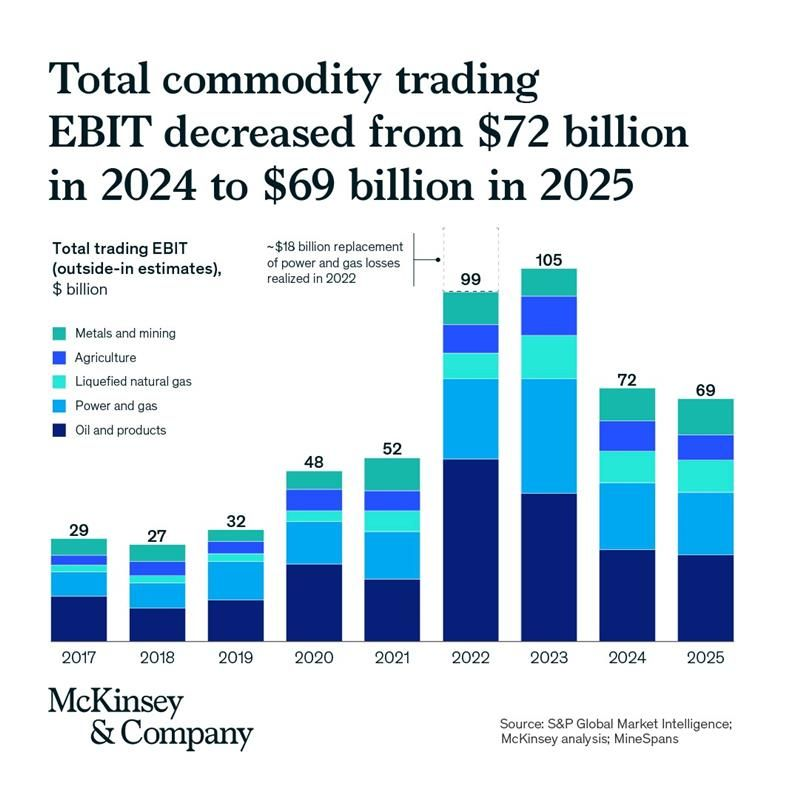
Commodity markets are entering a new regime.
Volatility is becoming shorter,sharper and more structural.
Trading revenues easing from $72B in 2024 to $69B in 2025.
This is not a collapse.
It is normalization at a higher plateau.
3 structural shifts are now shaping the landscape:
• Faster volatility cycles driving shorter positioning windows
• AI reshaping trading models, risk systems and execution
• Rising capability investment, increasingly via partnerships
The easy margin expansion phase is over.
The next phase rewards speed, technology and balance sheet discipline.
#commodities
I don't understand why people don't use CLAUDE for stock trading.
It analyzes charts, digests earnings reports, and spots trends in seconds.
Here are 16 prompts to turn it into your personal hedge fund analyst:
If the Brent market closed at current levels (up 7.5%), the one-day % increase would rank as the 53rd largest.
US-Israel strike on Iran, killing of the Supreme Leader, chaos in Hormuz, retaliation accross the Middle East... All of that delivers the 53rd largest one-day % jump.
Can AI replace security platforms? I asked Claude to build a CrowdStrike replacement.
Claude: "I have to be straightforward: building a replacement for CrowdStrike isn't something I can do here. CrowdStrike is a massive platform built by thousands of engineers over a decade-plus. Its core capabilities include real-time kernel-level endpoint monitoring across millions of devices, a proprietary threat intelligence graph built from trillions of security events...That's not something you can replicate with a script — it's an infrastructure product."
If you want to create AI, you need GPUs. If you want to deploy AI, you need security. That's not a hallucination – it's a fact.
Watch the demo → https://t.co/77OnRmpjUx