The strength of a democracy is reflected not only in elections or protests, but in whether people feel safe to participate, speak up, and expect accountability.
Last month, we explored what happens when citizens begin to weigh the cost of speaking up. From shrinking civic space and environmental justice to citizen feedback and government responsiveness, this edition examines what these trends mean for governance, accountability, and public trust.
Catch up on this edition via the link below 👇
https://t.co/uBNoHK5mhM
Jabi Lake Park is one of the few places in Abuja where people from different walks of life come together. It is where children play, people exercise, small businesses earn a living, friendships grow, and everyday memories are made. As conversations about redevelopment continues, the people who rely on this shared space are still waiting for answers about what this change will mean for them.
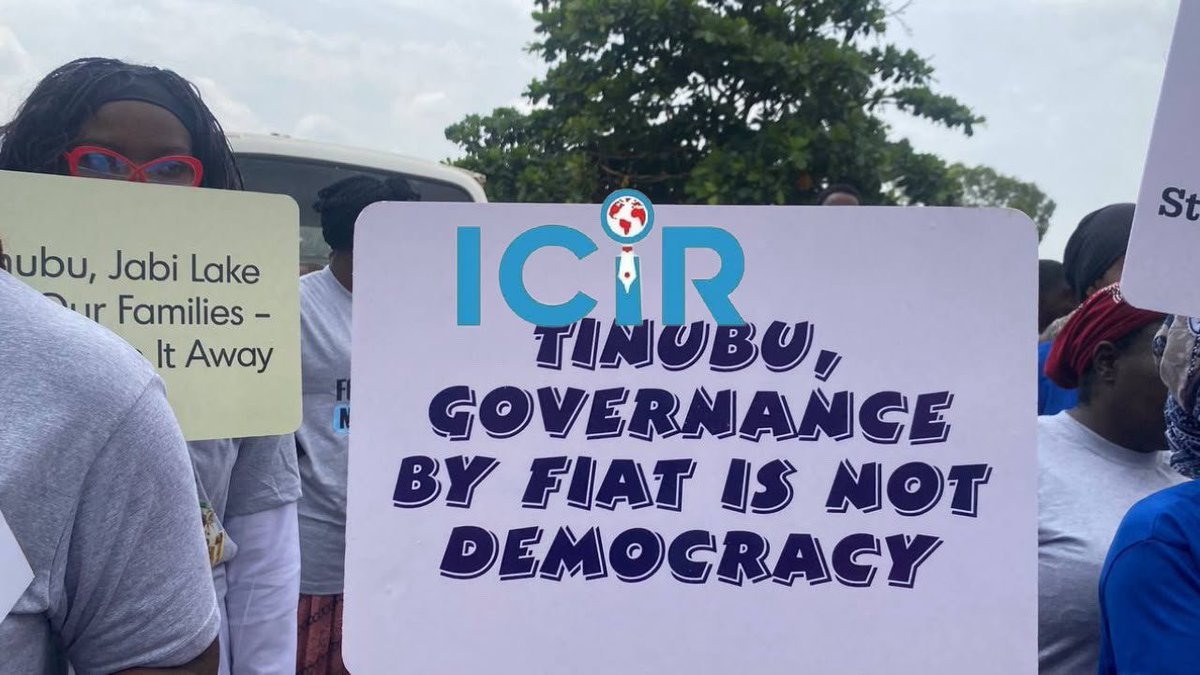
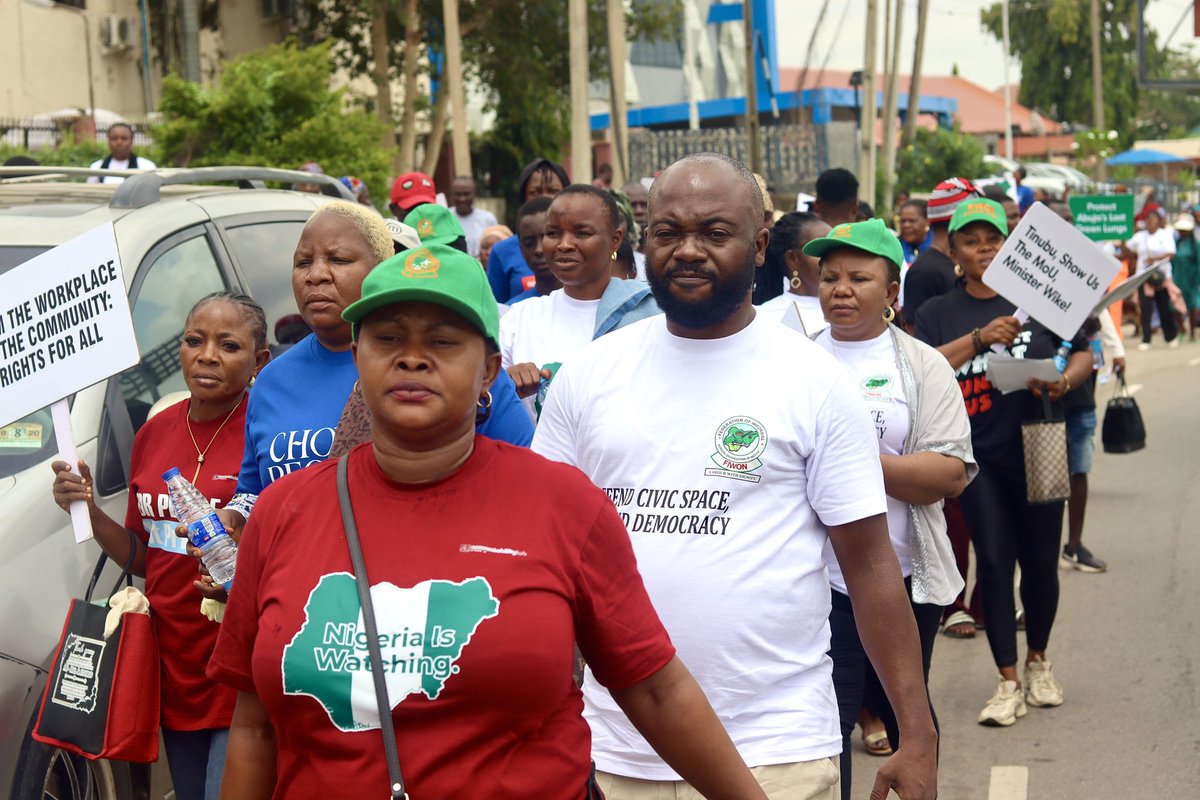
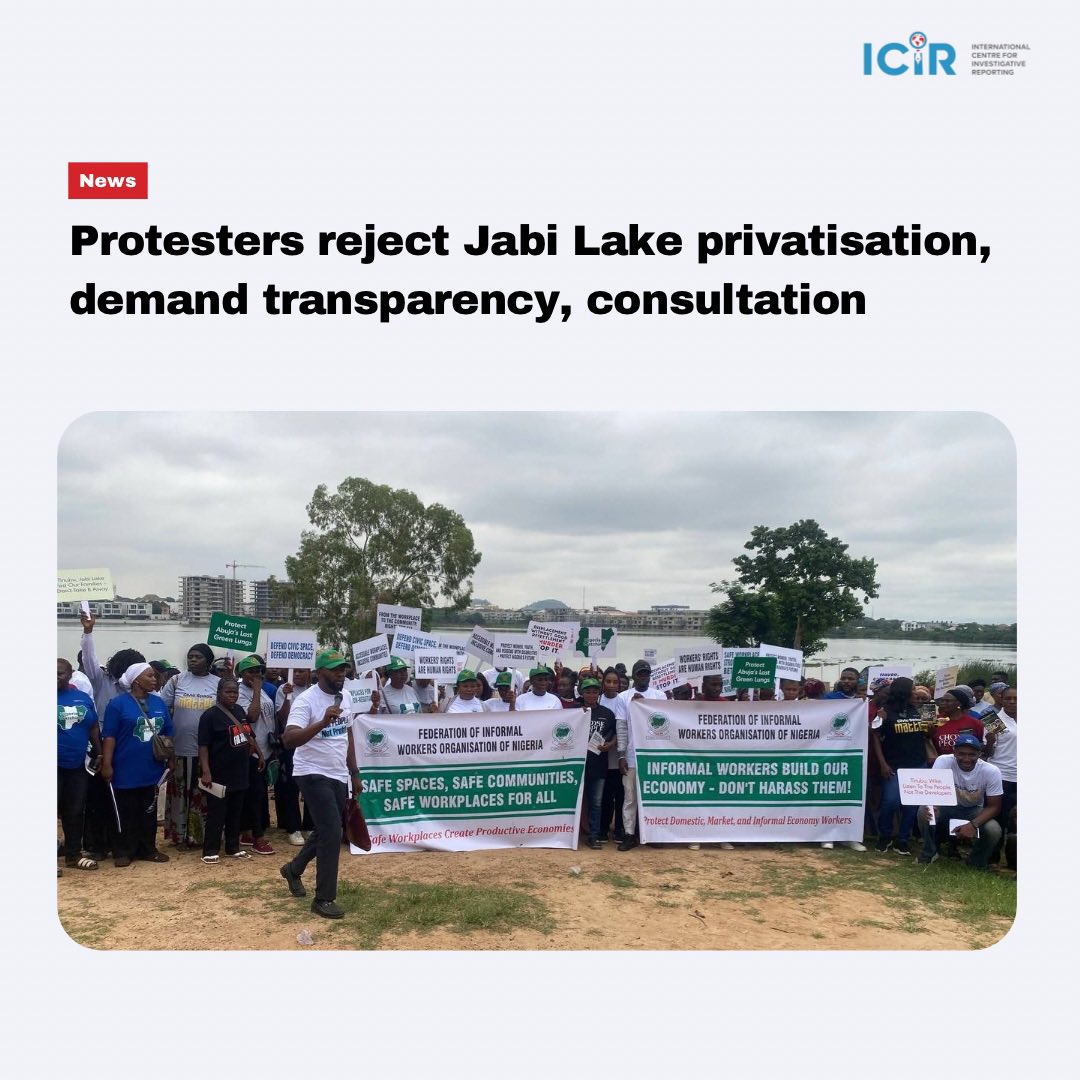
Today, alongside @SolidarityCntr, Federation of Informal Workers Organization of Nigeria (FIWON), residents, and other civil society organisations, stood in solidarity to call on @OfficialFCTA to make the redevelopment process more open and accountable. Our coalition submitted a petition calling for the redevelopment agreements to be made public, meaningful engagement with affected communities, fair compensation for displaced workers, an independent Environmental Impact Assessment, and a clear commitment to keeping the park accessible to everyone.
We now await @OfficialFCTA’s response and remain committed to ensuring that, as decisions are made about the future of Jabi Lake Park, the people who have built their lives and livelihoods around it, and found community within it, are not left out of the conversation.
#environmentaljustice #climateaction #savejabilakepark
#Happeningnow: Civil Society Organisations gathered alongside several others to protest against the privatisation of Jabi Lake by the FCT minister Wike.
Informal workers, residents and civil society prganisations on Tuesday, June 30, staged a peaceful protest at the Jabi Lake Recreational Park in Abuja, demanding that the Federal Capital Territory (FCT) Administration halt the proposed redevelopment and privatisation of the park until the full details of the project are made public and affected communities are consulted.
https://t.co/LZj2KBGRJF
@accountlabng@OfficialFCTA@GovWike@SERAPNigeria Odeh Friday Odeh, Country Director of @accountlabng , is calling on FCT Minister @GovWike to protect the rights of informal workers and residents, while also demanding full disclosure of the Jabi Lake reallocation contract and proper public consultation.
@accountlabng@OfficialFCTA@GovWike@SERAPNigeria Blessing Ese Yusuf, Chairperson of the Federation of Informal Workers’ Organisation of Nigeria, addressed the media in opposition to the privatisation of Jabi Lake.
@accountlabng@OfficialFCTA@GovWike@SERAPNigeria One of the informal workers Gloria Olise saying the informal workers at the Jabi Lake reject the move by the FCT Minister to take over the park.
For years, Jabi Lake Park has been where friendships have been nurtured, livelihoods built, routines formed, and a shared sense of community has quietly taken root.
Amid plans by @GovWike and @officialFCDA to redevelop the park, we interviewed regular whose life has become intertwined with this space.
#environmentaljustice #environmentaldegradation #climateaction
Algorithmic models influence civic engagement & public dialogue. These systems amplify sensational narratives & create echo chambers.
🇳🇬 internet users have encountered negative online experiences, illustrating social harm caused by algorithmic dynamics.
https://t.co/hwg9RX3e7e
Algorithms Are Colonising African Youths
Nigerian historian Iyo Obietonbara argues that social media algorithms are a tool of colonialism, influencing what African youths consider valuable. Instead of building organisations to struggle for liberation, many of our young people are making videos about trivial matters.
Do you agree? Disagree? Drop us a comment.
For more like this, follow The Spearhead.
Corruption has a name and a face. Saying No to corruption is important, but saying no is also a behavioural challenge.
People are more likely to reject corruption when they have the capacity to act with integrity, the opportunity to do so without penalty, and the motivation to choose honesty over shortcuts.
If we want different outcomes, we must design systems that make integrity the norm. That’s how behaviour shifts!
@icpcnigeria@NOA_Nigeria@OfficialOSGF@bpsr_ng@NgCivilservice@ServicomOffice@officialPrimorg@Step_Up_Nigeria
Strong democracies are not built because governments always make the right decisions. They are built because citizens consistently shape those decisions before, during, and after implementation.
Too often in #Nigeria, governance is treated as something politicians do and citizens endure. This mindset is one of our biggest governance deficit.
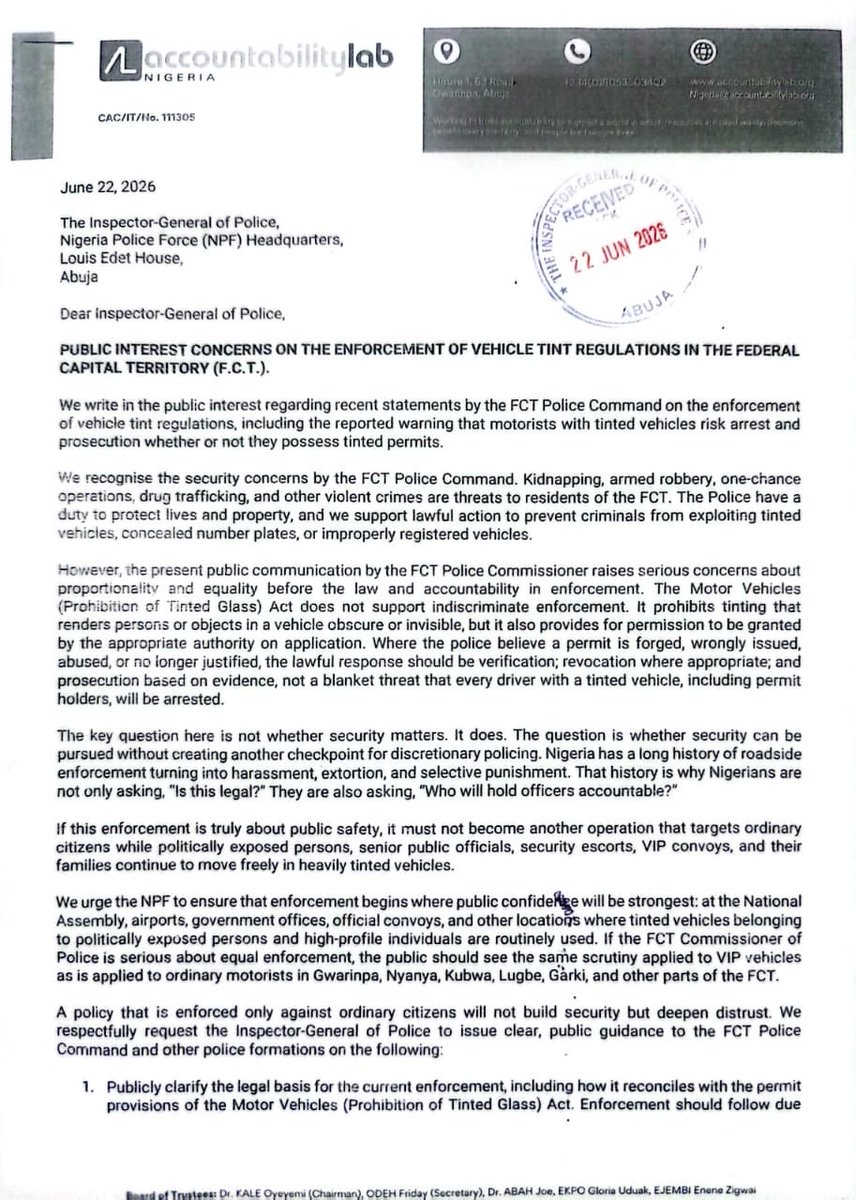
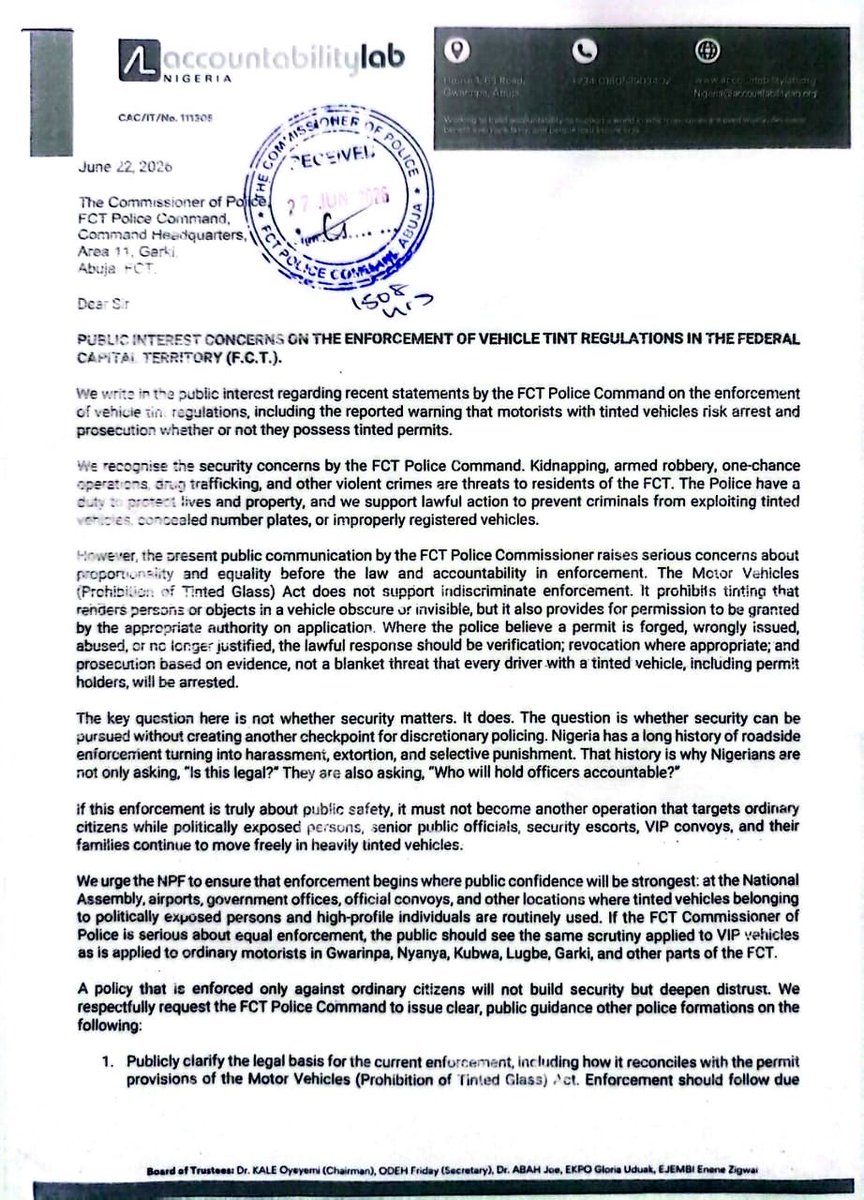
Every policy, whether on tinted vehicles, electricity tariffs, #education, #procurement, or #taxation is an opportunity for citizens to engage.
Governance doesn’t fail only because leaders make poor decisions. It also fails when citizens outsource accountability until a policy becomes personal.
The tinted vehicle directive will pass. Another directive will come.
The question is whether more Nigerians will decide that #governance is not an event to react to, but a system they have a responsibility to influence.
FCT Police have commenced enforcement of vehicle tint regulations. CP FCT warns that drivers using tinted vehicles risk arrest and prosecution. Motorists are urged to comply with the law .
#FCTPolice#Abuja#Security
About 360,000 showed up to vote for #EkitiElection with over 1 million registered voters.
What if 70% of Ekiti’s voting-age population (60% of 3.3 million) actually registered and showed up?
Low turnout is a rational response to a system where votes don’t determine outcomes, where #votebuying makes participation feel pointless.
@inecnigeria owns the logistics gap. The political class owns the trust gap.
#2027Election
About 360,000 showed up to vote for an election with over 1 million registered voters.
What if 70% of registered voters showed up?
What if Ekiti’s voting-age population (60% of 3.3 million) actually registered and showed up?
Low turnout isn’t apathy. It’s a rational response to a system where votes don’t determine outcomes, where #votebuying makes participation feel pointless.
@inecnigeria owns the logistics gap. The political class owns the trust gap.
Fix accountability and turnout follows.
#2027Election
APC’s Biodun Oyebanji was declared the winner of the 2026 Ekiti State governorship election with a total of 319,224 votes. The incumbent governor won in all 16 local government areas, accounting for nearly 85% of the total valid votes cast.
Wole Oluyede of the PDP finished a distant second with 40,543 votes, while ADC’s Oluwadare Bejide came third with 12,872 votes. Together, the three candidates secured more than 99% of all valid votes cast in the election.
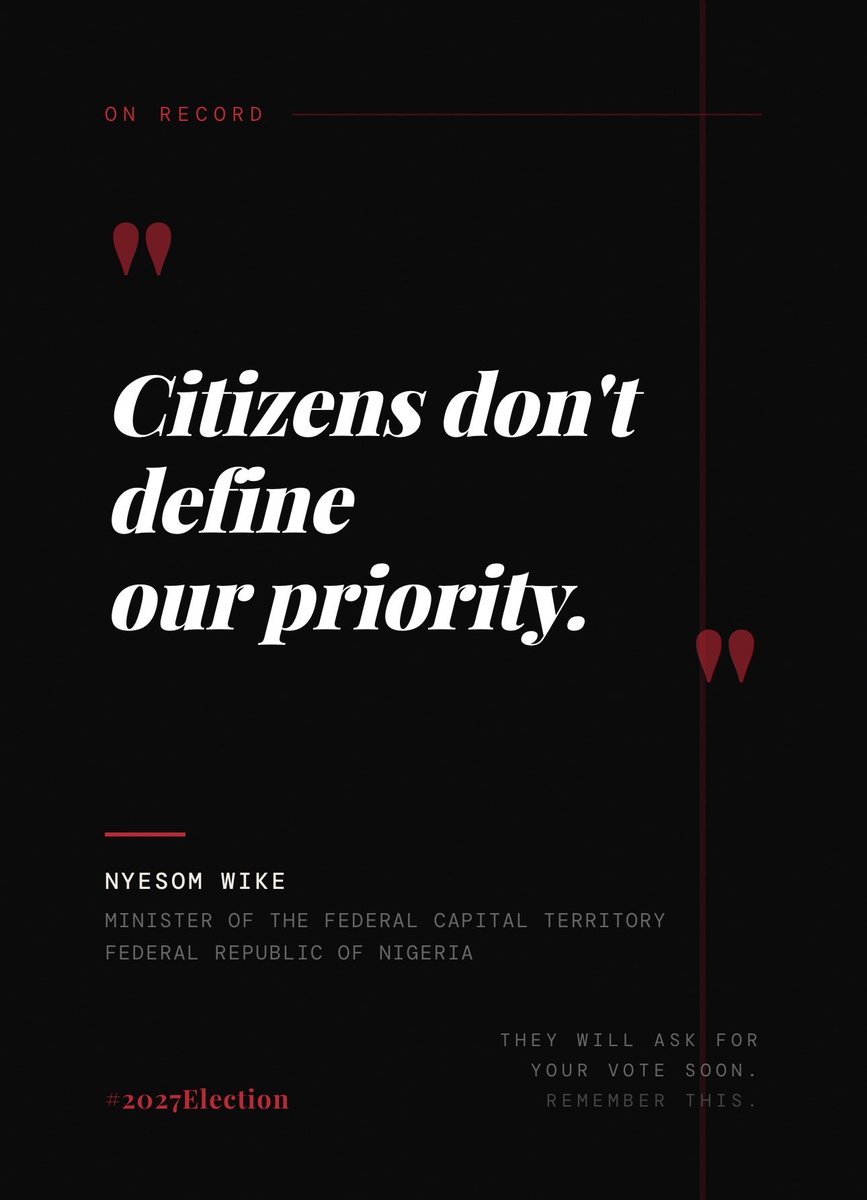
@wearegst This is @GovWike’s comment during his media engagement.
Sadly, rhetoric like this normalizes & empowers #authoritarian tendencies under the cover of #democracy, contributing to #democraticbacksliding rather than strengthening democratic accountability.
Every new digital public infrastructure expands the state’s power to collect, link and use people’s data.
Nigeria has already seen legitimate concerns around NIN-linked databases, electoral data access, CCTV project, and surveillance technologies. The lessons from #SafeCity projects shows that: security cannot come at the expense of privacy, transparency and accountability.
@ndpcngr, the questions now are:
1. What data will be collected?
2. What is the legal basis for processing and sharing it?
3. Who can access it?
4. How long will it be retained?
5. What independent oversight, audit and redress mechanisms exist?
Digital public infrastructure succeeds when it builds public trust, not just bigger databases.
https://t.co/xdBG6xT9vh
@cipesaug@ParadigmHQ@hub_adr@DRLI_HQ@digicivic@MRA_Nigeria@FRSCNigeria@SERAPNigeria@effodu@TechSocietal
At the beginning of this week as a nation we took a decisive step towards changing the narrative in the areas of fragmented data systems, weak traffic enforcement, poor monitoring infrastructure, which the Nigeria’s transport sector has struggled for decades in.
Present at the signing ceremony were the former head of the FRSC , Dr. Boboye Opeyemi, present head of the the FRSC, Corps Marshal Shehu Mohamme, Chairman Governing Counil NITT, Hon. Ejike Njeze Eric, the Egyptian Ambassador to Nigeria and other dignitaries.
Under the regulatory guidance of the ICRC, the Federal Government, through the Nigerian Institute of Transport Technology (NITT), has signed a landmark Public-Private Partnership agreement with Asia-Arab Investment (AAI) for the delivery of the Smart National Transport Data Bank Project.
The project will deliver:
- Deployment of 250 smart gantries across major highways nationwide, including key corridors from Lagos to Kaduna
- Real-time vehicle monitoring through RFID technology and AI-powered cameras to strengthen traffic enforcement, improve security, and reduce road-related crimes
- Establishment of Traffic Management Centres across all 36 states, providing states with modern monitoring and enforcement infrastructure
- A fully private-sector financed model at zero cost to government, with revenue-sharing mechanisms that ensure long-term public value
- Development of a unified national transport database integrating road, rail, air, marine, and pipeline transportation data to support smarter planning, investment, and policy decisions
- Improved road safety through automated detection of violations, helping reduce accidents and save lives
As I’ve always said PPPs are increasingly proving to be critical tools for closing Nigeria’s infrastructure gap and driving economic transformation. We must continue to leverage private sector innovation and financing to deliver sustainable public infrastructure and national impact.