My goodness. China's cyberspace watchdog, the CAC, just published a long (and unprecedented) set of draft regulations for recommendation algorithms. The short version: they will be tightly controlled. Key points below. 1/ https://t.co/YDtodrtsSY
❌ "This allowed me to explore xyz"
✅ "I explored xyz"
❌ "I was being trained as"
✅ "I trained in"
❌ "I was able to conduct"
✅ "I conducted"
❌ "I was able to determine"
✅ "I determined"
❌ "The xyz courses available to me"
✅ "I took courses in xyz"
Data scientists take note. Big JAMA paper retracted because treatment variable coded [1,2] recoded in error to [1,0]. Results of analysis reversed. Lung disease self-management program actually harmed patients. Check recoding carefully! via @themalariaarea
https://t.co/uF4bRLbqy8
If you want to be a good data scientist, you should spend ~49% of your time developing your statistical intuition (i.e. how to ask good questions of the data), and ~49% of your time on domain knowledge (improving overall understanding of your field). Only ~2% on methods per se.
1/ The year is 2003, and I’m in a bar questioning my life choices.
After months of travel and $100k+ in fees, our machine learning model failed badly on the test set.
Most ML efforts create no value. We should learn from those failures.
Here is a favorite of mine.
(attempt #2)
There is an ongoing misconception that AI/ML are intrinsically valuable, and that therefore working in the field is bound to make you rich.
A ML model is only as valuable as the problem it solves. ML without an application isn't worth anything (beyond intellectual curiosity).
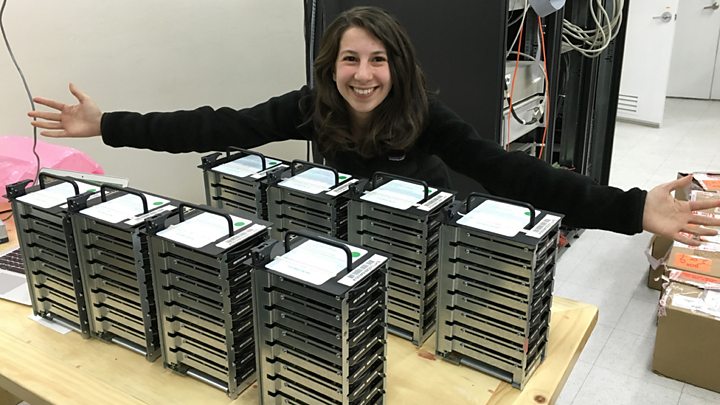
Left: MIT computer scientist Katie Bouman w/stacks of hard drives of black hole image data.
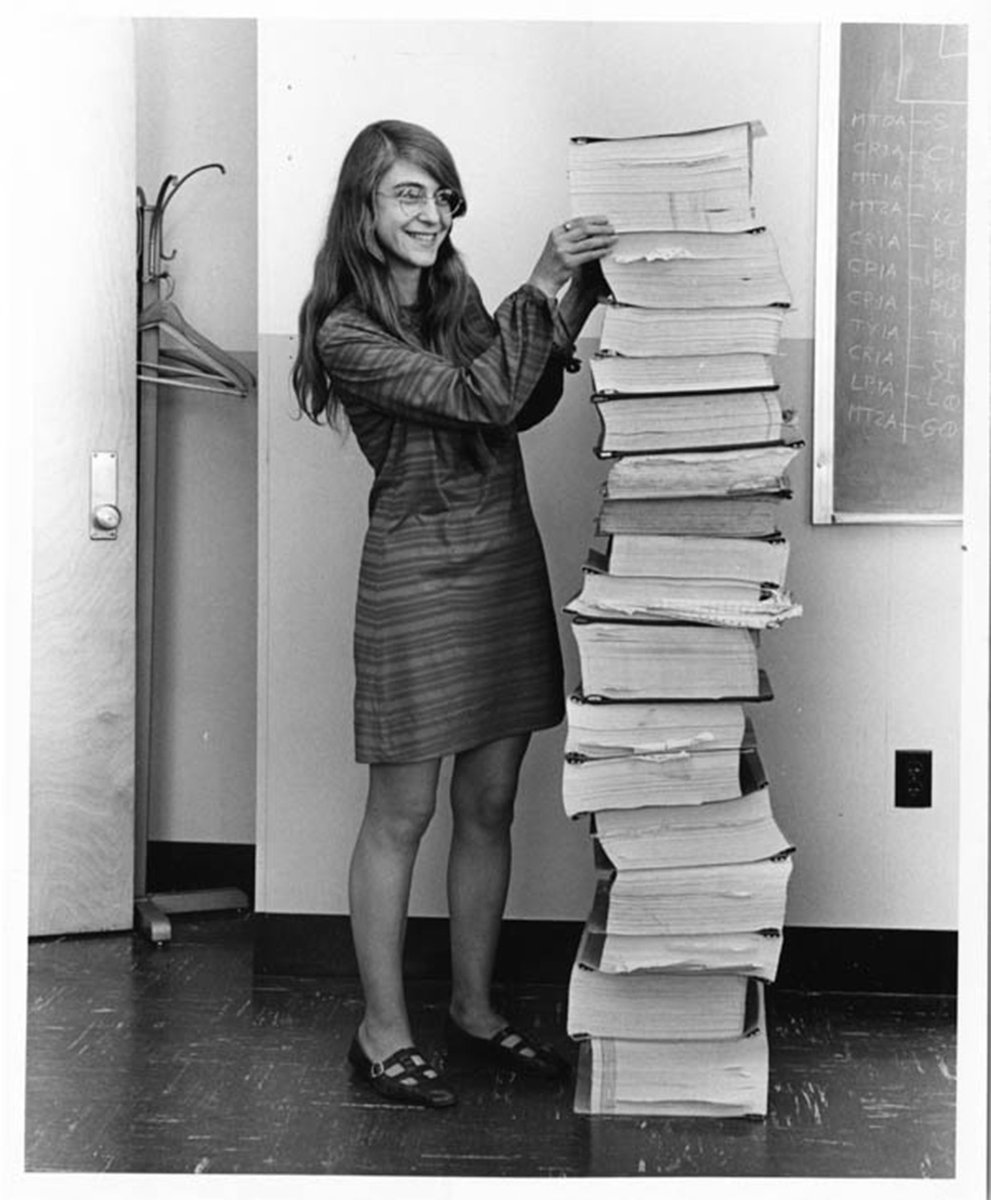
Right: MIT computer scientist Margaret Hamilton w/the code she wrote that helped put a man on the moon.
(image credit @floragraham)
#EHTblackhole#BlackHoleDay#BlackHole
One of the biggest failures I see in junior ML/CV engineers is a complete lack of interest in building data sets. While it is boring grunt work I think there is so much to be learned in putting together a dataset. It is like half the problem.
If a neural network generates an image, who owns the copyright? The owner of the dataset that the net was trained on? The designer of the network architecture? The person running the code? Or... the AI system itself?
Wow. It turns out 3/4 of businesses p-hack themselves when they conduct A/B tests, stopping their experiments as soon as they get the results they want, resulting in wrong results the vast majority of the time. And this is likely from the most “sophisticated” companies!
Hottest programming skills in 2018:
5. Fixing git merge conflicts
4. Correctly mapping ports in Docker containers to host machines
3. Getting info from AWS documentation
2. Pulling summary stats from a data stream
1. Turning any of the above into a conference talk about AI