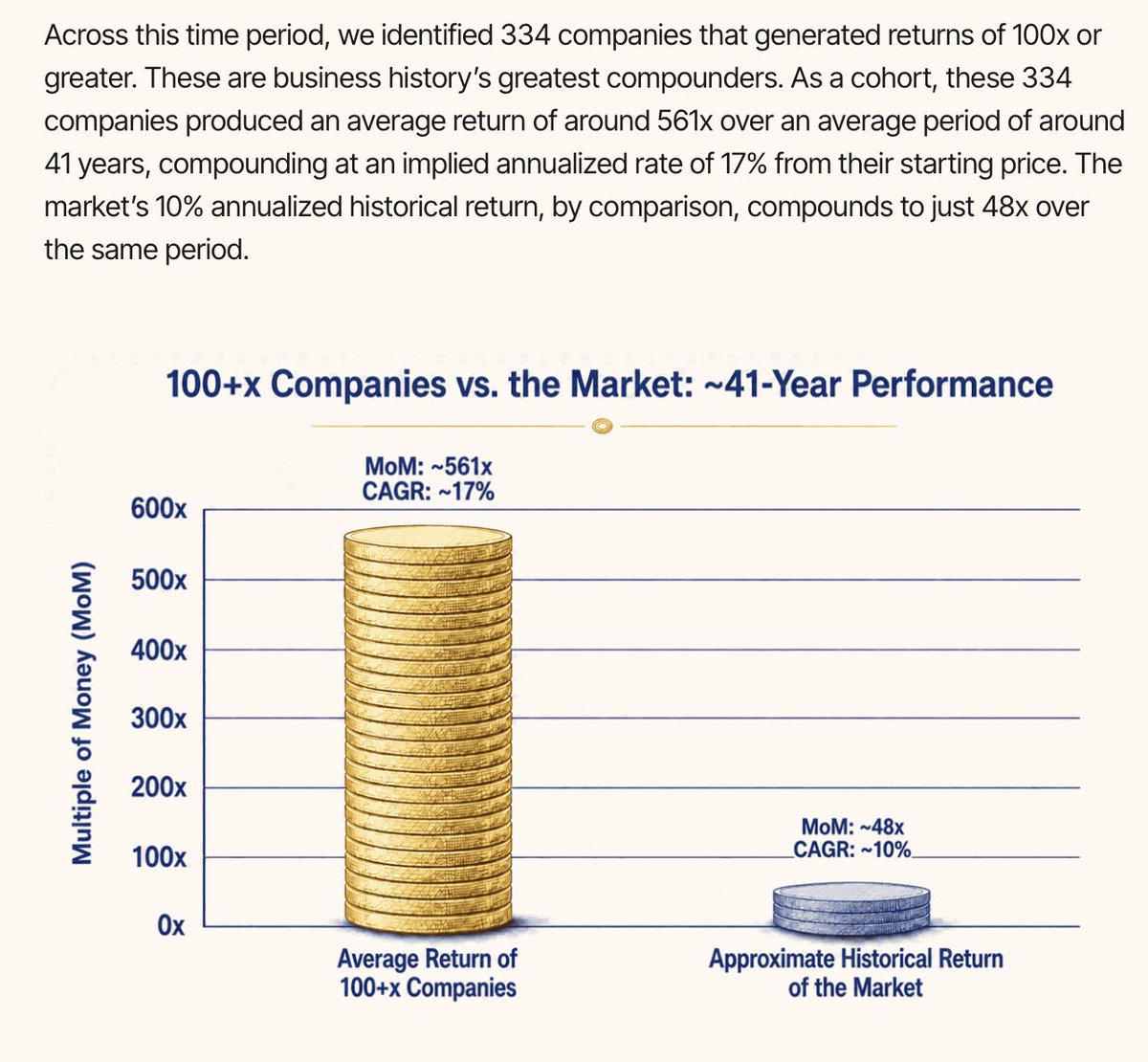
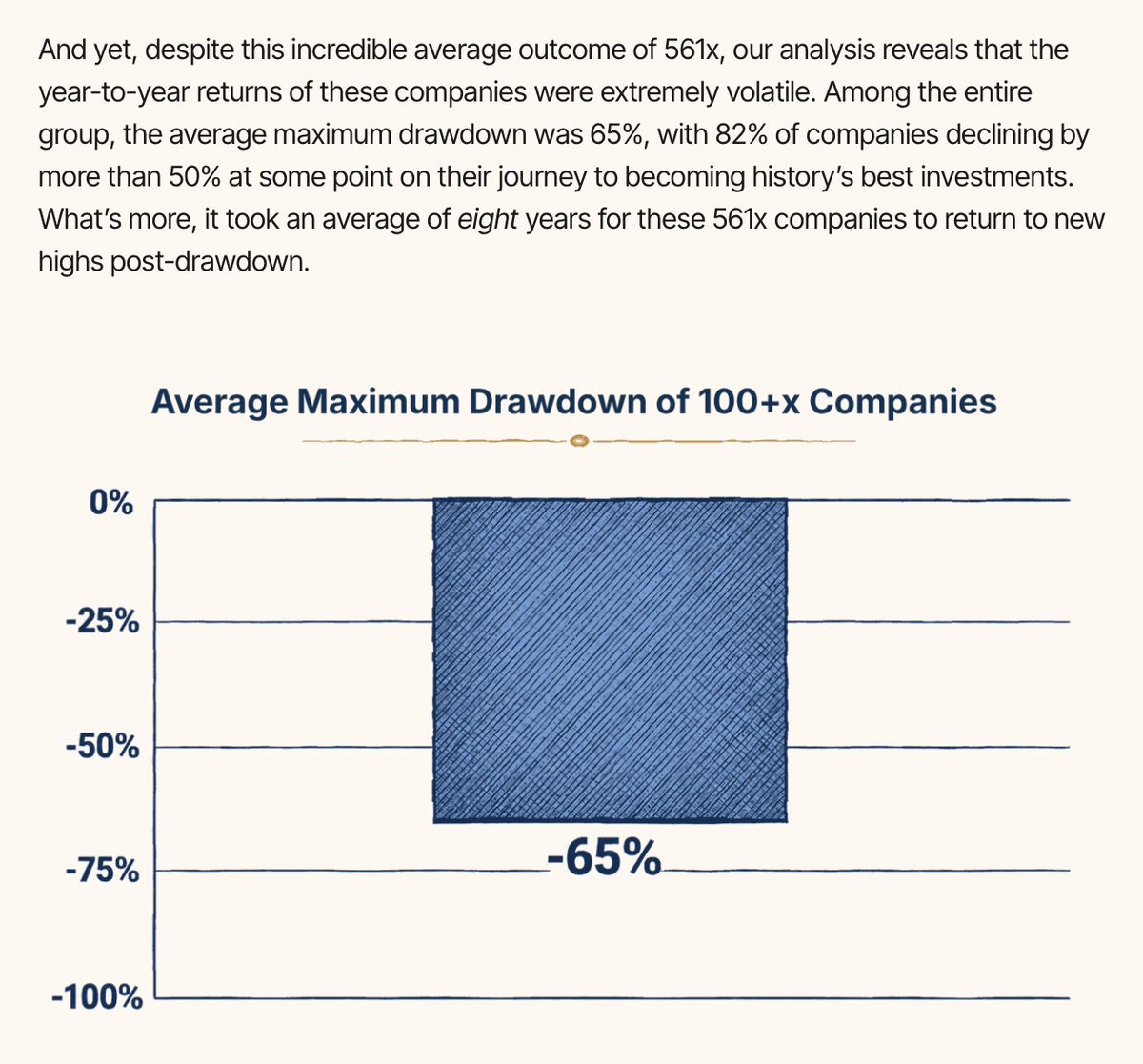
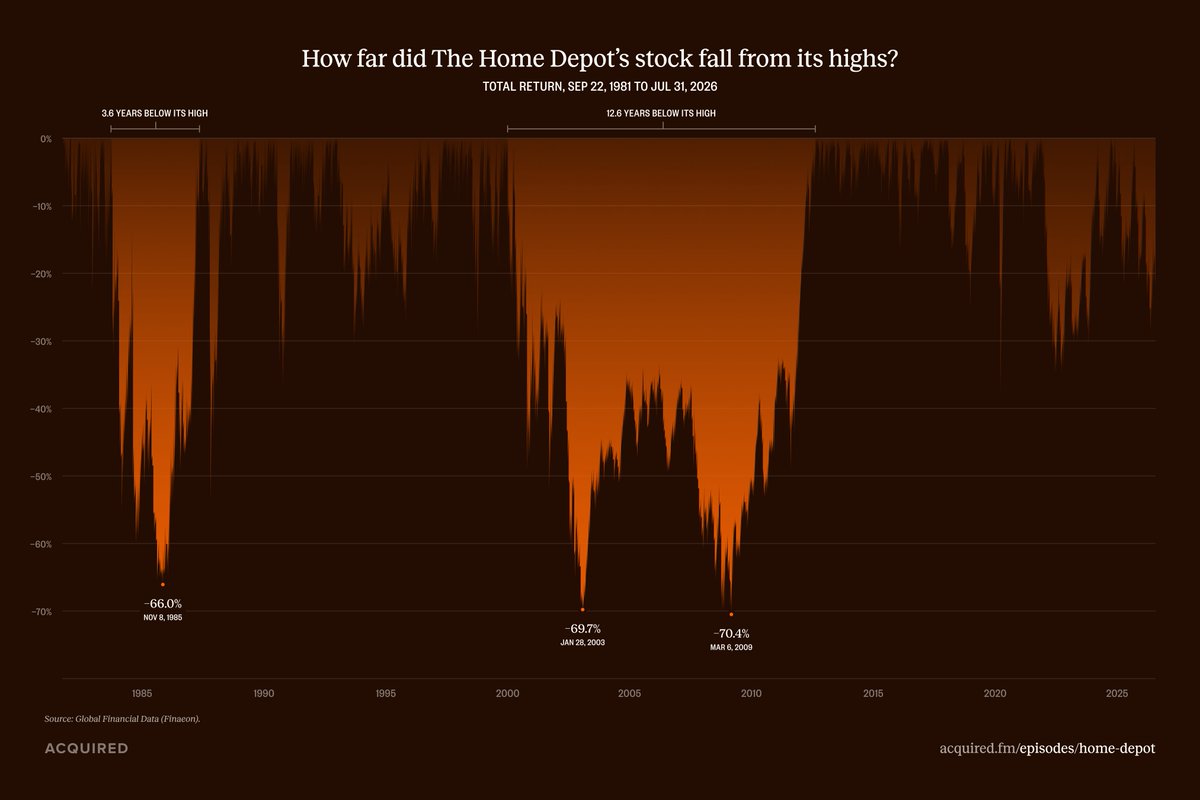
This property of extreme drawdowns is common among stocks with the highest total long-term return.
- Amazon was down 93% in the early 2000s
- Costco fell 70% from 1992-1995
- Starbucks fell ~50% three times: 1998, 1999, and 2008
Paradoxically, if you want to benefit from the greatest single-returning stocks over time, you have to have an investing disposition that lets you hold through massive multi-year drawdowns.
@APNavaratnam has been beating this drum for years and he published some great data on it: https://t.co/lpijJXJFVI
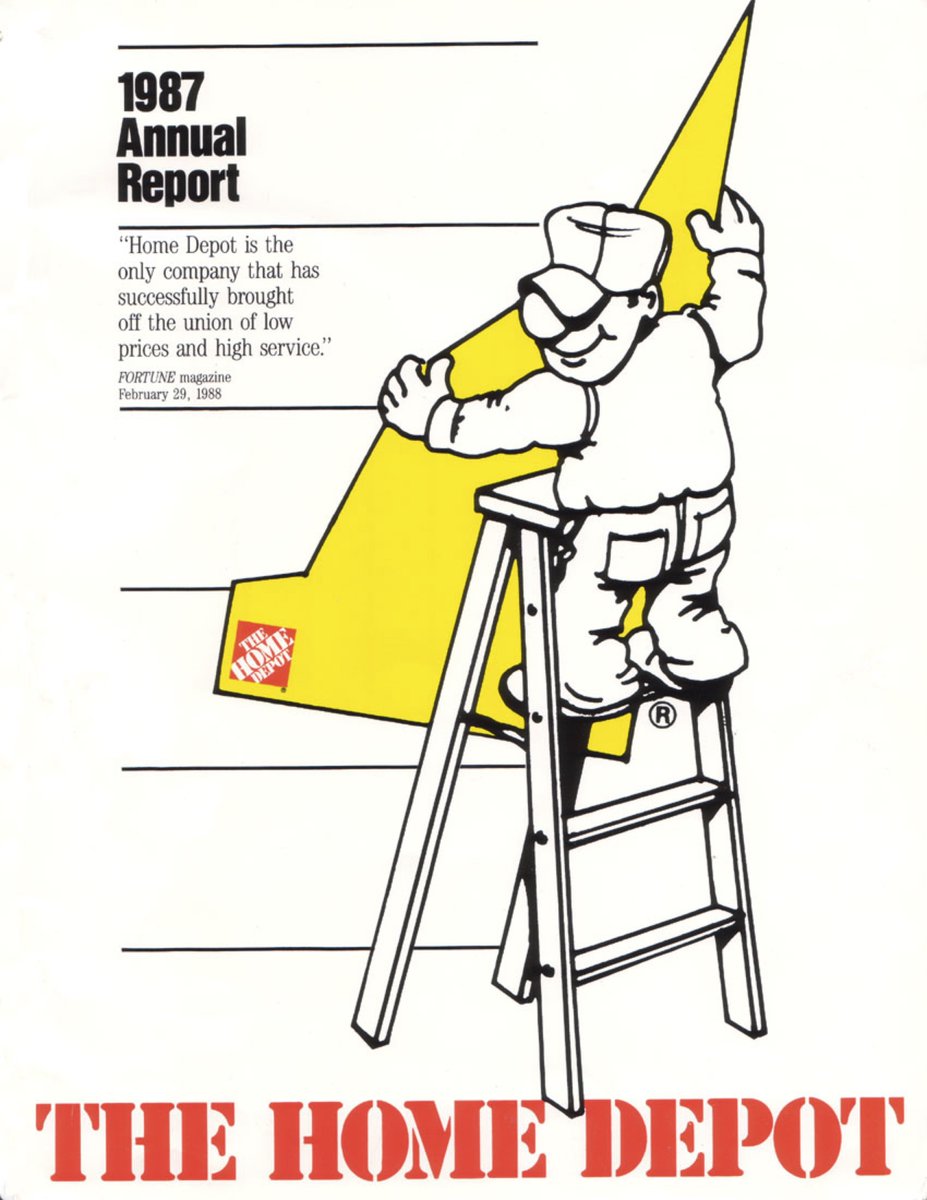
Home Depot — like most other 1000x+ investments over time — required you to hold through massive drawdowns.
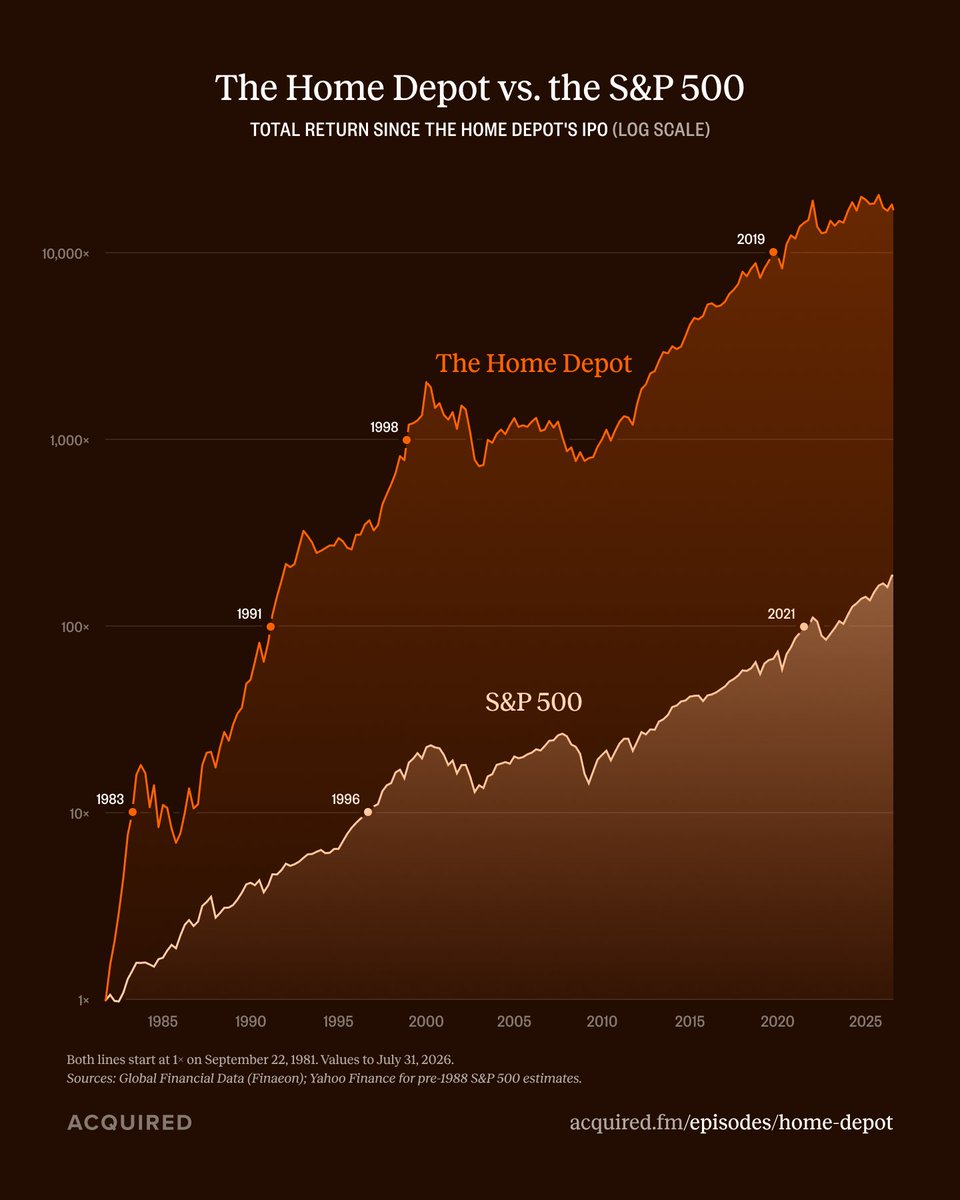
Yes it would be nice to have turned $10,000 into $17 million. But you would had to hold the stock for years through three separate 65%+ drawdowns from its all-time high.
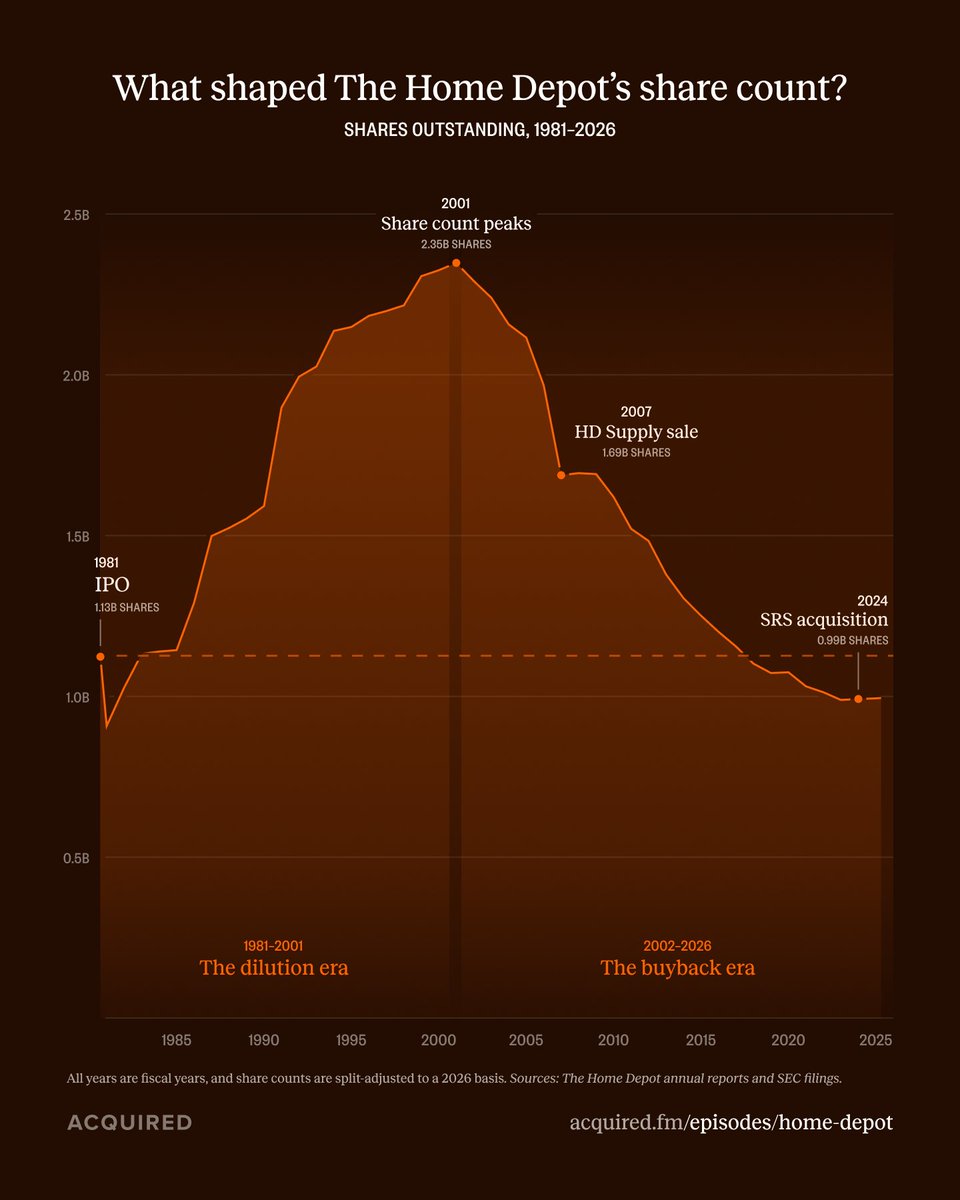
If you bought Home Depot's shares at IPO, you'd own a greater percent of the company today than you did 45 years ago.
Even with all the stock they issued to fund growth, they've now bought back enough stock to counteract it.
.@gilbert and @djrosent recently shared the story of Home Depot on @AcquiredFM, which is another masterclass on building a customer obsessed culture. Home Depot has had the highest total stock return since IPO in modern U.S. market history, even more than others like Apple or Microsoft.
Some examples of their customer obsessed culture:
- They called their central office in Atlanta the “Store Support Center” instead of “headquarters,” because the central office exists to support the front-line associates who serve customers
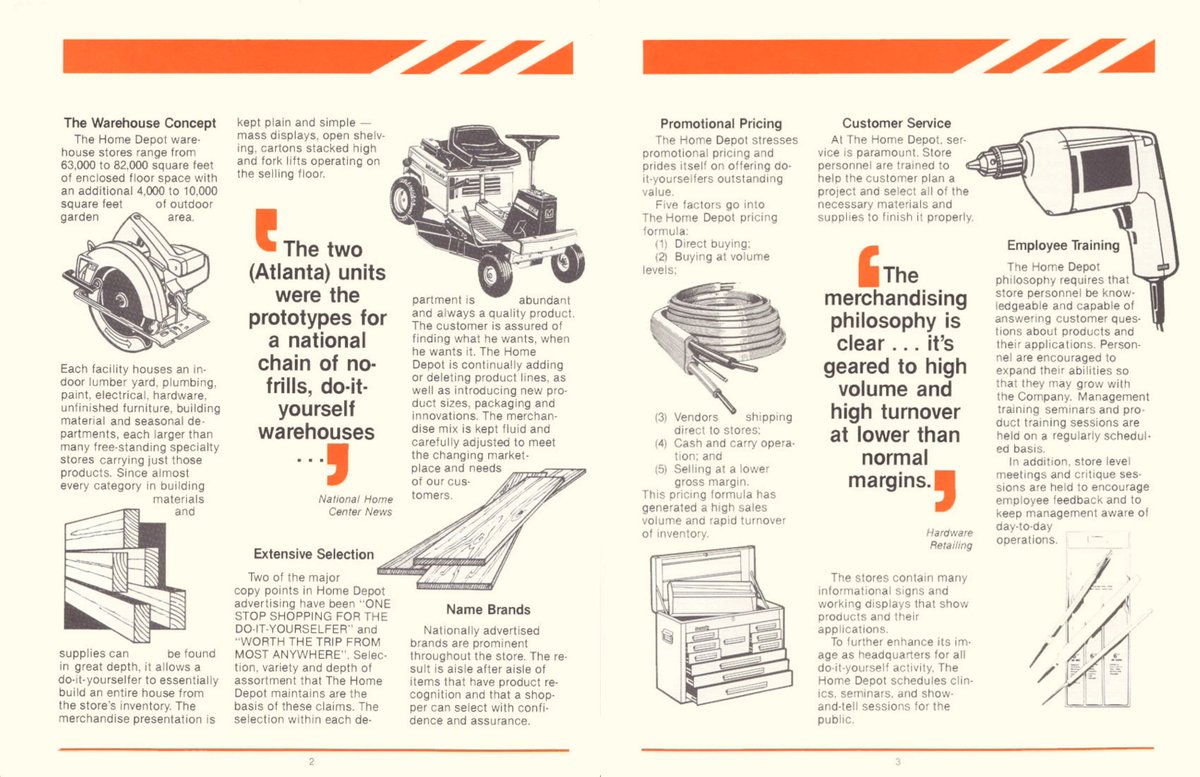
- They hired trained tradespeople who could actually help customers with the nuances of home projects, instead of retail associates who did not have that expertise
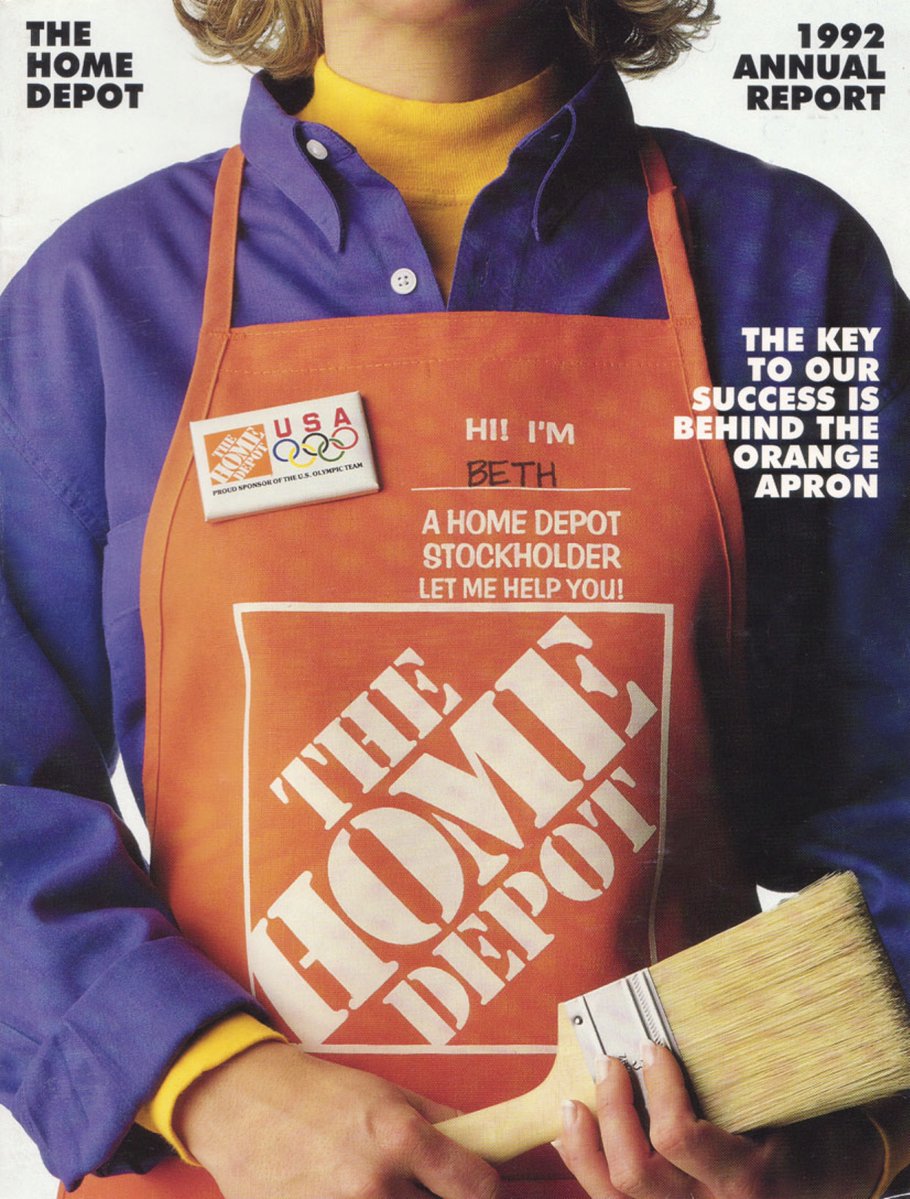
- They gave all front-line associates equity so that everyone’s incentives were aligned
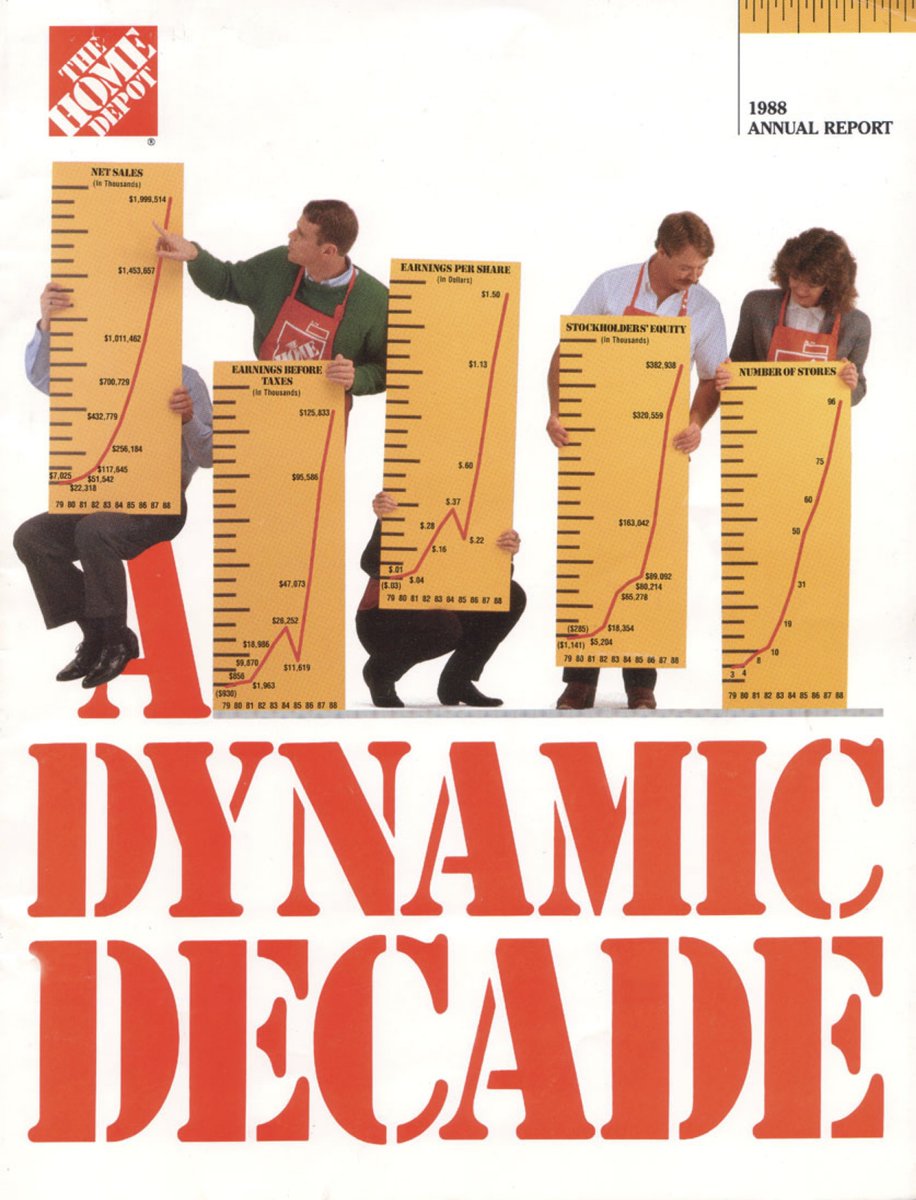
Future leadership changed these policies to pump revenue and margins (hiring non-tradespeople to lower costs, not aligning executive compensation with stock value, etc), and it led to Home Depot almost dying. Their next leader got them back to their basics.
It’s neither a surprise nor coincidence that the legendary retail stores of today (Home Depot, Amazon, Walmart, etc) are all legendary for their customer obsession.
The episode is worth a listen, as always.
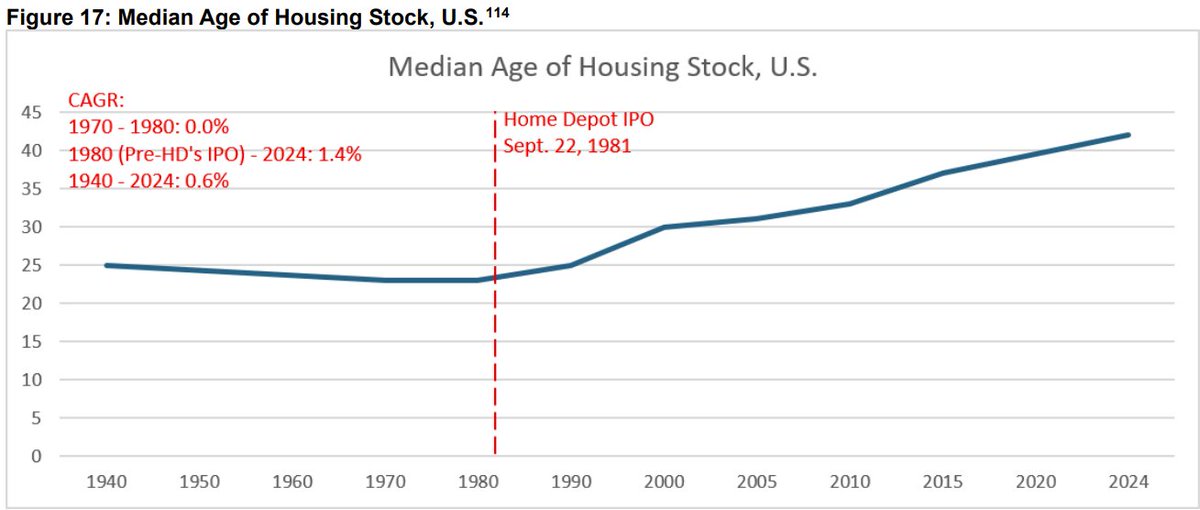
The U.S. housing supply is increasingly old.
Median age of a home was 42 years in 2024, up from 23 years in 1980.
This has been a meaningful tailwind for Home Depot, which IPO'd almost exactly when housing started to age.
Older homes = more home-improvement spending.
@AcquiredFM, @gilbert, @djrosent
It is one of the wilder facts in business history that Home Depot froze all new store openings and then nearly doubled per-store revenue over the next decade.