I filed this last week and then sat on the announcement for six days, which tells you something about how comfortable I am promoting my own work. Posting it because the argument is better tested in public than in a repo.
https://t.co/qb1Wzinu8p
The machine wrote down its own instructions so it would not have to think twice. Nobody wrote down what it actually did. I have been living the second half of that problem for years in my own buildings, it just never had a laser in it 🤖
An AI agent was given control of a laser. It made an adjustment, watched through a camera to see which way the beam had moved, and adjusted again, until it understood the relationship. Then it wrote the procedure down as a script so it would never have to work it out again. The alignment now runs as a single command.
That is Anthropic describing its own testing, in the announcement of the Model Hardware Standard on August 27. The standard is a shared specification for AI agents to operate physical devices, out as a research preview to scientific research labs and advanced manufacturers, with Universal Robots, Tecan, QIAGEN, Danaher, AWS and Raspberry Pi named as participants. Each device gets a reference file describing what it can measure, what can be adjusted, and what safety limits will be enforced. From there the agent supervises and directs the work, sequencing steps across instruments and adjusting parameters as conditions change in real time.
Read the whole announcement and there is nothing in it about what any of this leaves behind. Not a record of which adjustment the machine made, at what time, that somebody outside the system could later rely on. The document is about instruction and it is thorough on that.
I manage buildings with elevators in them. When somebody gets stuck, the record of what the machine did is a log I get from the company that maintains the machine. I have never once been able to check it. I sign off on it anyway, because there is nothing else to sign off on.
One of those is a research laser in a lab and the other is a passenger elevator in a residential building. What they have in common is that the only account of what the machine did was written by the company that supplied it.
None of that is a complaint about the standard. Telling a machine what to do and recording what it did are two different jobs, and right now one of them is being standardised across vendors by named companies with an open-source path, and the other is not being standardised by anyone.
If you run sites and you have already had to answer this for a carrier or a board, I want to hear how that went. Especially if it went badly.
Everyone is getting excited about Physical AI. Smart glasses that let AI see what you see and hear what you hear.
We are too. But sometimes you don't need any AI at all.
You just need a human on a call to help you diagnose a problem or fix an urgent issue.
That's why we built Mentra Call. To connect workers with the person who knows how to do it. Mentra Call wider availability coming in October.
Atoms owns the robots, the buildings they work in, and the only record of what happens inside them. I manage property. I am not going to tell an owner to give up control of their own records. I am going to ask them one question. At claim time, is a record only you could have written worth as much as one you could not?
Yesterday I wrote that a private site has one witness, and that it is always the company that owns the machine.
Here is what happens when that company also owns the building.
In July, Travis Kalanick's company Atoms raised $1.7B led by a16z. His own description of what he is building, the day it closed: atoms-based computers, where CPU is manufacturing, storage is real estate, and network is transportation.
Read the real estate line again. In the food division the same company owns the kitchens, owns the machines working in them, and owns the output.
The strategy is probably right, and their own manifesto argues it well: if you need a thousand pancakes an hour, a humanoid is the worst possible way to get them.
Here is what that structure quietly removes.
Every method we have for establishing what a machine did assumes at least two parties. One built it, someone else runs the site, someone else carries the loss. When two of them disagree there are two accounts to hold against each other, and that comparison is the check. You can ask a vendor for its logs precisely because the vendor is not also the landlord.
Consolidate all three into one company and there is one account, produced and stored and read by the only party with an interest in what it says. Nothing has been concealed. There is simply no second version to test it against.
That is not an argument against vertical integration. It is a description of what it costs, and the cost stays invisible until the day somebody asks.
When the machine, the building and the record all belong to the same company, who is the second witness?
If there is a room where operators are working this out, we would like to be in it. Tell me where.
Wilder Robotics works on the accountability layer for physical machines. What record exists after a machine does something in the real world, and whether anyone outside the vendor can trust it.
One of the best recent podcasts on AI. Neil has a gift for explaining all of the jargon and insights simply.
(I’m not involved, just found it unusually educational).
RoboStrategy published our first Shareholder Letter, and in it we discuss our outlook on Robotics industry.
While we've already reached the GPT-3 era, there won't be a ChatGPT moment. The adoption curve will be somewhere between AI chatbots and autonomous vehicles. There will be no single day where it clicks for the global consciousness, but nonetheless a rapid permeation of new autonomous machines of all shapes and sizes. Physical AI is already getting really good for a variety of use cases, but we can't instantly supply millions of robots to customers like we can with AI instances. By next year, intelligence will no longer be the bottleneck, it will be the actual robots.
https://t.co/ZqzJwj81nc
Modern Robotics course for free! 📚
📍Save this for later if you are starting in robotics.
The robotics textbook "Modern Robotics" by Kevin Lynch and Frank Park is now available for free as YoutTube course.
The Specialization consists of six short courses, each taking approximately four weeks at five hours per week:
Course 1: Foundations of Robot Motion (Chapters 2-3)
Course 2: Robot Kinematics (Chapters 4-7)
Course 3: Robot Dynamics (Chapters 8-9)
Course 4: Robot Motion Planning and Control (Chapters 10-11)
Course 5: Robot Manipulation and Wheeled Mobile Robots (Chapters 12-13)
Course 6: Capstone Project - Mobile Manipulation
The textbook covers configuration space, rigid-body motions, forward kinematics, velocity kinematics, inverse kinematics, dynamics, trajectory generation, motion planning, robot control, grasping and manipulation, and wheeled mobile robots.
Supporting materials include practice exercises with solutions, exam sets from Seoul National University (2017-2020 with solutions), video lectures filmed with Northwestern's Lightboard, software in Python/MATLAB/Mathematica available on GitHub.
Here's the link: https://t.co/qZDMXpyU92
~~
♻️ Join the weekly robotics newsletter, and never miss any news → https://t.co/GoA3ZuwoPB
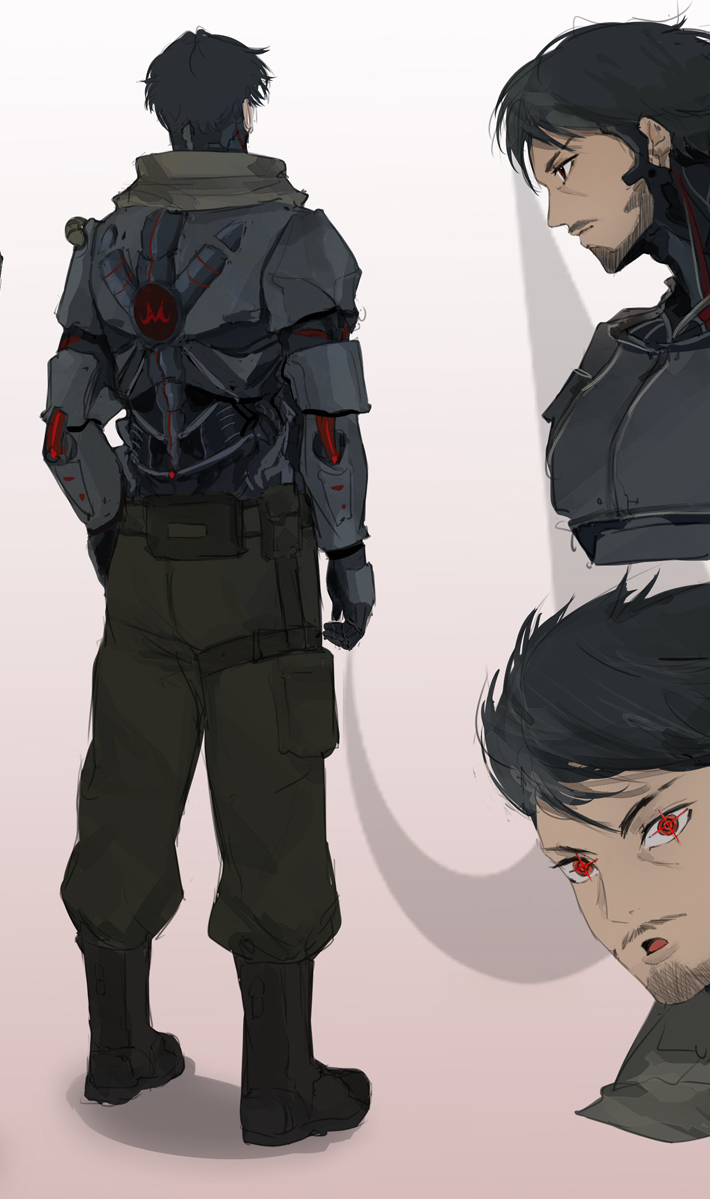
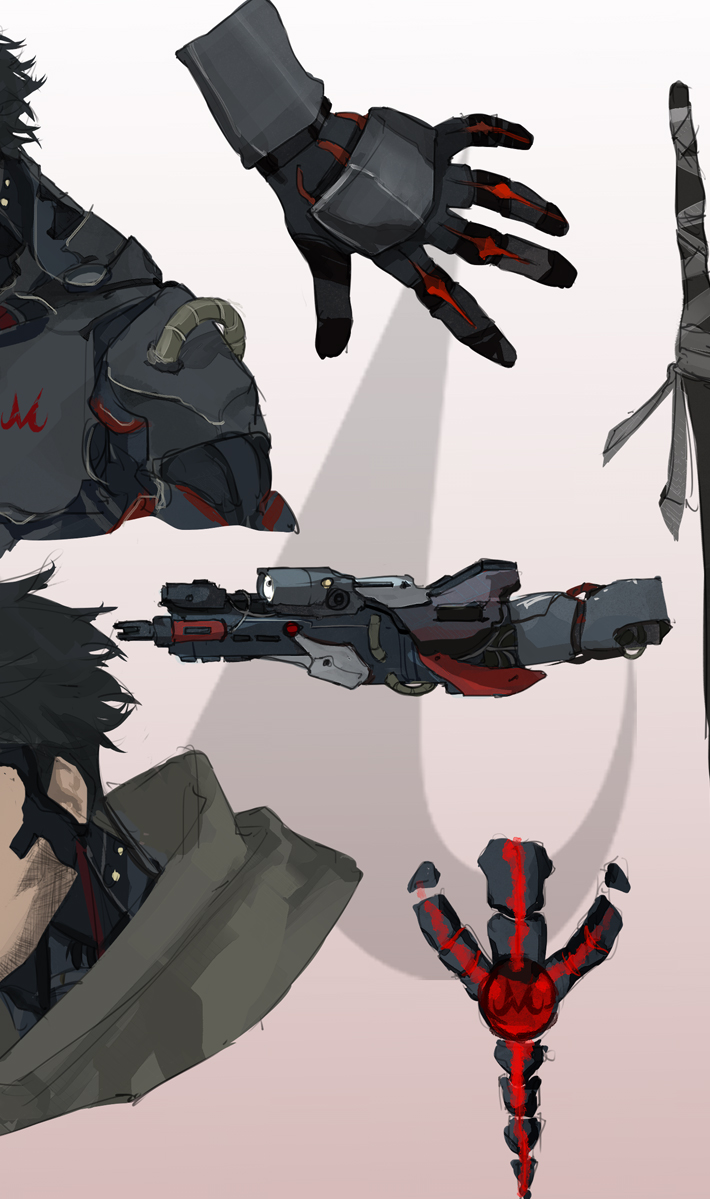
In this clip I reveal multiple Majin characters and special traits. You'll see the Albino Goth with the Diamond Curse and Twin Swords, and you'll get a preview of the Holographic Halo, Spine Katana and Chainsword.
Quick Wilder World Update:
Season Zero gave us the foundation and a clear loop: enter Wiami, fight, risk and extract. Now the focus is making that loop significantly better and bringing it fully onchain.
The Rebirth roadmap remains the source of truth. Three of its five major milestones are live, with Arsenal Awakens and the WILD Economy in motion.
Three priorities:
1. Deeper gameplay:
PULSE is the next evolution of the extraction loop. Energy rich zones appear across Wiami with rare resources, drawing in THE FORUM and rival Wilders. Enter with a squad, fight and scavenge, then extract before the zone collapses.
Around that loop we are adding resource grinding, crafting, gear customization and progression.
2. A better player experience:
We are rebuilding the first-time player experience so new players can enter Wiami and actually understand the world and its systems.
The Avatar Creator gives players their own identity. Personal Spaces give them Apartments in Wiami, including Weapon Rooms and Garages to display the items they own.
3. Assets and the economy:
Players will bring the Ethereum assets they own into the game and turn resources earned through gameplay into new assets they can use, build with and trade. This is where owned assets, gameplay and WILD start working as one system.
Once the PULSE loop is complete, we bring the full in-game economy onchain and launch Season One.
A lot is happening behind the scenes. The focus is building, testing and getting the experience ready for a bigger audience.
More soon 🦾
When you watch the video below you will see exclusive leaks of the Majin companions. They are strategically designed to excite collectors in a similar way as Pudgy Penguins and Pokémon did.
Once we release them as PFPs, the entire collection will be in strong demand across a broad audience, because the "cute factor" is an incredibly powerful marketing lever.
You can see in the video that we specifically position our IP to cater to the biggest audience possible. That is exactly what made Pudgy Penguins so successful.
But our approach is a bit closer to Pokémon, where we offer not only one shape or creature, but multiple different characters which have the potential of becoming as iconic as Pikachu or Charizard.
If you look at the concept of our "Mushroom Dog" in the video below, or the companion of the "Goth Girl", you'll get the idea and understand that these characters are made to go viral and designed as very attractive digital collectibles.
We have professional character designers and artists from legendary Japanese anime and video game IPs work on the Majin companions. We apply their experience and follow principles which already led to many world renowned characters.
An incredible amount of precision go into our approach, and we pay close attention to not only develop new characters but to engineer iconic designs and traits for the entire collection.
This is how I plan for Majin to go way beyond web3 and create serious hype and revenue in the traditional entertainment industry.
Human, chill. I will take care of your car! 🚗
@StanleyRobotics engineers precise mobile robots capable of moving, parking, and delivering vehicles without human intervention.
Robots need to know their environment, so they first create virtual representations of physical sites.
All of that to enable real-time management, optimization, and visualization.
Fleet manager technology dispatches robot fleets based on calculated trajectories, battery status, and task requirements.
On a side note, they are an API-first company and have developed a proprietary API to facilitate communication between their systems and customer existing management software.
Less parking lot accidents? 🤕
~~
♻ Join the weekly robotics newsletter, and never miss any news → https://t.co/GoA3ZuwoPB
BREAKING: The Robot Lamp Wars are coming. Choose your lamp! They’re all cute, use AI and are animatronic.
🇻🇳 - @dee_hw Autonomous AI
🇺🇸 - @natalieyeo PlaiPin
🇯🇵 - @skylark_mmm Nightingale01
🇫🇷 - @Karim_RC Ongo
🇺🇸 - @SarkaryShahvir LeLamp
Which one is your favorite one?
@iruletheworldmo@MatthewBerman Love this take. Positive sum outcome. Elon winning the race is perfect, or certainly happy to learn we’re not the only sentient life 🤙 It would be kind of cool to battle our frontier models against what aliens have👽