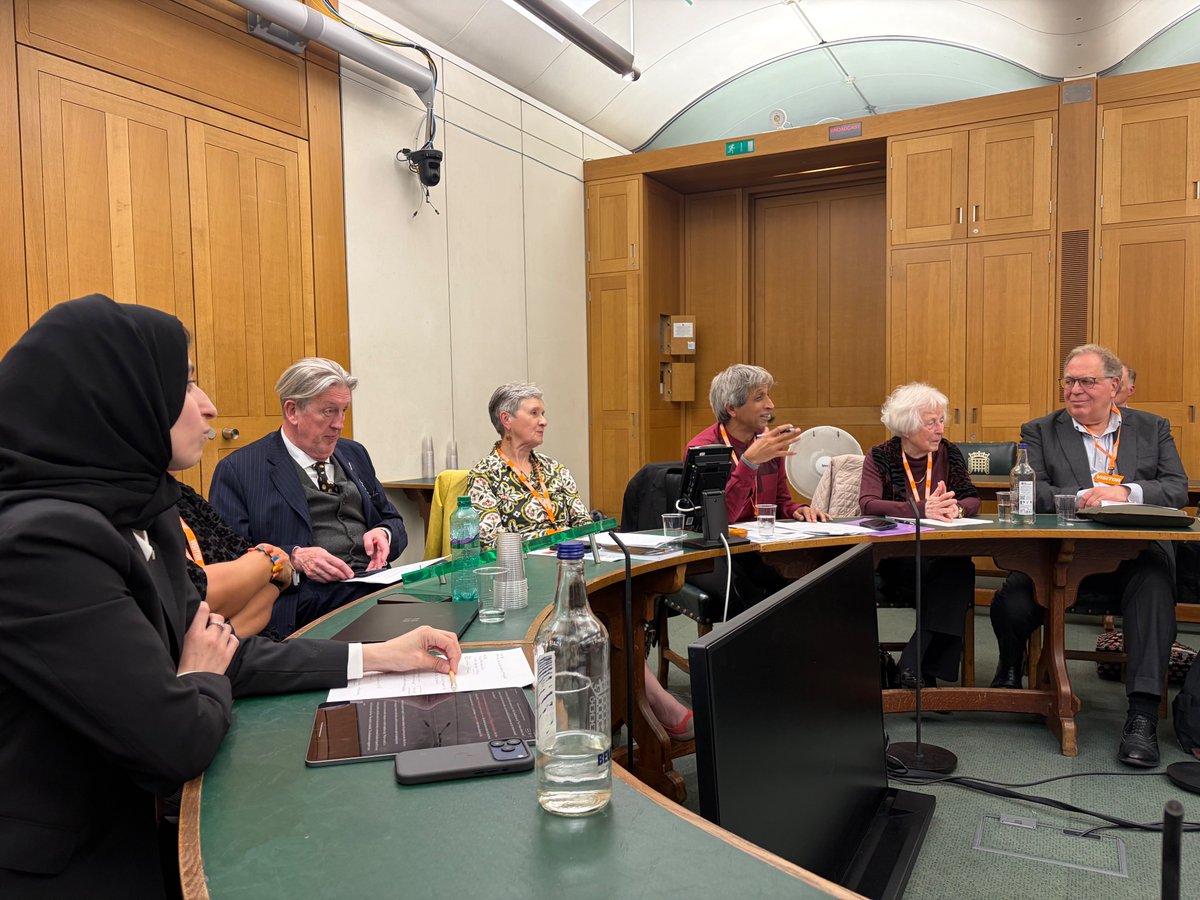
Professor Fareda Banda from SOAS engages Professor Mahmood Mamdani on his latest book Slow Poison and the lessons from post-colonial Uganda: https://t.co/68MYSHgytp
3. Such a successful merger involves a cross subsidy. But the financially stronger university needs to be aware of the risks and it probably needs a plan to find additional revenue or curtail the costs of the merged partner or it could risk its own financial future.
2. I say again: merging financially constrained universities does not resolve the financial challenge. It just generalises the financial crisis. You either have to cut costs (retrenchments) or grow income. Mergers could work if one of the universities is running a surplus.
It’s hard to overstate how deeply Netanyahu views this moment as a possible personal and political defeat. A U.S.–Iran agreement under Trump would be a major blow to him mainly diplomatically, but above all politically.
For years, Netanyahu built his political identity around being “Mr. Iran,” the leader who insisted that only pressure, deterrence, and force could stop the Iranian regime. And now, after multiple rounds of operational successes but one resounding strategic failure, and after finally succeeding in drawing the United States into direct confrontation with Iran, he may be forced to accept an agreement that not only legitimizes the very regime he sought to weaken, but also exposes the collapse of his long-standing Iran doctrine.
His approach was based on the belief that more pressure, more military power, and tighter coordination between Israel and the United States would eventually either force Iran into submission or destabilize the regime itself. Instead, the result has been a more radicalized, more resilient, and more dangerous Iran, one that even Washington now hesitates to confront militarily again.
If this confrontation ends with an agreement, an even bigger strategic question emerges: what future American president would be willing to commit U.S. forces to another major Middle Eastern conflict after seeing the political and military costs of this one?
Netanyahu had what may have been his greatest opportunity to prove his central strategic theory: that a close Israeli-American military partnership could fundamentally reshape Iran and perhaps even threaten the regime’s survival. By every indication, that assumption failed.
Against this backdrop, reports of a tense conversation between Trump and Netanyahu become much easier to understand. They also help explain the extraordinary level of pressure now coming from Jerusalem, and the extent to which Netanyahu is trying to persuade, or pressure, the administration not to move toward a deal with Tehran.
The bottom line is that a U.S.–Iran agreement would not only signal the failure of the military confrontation Netanyahu pushed for, but also the collapse of the broader strategic doctrine he has championed since entering Israeli politics, all on the eve of what could be the most critical election of his career.
In that sense, the next Israel’s leadership need to learn the fundamental lessons of this war. More than ever, this conflict demonstrates the urgent need for Israel to develop a different long-term strategy for dealing with Iran and especially to understand the following:
Israel’s confrontation with Iran will not bring normalization with the Arab world, nor will it resolve Israel’s most fundamental security challenges, first and foremost, the Palestinian issue.
The belief that regime change in Iran would transform Israel’s position in the Middle East was always detached from reality. In fact, the consistent opposition of Gulf leaders and major Arab states to further escalation against Iran has demonstrated this repeatedly throughout the conflict.
Israel will not be able to use the “Iran card” as a substitute for addressing the core political issues shaping the region. Anyone arguing that military confrontation with Iran alone can unlock normalization is mistaken and, more importantly, misleading others about the strategic reality of the Middle East.
Because despite the undeniable tactical and operational achievements of the campaign, this failure may ultimately leave Israel facing a more dangerous strategic reality, one that has not fundamentally improved its position in the Middle East.
#IranWar
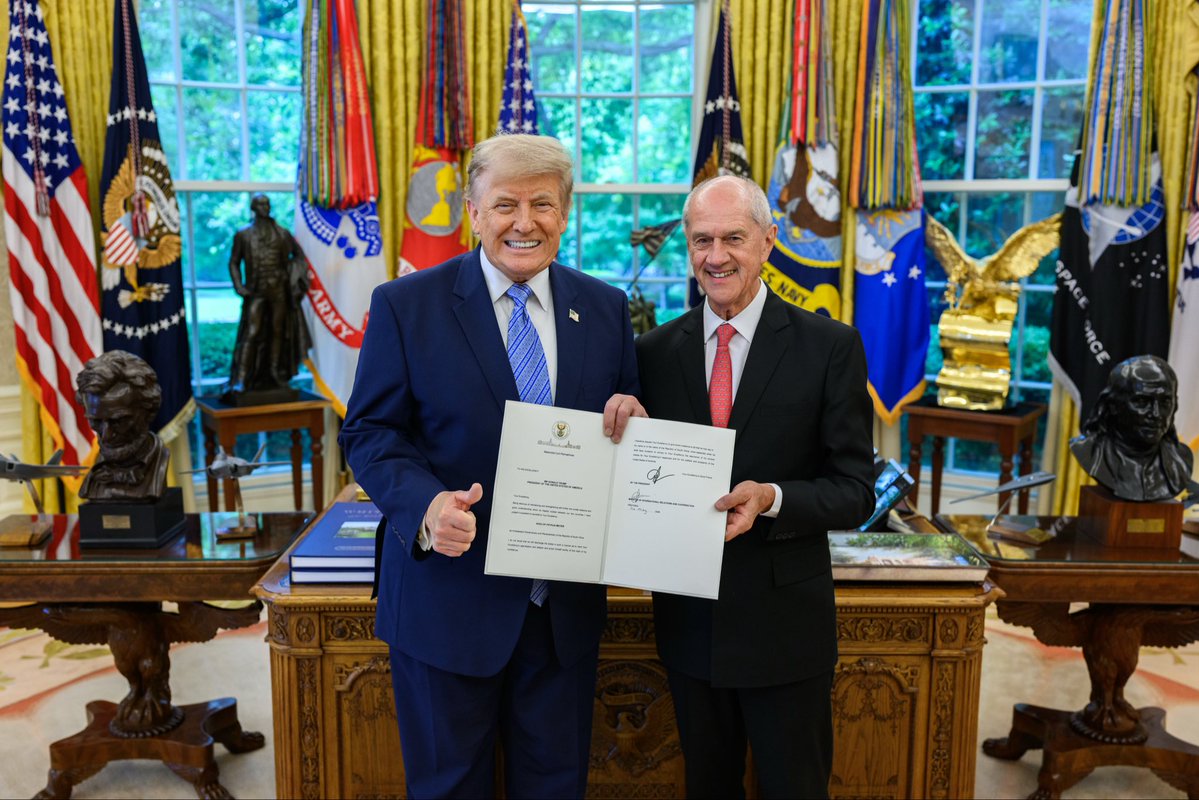
On 21 May 2026, Mr. Roelf Meyer presented his credentials to President Donald J. Trump, formally assuming his post as South Africa’s Ambassador to the United States. The occasion marks a significant moment in our bilateral relations as we advance domestic and global priorities.
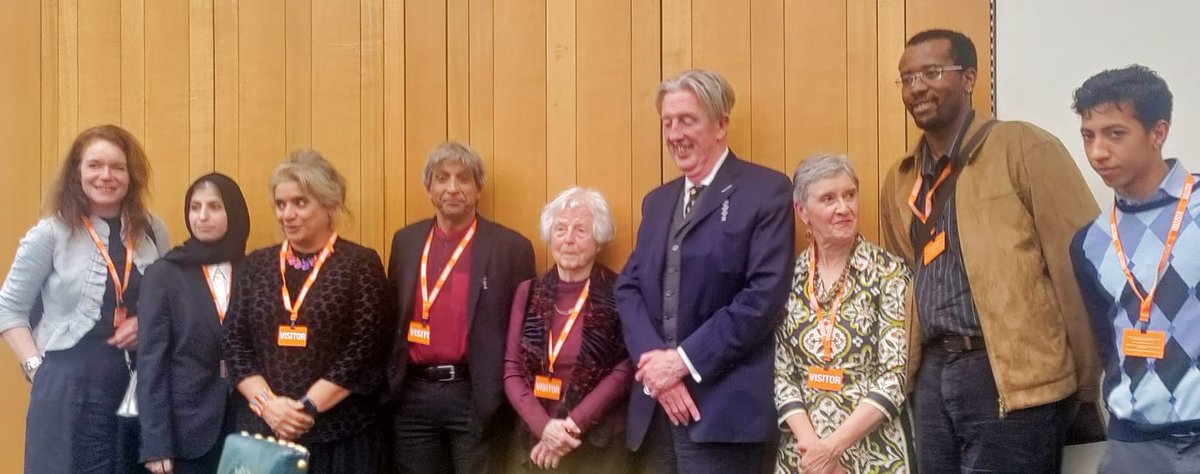
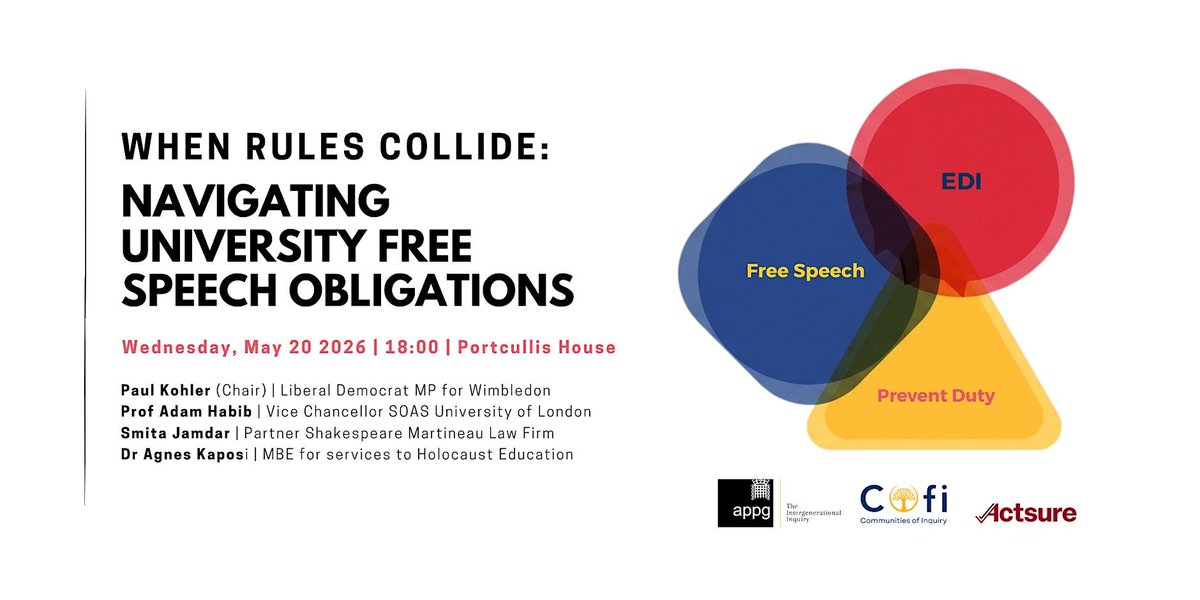
We had the privilege of attending a panel on free speech and academic freedom at the House of Commons. A topic close to our hearts having a podcast where we platform conversations and try to keep the flame of critical thinking alive.
Brought together by Lib Dem MP @PaulKohlerSW19 and Professor Alison Scott-Baumann and her team at SOAS, the room was filled with remarkable minds: @AdHabb, Dr Agnes Kaposi, and Smita Jamdar. Great to also meet Prof Deborah Johnston MBE, Deputy Vice Chancellor at LSBU, in her final week before stepping up as Vice Chancellor and Chief Executive of the University of Bedfordshire.
One voice that stayed with us was Dr Agnes Kaposi MBE, a Holocaust survivor and engineer. Agnes reminded us what it looks like when the law itself is the instrument of oppression. It made us deeply grateful for the institutions and liberties we so often take for granted in the UK.
This panel took place against the backdrop of new legislation introducing a complaints system where universities face serious financial penalties for failing to uphold free speech. Smita Jamdar raised her concerns: this complaints procedure is going to complicate matters significantly and it’s not clear how judgement will be used. There’s not enough regulatory clarity.
Adam Habib, Vice Chancellor of SOAS was brilliant, breaking down the issues point by point. Academics are terrified to publicly debate race, trans issues, Israel-Palestine, not out of ideology, but fear of what follows on social media. Self-censorship is the real problem, and to manage the tension between empathy and academic freedom you need an institutional climate to enable that. We asked him whether the new legislation might create more institutional fear than freedom. His answer: yes.
But the gap we felt in the room was this: Unfortunately, universities have lost their role as shapers of culture around free speech. Students now arrive already formed by algorithms, group identity, and content designed to provoke reaction, not reflection. Mob thinking is coming from the bottom up. No tribe has a monopoly on groupthink and it’s finding its way into the far right, the far left, and even the far centre.
To continue the discussion, we sat down with Robert Talisse yesterday on our podcast, Professor of Philosophy at Vanderbilt University, who has authored over a dozen books on how democracies can thrive amid polarisation. He notes: the more we surround ourselves with like-minded people, the more extreme we become. His insight on free speech: it doesn’t just protect the speaker, it serves the listener. Exposure to unfamiliar ideas is necessary for cognitive health. And his warning: top-down free speech policies risk backfiring. The solution to polarisation isn’t the same as what would have prevented it. So what do we do now?
Full conversation with Robert Talisse drops Monday 🎙️
“The simple act of the ordinary brave man is not to participate in the lies.”
— Aleksandr Solzhenitsyn (1918–2008)
@MadiBoity I am listening. But you are obfuscating. Many of those on the march, and in the public discourse blur the boundaries between legal and illegal migration. You may support legal migration, but the public discourse and the activists and politicians behind it, blur the boundaries.
Struck by some responses to my tweet thread on the anti-immigrant protests.The profane & vulgar responses reflect the deep racism of some members of this movement.These people would fit comfortably in the far right US MAGA movement & their local equivalent AfriForum & Solidarity.
@ianosworldwide I did not ‘slam a report into the debate’, I introduced it and summarised its argument about the current empirical evidence. Now, as our trained postgraduate, the lesson you should have learnt is to challenge through the provision of alternative data or analytical interpretation.
7. This disproves the assumption that immigrants generate high costs for the public sector (migration policy and implementation, social grants, health care etc.) without generating similar tax revenues.
@kewlkars 1. A lesson for this ‘wise person’. Societal wide assessments can never be made on sets of anecdotal information. Empirical Research is based on surveys; and one needs to choose samples reflective of the population on which one is drawing conclusion for.
1. Valuable report with evidence. Worth a full read. Summary of its findings: It is the nature of xenophobia, and the insecurity at work beneath it, to vilify the “other”. https://t.co/4AkVUVlZ9m
@_DavoRavo 1. A lesson for this ‘wise person’. Societal wide assessments can never be made on sets of anecdotal information. Empirical Research is based on surveys; and one needs to choose samples reflective of the population on which one is drawing conclusion for.
@ianosworldwide 2. Choosing words like dumb are signs of a feeble mind. It may make you feel empowered on twitter, but it proves nothing. As an aside, you should note that this is not my report. I read it and thought it was persuasive. Enough said! Have a lovely day.
@ianosworldwide 1. A lesson for this ‘wise person’. Societal wide assessments can never be made on sets of anecdotal information. Empirical Research is based on surveys; and one needs to choose samples reflective of the population on which one is drawing conclusion for.
9. The evidence disproves much of the public opinion on immigration. Indeed, the xenophobic sentiment is fanned by destructive politicians who are trying to simply get elected. Their rogue behaviour must be called out for it destroys our collective sense of humanity.
8. As for crime, only 6.4% of people in SA prisons are foreign nationals. This is below the 7.1% proportion of the population that they constitute. This is in line with studies in the US & elsewhere showing immigrants commit crimes at consistently lower rates than native-born.
6. Immigrant contribution to the economy is between 8.9% and 9.1% of national GDP. With respect to public finance, immigrants have a positive net impact on the government’s fiscal balance. This is because they pay more taxes than locals (income and value added).
5. Out of the eleven decent work indicators, immigrants performed the worst in eight (red entries in the figure below). In other words, whilst immigrants are more likely to be employed, they tend to participate in “less decent” work than locals.