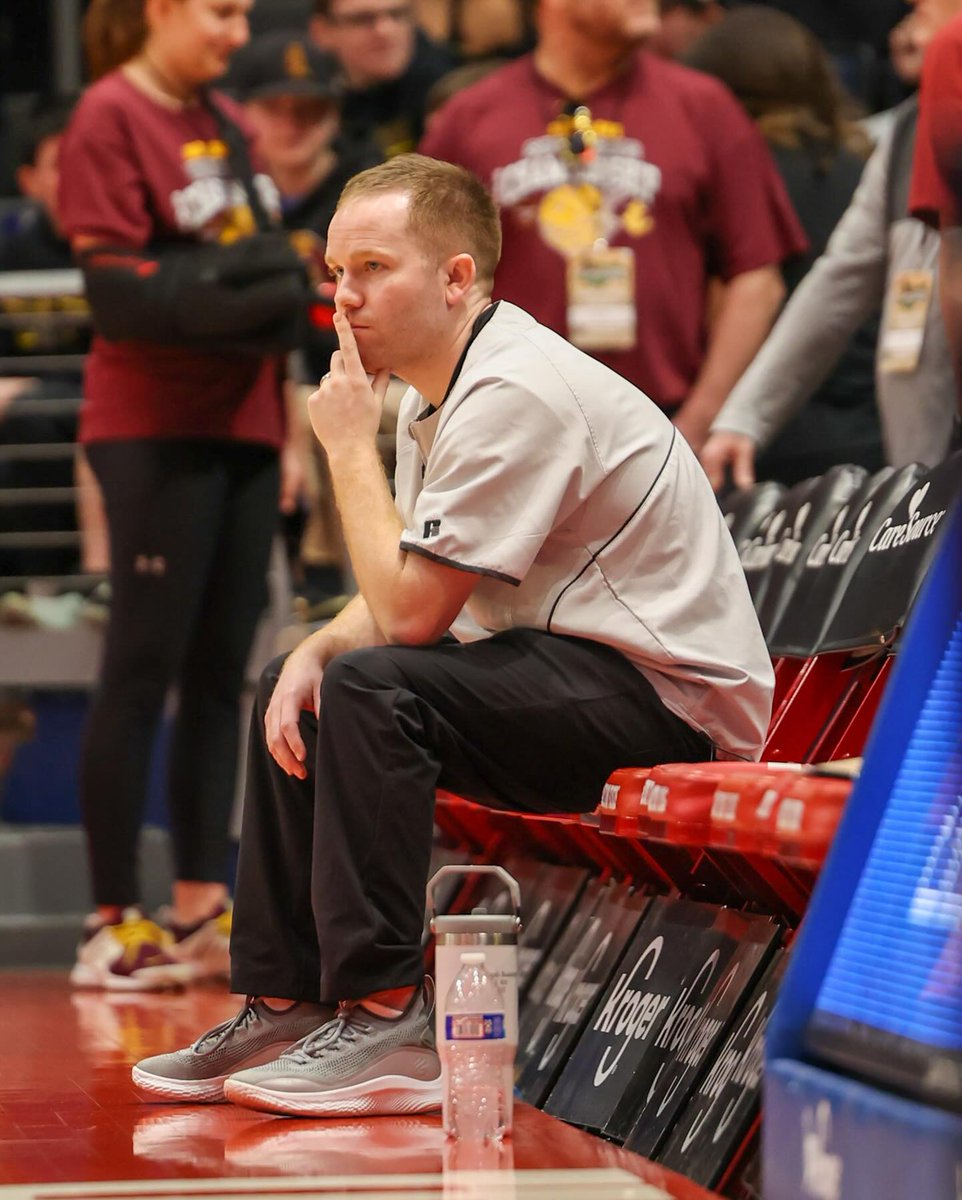
@SoftballPortal@NFHS_Org It should be a fall sport. Better weather to make the game enjoyable for the players and fans. Softball is not meant to be played in 40 degree weather. Your sign is when over 80% of your preseason practices are indoors after tryouts.
Deloitte forced me to quit my $92k/yr job when I posted the truth about financial services on Instagram.
Here are 27 "industry secrets" they wanted to hide:
Kobe Bryant on how he used the Compound Effect to inevitably become one of the best in the world at his craft:
✖️The Compound Interest equation is Reps multiplied by Time (Reps x Time = Growth). Improvement is quite early and obvious late— as you put in more time and reps. Most people quit in the silent phase, early on, not realizing the results were already building beneath the surface. The key is starting as early as possible and putting energy toward that improvement, because you can’t ever get TIME back, no matter how many reps you plan to do in the future.
🐍 Kobe didn’t just wake up at 4am for discipline, he did it to create separation between him and his opponent. The edge wasn’t intensity, it was timing. While others were still asleep, he was stacking deposits. By the time they caught up for their first session, he was already on his second, compounding effort into distance.
⛄️ Growth doesn’t just come from working harder, but can also come from working earlier AND more often. Kobe didn’t chase overnight success, he built a schedule that made exponential improvement inevitable and catching up to him nearly impossible.
Design a system where TIME works for you, so every REP doesn’t just add up, it multiplies and makes it harder for others to close the gap.
A HARVARD psychologist says: “if you’ve achieved nothing by 25, you’ve avoided the most destructive illusion of youth”
> In 2021, a Harvard psychologist surprised a lecture hall with an unexpected statement:
“If you haven’t accomplished much by 25, you may have escaped one of youth’s biggest illusions.”
At first, the room laughed.
She wasn’t kidding.
> The illusion of early success.
In your early 20s, the brain seeks quick proof of worth ~status, attention, rapid achievements.
But psychologists warn that chasing recognition too soon can lock people into roles or paths they never consciously chose.
They decide too early… and spend years trying to undo it.
> The exploration phase.
Research on career development suggests that people who explore more before 30 often build stronger long-term directions.
Testing ideas.
Making mistakes in public.
Changing course.
At 25 it looks like confusion ….but by 35 it often turns into clarity.
People who feel “behind” in their mid-20s frequently gain something others miss:
Perspective.
Patience.
And a clearer sense of what truly matters to them.
That foundation often leads to better decisions later on.
At the end of the lecture, the psychologist left the students with one final thought:
“You’re not meant to have life fully figured out at 25.”
“You’re meant to discover who you’re not.”
Warren Buffett on the best advice he ever received:
“It’s more important…what’s on your inner scorecard than your outer scorecard. Some people get in a position where they’re thinking all of the time of what the world’s going to think of this or that instead of what they themselves think.
If you’re comfortable with your inner scorecard, I think you’re going to have a pretty happy life.
I think the people that strive too much for the outer scorecard sometimes finds that it’s a little hollow when they get all through.”
Warren Buffet’s Quiet Framework for Not Waking Up With Regret
What Buffett is really passing along is a way to stop drifting. Not in some dramatic, motivational way, but in a very practical one. Instead of asking, “What should I do next?” he’s saying to ask, “How would I want to be remembered if this all stopped tomorrow?” Then work backward from that. Not the polished obituary. The real one. The one written by the people who actually knew you.
Once you do that, a lot of choices get clearer. Who you spend time with. What kind of work you tolerate or refuse to tolerate. How you treat your family when you’re tired. Whether you’re building something meaningful or just staying busy. Charlie’s point was that life compounds in the direction of your daily habits, not your stated intentions. If you want to be seen as generous, steady, curious, dependable then you have to practice those things now, quietly, when no one’s watching.
The career advice fits the same frame. Buffett isn’t saying chase your passion and everything works out. He’s saying pay attention to what holds your interest without forcing it. If you haven’t found that yet, keep looking but don’t forget that the goal isn’t status or money for its own sake. It’s work that fits who you are, done alongside people you respect. You’ll still make mistakes. You’ll still hit rough patches. But if you’re aiming at the right destination, the setbacks don’t feel like failure, they feel like part of the path.
The deeper message is simple and uncomfortable: no one fixes this later for you. There’s no separate chapter where you suddenly become the person you admire. You become that person by how you choose today and who you learn from, who you marry, how you work, how you show up. Do that long enough, and the ending tends to take care of itself.
Roger Federer broke the internet with one statistic that will change how you see every setback in your life.
1,526 singles matches.
Won almost 80% of them.
20 Grand Slams. 103 titles.
Now answer honestly:
What percentage of total points do you think he won across his entire career?
70%? 65%? 60%?
Try … 54%.
He lost literally almost EVERY SECOND POINT he ever played for 24 years.
And still became one of the greatest of all time.
Watch him explain it himself (2:07 of pure life-changing wisdom):
“In tennis, perfection is impossible… When you lose every second point on average, you teach yourself to say:
‘Okay, I double-faulted — it’s only one point.’
‘Okay I got passed at the net — it’s only one point.’
Even a screaming overhead smash that ends up on SportsCenter Top 10… still just one point.
So when you’re playing your point, it has to be the most important thing in the world.
The moment it’s over — it’s behind you.
That mindset frees you to attack the next point, and the next, and the next with absolute intensity and clarity.”
Then he looked at the crowd and said the line that hit a billion people in the soul:
“The real sign of a champion is not that they win every point.
It’s that they lose again and again and again… and have learned how to deal with it.
Negative energy is wasted energy.
Cry it out if you have to. Then force a smile.
Move on. Be relentless. Adapt. Grow.
Work harder — and work smarter.”
Save this post.
The next time you lose a deal, bomb a presentation, get ghosted, miss a deadline, or just have “one of those days” — come back here and read it again.
You’re not falling behind.
You’re just in the 46%.
And the 46% is exactly where every single legend has spent most of their career.
Keep playing the next point.
(full 2:07 clip — sound on)
@camijustice Same message. We simply aren’t a tough team. Our roster has holes. We have an aging OL. I see no offensive identity or development. We need to trade Garrett for draft capital and hit reset. We are 1-5 and nowhere close to goals.
An idea that I can't stop thinking about:
The Capability Gap
Alabama coach Nick Saban refers to the Capability Gap in this clip from a discussion with Holly Rowe:
“We oftentimes talk about what someone’s potential is, but I think to put it in better terms...the Capability Gap is what you’re capable of relative to what you’re doing...if you understand the truth about that, you can actually take information that can help you close that gap.”
The Capability Gap is a simple idea with powerful implications for every area of your life.
It requires understanding two things:
1. Your full capability
2. Your current delivery
In my experience, most people underestimate their full capability and overestimate their current delivery.
In other words, they think their Capability Gap is small, when in reality, it’s much larger than they realize.
That’s why having mentors, coaches, friends, and family who help you see the truth about your full capability and keep you honest about your current delivery is everything.
This isn’t about sports. This is about life:
Do you have people who help you think bigger about what you’re capable of?
Do you have people who tell you when your current delivery isn’t good enough?
We all need those people.
The ones who push us to get uncomfortable, to stretch our thinking, and to raise our standards.
We need people who help us become better partners, parents, friends, colleagues, and leaders.
Find the people who tell you two truths:
1. What you’re truly capable of
2. What you’re currently delivering on
Identify your Capability Gap and then work relentlessly to close it!
If this resonated or taught you something, share it with others and follow @SahilBloom for more.
Emerson Burgess (16U T3 Mavs Larizza) “Mic’d Up” over the weekend at the Great Lakes Showcase tournament shows her energy and “Sas” while competing and having fun. Way to go kiddo⚡️👏❤️
This is a Paul Appel appreciation post. All-Ohio voting may have concluded, but he deserves to be D3 COY. He took a group of neighborhood girls from a tiny suburb to the State Final beating some of the best teams in Ohio w/game prep, defense, & motivation. No one did a better job
The ALHS FBLA club had the opportunity last night to experience the Cavs Connect tour for the second year in a row. It allowed for the students to learn different positions found within a sports organization. The game after the tour did not disappoint!
Giving back never tasted so good!
Stop by Chipotle for our fundraiser and they’ll donate 25% of the proceeds to support the cause.
🌯Click here for more details:
https://t.co/lLKhe9FdGC #ChipotleFundraiser
The smartest people I know:
1. Read books
2. Stay curious
3. Are optimistic
4. Welcome feedback
5. Admit their mistakes
6. Don't get easily offended
7. Listen more than they speak