Think you only have five senses? This study says you may have 33.
We all grew up believing humans have just five senses: sight, hearing, smell, taste, and touch. But modern neuroscience reveals a much richer reality, suggesting that we actually possess between 22 and 33 interacting senses that constantly collaborate to shape our perception of the world.
Beyond the classic five, we rely on proprioception to know the position of our limbs and body in space, the vestibular system to maintain balance and orientation, and interoception to monitor internal states such as hunger, thirst, heartbeat, or the urge to breathe. We also experience a sense of agency—the feeling that we are the ones initiating our own actions—and a sense of body ownership, the conviction that our limbs and body belong to us. Both of these can be disrupted after strokes or in certain neurological conditions.
Even the traditional senses are more complex than they appear. Touch actually includes separate channels for pain, temperature, itch, pressure, and vibration, while taste is largely a composite experience created by combining true taste (sweet, salty, sour, bitter, umami) with smell and touch to produce what we perceive as flavor.
Because our senses are so deeply interconnected, input from one can profoundly influence another. For example, the scent of shampoo can make hair feel silkier, and added aromas in low-fat yogurt can trick the brain into perceiving it as creamier without any extra fat. In noisy airplane cabins, background engine noise suppresses sweet, salty, and sour tastes while enhancing savory umami flavors, which is why tomato juice and other umami-rich foods often taste surprisingly good at altitude. During takeoff or climb, the vestibular system signals that the body is tilting backward, causing the cabin to visually appear slanted even though it remains level.
These cross-sensory illusions and interactions—explored in cutting-edge research and interactive exhibits like “Senses Unwrapped”—demonstrate that human perception is not a simple sum of five independent channels, but a rich, dynamic negotiation among dozens of senses working together.
[Smith, B. (2026). You Don’t Have Just Five Senses – New Research Suggests Humans May Have up to 33. SciTechDaily (January 18, 2026)]
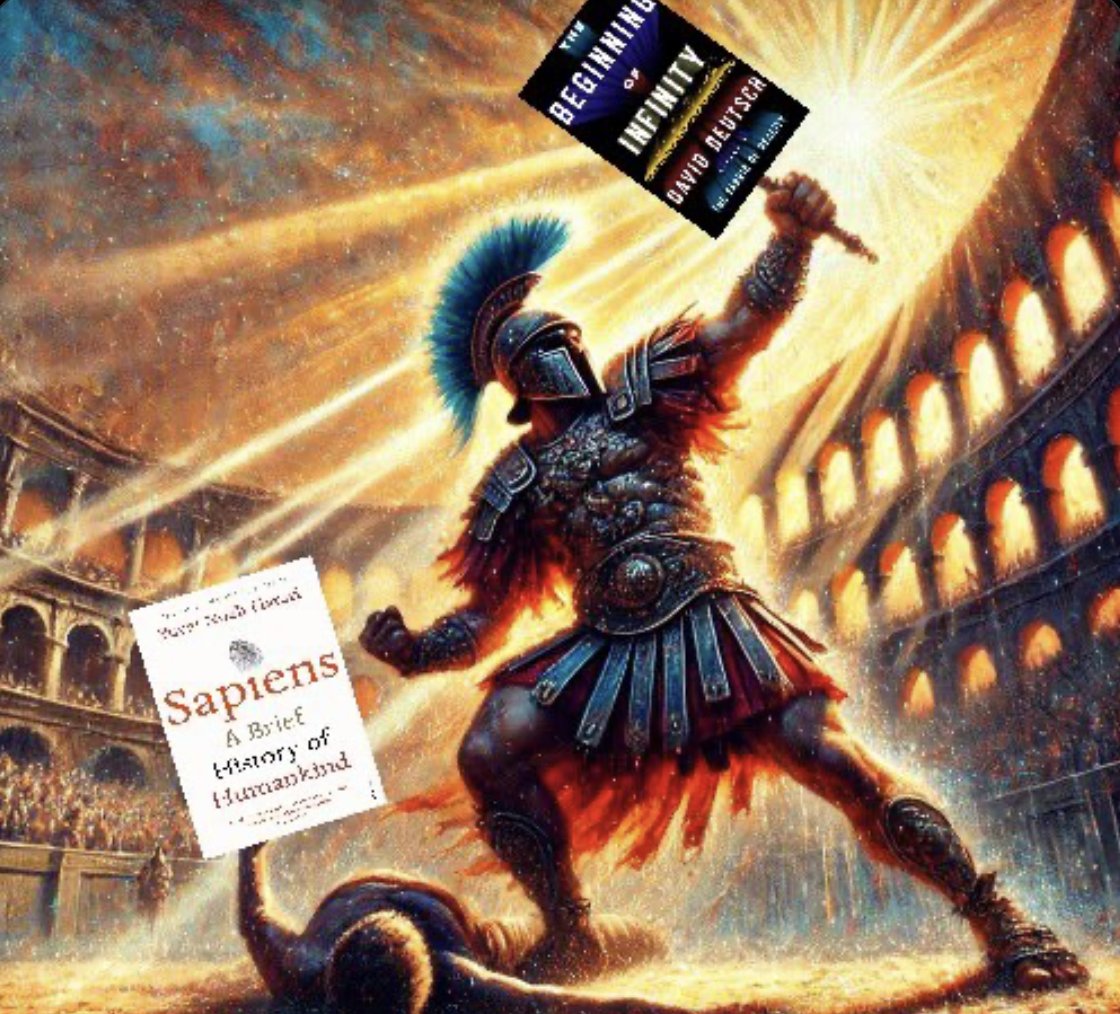
I used to think Sapiens was a great book. Sweeping, provocative, the kind of book that makes you feel like you finally understand the big picture of human history. It's on every CEO's bookshelf, assigned in universities, praised as a masterwork of synthesis. Yuval Noah Harari is treated as one of the serious thinkers of our time.
But something nagged at me. Some passages felt off. Claims that human rights are just figments of our collective imagination, not real things, just stories we tell ourselves. That nations, laws, money, justice, doesn't exist outside our heads. That meaning itself is a delusion we've invented to cope. That we're far more powerful than ever before but not happier. That hunter-gatherers had it better because they had no dishes to wash, no carpets to vacuum, no nappies to change, no bills to pay.
That sounded depressing to me, but was perhaps just the realistic scientific worldview? What it meant to see the world clearly, without comforting illusions.
Then I read The Beginning of Infinity by @DavidDeutschOxf. Deutsch has a concept he calls 'bad philosophy.' Not philosophy that's merely false, but philosophy that actively prevents the growth of knowledge. Ideas that close doors rather than open them. That makes problems seem unsolvable by design.
After soaking in Deutsch's framework (it's dense, a bit like digesting a delicious whale), it becomes clear: Harari's books are riddled with bad philosophy. They're smuggling nihilism in under the guise of scientific objectivity. Some examples:
On meaning: "Human life has absolutely no meaning. Humans are the outcome of blind evolutionary processes that operate without goal or purpose... any meaning that people inscribe to their lives is just a delusion."
On human rights: "There are no gods in the universe, no nations, no money, no human rights, no laws, and no justice outside the common imagination of human beings."
On free will: "Humans are now hackable animals. The idea that humans have this soul or spirit and they have free will, that's over."
On progress: "We thought we were saving time; instead we revved up the treadmill of life to ten times its former speed." The Agricultural Revolution? "History's biggest fraud." We didn't domesticate wheat, "it domesticated us."
On our cosmic significance: "If planet Earth were to blow up tomorrow morning, the universe would probably keep going about its business as usual. Human subjectivity would not be missed."
On the future: "Those who fail in the struggle against irrelevance would constitute a new 'useless class.'" Homo sapiens will likely "disappear in a century or two."
This is bad philosophy. It tells us our problems are cosmically insignificant, our solutions are illusions, and that progress is neither desirable nor within our control. It's also perfect nonsense. No one would ever go back to being hunter-gatherers. Would you rather worry about your kid spending too much time on Roblox, or face the 50% chance she won't reach puberty?
And our so-called "fictions"? They ended slavery. They gave women equal rights. They solved hunger. They eradicated smallpox. They turned sand into computer chips. They got us to the moon, and hopefully soon, to Mars and beyond. These "fictions" are already reshaping the universe, and over time they may become the most potent force in it.
Now compare Deutsch:
"Humans, people and knowledge are not only objectively significant: they are by far the most significant phenomena in nature."
"Feeling insignificant because the universe is large has exactly the same logic as feeling inadequate for not being a cow."
"Problems are soluble, and each particular evil is a problem that can be solved."
"We are only just scratching the surface, and shall never be doing anything else. If unlimited progress really is going to happen, not only are we now at almost the very beginning of it, we always shall be."
Where Harari sees a species of deluded apes stumbling toward obsolescence, Deutsch sees universal explainers, the only entities we know of capable of creating explanatory knowledge, solving problems, and potentially seeding the universe with intelligence.
The difference isn't academic. Ideas shape action. If you believe life is meaningless, progress is a trap, and humans are hackable animals with no free will, how does that affect what you build? What you fight for? What you teach your children?
Harari's books sell because they flatter a fashionable pessimism. They let readers feel sophisticated for seeing through the "delusions" everyone else lives by. That smug cynicism is corrosive. And it's everywhere: in schools, in media, in bestselling books. More than half of young adults now say they feel little to no purpose or meaning in life. This is what happens when you teach an entire generation bad philosophy. Less progress, less health, less wealth. Less flourishing. And ultimately, a higher chance that civilization and consciousness go extinct.
Fortunately, there's another equally well-written, but much truer, account of homo sapiens, appropriately titled 'The Beginning of Infinity'. And this one smuggles no despair in by the backdoor. But let's give Harari credit where it's due. He is right about one thing: if planet Earth blew up tomorrow, we wouldn't be missed. Because there'd be no one left to miss us, just a careless universe, blindly obeying physical laws. We are the only ones who can miss, but we're not going to. We're going to aim, hit, and keep going.
Full credit for the amazing meme to @Ben__Jeff
"Women do want men to slay the dragon. But not only that: A man should do it beautifully.
Yes, a man who defeats a dragon is more desirable than a man who cannot. But most desirable of all is a man whose sword carries the grace of his soul – a man who conquers with gravitas and élan.
It is not only the treasure at the end that matters – whether it be riches, status, or great works birthed into being. It is the manner in which it is earned, whether that manner reveals an inner beauty.
Have you heard ‘The Log Driver’s Waltz’? It goes like this:
> If you ask any girl from the parish around
> What pleases her most from her head to her toes?
> She says…I do like to waltz with a log driver.
> For he goes birling down and down the white water
> That's where the log driver learns to step lightly
The log driver’s manner of work makes him more beautiful, more capable of pleasing a woman. Does yours?
From Ancient Greece to Samurai Japan, from Mughal India to Renaissance Europe, men used to value their own beauty. They knew that to be beautiful was not weakness, but the highest strength: ‘Watch me be beautiful while I be competent. I can *afford* that. I can afford to not disfigure my soul while I protect what matters, while I do the impossible.’
Now there are no men left to teach you how to be beautiful. Why did this change? Maybe industrialization is to blame. Maybe its gears ground the flourish out of labor. Maybe the death of warrior culture into soldier culture is to blame. Maybe a man need not be beautiful as long as he can aim a rifle from afar. I don't know.
What I do know is that there is an opening now, a chance for men to reclaim their beauty, to toil not as soldiers would, but as warriors will. There is an invitation in the air, I can feel it. Can you feel it too?
Come. Shake off the steel that binds your bones. You’ve strained so hard for so long. Be beautiful for me now. Fight beautifully. Win beautifully. Don’t think. You already know how.”
Women, is this true? (Pictured: log drivers)
I had a male teacher for grades 5 and 6 who was highly eccentric (and not gay - he was a family man without a whiff of scandal). He had old printing presses in the classroom and we learned about how books and newspapers were printed - by printing our own pages with movable type we set ourselves. He showed us violent war movies. He had WW2 and Vietnam veterans come in and give graphic talks. One guy talked about his baptism of fire in Japan - he said something like ‘I jumped into the foxhole and killed two Japs with my pistol - I’m glad I bought that pistol off a guy before the fight because I might not be here if I hadn’t.’ The teacher would tells us the casualty figures of WW1 and 2 and sometimes start crying. He also taught us chess, and he spotted kids who were good in math. He gave me math problems well in advance of 6th grade, and ensured I was pushed up a level in middle school. He was tolerant of wild boy behavior - including boys throwing things at each other across the classroom.
Only a few years later I heard he had to stop showing the war movies, the veterans weren’t allowed to give talks. He retired shortly thereafter - he was getting old anyway.
But this kind of man used to teach elementary school. I don’t know why he wanted to do it - but he was good at it. And I don’t think there are many like him in public schools now - and that isn’t good for boys.
Germany has unveiled a revolutionary salt-air battery that could transform global energy storage. Instead of relying on lithium — a costly, finite, and environmentally challenging resource — this technology uses salt, air, and carbon to create a long-lasting, stable battery with a lifespan measured in decades, not years.
The battery works by converting chemical energy into electricity using a reaction between salt and oxygen. Unlike lithium-ion systems, it doesn’t overheat, doesn’t require rare-earth elements, and is nearly 100% recyclable. It also stores energy at a lower cost, making it ideal for large-scale renewable grids.
If deployed globally, salt-air batteries could make solar and wind power more reliable by storing energy even during long cloudy winters or calm wind periods. It’s a reminder that nature’s simplest materials — salt and air — may hold the key to humanity’s clean-energy future.
This is your reminder that speed reading is REALLY BAD for you.
- Apps that flash words at you (RVSP) ruin comprehension
- Suppressing Subvocalization messes up memory organization (phonological coding)
- Peripheral vision "chunking" is biologically impossible
13 years ago, Aaron Swartz left us. I was 13 years old when i heard about him. He was the age i am today.
I was just a kid but I immediately thought “is it really that wrong to post books?”
Of course, it wasn’t. No matter what we say. It could’ve been so much better. I wish we were kinder.
Rest in peace to Aaron Swartz.
The world failed you.
I wish you were with us today.
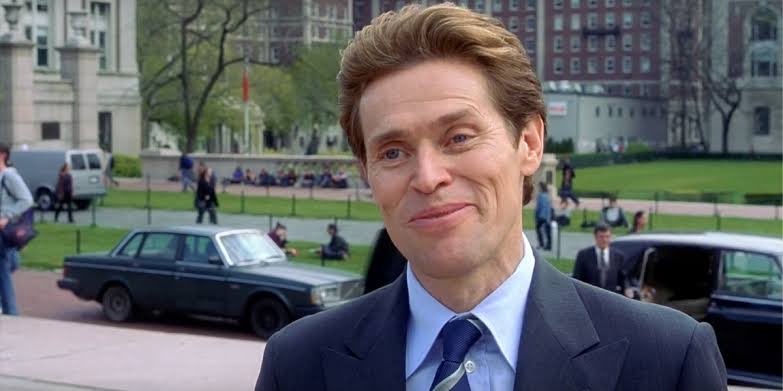
Yeah, I'm something of a first principles guy myself.
That's why I so often cite Jevons paradox, Baumol’s cost disease, Metcalfe’s law, Reed's law, Wright’s law, Goodhart’s law, survivorship bias, the principal–agent problem, the narrative fallacy, prisoners dilemmas, comparative advantage, Gall’s law, Chesterton’s fence, the cobra effect, Lindy, Moloch, fat tails, black swans, Pareto efficiency, and Occam's razor.
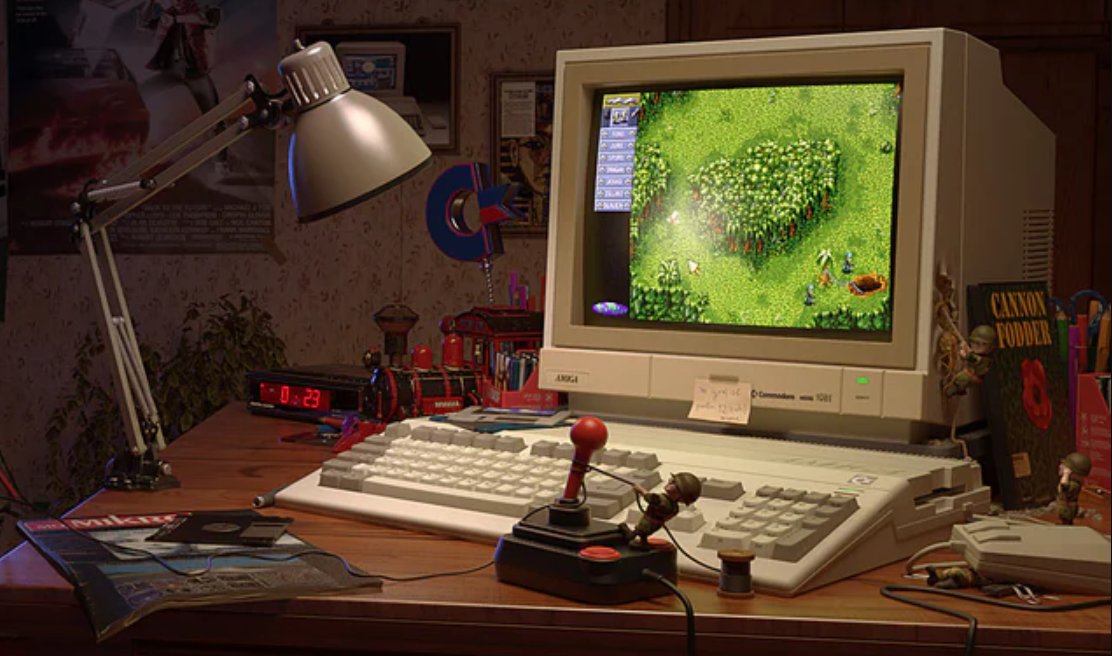
I often think about why older games (80s and 90s era) have such high emotional value to me, while modern games (almost everything after the early 2000s) do not.
I think it's not just for one reason but several. The first one is pretty obvious, the second one became clearer to me today, the third one is the reality we live in today.
1) When it comes to the past, we tend to remember mostly what was good and what we liked. It's just how the human brain and memory works. It's also true for movies, music and other things from our past.
2) Games in the 80s and 90s didn't have to compete with the mass media and sensory overload we face today. Games in the 80s were more "magical" in a sense that they let you dive into a fictional/fantastic world, just as you might have done with a great book or movie. They didn't look realistic by today's standards, but they stimulated your mind and senses, so you could fill in the blanks and create your own world, while playing the game.
We had 3 TV channels in the 80s, one rotary phone, obviously no social media, Internet, mobile phones, or streaming. I know, the Internet grew in the 90s, the first mobile phones were available, more TV stations emerged - but still, no social media, no streaming, no "media overload" as we have it today. A game in the 90s could still have that magic, because it didn't compete with other digital distractions that much. We had to read about games in print magazines first, then wait to buy them (a physical product, in a shop), the anticipation and joy was all connected to that process.
3) Today, the gaming industry is a billion dollar business, often based on micro transactions, addictive gameplay, fully grown up, mostly run by publicly listed companies where CFOs reign supreme. We have endless choices when it comes to streaming, we are constantly connected/online, and social media (and AI junk) is ever present.
Our brains can only process a limited amount of input, while today more games are available than ever before (think Steam, Roblox, and so many more). No wonder we don't form the same emotional connection to games these days. At least that's how I see it.
If you ask me about any pre-2000 game, I can tell you a lot about it and what it meant to me. Ask me the same about any game after the early 2000s and you will get mostly a blank stare from me.
My hand slides under her shirt, tracing the contours of her spine. The slow, deliberate movement ignites her mechanoreceptors, generating a current that speaks safety and pleasure. Microbursts lift the skin into goosebumps. Her hair stands perpendicular, increasing the drag of my fingertips. She asks for more.
My left hand anchors the curve of her waist, pulling her close. My arms establish a perimeter of safety, holding back the world’s chaos. The warmth soothes and excites. Her vagus nerve activates, pulling her breath down deep and slow. For days, we’ve architected this moment in messages. Our imaginations have already lived this. The pent-up energy radiates.
My heart aches with affection for this woman. Her nervous system knows. It is the architecture of her cognition that pulls me in. She is Van Gogh, painting the world with the turbulence of possibility. Light pours in; her mind refracts it into color, shattering the monochrome of the status quo.
My lips brush her cheek; my hands hold the nape of her neck. The firm pressure asks her prefrontal cortex to stand down. She surrenders. This sacred entrance is earned. A thousand acts of reliability and trust precede. I whisper that she’s been missed, that I’ve longed. Deep within her cells, chromatin relaxes, inviting repair. Wholeness saturates us.
My lips press against hers; sensual want cascades through our nervous systems. My primitive brain tastes her chemistry, decoding the ancient immunological match.
My hand glides over her abdomen to caress her breast. Her breath pulses, ragged and sharp, as her limbic system overrides the conscious mind. I circle the delicate skin of the areola. My fingertips graze the nipple. The tissue contracts and hardens. A current travels inward, awakening her. She’s wet, though her body is not yet ready for entry. Nor am I finished tapping out the patterns of affection.
I slowly trace my hand down her body, mapping the terrain. I stop. It is calculated. Her hips rise, searching for the lost momentum. She makes a sound—half frustration, half plea. I’m in awe of the creation before me.
I continue, taking a new route. Brushing close to tease. She wants more but must wait. The tension floods her brain with dopamine; oxytocin must follow. She craves union.
Increased blood flow pulses serum through the vaginal walls, lubricating. Her cervix begins to tent, lifting the uterus in preparation. Too soon, and pain dominates. In concert with the symphony of her body, bliss awaits.
Her vestibular bulbs engorge, forming a soft, pressurized cuff. Her anatomy has remodeled itself for the dance. We merge. Our brain signals collapse into synchrony, phase-locking. No longer are we distinct neural patterns, but one shared waveform.
Rhythmic motion now resolves as music. Beads of sweat surface as we sway in concordance. Want washes over us, commanding all. Our egos quiet as the frontal cortex dims; future, past, and death evaporate. Now is all that exists.
We are transported into the tesseract, floating in and out of each other. Gravitational waves of motion compose a music of rapture. We climb toward the peak, descend again, maintaining perfect tension. Her legs wrap around me, demanding more. Boundaries are erased. Full body release waits in suspended agony, yet we stubbornly refuse to concede there is an end.
We will grow young together.
She ascends. The pelvic floor contracts rhythmically. A tidal wave of oxytocin lands ashore, bonding what logic cannot break. Hunger vanishes as prolactin signals all-consuming satisfaction. The cervix dips; the uterus contracts, drawing in the possibility of new life.
We lie together, interwoven. Her head rests on my chest as I trace the sheen on her back. Outside this room, entropy reigns. Inside this room, our union commands repair; decay retreats. Our deep companionship has been earned. We bathe in the quiet certainty that we are one.
They fell from grace because they sought knowledge. We seek knowledge to claw our way back in.




![Rainmaker1973's tweet photo. Think you only have five senses? This study says you may have 33.
We all grew up believing humans have just five senses: sight, hearing, smell, taste, and touch. But modern neuroscience reveals a much richer reality, suggesting that we actually possess between 22 and 33 interacting senses that constantly collaborate to shape our perception of the world.
Beyond the classic five, we rely on proprioception to know the position of our limbs and body in space, the vestibular system to maintain balance and orientation, and interoception to monitor internal states such as hunger, thirst, heartbeat, or the urge to breathe. We also experience a sense of agency—the feeling that we are the ones initiating our own actions—and a sense of body ownership, the conviction that our limbs and body belong to us. Both of these can be disrupted after strokes or in certain neurological conditions.
Even the traditional senses are more complex than they appear. Touch actually includes separate channels for pain, temperature, itch, pressure, and vibration, while taste is largely a composite experience created by combining true taste (sweet, salty, sour, bitter, umami) with smell and touch to produce what we perceive as flavor.
Because our senses are so deeply interconnected, input from one can profoundly influence another. For example, the scent of shampoo can make hair feel silkier, and added aromas in low-fat yogurt can trick the brain into perceiving it as creamier without any extra fat. In noisy airplane cabins, background engine noise suppresses sweet, salty, and sour tastes while enhancing savory umami flavors, which is why tomato juice and other umami-rich foods often taste surprisingly good at altitude. During takeoff or climb, the vestibular system signals that the body is tilting backward, causing the cabin to visually appear slanted even though it remains level.
These cross-sensory illusions and interactions—explored in cutting-edge research and interactive exhibits like “Senses Unwrapped”—demonstrate that human perception is not a simple sum of five independent channels, but a rich, dynamic negotiation among dozens of senses working together.
[Smith, B. (2026). You Don’t Have Just Five Senses – New Research Suggests Humans May Have up to 33. SciTechDaily (January 18, 2026)]](https://pbs.twimg.com/media/G_NMRScWsAAuE2u.jpg)