Interested shows up when it’s comfortable.
Committed shows up no matter what.
Interested fades when it gets tough.
Committed pushes through every obstacle, sticks to the standard, and doesn’t make excuses.
That’s the difference between a contender and a champion.
Your team isn’t training with the intensity you want?
❌ The answer isn’t to yell at your players. High intensity isn’t achieved by being loud.
✅ High intensity comes from clarity in your style of play and, consequently, your coaching.
To raise intensity, you need to be precise about the actions that need to change.
For example, if your players aren’t pressing with enough intensity, the solution isn’t to raise your voice. Instead, focus on being crystal clear about your style of play and your expectations.
▶️Are they jogging when they should be sprinting?
▶️Are they not moving as a unit (compact)?
▶️Are they starting the press at the wrong moment?
These small details contribute to a lack of intensity.
To increase intensity, improve actions.
REMEMBER:
In football, running isn’t the goal—it’s a tool. Don’t just tell your players to run more.
Focus on actions. Provide your players with specific, actionable instructions instead of vague demands.
So, the next time you feel the urge to shout for more intensity, pause. Think about the specific actions you want to see. Then, communicate those clearly and calmly. That is what increases the intensity.
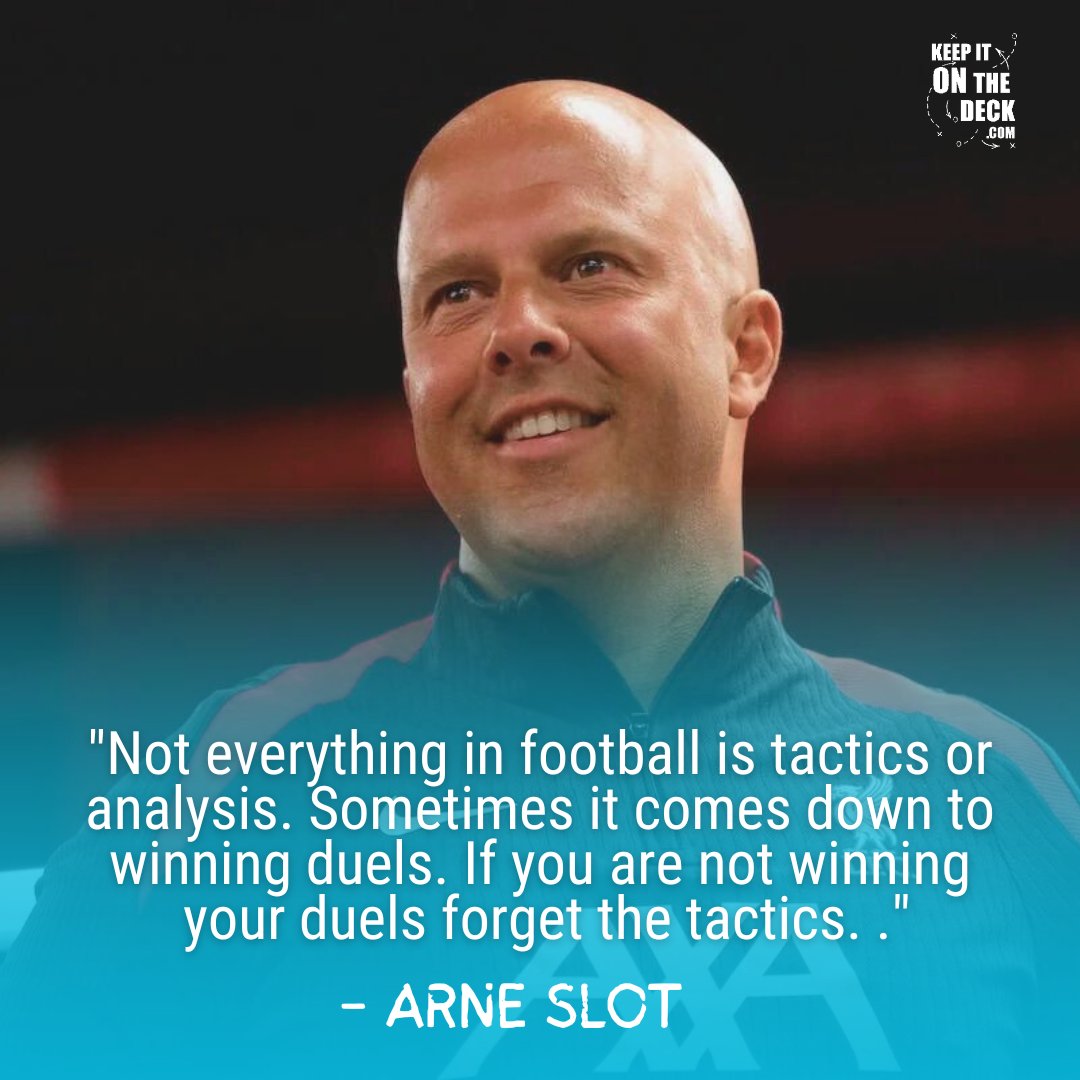
"Not everything in football is tactics or analysis. Sometimes it comes down to winning duels. If you are not winning your duels forget the tactics."
- Arne Slot
Each coach has a vision for the perfect player in their mind.
But how do you develop that player each day in training?
Here's how to use your player profile and game model to influence your session design ⬇️
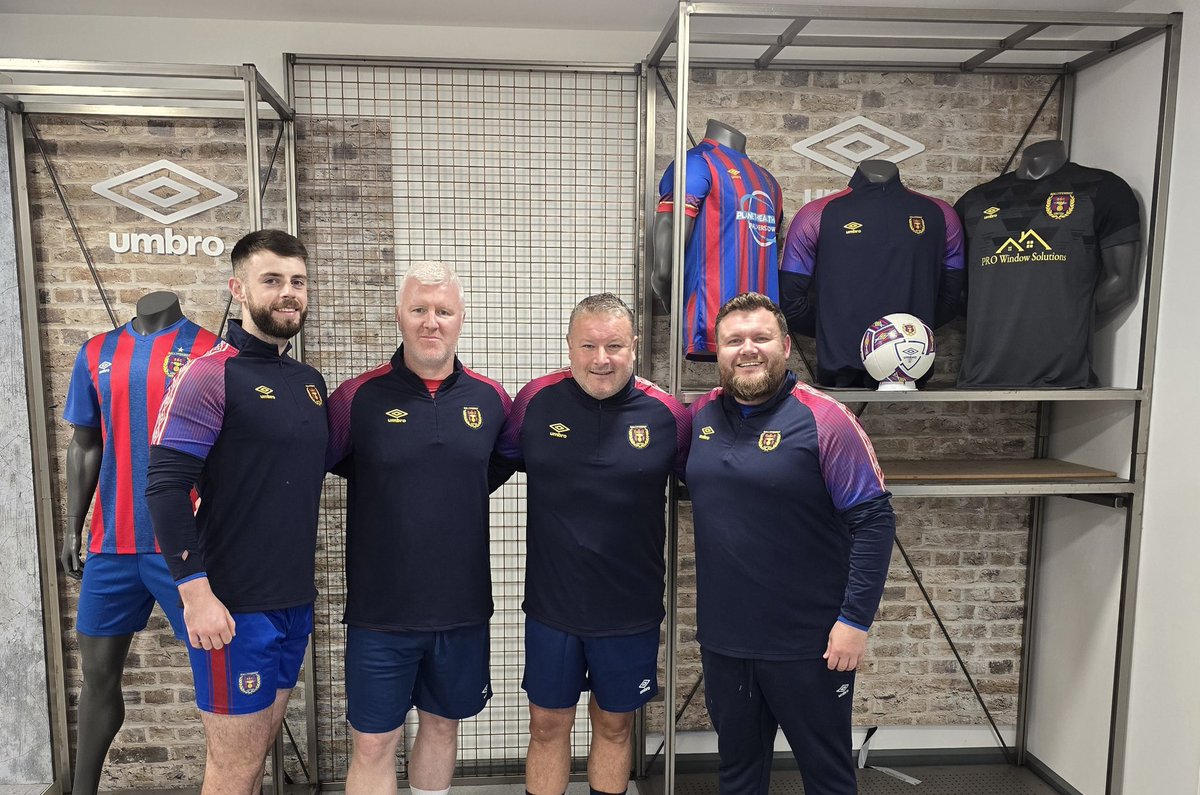
We are delighted to announce our new Senior Sunday 1A Management Team of Barry Prenderville, Mark "Jacko" Darcy, Adam Mason and Leigh Scanlon.
The Club would like to wish the lads the very best of luck in their new roles.
@LSLLeague@AlQuinn2015
To go again and again and again…
It’s always been the same…
In my first Premier League position at West Ham many years ago…fresh-faced with optimism high…the message was to go again and again and again…every action, every second, every game!
When I was Lead Psychologist for England Golf…with a strong history of professional golf accrued…the message was to go again and again and again…every shot, every hole, every round!
When I worked with the other five Premier League clubs who’ve gainfully employed me…or England Rugby who lent me the chance to grace their corridors…the message was to go again and again and again.
When I’ve worked at Roehampton with some coaches and players from the Lawn Tennis Association, or at Silverstone for Aston Martin…go again and again and again.
When I entered the hotel to meet the boxer the night before a world heavyweight contest, or wondered the octagon speaking with a UFC contender…go again and again and again.
A goal against…go again
A bogey made…go again
A set dropped…go again
A try conceded…go again
A slow lap…go again
A flurry of punches…go again
That’s what it is to be a competitor…a great competitor. To refocus. To gain control of intensity as it dips and wheels from grasp. To execute with a front-foot intent as energy slips to the back-foot for comfort.
To go again and again and again.
That’s what it is to be a great competitor. To keep hold of hope through continuous actions and movements and attitude and energy. To retain upright and to portray unchanging. To venture forward and to stay ready to strike.
To go again and again and again. That’s what it is to be a great competitor. Every action every second as the game unfolds and the challenges emerge and dissolve…
𝗪𝗵𝘆 𝗱𝗼 𝘄𝗲, 𝗮𝘀 𝗰𝗼𝗮𝗰𝗵𝗲𝘀, 𝗼𝗳𝘁𝗲𝗻 𝗳𝗮𝗶𝗹 𝘁𝗼 𝗵𝗲𝗹𝗽 𝗼𝘂𝗿 𝗽𝗹𝗮𝘆𝗲𝗿𝘀 𝗿𝗲𝗮𝗰𝗵 𝘁𝗵𝗲𝗶𝗿 𝘁𝗿𝘂𝗲 𝗽𝗼𝘁𝗲𝗻𝘁𝗶𝗮𝗹?
Here are 6 key actions to help you build the perfect environment for your players to reach their true potential ⤵️
Coaches aren't only able to impact sessions based on their tactical knowledge of the game.
They can impact the session before, during, and after players step on the field.
Here's 5 things I aim to do with my teams and players to have an impact beyond the quality of the session ⬇️
𝐓𝐡𝐞 𝐩𝐨𝐰𝐞𝐫 𝐨𝐟 𝐬𝐚𝐲𝐢𝐧𝐠 𝐧𝐨𝐭𝐡𝐢𝐧𝐠.
On my Adavanced Youth Award the renowned Barcelona B Coach, Albert Capellas, asked a profound question to us all.
𝑯𝒐�� 𝒅𝒐 𝑰 𝒆𝒏𝒔𝒖𝒓𝒆 𝑰 𝒅𝒐𝒏'𝒕 𝒎𝒂𝒌𝒆 𝒕𝒉𝒆 𝒑𝒍𝒂𝒚𝒆𝒓𝒔 𝒘𝒐𝒓𝒔𝒆?
The answer
↓
➠ 𝐂𝐨𝐚𝐜𝐡 𝐢𝐧 𝐬𝐢𝐥𝐞𝐧𝐜𝐞
This was a ground-breaking question from a coach whose player development experiences included legends of the game in Messi, Xavi and Iniesta.
��𝘯 𝘩𝘪𝘴 𝘸𝘰𝘳𝘥𝘴...
"𝐈𝐟 𝐰𝐞 𝐝𝐨𝐧’𝐭 𝐦𝐚𝐤𝐞 𝐭𝐡𝐞𝐦 𝐚𝐧𝐲 𝐰𝐨𝐫𝐬𝐞 𝐭𝐡𝐞𝐧 𝐰𝐞 𝐝𝐢𝐝 𝐨𝐮𝐫 𝐣𝐨𝐛 𝐰𝐞𝐥𝐥."
As coaches we have the tendancy to want to say something at every point, coach every mistake, control every movement.
The truth is, w̳e̳ ̳d̳o̳n̳'̳t̳ ̳k̳n̳o̳w̳ ̳e̳v̳e̳r̳y̳t̳h̳i̳n̳g̳.
This is where the benefit of silence comes in:
1. Your players grow in knowing you trust their decisions
2. You learn more about the player who is in front of you
3. You learn more about how the game can be played
4. Your players become more confident on the pitch
5. You are surprised by how they problem solve
I recently read Cal Newport's new book called Slow Productivity: The Lost Art of Accomplishment Without Burnout
It's based on these principles:
- Do Fewer Things.
- Work at a Natural Pace.
- Obsess over Quality.
I think this idea can be applied to football 👇🧵
Anson Dorrance is the most successful NCAA D1 soccer coach of all time, winning 21 of the 41 national titles ever played for.
He’s also famous for his “Competitive Cauldron” in training to develop players.
Here’s how I used this in my own sessions:
Mourinho on tactics and strategy.
‘The tactics are the model, the principles. So let’s say, day one, I come in, I want Chelsea to be a team that is always pressing, high up the field, high pressing, blocking, that is what I want. The basic tactics are made up of, say, twenty items. So, when the keeper has the ball, does he go short or long? That is a tactic,’
‘When the other team has the ball in midfield, where do our players go, what do they do, what is their aim at that moment? When a striker moves into this area, that area, what is he looking for, what is he trying to do, how do the other players react, when he moves there, where do they go, what are they looking for, what are they trying to do to the opposing defenders? These are parts of a tactical model. They are like the DNA of the team, the tactics that say what kind of team we are.’
‘Strategy – being strategic – this is when you do something for a certain moment or a certain game. Every game we analyse opponents: real depth, real detail, and then we try to predict how they play and we say “so today we add a particular strategy to our tactical system”. If we play Liverpool at Liverpool we add this to the way we play. Then maybe the next game is Hull City at home and we play a different way, we make this strategic plan, we add it to the tactical model. The basic tactical model is the same, the strategy depends on the moment, depends on the context.’
Here are the 8 rules I follow when designing my training:
1⃣ The Game is the best teacher.
a) The Game gives immediate Feedback.
The Game doesn’t lie.
It tells you right away if something isn't working.
b) People are a reflection of their environment.
The same is true in Football.
Players are a reflection of the games they repeatedly play.
If the environment is right, everything else falls into place.
c) You can teach everything through the game.
The game contains everything.
If the game doesn't teach it, you don't need it.
You just need to know how to provoke different aspects of the game.
2⃣ High Intensity.
Only train 100% intensity. Then recover. Then repeat.
Players play as they train.
If they only know 100%, they can only play 100%.
Note: The term ‘Intensity’ is used very often in Football.
I used it to describe the level of focus and effort of the players.
3⃣ The Game Model is the starting point.
Design each exercise to operationalize your principles.
“Training is worth it only when it lets you make your ideas and principles operational.
Thus, the coach has to find exercises to guide his team to do what it is intended to do in the game.”
- Mourinho.
First, you need a clear idea of how you want to play:
"What is the job of a football head coach or manager?
To have a clear idea of how my team should play. […]
But what they [Pep Guardiola, Diego Simeone, Hansi Flick, Julian Nagelsmann, Jürgen Klopp] all have in common is that they exactly know how this kind of football they want to play looks like.
They have in their brains the video of the perfect game.
They have it in their minds.
And the job of the football manager is to transform this Idea of football into the heads, hearts, brains, and veins of your players."
- Ralf Rangnick.
Clarity is the key to implementing your philosophy quickly:
"In my experience, it is possible to teach a completely new style of play to a team within a very short period and make your ‘signature’ recognizable.
Provided that the coach knows exactly where he wants to take the team.”
- Roger Schmidt (’Roger Schmidt: Das Buch eines Trainers’; Schmidt/Wolf; 2020)
With each exercise, you learn more about your Game Model.
It is a reinforcing cycle.
When you teach something, you learn more about it.
The more you learn, the faster you can teach it.
The faster you can teach it, the more new things you can learn.
With every exercise you get feedback on whether your ideas work - not just at the weekend.
You can test more and learn faster.
4⃣ Small groups for more repetitions.
Boil down your team principles to individual principles.
Then you can develop your team while focusing on player development.
Most of the training is played in small (1v1-4v4) and medium games (5v5-7v7).
This allows you to quickly develop a recognizable style.
“We often train in small groups.
The aim is nevertheless to train the tactical behavior in a position-specific manner and to consolidate and automate it through high numbers of repetitions in the shortest and most complex situations.”
- Roger Schmidt (’Fußball durch Fußball’, Maric/Henseling, 2015)
5⃣Train harder than the game.
Learning is the adaptation to challenges.
Overload the skills of the players. They adapt to it.
Not too much overload to avoid injuries.
Increase the challenge step-by-step.
"You sometimes have to struggle through a training exercise.
A learning effect occurs when something doesn't work right from the start.
The training should be so complex and demanding that the competitive game feels almost easy for the players at the end.
This gives you more room for creativity and game intelligence.
That's why training games can often be exaggerated to test the limits.
Especially if you want to play a very intense game.”
- Roger Schmidt (’Roger Schmidt: Das Buch eines Trainers’; Schmidt/Wolf; 2020)
Use constraints that exaggerate your idea of the game.
Sarri, for example, limits the number of touches. He forces his players to think his way of playing:
"During the week, we always play with just two touches of the ball in training.
So we aim to move the ball quickly.
But when our strikers get possession of the ball, they are allowed to dribble."
- Marek Hamsik.
Johan Cruyff trained in small spaces. He forced his players to think faster:
"We play on a short field with a lot of people.
So the pace of the ball must be very high, nearly one touch, two touch mostly.
And that's why we always try to create a small piece of field where the ball can go at a high pace.
So people think 100%"
The use of numerical overload situations is very common in football. However, it's often the case that there is either no numerical overload or only a very small one:
“In the game, you have fast actions, and sometimes one player overloads, sometimes none, we don't see situations of four or five player overloads.
In conditioning or confidence building, a large overload may be useful, but in training for the game, a minimal overload is better”
Roberto De Zerbi
6⃣ Continuous Games > Start-Stop Games.
Continuous: Play for a certain time without stopping. Multiple actions.
(1v1 for 30 seconds).
Start-Stop: One action, then rest.
(One time 1v1 → stop.)
I prefer continuous games. They are closer to the real game.
7⃣ Train everything in one session.
Each variation of the game focuses on specific aspects of the game.
At the same time, other aspects occur less frequently.
For example, a Rondo overloads passing actions, but underloads 1v1 actions.
Balance Rondos with 1v1/2v2 games that emphasize dribbling.
Design the session to cover all aspects.
8⃣ Variations > New Exercise
Rather than using several different exercises, I prefer to introduce new variations around ONE exercise. Advantages:
a) Less time wasted: It is quicker to introduce a variation than to explain a new exercise.
b) Become an expert at this game by thinking very deeply about it.
The better I understand a game, the better I can coach it.
c) Increase the challenge step by step.
Adapt it to the players’ skills.
With a new exercise, you can only guess the optimal difficulty level.
How I train my team to be unstoppable even when things get tough:
There are many good, talented football players. But the question is, how do they behave when it's difficult? When the opponent is better? When the opponent has the ball and we have to run a lot? When we lose 0:2 and there are 10 minutes left? Can you take the penalty if it's the decisive penalty in the final? How do you deal with pressure? That's what makes the difference.
That is why the most important thing in my training: I try to make it as competitive and difficult as possible. I try to make it more difficult than the game. It doesn’t matter what happens in the game, we are prepared.
Thomas Tuchel talked about it:
“Give them difficulties. Overcoming obstacles is the most important talent criteria. I was youth coach in Stuttgart and in Augsburg. I always wanted the best environment for my players. I wanted everything to be perfect. Today I would say, that half a pitch, one TV and one recorder are enough. And the pitch does not have to be in the best condition. The players should deal with difficulties and play regardless of the environment.” (Tuchel, Aspire Academy, Free translation from German)
Kobe Bryant: ”Practices are meant to be competitive. If your practices aren't more competitive than the games themselves, you are doing the wrong thing. Most of the teams and coaches have gotten into this mindset of resting players. ‘Oh, it’s too much, we are not going to practice’.[…] Phil never gave us a light day.
There is no days off. You show up and you work and practice. And practices are going to be worse. They are going to be more physical, it is going to be more trash-talking, and if you didn't show up today I'm going to let you know. It’s going to be embarrassing and you're going to hate it. But when game 7 rolls around the NBA Finals, you will be prepared.”
Raymond Verheijen breaks the non-specific term “mentality” down to one thing: Are you able to focus 100% on the next action (see ’Football Coaching Theory’). And he has to do that, no matter how emotional he is. No matter how difficult and hopeless the situation seems. No matter how superior the opponent is. Can you focus 100% on the next action without being distracted? That takes a lot of training. And the more difficult the challenge, the harder it is to focus on the next action.
The same applies to coaches: Can we focus on the next action, or do we lose our composure and yell at our players? Can we still make rational decisions when we're loosing, or do we substitute the player who made the mistake? So the next time training doesn’t work as planned, do not try to get emotional. Remind yourself, this is the chance for you to become a better coach. Stay calm and try to make rational decisions.
Fixed vs. Infinite Mindset:
People with fixed mindset think (unconsciously), that some abilities and character traits cannot be changed. They avoid challenges and easily give up when faced with obstacles.
If you have players with this mindset, you have to change their believes first. How they see the world? Teach them that with hard work and dedication they can improve anything. Nothing is set in stones. Teach them how to cope with setbacks. Teach them how to deal with mistakes. The infinite mindset sees challenges as an infinite game. The goal is to keep playing and improving over time, rather than simply winning a single game or achieving a specific outcome.
Infinite Mindset is important to teach. Don't let limiting beliefs stop you. There is always something to optimize. Once you are satisfied, you stop growing. It is important to repeat this over and over until it is internalized.
But how can we make the training competitive? How should we train?
Our brain adapts to challenges (called neuroplasticity). If we stop challenging ourself, we stop growing.
Children have this naturally. Because they do not have much experience, for them is everything new and and therefore a challenge. The older they become, the lower the number of mistakes. Think of a toddler learning to walk. He is making mistakes with every step and falling down. But over time, this is not a challenge anymore, so we stop improving. We are in a stable state where we feel comfortable. You can't walk better at 40 than you did at 20. That is because we have no pressure to adapt. At a certain point, the automatic adaptation stops, and we have to provoke it again and again, putting our brain in an unstable state. The brain strives for a stable state again, so it adapts.
Here are some ideas how we can make our training more competitive:
a) Do tournaments.
Form three teams. Two play, one has to wait. The losing team swaps with the waiting team. The players want to play, so you provoke to compete. If you give up, you do not play.
Here are a few additional tips:
- Change after every goal → Immediate feedback
- Extra-Work outside: The team outside has to do something they do not want to do.
- You can do this with Rondos or positional games, too.
- Incentives: price for the winner (Candy; they are allowed to pick an exercise for the next session)
- Punishment: Losers have to tidy up after the training
b) Incentives.
Incentives usually work better than punishments, at least in the long run. Example: Reward ball: After scoring a goal, you keep possession of the ball.
c) Restrictions.
You give the players extra rules. They can get rid of them (reward themselves) by winning/scoring goals.
One team plays with 2 contacts, the other free. if the restricted team scores, then the teams swap tasks. If the "free" team scores two goals in a row, they win the competition. (Or than it is getting even more difficult for the other team, for example just scoring one touch).
Other example: One team is allowed to pass and shoot only with the weak foot. If they score, the other team has this restriction.
d) Simulate uncomfortable game situations.
- 6v4. The team with the numerical disadvantage starts with 2:0 lead. They have to defend it for 4 minutes. If they don't succeed, they have to play outnumbered again.
- Before the game, both team have both ONE penalty. If they score, they have two goals, if not, the other team gets one goal. It creates pressure for the player and simulate a decisive penalty.
- Unfair teams: Normally, you divide your teams into equally strong teams. Try to let your “best” players play against the others. Observe how they behave. My observation is, the the “underdog” team is running a lot and battle to beat the other players.
e) Do boring drills.
This is probably unusual advice. But how long can you focus doing the same boring, repetitive task? Usually we don't do that because we know our players can't concentrate for long. And it's not the most effective exercise to teach something. But we demand discipline and concentration for a long time.
f) Punishment.
For example, two push-ups after each goal conceded.
g) Choose a difficult environment.
Do you have a field in a bad condition? Train there. Or meet on a field in the park, whose lawn is not perfectly trimmed. Play in the parking lot. There it hurts when you fall down. Simulate the street football. Naby Keita talked about it:
“We played with whatever we could and I would have nothing on my feet, or sometimes, play with old, damaged shoes”
“I didn’t have boots and treasured football shirts that were given to me. All that has helped me be better prepared for anything now as a professional and I’m also not scared of anything on the pitch.”
“I was quite small and so I had to fight for everything: the chance to play, for the ball, to get respect and that’s why not even cars could stop me. It’s where the aggression in my game, which is so important for my position, comes from.”
Summary:
Nowadays we are sometimes too careful. We have the best conditions and try to take all the tasks and challenges away from the players. Even with children I hear terms like load management. But it is not about the players being rested for the game at the weekend. It's about overcoming obstacles. They have to go beyond their limits. Yes, that may not be optimal, it can be that you lose games because your players are not rested at the game. But it trains your mind. It makes you more resilient to challenges.
If you do one thing every training that is uncomfortable for the players, you help them a lot. Especially at higher level it is not so much about showing them how to play. Most of the time they are playing better than you. Your job is it to create the obstacle.