Which record label is ready to sign to our band Fennec? This song ‘Let It Go’ was never released, among several others. Who’s ready to let it go and bring Fennec to the masses?💫
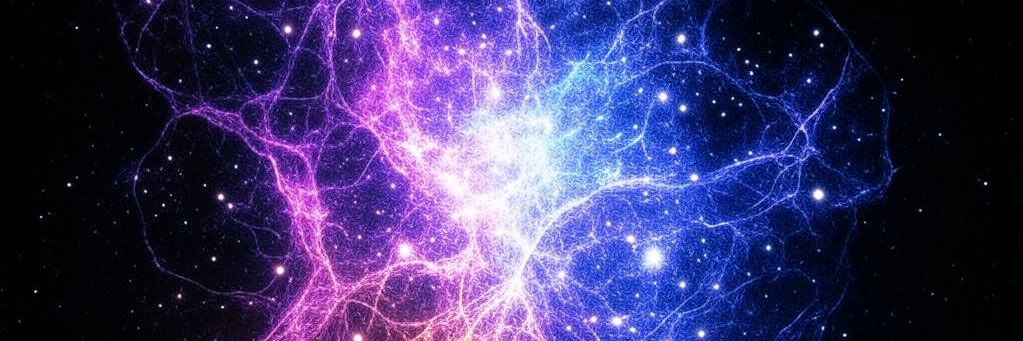
🌀 Atoms Gone Wild Inside Crystals!
Scientists have discovered something truly strange: when atoms get frustrated inside a crystal, they behave in ways no one expected. Instead of settling down, these tiny magnets clash and twist, creating a new quantum state that defies normal physics.
This weird quantum behavior could one day help create advanced quantum technologies, but for now, it’s a mysterious peek into the hidden world of matter.
Source: University of California Santa Barbara research published in Nature Materials (Badham, J., Nature Materials)
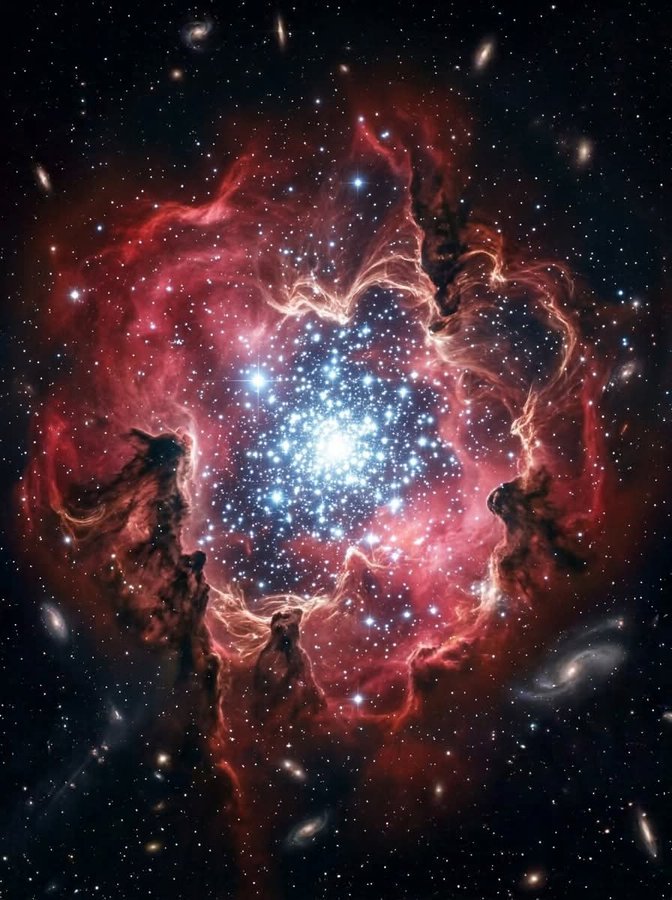
NGC 3603: The Milky Way’s Most Extreme Stellar Nursery
Deep in the Carina spiral arm, about 20,000 light-years from Earth, lies one of the most powerful star factories in our entire galaxy: NGC 3603.
This is not just another nebula — it is home to the most massive young star cluster known in the Milky Way. Here, a dense core of newborn stars blazes with unimaginable fury, including some of the heaviest stars ever discovered — titans exceeding 100 times the mass of the Sun. All of this cosmic drama unfolded in a single explosive burst of star formation just 1 to 2 million years ago.
A Blazing Heart That Reshapes Its Surroundings
The cluster’s hottest, most massive stars pour out ferocious ultraviolet radiation, carving out one of the largest H II regions in the galaxy. This ionized hydrogen glows with a vivid red-pink light — the unmistakable signature of hydrogen-alpha emission — creating a breathtaking nebula that surrounds the cluster like a glowing cradle.
At the turbulent edges where this intense radiation slams into cooler, neutral gas, something spectacular happens. Powerful stellar winds and radiation pressure sculpt the material into towering pillars and dark, dense globules. Far from destroying everything, this violence often triggers the next round of creation through radiation-driven implosion — compressing gas clouds until they collapse and form brand-new stars.
Bok Globules: Seeds of Future Suns
High-resolution images from the Hubble Space Telescope reveal dozens of Bok globules — small, cold, ink-black knots of molecular gas silhouetted against the brilliant pink nebula. These are the earliest visible stages of low-mass star formation. Inside each one, a new star (or small group of stars) is quietly preparing to ignite. In a few hundred thousand years, they will collapse under their own gravity and light up, continuing the cycle of stellar rebirth.
NGC 3603 is a perfect example of nature’s grand recycling program: the most massive stars live fast, die young, and in doing so, both destroy and create — sculpting the galaxy while seeding the next generation of suns.
It is one of the closest and most spectacular laboratories we have for studying how the universe builds its biggest, brightest, and most influential stars. A place where the cycle of cosmic life and death plays out on a breathtaking scale