National data will be increasingly used to monitor performance in #neurosurgery. Read the latest NNAP research paper on risk-adjustment & performance monitoring, published in @ActaNeuro
https://t.co/hqgcz4jbn4
@The_SBNS@AdelHelmy79 @adampwilliams13 @pja_hutch@LeedsNeuro
Have been following the conversation around the Paris Olympics #OpeningCeremony. The content depicting the apparent parody of the Last Supper is inappropriate, grossly offensive and sacrilegious, and entirely unacceptable.
At a moment in time that presented an opportunity for unifying people, and bringing joy and healing to a world increasingly torn apart by conflict, war, religious persecution, and division on many levels, more unnecessary offence, hurt and distraction has been caused.
I will be sharing my thoughts in greater depth in the coming days, but to everyone who is justifiably offended, saddened and concerned that such a beautiful moment in history, and one that is core to the Christian Faith, was so misrepresented, I assure you that you are not alone.
@MichelePaduano@RCSnews@TMitchellFRCS
The RCSEng are the ones who promoted this nonsense, and now you complain about it!
https://t.co/cJk4hK6kAv
It was bound to happen, but you glossed over the concerns of trainee surgeons.
You reap what you sow.
NNAP Update: Elective work still not back to pre-COVID levels as of 2022, projected to reach normal operative activity in 2026. Individual Trust data to be shared in the near future to guide planned actions #SBNSLONDON2023
"Globally, 27% of children died before they were 15 years old in 1950.
But that figure became 4.3% in 2020, which is a 6-fold decline in seventy years."
Read more: https://t.co/ngLlJQprTV
@ukneurosurgeon Very interesting. But the figure for UK neurosurgeons is incorrect. It's more like 350 on the specialist register I believe.
@kat_casablanca & @sheffneurosurg are doing a census I believe and may be able to provide an estimate?
@The_SBNS
Interested in #clinicaldata? Please consider completing this survey on use of clinical data and repositories, on behalf of @The_SBNS and the National Neurosurgical Audit Program
https://t.co/4ABwO4FzRO
**NEW RESEARCH**
Our #GIRFT team have been looking at volume-outcome relationships in endoscopic pituitary surgery.
Read more on the evidence for minimum annual volumes for ESTPS on our website>>> 🔗https://t.co/p4PnSesOIL
@The_SBNS
Read our Open Access article on the use of hospital data in assessing pituitary surgery / surgeons in England. An @The_SBNS NNAP study
"Assessing national patterns and outcomes of pituitary surgery: is hospital administrative data good enough?"
https://t.co/OG3kRY4et0
@DanielWalshFRCS Many thanks. Yes, the neurovascular group looks at all pathologies, both microsurgical and endovascular treatments. In that way, the analysis considers a neurovascular service, but it's heterogeneous group.
Further analyses could consider how to pool procedures within subspecs.
Is mortality a statistically valid performance indicator in neurosurgery?
No - for individual surgeons (due to low volumes & low mortality).
Yes - for neurosurgical units, and in certain subspecialties.
https://t.co/QJmEJeXKnV
An NNAP study @The_SBNS@BMJ_Open
And emergency neurosurgery.
Pooling procedures increases volume (& statistical power) but produces heterogeneous groups. This introduces several challenges for national audit.
🚨FAO UK/Ireland neurosurgery consultants, registrars and SHOs 🚨
Please complete the following SBNS/NNAP survey [5 minutes]. Your responses would be hugely valuable in shaping future UK neurosurgical data pathways and its impact upon patient care
👉 https://t.co/VNndhYLv9h





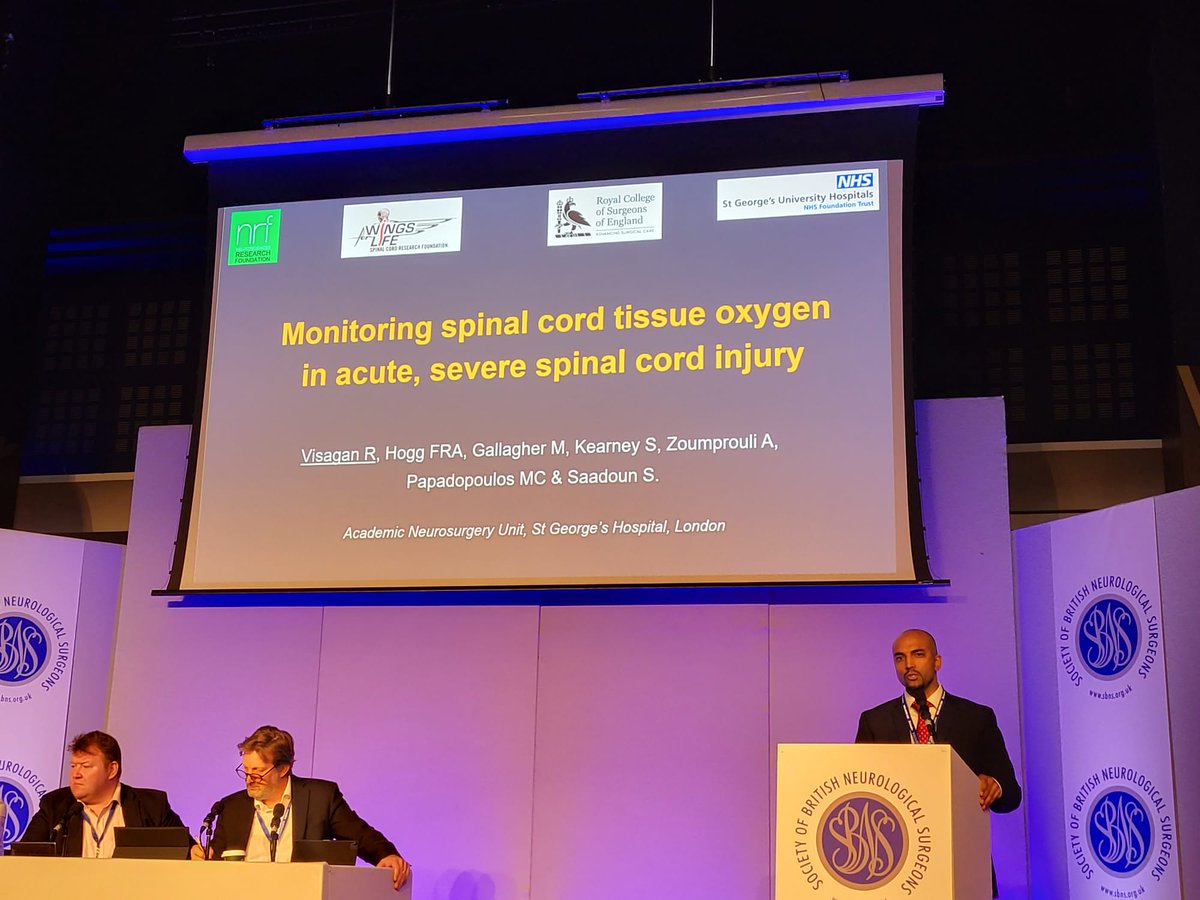



![anandpandit00's tweet photo. 🚨FAO UK/Ireland neurosurgery consultants, registrars and SHOs 🚨
Please complete the following SBNS/NNAP survey [5 minutes]. Your responses would be hugely valuable in shaping future UK neurosurgical data pathways and its impact upon patient care
👉 https://t.co/VNndhYLv9h https://t.co/2VxBG56onC](https://pbs.twimg.com/media/FfqkHPJWIAA0QZW.png)


