Why do corporate codes of conduct often fail to improve working conditions in global supply chains? Our new article in the Journal of Business Ethics shows that the answer may lie inside the buyer firm itself.
How does social franchising enable disadvantaged communities to access healthcare?
Our new World Economic Forum piece discusses the case of Unjani Clinics
@wef@constanceduma@GiacomoCiambott
https://t.co/xRRcN4dglr
As a fun Saturday vibe code project and following up on this tweet earlier, I hacked up an **llm-council** web app. It looks exactly like ChatGPT except each user query is 1) dispatched to multiple models on your council using OpenRouter, e.g. currently:
"openai/gpt-5.1",
"google/gemini-3-pro-preview",
"anthropic/claude-sonnet-4.5",
"x-ai/grok-4",
Then 2) all models get to see each other's (anonymized) responses and they review and rank them, and then 3) a "Chairman LLM" gets all of that as context and produces the final response.
It's interesting to see the results from multiple models side by side on the same query, and even more amusingly, to read through their evaluation and ranking of each other's responses.
Quite often, the models are surprisingly willing to select another LLM's response as superior to their own, making this an interesting model evaluation strategy more generally. For example, reading book chapters together with my LLM Council today, the models consistently praise GPT 5.1 as the best and most insightful model, and consistently select Claude as the worst model, with the other models floating in between. But I'm not 100% convinced this aligns with my own qualitative assessment. For example, qualitatively I find GPT 5.1 a little too wordy and sprawled and Gemini 3 a bit more condensed and processed. Claude is too terse in this domain.
That said, there's probably a whole design space of the data flow of your LLM council. The construction of LLM ensembles seems under-explored.
I pushed the vibe coded app to
https://t.co/EZyOqwXd2k
if others would like to play. ty nano banana pro for fun header image for the repo
Social entrepreneurship (SE) is booming in the Global South, but it does not take place on a blank slate. How does the growth of SE affect local institutions? Our new Research Policy paper examines how SE's expansion affects Colombia's indigenous economy. https://t.co/LQa68jtYFa
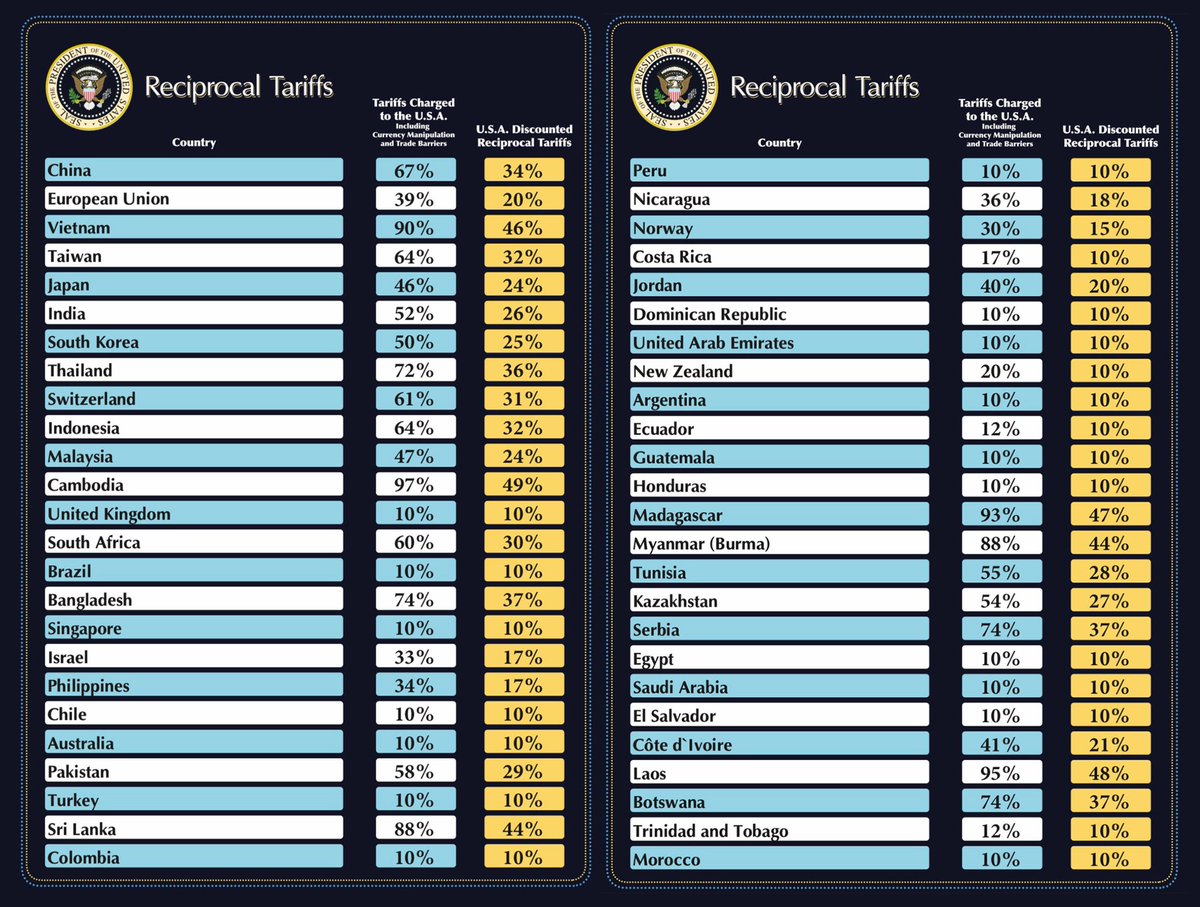
This is nuking every single supply chain that passes through the US in any way, under the illusion that 45 years of deindustrialization can be fixed in one day of 45% tariffs.
Countless low-margin businesses, including US exporters, will be pushed into unprofitability.
Which companies are resisting climate change disclosure regulations, and why? Our recent study explored the factors that drive some firms to oppose regulatory oversight more strongly than others.
https://t.co/ZjjNSs8AOt
Heineken and Nando’s have successfully integrated smallholder farmers in Africa into their value chains. @AddisuLashitew and @Annika_surmeier discuss how other companies can follow their lead and create truly "inclusive" value chains. #ForesightAfrica https://t.co/xzaUP4uYpD
More than half of Africa’s 1.3 billion people make a living from agriculture. In a #ForesightAfrica viewpoint, @AddisuLashitew, @Annika_surmeier and Tanner Methvin call for increased support for the continent’s low-income smallholder farmers. https://t.co/otiGBdoqAe
Which corporations are opposed to climate change regulation? Our new paper examines the sentiment of major companies to the SEC's new climate-related disclosures law. #SEC#ClimateChange#ClimateDisclosure
https://t.co/yrFBpsaTcu