There's a physicist at Stanford named Safi Bahcall who modeled this exact principle and the math is wild.
He calls it "phase transitions in human networks." When you're stationary, your probability of a lucky event is limited to your existing surface area: the people you already know, the places you already go, the ideas you've already been exposed to. Your opportunity window is fixed.
When you move, your collision rate with new nodes in a network increases nonlinearly. Double your movement (new conversations, new cities, new projects) and your probability of a serendipitous encounter doesn't double. It roughly quadruples. Because each new node connects you to their entire network, not just to them.
Richard Wiseman ran a 10-year study at the University of Hertfordshire tracking self-described "lucky" and "unlucky" people. The single biggest differentiator wasn't IQ, education, or family money. Lucky people scored significantly higher on one trait: openness to experience. They talked to strangers more, varied their routines more, and said yes to invitations at nearly twice the rate.
The "unlucky" group followed the same routes, ate at the same restaurants, and talked to the same 5 people. Their networks were closed loops. No new inputs, no new collisions.
Luck isn't random. Luck is surface area. And surface area is a function of movement.
The lobster emoji is doing more work than most people realize. Lobsters grow by shedding their shell when it gets too tight. The growth requires a period of total vulnerability. No protection, no armor, soft body exposed to the ocean.
That's the cost of movement nobody posts about. You have to be uncomfortable first. The new shell only hardens after you've already moved.
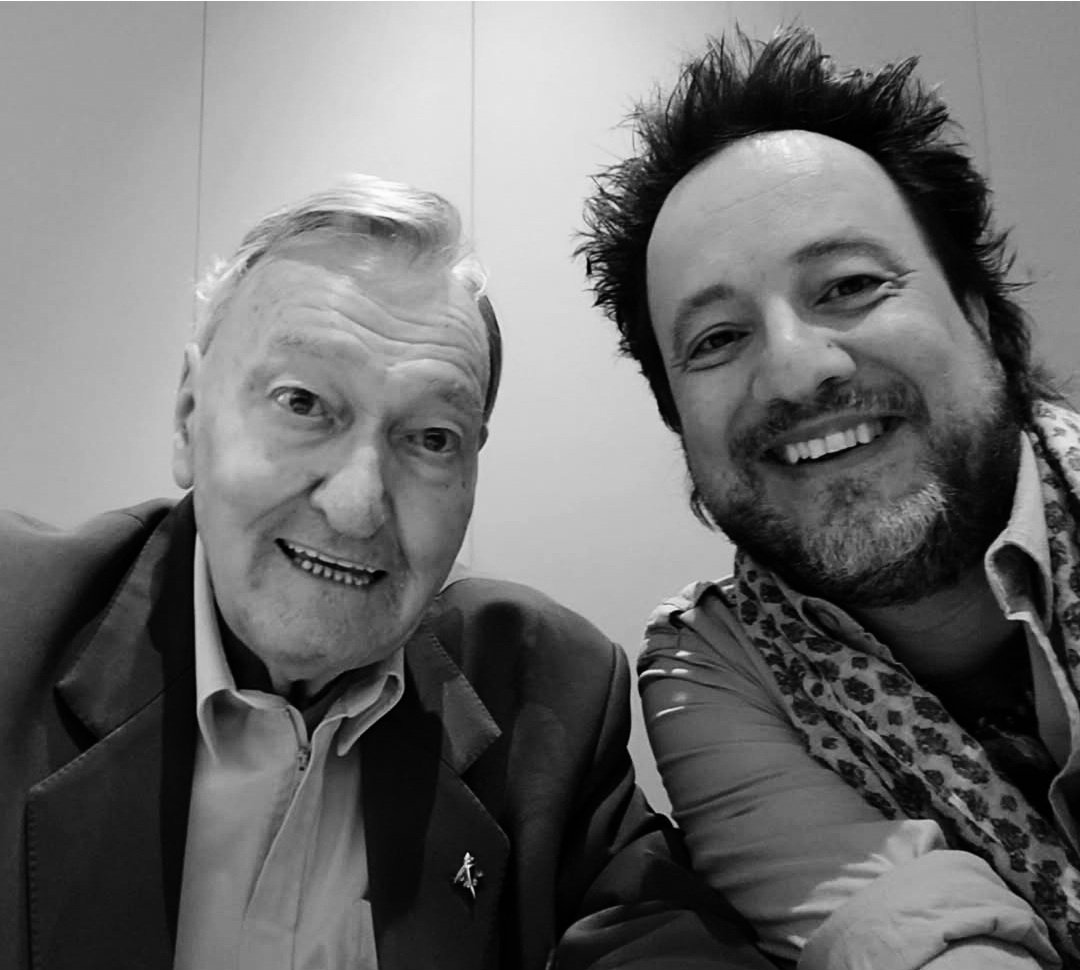
It is with profound sadness and a heavy heart that we announce yesterday's passing of Erich von Däniken on January 10, 2026. Our thoughts are with his family. EvD is also mourned by his friends around the world, the millions of readers of his books, and the many colleagues who have had the privilege of working with him for decades.
His "Archaeology, Astronautics, and SETI Research Association" (A.A.S. R.A.) and all those interested in the Ancient Astronaut Theory and Paleo-SETI research have received this news with dismay and sorrow. What a tremendous loss.
Billionaire Kenn Ricci is open with his kids about his wealth—and even has quarterly meetings with his family to talk about their finances.
Watch the full interview with WSJ’s Gunjan Banerji: https://t.co/J1Ku3HPKnu
I highly recommend this article for anyone who still thinks that LLMs are still "only predicting the next token". It's long and unsettling but worth the read.
Let's talk about Carl Stewart.
If you were a high-level criminal in Europe around 2020, you didn't use WhatsApp. You used EncroChat. It was a bespoke, encrypted network sold specifically to organized crime. Costing thousands of dollars a year, these modified Android phones had no GPS, no camera (software disabled), and a panic wipe feature. Criminals trusted it implicitly. They talked openly about drug shipments, hits, and money laundering.
Carl Stewart, a major drug dealer from Liverpool, was one of them. He went by the handle Toffeeforce.
He moved heroin, cocaine, and MDMA. He trusted the encryption. He trusted the device.
But he made a mistake that sounds like a joke.
The Breadcrumb: The Stilton.
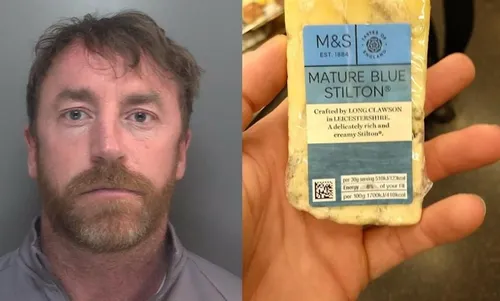
Stewart was at a Marks & Spencer grocery store. He bought a block of mature blue Stilton cheese. He thought it looked good.
So, he took a picture of it. He held the block of cheese in the palm of his hand and snapped a photo to share with a contact on EncroChat. Maybe to brag, maybe just making conversation.
He assumed it was safe. After all, the photo didn't show his face. It didn't show his house. It didn't have GPS coordinates attached.
It was just cheese and a hand.
The Investigation.
What Stewart didn't know was that French and Dutch police had already hacked the EncroChat servers. They were reading everything in real-time (Operation Venetic). But reading the messages wasn't enough. They had the what, but they needed the who. Toffeeforce was just a nickname. They needed a real identity.
Merseyside Police analyzed the photo of the cheese. They didn't care about the cheese. They looked at the hand holding it.
Modern smartphone cameras are incredible. They capture 12-megapixel images with stunning clarity. The photo was so sharp that the forensic team could zoom in on the fingers holding the package.
They could see the friction ridges. They could see the loops and whorls.
They pulled a full fingerprint directly from a photograph sent over an encrypted chat.
The Collapse.
They ran the fingerprint against the police database. It matched Carl Stewart.
That single biometric data point connected the Toffeeforce persona to a physical human being. He was arrested and sentenced to 13 years and 6 months in prison.
He fell because he posted a picture of his lunch.
Your brain might be tapping into universal intelligence.
What is the true origin of intelligence? One provocative proposal comes from biophysicist and mathematician Douglas Youvan, who contends that the brain does not generate intelligence—it merely accesses it.
Youvan posits that intelligence is not a biological emergent property but a foundational feature of the universe, akin to an invisible "informational ether" or substrate that exists independently of matter and biology. Neural structures, whether organic brains or artificial networks, simply tune into this pre-existing cosmic resource, much like a radio receiver capturing broadcast signals.
This perspective emerged from Youvan's extensive background in genetics, artificial intelligence, and information theory. Observing rapid, unforeseen breakthroughs in AI, he increasingly viewed them as discoveries of latent patterns rather than pure inventions, prompting the question: What if intelligence is an ever-present cosmic resource awaiting the right interface?
He cites supporting clues in the shared fractal, recursive patterns seen in neuronal dendrites and galactic structures, suggesting a universal self-organizing principle operating across scales.
The concept remains highly debated. Philosopher Keith Frankish, a proponent of illusionism, argues that our vivid sense of consciousness may be an evolutionary deception—a distorted introspection that serves adaptive purposes without connecting to any profound external reality. He likens it to viewing one's reflection in water: seemingly direct, yet fundamentally misleading.
Nevertheless, Youvan remains optimistic that future interdisciplinary advances—blending physics, computation, and even metaphysics—could eventually quantify elusive aspects of mind, such as attention, awareness, and creative insight.
["The Universe Is Intelligent—And Your Brain Is Tapping Into It to Form Your Consciousness, Scientist Says." Popular Mechanics, 2025]
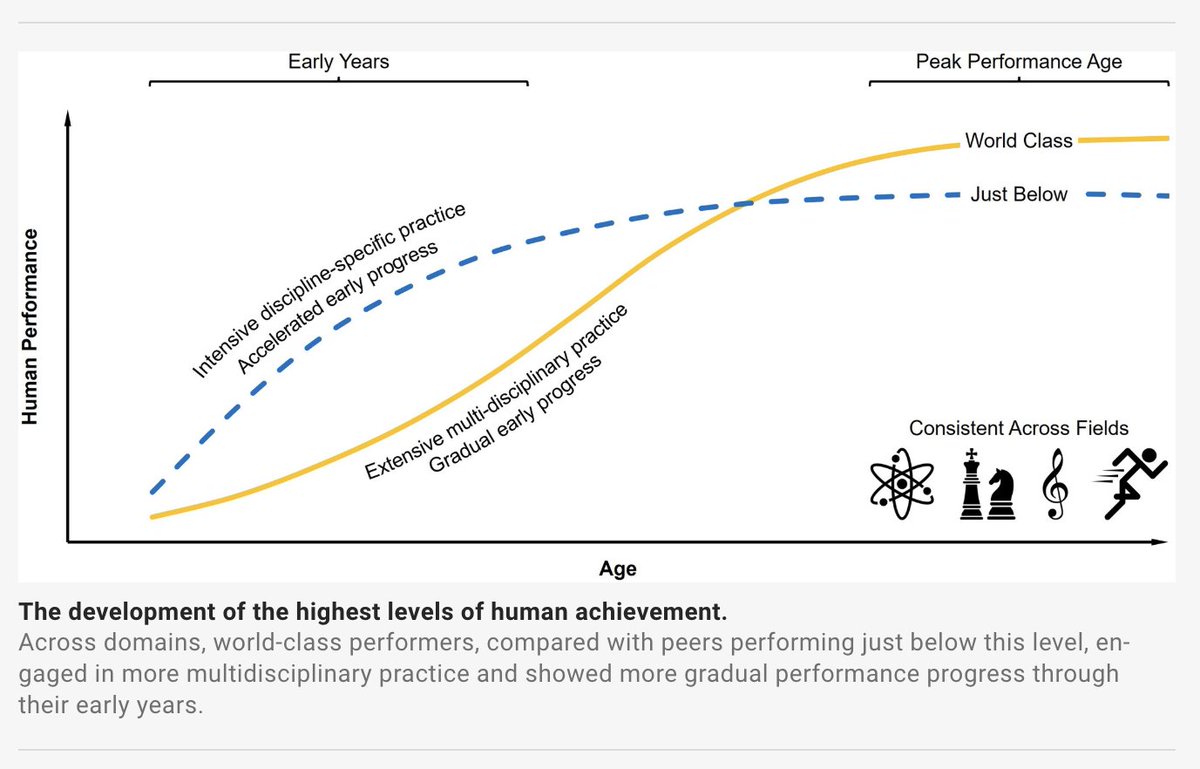
A massive new study on peak performance included 34,000 international top performers: Nobel laureates, renowned classical music composers, Olympic champs, and the world’s best chess players. It shows early specialization is a trap, and the road to greatness is long and varied.
🚨 Why is the British Empire in full panic mode?
It's not about missiles. It's about a "boring" document that just ended their financial control over America.
NATO generals are screaming for war. MI6 is coming out of the shadows. Russia is calling them out.
I saw @thisisgrantlee post this on Linkedin and thought it was VERY good:
Slack’s founder noticed something weird as they grew. Every young PM they hired immediately wanted to hire someone. When he asked why:
"That person would do the product management, and I would do strategy."
That response reveals a physics problem eating your company.
Because these weren't bad people. They were smart and ambitious.
That's what made it dangerous.
Given their system, asking for headcount was the rational move.
Career progression correlates with team size. Comp bands jump when you become "manager of X." Your peers build empires and you get praised for scale.
So they asked for more people. Everyone does.
In budget meetings, no head of engineering or sales ever says "Good news - we can do this with fewer people."
The slider only moves one way.
C. Northcote Parkinson saw this in the 20th century.
He studied the British Navy. Between 1914 and 1928, they cut ships by two-thirds and sailors by a third.
Yet, strangely, administrators grew 78%.
Ships down. Sailors down. Bureaucrats up. What?
But swap "admiralty officials" for "product managers" and you get modern tech.
Parkinson found two mechanisms:
1. Officials want subordinates, not rivals.
2. Officials create work for each other.
Stewart called what comes next "fake work" - activities that look like work but don't move any customer outcome.
"Let's explore this space."
"We should have someone thinking about X."
"Can you own the strategy for Y?"
That fog is where Parkinson's Law thrives.
Every new hire makes it worse. Double the team, quadruple the meetings. Most of what they'll talk about is themselves.
The antidote is "known valuable work."
"Known" means a smart outsider could understand why it matters.
"Valuable" means a customer would be noticeably worse off without it.
The funniest thing Parkinson said:
"No one has been idle. All have done their best."
Everyone in the bloated Admiralty was busy.
They just weren't doing anything that mattered.
Happy to share this detailed study on jihadist expansion and difussion in Nigeria, which will be featured in the January vol. of CTC Sentinel
A lot of fieldwork across Nigeria went into trying to understand this complex phenomenon
(Thread to follow)
https://t.co/O6YPYDVWDI







![Rainmaker1973's tweet photo. Your brain might be tapping into universal intelligence.
What is the true origin of intelligence? One provocative proposal comes from biophysicist and mathematician Douglas Youvan, who contends that the brain does not generate intelligence—it merely accesses it.
Youvan posits that intelligence is not a biological emergent property but a foundational feature of the universe, akin to an invisible "informational ether" or substrate that exists independently of matter and biology. Neural structures, whether organic brains or artificial networks, simply tune into this pre-existing cosmic resource, much like a radio receiver capturing broadcast signals.
This perspective emerged from Youvan's extensive background in genetics, artificial intelligence, and information theory. Observing rapid, unforeseen breakthroughs in AI, he increasingly viewed them as discoveries of latent patterns rather than pure inventions, prompting the question: What if intelligence is an ever-present cosmic resource awaiting the right interface?
He cites supporting clues in the shared fractal, recursive patterns seen in neuronal dendrites and galactic structures, suggesting a universal self-organizing principle operating across scales.
The concept remains highly debated. Philosopher Keith Frankish, a proponent of illusionism, argues that our vivid sense of consciousness may be an evolutionary deception—a distorted introspection that serves adaptive purposes without connecting to any profound external reality. He likens it to viewing one's reflection in water: seemingly direct, yet fundamentally misleading.
Nevertheless, Youvan remains optimistic that future interdisciplinary advances—blending physics, computation, and even metaphysics—could eventually quantify elusive aspects of mind, such as attention, awareness, and creative insight.
["The Universe Is Intelligent—And Your Brain Is Tapping Into It to Form Your Consciousness, Scientist Says." Popular Mechanics, 2025]](https://pbs.twimg.com/media/G8iiWjiXQAAjTY2.png)