QuantizedMesh support has been added to 3DTilesRenderer thanks to another grant from @CesiumJS!
The plugin supports normals, water masks, tile skirts, & "just works" with Cesium Ion. Support for texture overlays in progress! 🌎✨
#threejs#3dtiles#javascript#gis#nasajpl
Working on a TSL implementation of a 2D and 3D SPH fluid simulations.
It works with both WebGPU and WebGL backends, using compute shaders and transform feedback as a fallback.
Still battling a bit with the WebGPURenderer to make the spatial grid optimization work.
#threejs
A true order independent transparency demo in #threejs using depth peeling! It comes at a cost since the model is rendered multiple times but its stable as the camera moves & transparency overlaps correctly.
I've made a PR to three to improve depth texture behavior for it.
1/3
My paper "Nonlinear Ray Tracing for Displacement and Shell Mapping" got accepted to SIGGRAPH Asia 2023 Conference Track.
A big thank you to Brian Budge. He kindly sent me his experimental code that uses Newton's method to handle curved rays. That was 2012, and the problem stayed in my head.
The new method directly traces curved rays by expressing them as quadratic rational functions. That's it!😀
I am looking for opportunities to switch career to computer graphics. If you have a job or know someone please DM me.
I am passionate about path tracing and offline rendering and I've been working on my path tracer for the past 6 years.
Here is a list of the main projects I did
If you want to do something for a long time and not burn out you have to look for ways to make the process as effortless as possible.
Be aware that your older self won't have as much mental space or energy as you have now.
*Mitsuba 3* is now available! It's a major redesign of the lab's infrastructure for differentiable rendering building on the Dr.Jit just-in-time compiler announced yesterday. Full video link: https://t.co/WnfnRWiICm 1/10
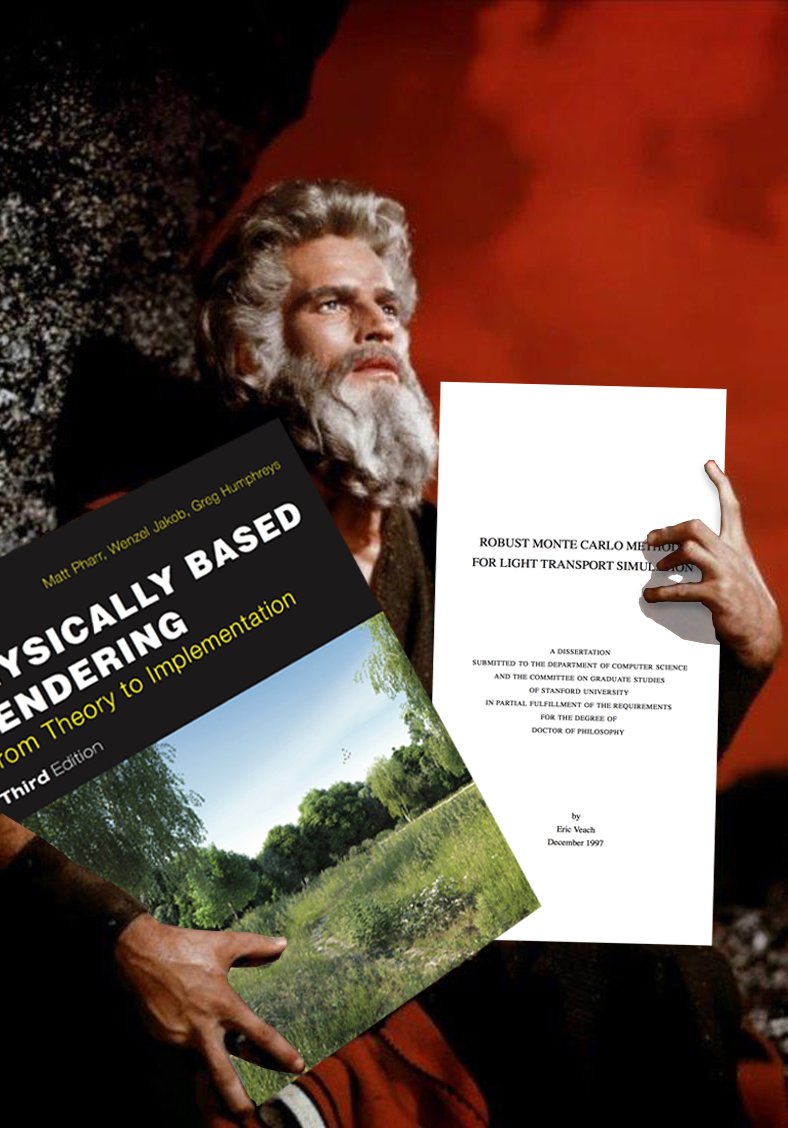
There's a reason I made this joke image a few years ago; the secret is that it's not a joke. It's 100% serious; these are the two things every person in rendering eventually returns to over and over again.
Order independent transparency techniques have been around for a while, have actually been used in some games but not widely yet. I tinkered with a few to get a feel for how they perform and look and wrote a blog post (more to follow) https://t.co/vftykF8jZc
(1/n)
Presenting a research project is actually surprisingly difficult.
For instance, at a poster presentation or during a casual conversation at a conference, there's only a short amount of time to communicate the main ideas of a project.
Here's a few things that might help 🧵
A glimpse of revamped global illumination in my toy #rustlang#vulkan renderer `kajiya` 👀 Lots more ReSTIR, new meshless irradiance cache, much larger worlds 🎉
Around 11ms/frame here on a Radeon 6800 XT at 1080p, pending some optimizations 😛
Lighting: sun + emissive materials.
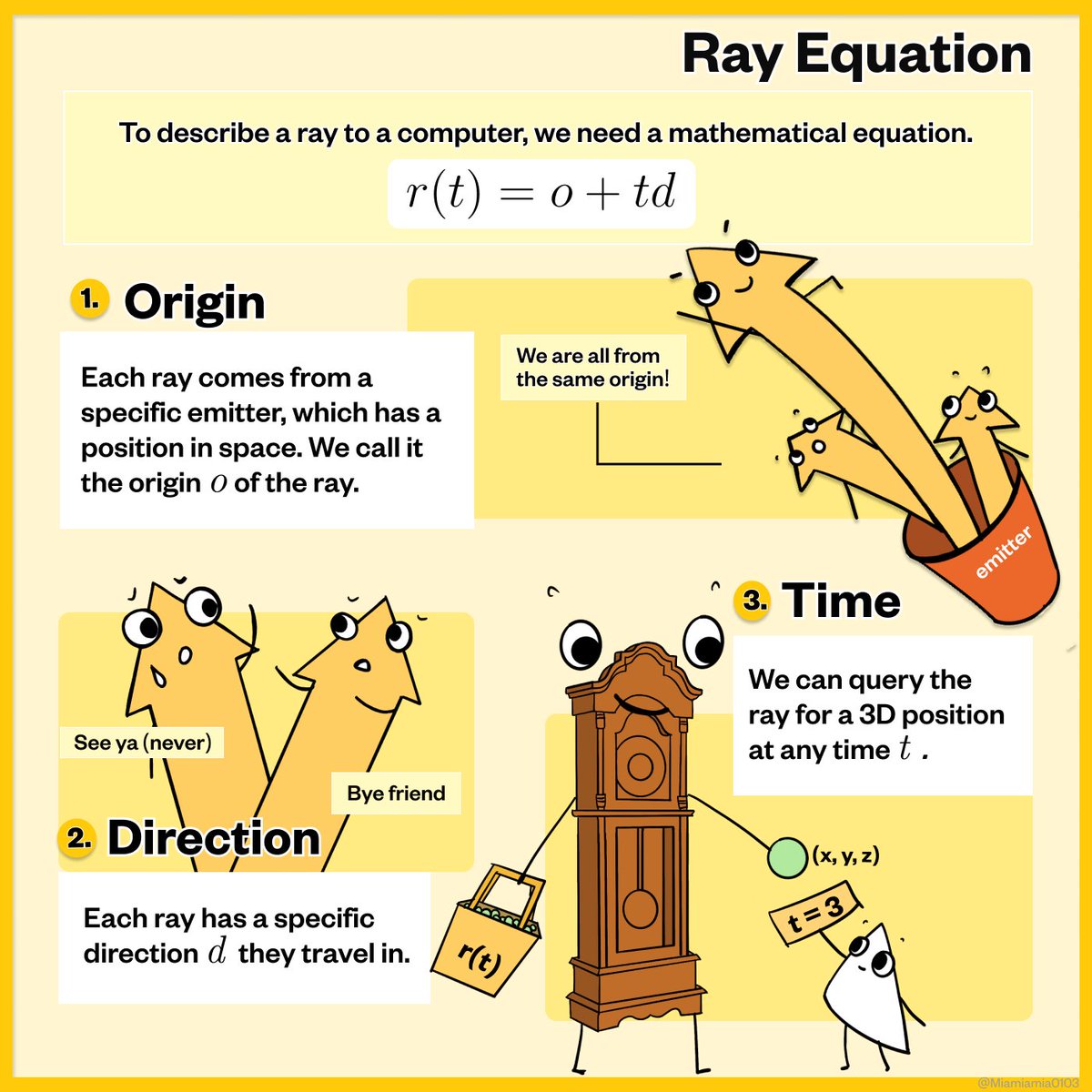
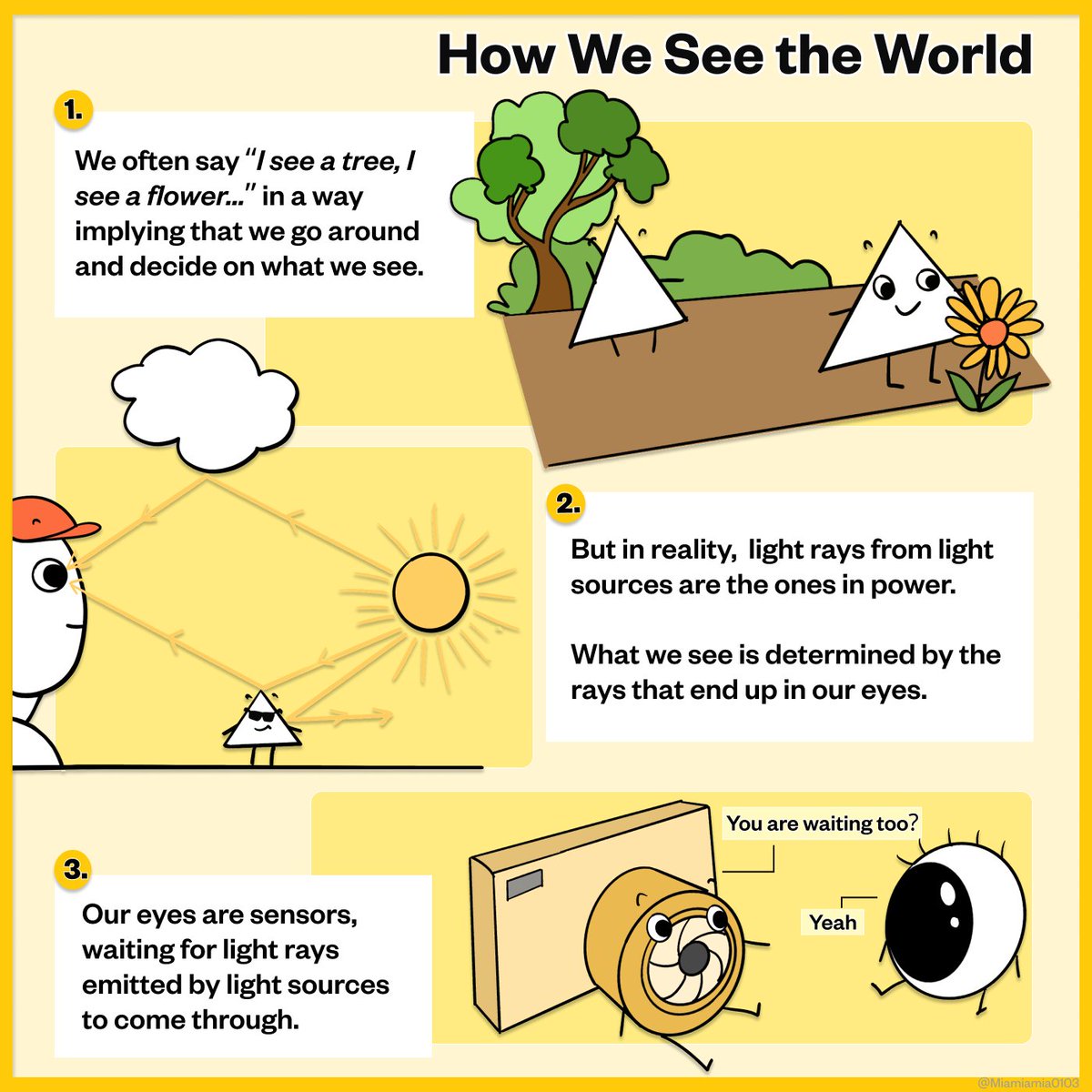
Ray tracing is our friend when we want a realistic 3D render. This technique is inspired by what happens in the natural world. But why, and how? Here we look at some basics of ray tracing: the why, ray equation, forward vs backward, and an overview of the general algorithm.
@alexanderameye An acceleration structure might help speeding up rendering when using high detailed meshes with millions of triangles. PBR book has a nice chapter on it: https://t.co/ahEekB1HyL
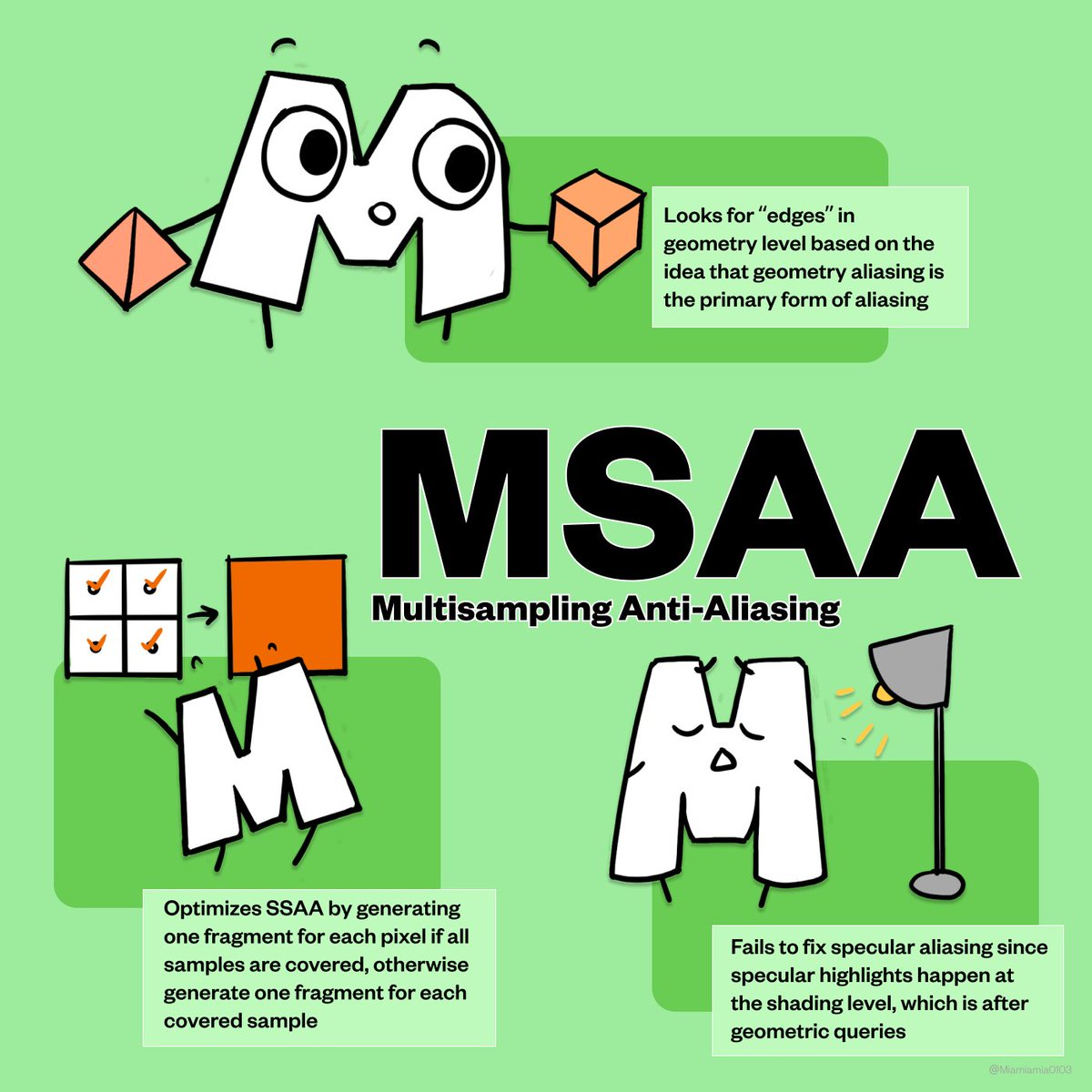
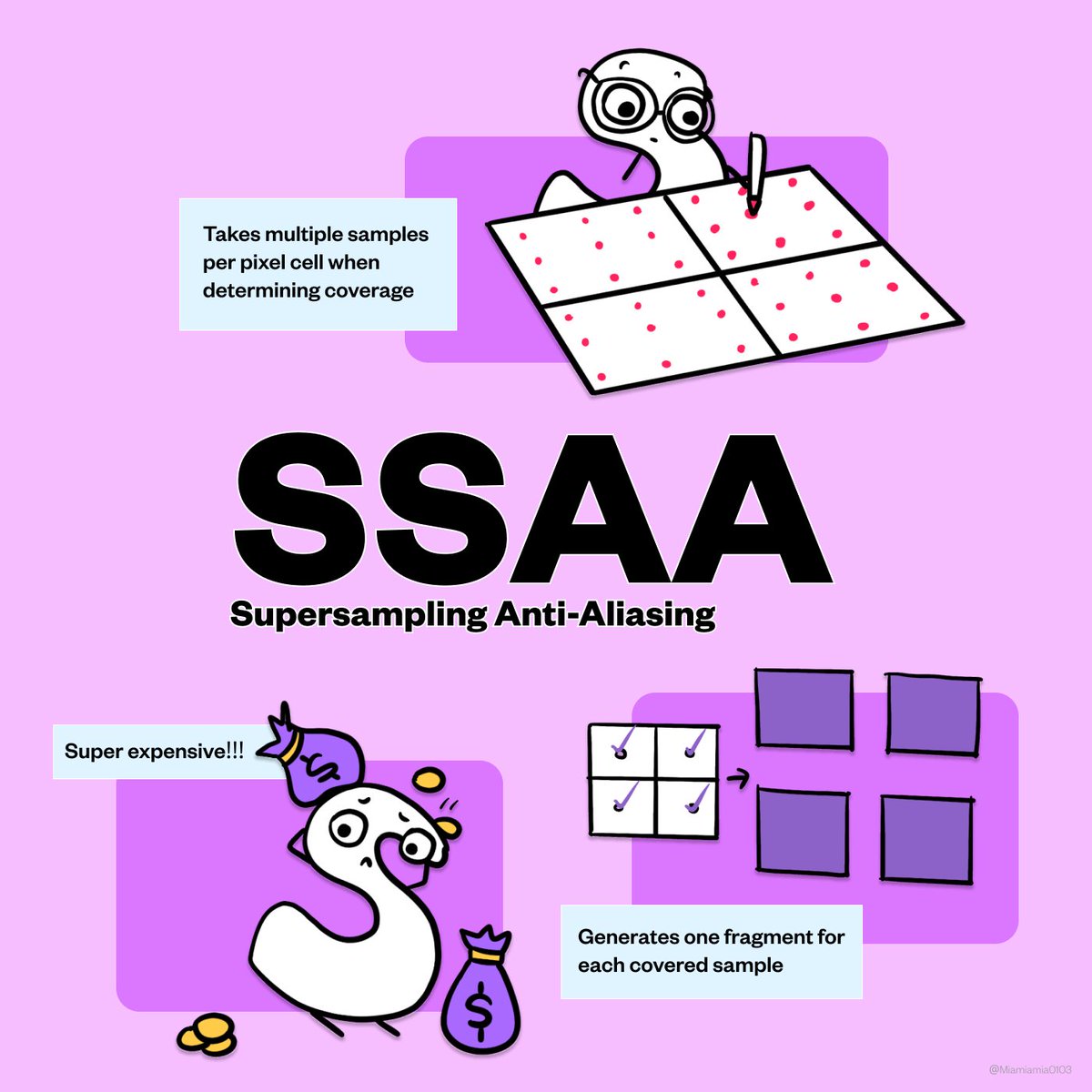
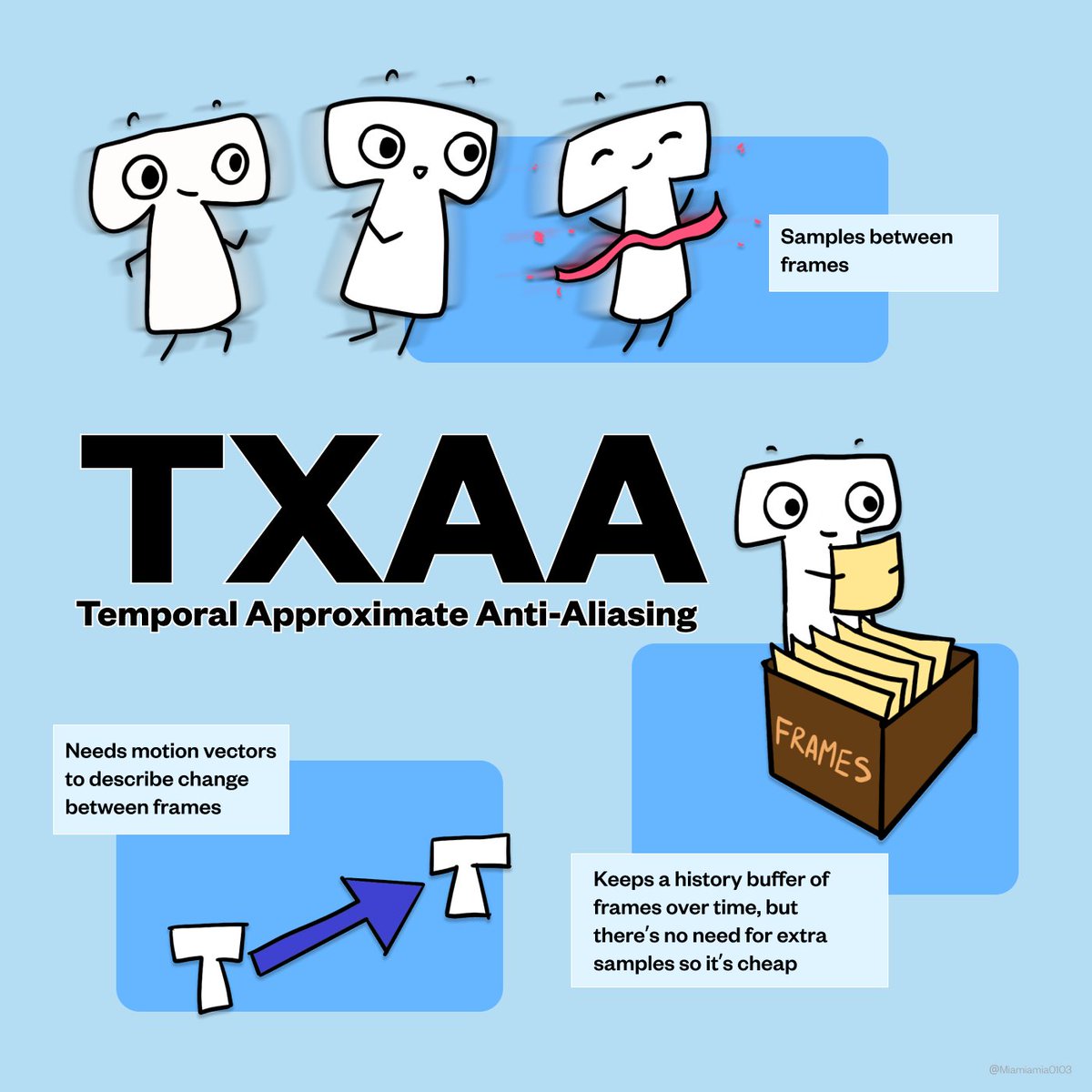
Have you ever felt confused by all the Anti-Aliasing acronyms out there? What are they actually doing to reduce those jaggies on your screen? Here we look at some selected features of FXAA, SSAA, MSAA, and TXAA.