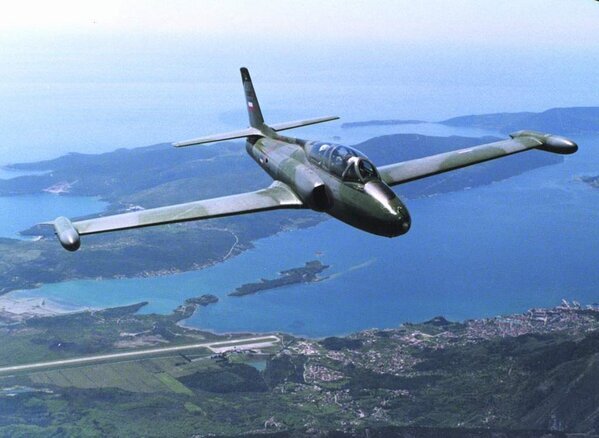
In this new paper, Bama Andika Putra writes that Indonesia’s de-risking policies in the South China Sea have included limited-coercive symbolic gestures, the public sinking of illegal ships, the development of frontier regions, and defensive diplomacy. ⤵️ https://t.co/YdJZURFFbY
The Coalition of the Willing held its first military exercise 100 kilometers from the Ukrainian border.
It is the first operational use of an entirely European chain of command, conceived to deter renewed Russian aggression, says @RymMomtaz.
https://t.co/o5Jsmvqlid
PLA Joint Operations Command Centre (JOCC)
May see details of JOCC from excerpts of a paper by Colonel Hsu Wei-hsun (徐偉勛) of Taiwan Army on PLA’s Joint Operations Command Centre (联合作战指挥中心), published in Army Academic Bimonthly, Volume 60, Issue 597 in October 2024.
I have also added some of my observations. May read the full article here,
https://t.co/PBAA4jW7qW
Eh gapapa sih
Kalo salah: Tinggal klarifikasi kalo ini cuma post pribadi di dalam fasilitas
Kalo bener: Udah tau sensitif, kenapa foto terus disebarin ke sosmed? Pas diambil orang-orang yang sering mantau, baru protes
Core problem nya? Procurement yang gak publik
Kekepoan anak formil, nyomot status atau postingan tim yang berangkat trus dijadikan berita sesuai persepsi mereka.
Kadang benar, kadang salah, dan efek keduanya, yang ngeposting jadi trouble sama atasannya. 😅
Had the opportunity to board the Suffren-class nuclear attack boat FS Duguay-Trouin (S636) in Toulon last month. Learned a lot about French Navy submarines during the tour and while researching this story. Wrote out my observations for USNI News here:
https://t.co/WT6RAg7Wks
Honored to contribute to new @routledgebooks/@Rout_PoliticsIR volume—Smashing the Sun Tzu Myth: Chinese Strategy in Context!
https://t.co/yTI2lnCXFU
My chapter—“#Chinese#Maritime (Militia) #Strategy: Increasingly More Exceptional Than Unique”—examines what China’s 3 sea forces are & what they are not:
https://t.co/7HEYtle4IE
Thanks to Editor Peter Lorge @VanderbiltU & my @NavalWarCollege colleague Dex Wilson for the opportunity! Honored to join @JohnF_Sullivan, @ad_hoc_anthro & other chapter authors not @X!
Curated content available here: https://t.co/Hu9GuotKmr
🔓 Open Access
Can the US and China keep using economic choke points as sources of leverage indefinitely?
Ramkishen S. Rajan (@LKYSch) argues that supply-chain, trade and financial choke points function as depletable sources of economic power. The more they are used, the more firms and states adapt, reroute and reduce their dependence.
🔗: https://t.co/eEC7AKTx2O
Russia possesses a large and modern nuclear arsenal according to researchers from @FOIresearch Russia is likely to use rhetoric, military exercises, and the release of documents to create uncertainty and division over the possible use of nuclear weapons. https://t.co/wxgaTvZqvT
@anggapph2 Semua permasalahan di Indonesia dapat diselesaikan dengan boring solutions: Seminar, Training of Trainers, Workshop pelatihan dengan sertifikat, sosialisasi best practices, dan bantuan infrastruktur
"The Naval War College was still famous for its wargaming, but that technique, as well as research in general, had been divorced from teaching and sequestered into a separate organization, the Center for Naval Warfare Studies..."
🖇️ https://t.co/M58sj6Muey
@rachman_joseph@Ameer_Kotecha UK needs its own EDB (for planning) and GIC + Temasek (for strategic acquisitions, investments, and operations) to do all that
In which, debatably, not in the UK’s best positions nor timings at the current moment
Or that’s what I think some folks in the Whitehall would say
Absolutely none of the basic passive force protection measures we normally see existed around that Russian corvette docked in Benghazi. Lot's of people are saying this is the end of the warship etc. Listen, USVs have major implications, this is anything but new, but this one attack is not a revelation. It's another chapter in the story. It was basically the juiciest of targets.
This @politico Canberra Playbook mentions Max Balafoutis, @alexcolv1lle and Shelly Shih's Strategist special report, finding a new class of AI models designed for automated decisions is showing marked bias towards CCP politics.
📕: https://t.co/W4pnefYVxl
https://t.co/EzEA2wEHcN
Brought to you through CMSI collaboration w/ CASI @CASI_Research!
@NavalWarCollege/@ChinaMaritime Report #60: “PLA Naval Aviation Personnel: Training and Career Paths for a Modern Force”
https://t.co/f9iscVl6fT
From CMSI Director @ChrisHSharman—
What does it take to build a new generation of naval aviators capable of supporting the PLA Navy’s expanding carrier force?
Building a carrier navy requires more than ships & aircraft. It requires a pipeline of trained pilots, aviation crews, & tech personnel capable of sustaining increasingly complex maritime operations in the near & far seas.
Authored by our #China #Aerospace Studies Institute (CASI) colleagues, Eli Tirk & Qi, CMR #60 examines how the PLAN has overhauled its aviation personnel development system to meet these demands.
What does it actually take to qualify a pilot to fly from an aircraft carrier?
This CMR walks readers through the training pipeline, from initial flight instruction & advanced training to operational transition & carrier qualification. It identifies the aircraft used at different stages, examines efforts to shorten & improve the training process, and highlights how China’s #Navy is incorporating more realistic, operationally focused training.
The report also introduces readers to the Naval Teenagers Aviation School, an initiative launched in 2015 to cultivate future naval aviators by recruiting junior high school grads into specialized programs at 14 selected high schools across China.
And this isn’t just about fighter pilots. The report examines the development of helicopter, special mission, & transport aviation personnel, including the training of airborne combat support crews.
It also profiles senior PLAN aviators, traces their career progression, & explores the promotion opportunities available to officers in this increasingly important community.
For anyone interested in understanding how the PLAN is building the human capital behind its expanding naval aviation capabilities, this report offers a particularly insightful look inside the training pipeline, the aviation education challenges the PLAN has addressed, & what it takes to be promote to the senior naval ranks from within the PLAN naval aviation community.
Main Findings
•PLA Naval Aviation has undergone substantial institutional transformation over the past 2 decades, driven by the goal of becoming a carrier-based force capable of effective joint ops in the maritime domain.
•This transformation has been accompanied by reforms to pilot education, training, & career management systems, aimed at producing a qualified force capable of conducting long-range maritime ops.
•Despite significant progress, there are still areas that require improvements, particularly Naval Aviation University.
•The PLAN likely aims to further professionalize pilot education & shorten the carrier pilot training pipeline by equipping Naval Aviation University training units with carrier-capable training aircraft to reduce reliance on operatn’l units.
•PLAN authors have praised @USNavy’s tactical training, suggesting the PLAN may seek to incorporate more combat-realistic training content.
•It is likely that PLA Naval Aviation’s transition training phase will continue to improve, building on the initial progress in adoption of complex force-on-force training scenarios.
•Understanding the career progression of officers in this community adds context to the desirability of this career field.
•Close attention to how PLA Naval Aviation grows & changes with the adoption of carrier-based KJ-600s & future land-based systems will be important to understanding how the PLAN will fight.
•Overall, improvements to Naval Aviation pilot training & joint training by the operational force clearly suggest that the PLAN is increasingly providing its aviation branch with the opportunities to develop technical acumen & tactical competencies required to conduct the missions the PLAN has been tasked with.
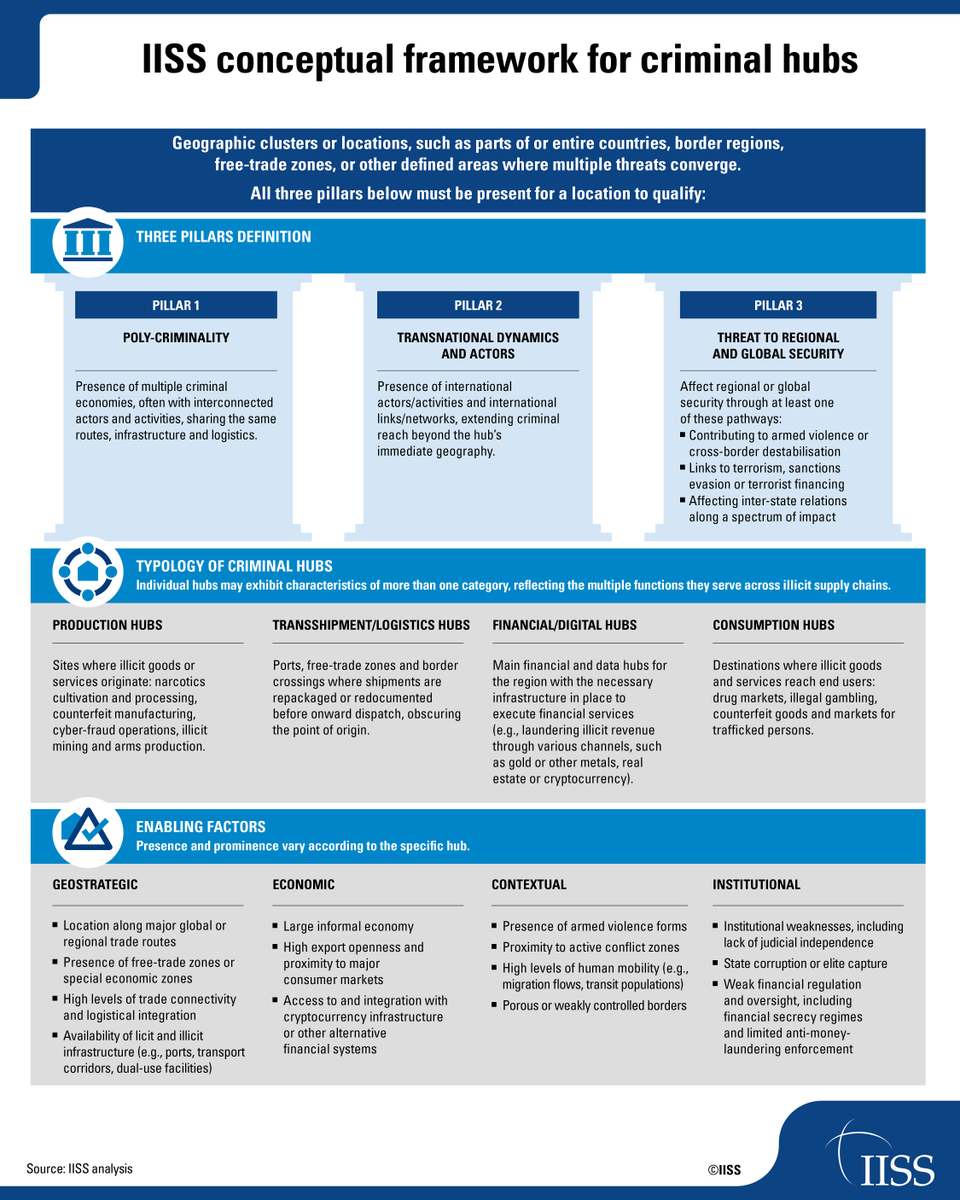
The latest IISS research paper introduces a strategic framework for identifying ‘criminal hubs’ as geographic clusters where transnational actors and multiple criminal economies converge.
The conceptualisation of criminal hubs is based on a three-pillar framework.
Find out more: https://t.co/Wgt2axSO6B
US: :BEIJING'S AI PLAYBOOK-- A Joint Investigative Report: How AI Models Developed in the People's Republic of China Became Embedded in America's Technology Stack and What It Will Take to Avoid the Next Huawei" https://t.co/M3sBcp6u2v
US: China’s Wingmen How Western Government Policy Enabled China’s Rise in the Skies
Investigation Findings
Western aerospace companies entered lawful commercial arrangements that transferred advanced technology, technical know-how, and Western expertise to Chinese aerospace firms.
Honeywell, GE Aerospace, and Collins repeatedly sought and obtained licenses for controlled technology transfers involving PRC military end users and other military-linked entities as part of Chinese commercial aerospace platforms.
Export controls relied on company due diligence even where commercial incentives favored continuity and past enforcement actions revealed compliance weaknesses.
PRC-based joint ventures created a structural gap in U.S. national security review by allowing sensitive capabilities to move offshore outside the principal Committee on Foreign Investment in the United States (CFIUS) framework.
Unilateral U.S. restrictions would disadvantage American aerospace companies without denying China access to many Western technologies when allied firms backfill the resulting business.