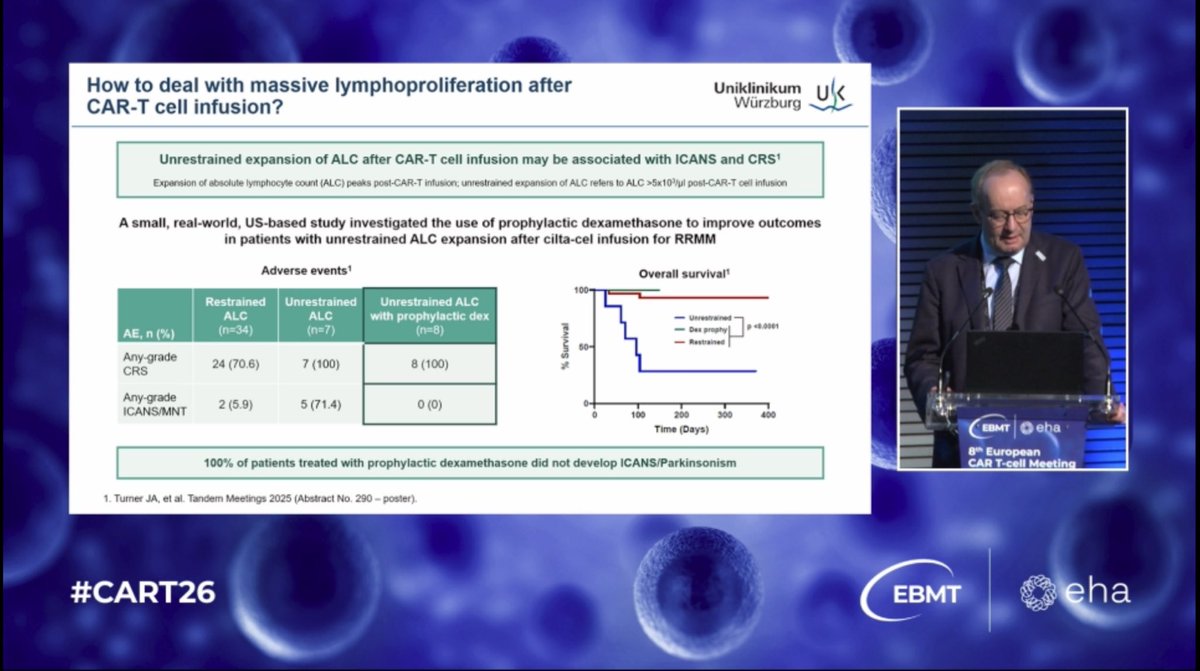
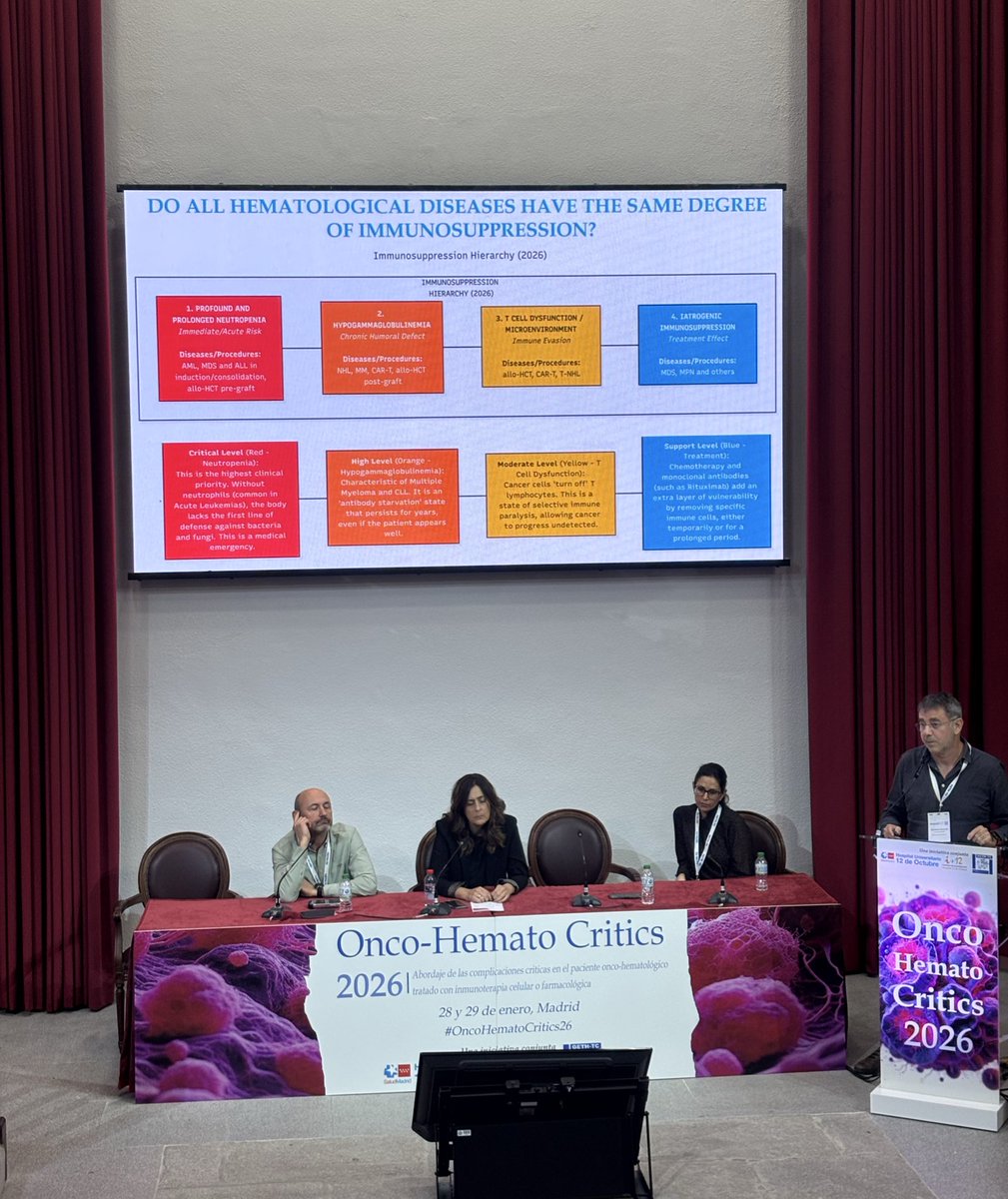
Granted it’s only 2 patients but this is pretty cool. BMT/cell therapy is science fiction and the coolest most rewarding job.
Kidney Transplantation in Two Highly Sensitized Candidates after CAR T-Cell Therapy | New England Journal of Medicine https://t.co/QYd7dftILb
MAJESTEC-9 trial at #ASCO26 : the message was strikingly simple: a couple of curves summarized it all. At the end, curves speak louder than words. @TheIACH@COMyCongress
#weekend_review#AML#leusm
🧵 Optimizing Venetoclax Duration in AML (Ven + HMA)
Key observations from available data:
🔹 VIALE-A established efficacy (CR/CRi 66%, median OS 14.7 mo), not necessarily the ideal duration for every patient; Persistent cytopenias and infectious complications remain major barriers to prolonged exposure.
🔹 Karrar et al. (Mayo) suggest shorter durations (14 vs 21 vs 28 days) may be feasible in selected patients, but shorter duration should NOT be assumed to be intrinsically less myelosuppressive (AJH)
🔹 Prospective evidence does NOT currently support routine universal 7–14 day induction Venetoclax.
🔹 7+7 French study showed comparable response after 2nd cycle but toxicity was similar to 28 day venetoclax.
🔹 FILO data raise an important concept: treatment-free remission may be feasible after prolonged MRD-negative remission in favorable-risk disease (ELN2024), highlighting the importance of biology rather than fixed duration.
🔹 Metronomic/weekly Dec+Ven approaches and ongoing randomized studies (Opti-AML/Beat AML) may further redefine exposure strategies.
Current practice increasingly individualizes Venetoclax duration based on:
✓ Age/frailty
✓ Comorbidities
✓ Molecular profile/genomics
✓ Disease burden and response kinetics
✓ MRD status
✓ Cytopenias/infection risk
✓ Tolerability and treatment goals
The question may no longer be:
“How long should Venetoclax be given?”
Instead:
“For which patient, at what disease state, and for how long?”
Right patient. Right biology. Right duration.
#AML #leusm #Venetoclax
🚨New in Leukemia: HARMONY NPM1 classification reassigns >40% of NPM1-mut patients into a different risk category with potential clinical impact on allo-HSCT decision-making
🔓Free access link:
https://t.co/KpvxDodtHN
@HarmonyFoundEU@LeukemiaJnl@HematoCAUSA
1/13
I posted a poll asking:
In acute GI bleed anemia, would you give 1 g IV iron regardless of ferritin?
Results:
• 27% yes — anticipate iron debt
• 12% sometimes
• 21% only if ferritin is low
• 41% no
One of the main goals of our review article in @NEJM on MGUS was to provide clear clarifications on the concept of “monoclonal gammopathy of clinical significance” (MGCS). It’s all very confusing in the literature and can cause problems for patients if we are not totally clear of the concepts.
Read on to be 100% sure of the concepts so you can take care of your patients correctly!
1) First key concept: MGUS is a clinically indolent condition that usually remains quiet for an entire lifetime. The problem with MGUS is that it can progress to symptomatic malignancy (like multiple myeloma), or cause a variety of non-malignant, serious, and clinically important diseases that are collectively referred to as “monoclonal gammopathy of clinical significance” (MGCS).
2) Second key concept: MGCS is like the title of chapter in a textbook. It is NOT the name of a disease. Within the term “MGCS” are several distinct diseases, each of which has its own diagnostic criteria, clinical manifestations, and treatment strategies. So you simply cannot diagnose “MGCS” and treat but need to identify the specific disease. All that the term MGCS does is to alert you that MGUS can cause serious non-malignant diseases besides progression to malignancy.
3) Third key concept is: Some of the MGCS conditions are multi-system disorders like light chain amyloidosis and light chain deposition disease. Some MGCS disorders on the other hand are restricted to one organ leading to more confusing terms like “monoclonal gammopathy of renal significance” (MGRS), “monoclonal gammopathy of dermatologic significance” (MGDS), monoclonal gammopathy of neurological significance” (MGNS), and so on. These are also like titles of book chapters NOT the names of a disease. Within each term are specific unique diseases.
4) Fourth key concept is: For taking care of the patient you need to know the name of the exact disease. Not just add an umbrella term like “MGCS” or “MGRS”. So for example instead of diagnosing “MGRS” you need to be clear exactly which kidney disease the monoclonal protein is accused of causing! MGUS is so common and so many people can have a MGUS and a completely unrelated kidney disease. MGUS plus kidney disease doesn’t mean “MGRS”. Most of the time the two have nothing to do with each other.
There are specific kidney diseases that are casually related to the monoclonal protein and if we suspect MGRS for some reason we need to work up and make the specific diagnosis which needs a kidney biopsy: proliferative glomerulonephritis with immunoglobulin deposits (PGNMID), C3 glomerulonephritis, and so on. Each of these disease have their unique clinical and lab manifestations, and treatment strategies.
5) Fifth key concept is: with more and more sensitive tests for MGUS and more and more testing done for MGUS we are all going to find M proteins associated with a variety of clinical problems, 99% of which are NOT caused by the M protein. I am hugely concerned with labels like MGCS and MGRS wrongly applied. And the last thing we want is Dara-VRd for a DVT just because there is a paper that says M proteins can cause blood clots!
This Review will be a good place to start for getting all the key concepts straight. https://t.co/XErNkLVA48
CONGRESS | #EHA2025 | POSTER
Alicia Aguirre, @HUReinaSofia, shares findings from a retrospective study of inotuzumab followed by cellular therapy in R/R B-ALL (N=68). ORR = 77.9%; higher CR/MRD negative rates in patients aged ≤25 years vs ≥25 years (84.6% vs 53.8%; p = 0.043). Younger age (p = 0.027) and MRD negativity (p = 0.013) were associated with better OS. Grade 3-4 hematologic toxicity = 53%; Grade 3-4 hepatotoxicity = 7%; veno-occlusive disease = 16.2%.
Inotuzumab is an effective treatment option for R/R B-ALL with high MRD negativity rates and acceptable survival rates.
Follow our live feed for more updates: https://t.co/wXFxv89VKU
#leusm #ALLsm #MedicalCongress
📣 We are proud to announce the new open-access EU CAR-T Handbook, now available in a digital format on our website. @GoCARTcoalition@EHA_Hematology
This updated version includes new developments in CAR-T according to the latest clinical data and regulatory advancements.
Access the handbook ⬇️
https://t.co/uCcrBAYVLO
Editors 👥 Mahmoud Aljurf @aljurf100, Chiara Bonini, @CChabannon, @JulioDelgadoHem, Martin Dreyling, @JKuball, @AnnalisaRugger1 , Marion Subklewe and @AnnaSureda5
#CARTcelltherapy #CellTherapy
🔬 ¡Lanzamos un nuevo proyecto de leucemia linfoblástica aguda (LLA)! 🌎💉
Si tratas adultos con LLA en LATAM, te invitamos a participar completando nuestro formulario.
🔗 https://t.co/UC5cfv2E4y
Tu aporte será clave para mejorar la atención de LLA en la región.